Starting a pet sitting business has become one of the most accessible and rewarding small business opportunities for animal lovers. As more people adopt pets and maintain busy lifestyles, the demand for reliable pet care services continues growing rapidly.
Modern pet owners increasingly view their pets as family members rather than simply animals. Because of this emotional connection, many owners prefer personalized pet care services instead of traditional kennels or boarding facilities. They want trustworthy people who can provide attention, companionship, exercise, and routine care while they are at work, traveling, or managing hectic schedules.
This growing demand has created strong business opportunities for pet sitters.
However, many people underestimate what it actually takes to build a successful pet sitting business long term.
Enjoying animals alone is not enough.
Running a professional pet sitting business requires:
organization, customer trust, scheduling systems, safety procedures, communication skills, legal planning, marketing, and reliable operations.
Pet owners are trusting you with animals they deeply care about. That means professionalism matters just as much as compassion.
The good news is that pet sitting businesses typically have relatively low startup costs compared to many other industries.
You do not need a storefront, expensive equipment, or large inventory investments to begin. Many successful pet sitting businesses start small and gradually expand through strong reputation, repeat customers, and word-of-mouth referrals.
At the same time, competition has increased significantly in recent years.
Pet owners now expect:
online booking, fast communication, professional branding, secure payment options, real-time updates, and trustworthy reviews before hiring a pet sitter.
This means successful businesses must combine personal care with efficient business systems.
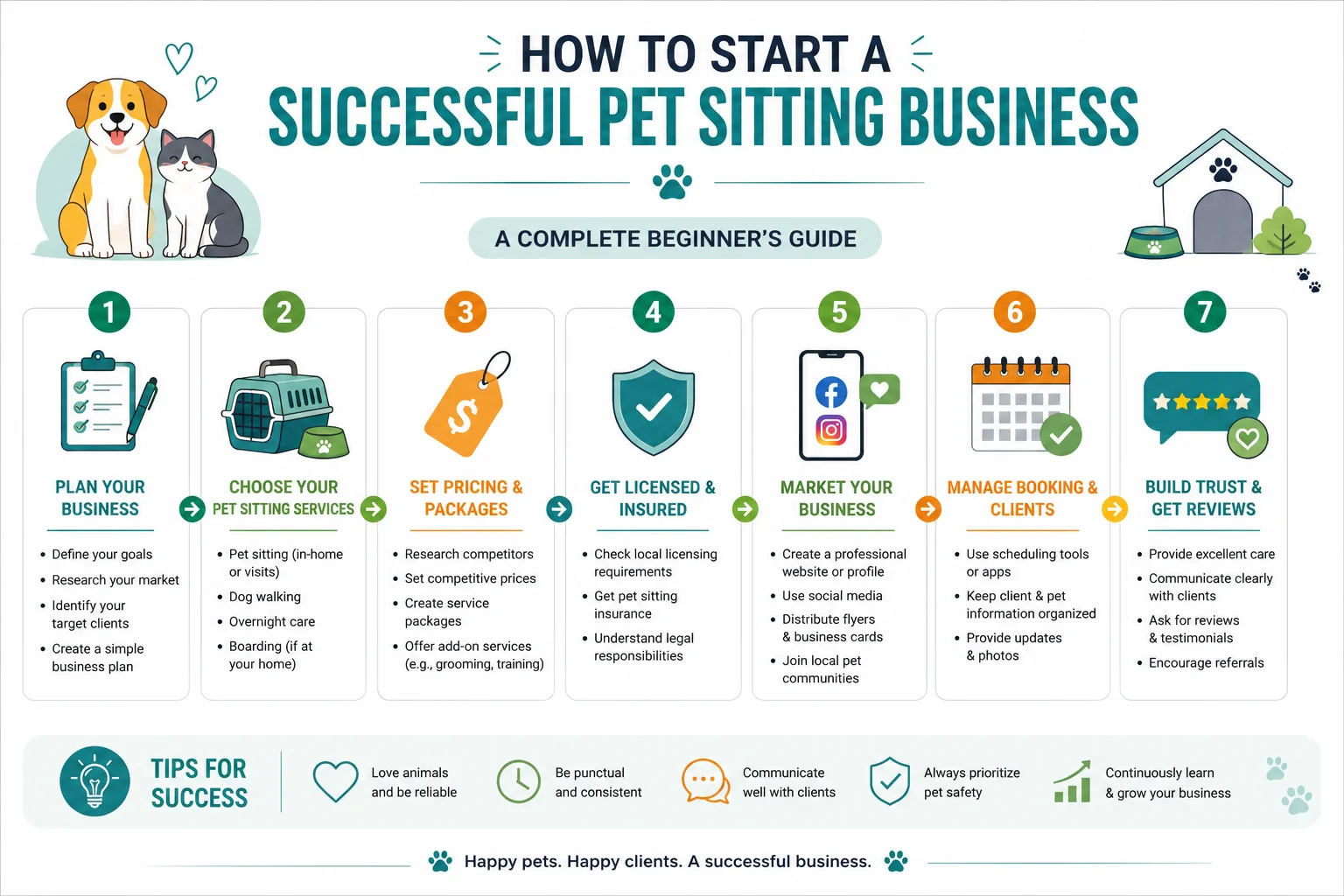
In this guide, we’ll cover how to start a successful pet sitting business, market research strategies, pricing, legal considerations, customer trust, operational systems, marketing methods, common mistakes to avoid, and how tools like Biyo POS can help streamline business management as you grow.
Table of Contents
- Why Pet Sitting Is a Growing Industry
- Conducting Market Research
- Creating a Pet Sitting Business Plan
- Legal Requirements and Business Setup
- Choosing Your Pet Sitting Services
- Setting Prices and Managing Profitability
- Finding and Retaining Clients
- Building Trust With Pet Owners
- Managing Daily Operations Efficiently
- Common Mistakes New Pet Sitters Make
- Growing Your Pet Sitting Business
- How Biyo POS Helps Pet Sitting Businesses
- Frequently Asked Questions
Why Pet Sitting Is a Growing Industry
The pet care industry has expanded enormously over the past decade.
Millions of households now own pets, and many owners spend heavily on products and services that improve their pets’ quality of life.
At the same time, modern lifestyles have increased demand for flexible pet care solutions.
People travel frequently for:
work, vacations, family obligations, and social events.
Long work hours and unpredictable schedules also create daily demand for dog walking and daytime pet visits.
Traditional boarding facilities are not always ideal for every pet.
Many animals experience anxiety in unfamiliar environments or struggle in crowded kennels.
Pet sitting offers a more personalized alternative where animals can remain in familiar surroundings while maintaining regular routines.
This convenience and emotional reassurance make pet sitting highly attractive for owners.
Pet sitting businesses also appeal to entrepreneurs because startup costs are relatively low.
Most beginners only need:
basic pet care supplies, transportation, scheduling tools, insurance coverage, and marketing materials.
Unlike many businesses, there is no need for expensive storefronts or large inventory investments initially.
However, despite low startup costs, professionalism still matters heavily.
Pet owners prioritize trust, reliability, communication, and safety above almost everything else.
 Conducting Market Research
 Conducting Market Research
Before launching a pet sitting business, understanding your local market is extremely important.
Many new businesses fail because owners assume demand exists without properly researching competition and customer expectations.
Start by evaluating:
how many pet owners live in your area, what types of pets are most common, and which services customers already use.
Research competing pet sitters, dog walkers, boarding businesses, and pet care apps operating locally.
Pay attention to:
pricing structures, service offerings, online reviews, customer complaints, and gaps in the market.
For example, some areas may have many dog walkers but very few overnight pet sitters or specialized services for senior pets.
Understanding these gaps helps position your business strategically.
Customer demographics matter as well.
Busy professionals, frequent travelers, families, and older pet owners often have different service needs and spending habits.
Market research should also include pricing analysis.
Charging too little can make your business unsustainable, while pricing too high without strong branding may reduce customer interest initially.
The goal is understanding where your services fit within the local market realistically.
Creating a Pet Sitting Business Plan
A strong business plan gives structure and direction to your pet sitting business.
Even small businesses benefit significantly from planning because it reduces operational confusion later.
Your business plan should outline:
services offered, target customers, pricing, operational processes, marketing strategies, startup costs, and growth goals.
Defining your niche early can help differentiate your business.
Some pet sitters specialize in:
dog walking, luxury pet care, overnight stays, uncommon pets, senior animals, medication administration, or pet transportation.
Specialization can help attract higher-value customers while reducing direct competition.
Financial planning is also important.
Estimate expected monthly expenses including:
insurance, transportation, marketing, software, pet supplies, and taxes.
Many small business owners underestimate operational costs initially.
Planning ahead improves long-term sustainability.
Business plans should remain flexible as well.
Your services, pricing, and operations may evolve as you gain experience and understand customer behavior more clearly.
Legal Requirements and Business Setup
Running a legitimate pet sitting business requires proper legal preparation.
Many beginners ignore this stage because they view pet sitting as informal work, but legal protection becomes extremely important once clients and revenue grow.
You should register your business according to local regulations and choose an appropriate business structure.
Depending on your location, this may involve:
business licenses, permits, tax registration, or insurance requirements.
Liability insurance is especially important.
Pet sitters are responsible for animals, client homes, keys, and personal property while working.
Insurance helps protect your business financially if:
pets become injured, property is damaged, or unexpected accidents occur.
Contracts are also highly recommended.
Clear agreements help define:
service expectations, pricing, cancellation policies, emergency procedures, and liability terms.
Professional documentation builds customer confidence while reducing misunderstandings.
Background checks and certifications may also improve credibility.
Some clients specifically look for:
pet CPR certification, first aid training, or bonded and insured businesses.
These qualifications can help you stand out in competitive markets.
Choosing Your Pet Sitting Services
Pet sitting businesses can offer a wide variety of services depending on experience, market demand, and operational capacity.
Common services include:
daily pet visits, dog walking, overnight stays, feeding, medication administration, litter box cleaning, companionship visits, grooming assistance, and pet transportation.
Some businesses focus exclusively on dogs, while others care for:
cats, birds, reptiles, rabbits, fish, or less common household pets.
Specialized services can often justify premium pricing because fewer competitors provide them.
Overnight pet sitting usually generates higher revenue but requires greater scheduling commitment.
Dog walking services often create recurring income because customers book them regularly throughout the week.
Offering flexible service packages can also improve customer retention.
For example, some businesses combine:
dog walking, feeding, and playtime into bundled care plans.
The key is balancing service variety with operational efficiency.
Offering too many complex services too early can create scheduling chaos and inconsistent quality.
Setting Prices and Managing Profitability
Pricing is one of the most difficult decisions for new pet sitters.
Many beginners undercharge because they fear losing customers.
However, unsustainably low pricing often creates burnout while limiting long-term business growth.
Your pricing should account for:
travel time, fuel costs, service duration, operational expenses, taxes, insurance, and your skill level.
Research local competitors carefully to understand standard market rates.
Pricing structures may include:
hourly rates, flat visit fees, package pricing, holiday surcharges, overnight rates, or emergency booking fees.
Holiday periods often justify premium pricing because demand increases significantly.
Some businesses also charge additional fees for:
multiple pets, medication administration, late-night visits, or specialized care needs.
Profitability improves when scheduling becomes more efficient.
Grouping nearby clients together reduces travel time while maximizing daily appointment capacity.
As your reputation grows, raising prices gradually becomes much easier.
Finding and Retaining Clients
Marketing plays a major role in building a successful pet sitting business.
Even highly skilled pet sitters struggle without consistent customer visibility.
Professional branding is important from the beginning.
A clean website, clear service descriptions, customer testimonials, and strong communication create trust immediately.
Social media can also be extremely effective because pet-related content performs well visually.
Sharing:
pet photos, client testimonials, care tips, and behind-the-scenes content helps build familiarity and credibility.
Local networking remains valuable too.
Building relationships with:
veterinary clinics, groomers, pet stores, trainers, and dog daycare centers can generate strong referral opportunities.
Online reviews matter heavily in pet care businesses because trust drives purchasing decisions.
Encouraging satisfied customers to leave reviews improves visibility and reputation significantly.
Referral programs can also accelerate growth.
Offering discounts or bonuses for successful client referrals often creates strong word-of-mouth marketing.
Building Trust With Pet Owners
Trust is the foundation of every successful pet sitting business.
Pet owners are allowing you into their homes and trusting you with animals they deeply love.
Communication is one of the most important trust-building tools.
Clients appreciate regular updates including:
photos, feeding confirmations, walk summaries, and behavioral observations.
Reliability is equally important.
Showing up consistently on time and following instructions carefully creates long-term customer confidence.
Transparency matters as well.
If problems occur, communicating honestly and quickly is much better than hiding issues.
Strong trust often leads to repeat bookings and long-term customer relationships.
Many successful pet sitting businesses grow primarily through loyal repeat clients rather than constant new customer acquisition.
Managing Daily Operations Efficiently
As client volume increases, organization becomes critical.
Managing appointments manually often creates scheduling errors and operational confusion.
Pet sitting businesses must track:
appointments, client instructions, feeding schedules, payment records, emergency contacts, medication requirements, and customer communication.
Digital scheduling systems help streamline operations significantly.
Efficient route planning also improves profitability by reducing unnecessary travel time.
Payment management is another important operational area.
Customers increasingly expect:
digital invoices, online payments, and convenient booking systems.
Professional operational systems create stronger customer experiences while reducing administrative stress.
Common Mistakes New Pet Sitters Make
Many new pet sitters underestimate how much organization and professionalism the business requires.
One common mistake is accepting too many clients too quickly.
Overbooking often leads to burnout, scheduling mistakes, and reduced service quality.
Another major issue is weak communication.
Failing to provide updates or respond quickly to client concerns damages trust rapidly.
Some beginners also neglect legal protection entirely.
Operating without contracts or insurance creates serious financial risk if accidents occur.
Underpricing is another common problem.
Low pricing may attract initial customers but often becomes unsustainable once operational costs increase.
Ignoring boundaries can also become problematic.
Professional policies regarding cancellations, emergency visits, scheduling limits, and payment terms help prevent long-term operational stress.
Growing Your Pet Sitting Business
Once your business develops a stable client base, growth opportunities expand significantly.
Some pet sitters eventually hire additional employees or independent contractors to increase appointment capacity.
Others expand services into:
pet grooming, training, daycare, boarding, or retail products.
Technology becomes increasingly important as businesses grow.
Managing multiple employees, schedules, customer records, and payments manually eventually becomes inefficient.
Strong operational systems improve scalability while maintaining service consistency.
Long-term success usually comes from:
reputation, reliability, customer relationships, and operational discipline rather than aggressive short-term growth.
How Biyo POS Helps Pet Sitting Businesses
 How Biyo POS Helps Pet Sitting Businesses
Biyo POS helps pet sitting businesses manage operations more efficiently through integrated cloud-based business management tools.
The platform supports:
appointment scheduling, payment processing, customer management, reporting, invoicing, and operational tracking through one centralized system.
Business owners can monitor appointments, manage customer information, track payments, and improve workflow organization more efficiently.
Biyo POS also helps businesses create smoother customer experiences through digital operational tools that simplify scheduling and communication.
If you want to modernize your pet sitting business operations, you can explore the platform directly through the Biyo POS signup page.
Frequently Asked Questions
Is a pet sitting business profitable?
Yes. Pet sitting businesses can become highly profitable when owners build strong client relationships, manage scheduling efficiently, and maintain consistent service quality.
Do I need insurance for a pet sitting business?
Yes. Liability insurance helps protect pet sitters financially in case of accidents, injuries, or property damage while caring for pets.
What services do pet sitters usually offer?
Common services include dog walking, feeding, overnight stays, medication administration, companionship visits, litter box cleaning, and pet transportation.
How do pet sitters find clients?
Pet sitters often find clients through social media, referrals, local networking, online reviews, veterinary partnerships, and professional websites.
Should pet sitters charge hourly or flat rates?
Both pricing models are common. Many businesses use flat rates for standard visits and hourly pricing for extended or specialized services.
How does Biyo POS help pet sitting businesses?
Biyo POS helps businesses manage appointments, payments, customer records, invoicing, reporting, and operational workflows through centralized cloud-based tools.