
A customer stops by an accessory boutique to replace an old wallet but leaves with a matching belt, leather card holder, and a travel bag they’ve had their eye on for weeks. It’s a familiar scene in accessory retail. Unlike clothing stores, where shoppers often arrive with a specific item in mind, accessory shops thrive on helping customers complete an outfit, prepare for a trip, or find the perfect gift.
While these purchases may seem simple, every card transaction follows a sophisticated payment process behind the scenes. To identify the type of business accepting the payment, banks and payment processors rely on Merchant Category Codes (MCCs). For many apparel accessory retailers, that classification is MCC 5699.
If you own an accessory shop, leather goods store, handbag boutique, or another specialty fashion retailer, understanding MCC 5699 can help you better understand how your business is categorized, why that classification matters, and how it supports payment processing across the retail industry.
At a Glance: MCC 5699
| Category | Details |
|---|---|
| Merchant Category Code | 5699 |
| Category Name | Miscellaneous Apparel and Accessory Shops |
| Industry | Apparel & Fashion Retail |
| Typical Businesses | Fashion accessory boutiques, handbag stores, luggage retailers, leather goods shops, belt stores, hat shops, scarf boutiques, and other specialty apparel accessory retailers. |
| Assigned By | Payment processors and acquiring banks |
| Purpose | Classifies apparel and fashion accessory retailers that don’t fall under more specific merchant categories. |
Table of Contents
- What Is MCC 5699?
- Which Businesses Qualify for MCC 5699?
- Businesses That Usually Don’t Qualify
- Why Merchant Category Codes Matter
- How Payment Processors Use MCC 5699
- Benefits and Challenges of MCC 5699
- How to Verify Your Merchant Category Code
- MCC 5699 Compared to Similar Merchant Categories
- How Biyo Helps Apparel Accessory Retailers
- Frequently Asked Questions
What Is MCC 5699?
Understanding MCC 5699
Not every fashion retailer specializes in clothing or footwear. Many businesses focus on the items that complete a look, such as handbags, wallets, belts, scarves, hats, luggage, or leather accessories. Others combine several of these product categories into one boutique without fitting neatly into another apparel classification. That’s where MCC 5699 comes in.
MCC 5699 is the Merchant Category Code assigned to miscellaneous apparel and accessory shops whose primary business involves selling fashion accessories or apparel-related merchandise that doesn’t belong in a more specific merchant category. It allows payment providers to classify these retailers accurately within the broader apparel industry.
How Merchant Category Codes Are Assigned
When a retailer opens a merchant account, the payment processor or acquiring bank reviews the overall nature of the business before assigning a Merchant Category Code. Rather than evaluating every product individually, they look at the merchant’s primary source of revenue, inventory mix, and day-to-day operations.
A boutique may sell handbags alongside wallets, travel bags, belts, scarves, and small leather goods. Because no single product category defines the business, MCC 5699 is often the most appropriate classification.
Why Miscellaneous Apparel Shops Have Their Own Classification
Fashion accessories occupy a unique space in retail. Customers often purchase them to complement clothing they already own, update their wardrobe without buying an entirely new outfit, or find practical everyday items like backpacks, luggage, and wallets. These stores also see strong seasonal demand, with scarves and gloves selling during colder months while hats, sunglasses, and travel accessories become more popular in spring and summer.
Since these retailers don’t fit neatly into clothing or footwear categories, payment providers use MCC 5699 to classify businesses with broader or more specialized accessory-focused merchandise.
 Which Businesses Qualify for MCC 5699?
 Which Businesses Qualify for MCC 5699?
Businesses Commonly Assigned MCC 5699
MCC 5699 generally applies to retailers whose primary business centers on fashion accessories or apparel-related products that fall outside more specific merchant categories. These businesses often specialize in complementary products rather than complete wardrobes.
- Fashion accessory boutiques
- Handbag retailers
- Leather goods stores
- Luggage retailers
- Wallet and belt shops
- Hat boutiques
- Scarf and glove retailers
- Travel accessory stores
- Mixed fashion accessory shops
- Independent accessory boutiques
More Than the Finishing Touches
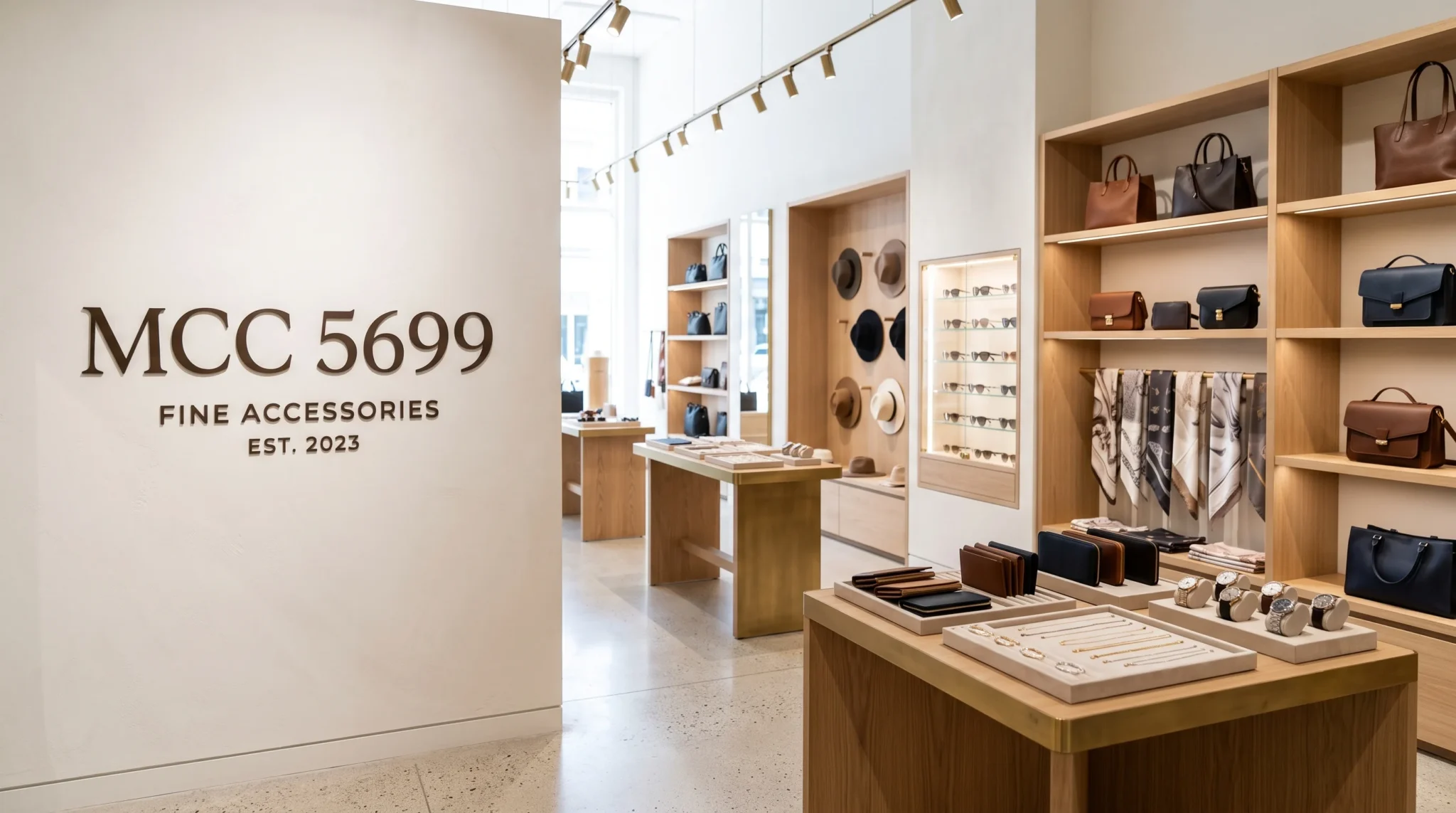
Step inside a well-designed accessory boutique and you’ll notice that every display encourages shoppers to imagine a complete look. A handbag is paired with a matching wallet, belts are arranged by color and finish, while travel bags sit beside passport holders and luggage tags. These retailers aren’t simply selling individual products—they’re helping customers add personality, function, and convenience to their everyday style.
That retail experience is very different from shopping for clothing or shoes, making MCC 5699 a natural fit for many accessory-focused businesses.
How Payment Providers Determine Eligibility
Payment processors classify merchants according to their primary business activity rather than every product they carry. A retailer whose business revolves around handbags, travel accessories, leather goods, and similar products will generally qualify for MCC 5699, even if a small selection of apparel is also available.
The goal is to assign a Merchant Category Code that accurately reflects how the business operates, ensuring merchants are consistently classified across the payments industry.
Businesses That Usually Don’t Qualify
Retailers with Different Merchant Category Codes
Although many apparel retailers sell accessories, that alone doesn’t place them under MCC 5699. Payment providers assign different Merchant Category Codes to businesses whose primary operations belong to another retail category.
- Family clothing stores
- Men’s clothing retailers
- Women’s apparel boutiques
- Shoe stores
- Department stores
- Jewelry stores
- Sporting goods retailers
Understanding the Difference
A women’s boutique may sell handbags and scarves alongside dresses, while a shoe retailer often carries belts and shoe care products near the checkout. In both cases, accessories support the primary business rather than define it. An MCC 5699 retailer, on the other hand, builds its business around accessories themselves.
That’s an important distinction because Merchant Category Codes are based on the merchant’s overall business model, not individual product lines.
Why Primary Business Activity Matters
Two stores may sell the exact same leather wallet, yet receive different Merchant Category Codes. One may operate as a department store, while the other specializes exclusively in leather accessories. Looking at the merchant’s primary activity helps payment providers classify retailers consistently, even when product selections overlap.
This standardized approach creates a more accurate and organized payment ecosystem for merchants, financial institutions, and card networks alike.
Why Merchant Category Codes Matter
Creating Consistency Across Retail Payments
Every time a customer taps a card or mobile wallet, the transaction moves through multiple financial institutions before it’s approved. Merchant Category Codes provide a common language that allows banks, payment processors, and card networks to identify businesses consistently, regardless of where the purchase takes place.
Without standardized merchant classifications, processing millions of retail transactions across thousands of industries would become significantly more complex.
Supporting Reporting and Business Analysis
Merchant Category Codes help organize merchants into meaningful business categories, making reporting and industry analysis more useful for financial institutions. For accessory retailers, this standardized classification helps payment providers better understand transaction patterns within the broader fashion retail sector.
Some credit card issuers also use Merchant Category Codes when determining eligibility for cashback or rewards, although each card program establishes its own qualification requirements.
Helping Monitor Transaction Activity
Merchant Category Codes also contribute to payment security by giving financial institutions additional context about the businesses processing transactions. Understanding the purchasing behavior commonly associated with accessory retailers helps payment providers identify unusual activity more effectively.
Although MCC 5699 doesn’t prevent fraud by itself, it supports the broader systems that help keep electronic payments secure.
How Payment Processors Use MCC 5699
Recognizing Accessory Retailers
Once an accessory shop begins accepting card payments, MCC 5699 becomes part of its merchant profile. Every eligible transaction processed by the business carries this classification, allowing payment processors to recognize the retailer as a merchant specializing in apparel accessories or related fashion goods.
The Merchant Category Code applies to the business itself rather than individual products. Whether a customer purchases a leather wallet, a designer handbag, a travel backpack, or a winter scarf, the transaction reflects the retailer’s primary business activity instead of the specific item sold.
Supporting Merchant Account Management
Merchant Category Codes help payment providers better understand how businesses operate. While MCC 5699 doesn’t determine payment processing rates by itself, it provides valuable context when merchant accounts are established, reviewed, and managed.
Payment processors also evaluate transaction volume, average purchase value, refund activity, chargeback history, and overall account performance. Together, these factors help build a more complete picture of the merchant while supporting effective account management.
Improving Reporting and Transaction Monitoring
Accessory retailers often experience changing sales patterns throughout the year. Travel accessories become more popular during vacation seasons, winter accessories gain demand as temperatures fall, and gift purchases increase during major holidays. Merchant Category Codes help organize these transactions, making reporting more meaningful for payment providers and merchants alike.
MCC 5699 also provides valuable context for fraud monitoring. Understanding the purchasing behavior typically associated with accessory retailers helps financial institutions identify unusual payment activity while minimizing unnecessary disruptions for legitimate customers.
Benefits and Challenges of MCC 5699
Benefits of Accurate Classification
Having the correct Merchant Category Code ensures your business is grouped with retailers that share a similar operating model. This improves consistency throughout the payments ecosystem while supporting clearer merchant reporting and payment account management.
Accurate classification also simplifies conversations with payment providers because your business is immediately recognized as an apparel accessory retailer rather than a clothing store or another type of merchant.
Potential Challenges
The most common challenge isn’t MCC 5699 itself but receiving an incorrect classification. Since many apparel retailers also sell accessories, payment processors must distinguish between businesses where accessories complement the inventory and businesses where accessories are the primary focus.
Retailers can also evolve over time. A boutique that gradually expands into full apparel collections or specializes in luggage alone may eventually qualify for a different Merchant Category Code if its primary business activity changes.
Best Practices for Accessory Retailers
Review your merchant account information periodically to confirm your Merchant Category Code still reflects how your business operates. If you’ve significantly changed your inventory, expanded into new retail categories, or shifted your business focus, discuss your classification with your payment processor.
Keeping your merchant profile accurate helps prevent misunderstandings and ensures your payment account continues to represent your business correctly.
How to Verify Your Merchant Category Code
Review Your Merchant Account Information
If you’re unsure whether your business has been assigned MCC 5699, begin by reviewing your merchant account documents. Many payment processors display the Merchant Category Code in onboarding paperwork, merchant statements, or online account dashboards.
If you can’t find the information, your payment provider can usually verify your classification within a few minutes.
Request a Merchant Category Code Review
If you believe your business has been assigned the wrong Merchant Category Code, contact your payment processor and request a review. They may ask about your inventory, website, target customers, and primary revenue sources before determining whether another classification more accurately reflects your business.
The review considers your overall retail operation rather than individual products, helping ensure your Merchant Category Code matches the way your business actually operates.
Know When Your Classification May Change
Merchant Category Codes aren’t permanent. As businesses expand or change direction, payment processors may review the assigned classification and update it if another Merchant Category Code becomes a better fit.
For example, an accessory boutique that grows into a full apparel retailer or a specialty luggage business may eventually receive a different merchant classification.
MCC 5699 Compared to Similar Merchant Categories
 MCC 5699 Compared to Similar Merchant Categories
MCC 5699 vs. Clothing Stores
Clothing retailers generate most of their revenue from apparel, while accessory shops focus on products that complement a customer’s wardrobe or everyday lifestyle. Although both may sell handbags, belts, or scarves, accessory retailers make these items the centerpiece of their business rather than an add-on to clothing sales.
MCC 5699 vs. Department Stores and Specialty Retailers
Department stores carry accessories alongside clothing, cosmetics, home goods, and many other product categories, while specialty retailers concentrate on a single niche such as jewelry or footwear. MCC 5699 fills the gap for businesses whose primary identity revolves around apparel accessories without fitting into another specific merchant category.
Comparison Table
| Merchant Category Code | Business Type | Primary Business Activity |
|---|---|---|
| 5699 | Miscellaneous Apparel & Accessory Shops | Retail sale of handbags, leather goods, travel accessories, belts, hats, scarves, and other fashion accessories. |
| 5651 | Family Clothing Stores | Retail sale of apparel for men, women, and children. |
| 5611 | Men’s & Boys’ Clothing Stores | Retail sale of men’s and boys’ apparel and accessories. |
| 5621 | Women’s Ready-to-Wear Stores | Retail sale of women’s apparel and fashion. |
| 5311 | Department Stores | Retailing merchandise across multiple departments and product categories. |
How Biyo Helps Apparel Accessory Retailers
Accessory retailers often manage hundreds of SKUs across colors, materials, brands, and seasonal collections. Biyo POS helps simplify inventory management with real-time stock tracking, faster checkout, and detailed sales reporting, making it easier to identify best-selling products and keep popular items available. Schedule a demo to see Biyo in action or create your account to explore the platform.
Frequently Asked Questions
What is MCC 5699?
MCC 5699 is the Merchant Category Code assigned to miscellaneous apparel and accessory shops, including businesses that primarily sell handbags, wallets, belts, luggage, scarves, hats, and other fashion accessories.
Who assigns MCC 5699?
Merchant Category Codes are assigned by payment processors or acquiring banks when a business opens a merchant account. The assigned code reflects the merchant’s primary business activity.
Can a clothing store use MCC 5699?
Generally, no. Clothing retailers are usually assigned a Merchant Category Code that reflects their primary apparel business. MCC 5699 is intended for retailers whose main focus is apparel accessories rather than clothing.
Does MCC 5699 affect credit card rewards?
Some credit card issuers use Merchant Category Codes when determining eligibility for cashback or rewards. Whether purchases qualify depends on the individual card issuer and the terms of its rewards program.
How do I verify my Merchant Category Code?
You can verify your Merchant Category Code by reviewing your merchant account documents, checking your payment processor’s online dashboard, or contacting your payment provider directly.
Can my Merchant Category Code change?
Yes. If your business changes significantly over time, your payment processor may review your account and assign a different Merchant Category Code that better reflects your current operations.