
Think of your store's best customers. You probably know a few by name, maybe even what they usually buy. But what about the hundreds, or even thousands, of others? Trying to remember every preference, every past purchase, and every interaction is simply impossible for the human brain.
This is exactly where retail customer management software steps in. It's not just a fancy digital address book; it’s the central nervous system for all your customer intelligence, connecting your sales floor to your marketing strategy.
Unlocking Customer Relationships in Modern Retail
Imagine this software as the digital memory for your business. It remembers everything, so you don't have to. Every time a customer buys something, the system doesn't just record the sale—it links that transaction directly to their unique profile. Suddenly, an anonymous purchase becomes a valuable piece of the customer's story.
This simple act is a game-changer. It’s the connective tissue between your point-of-sale (POS) system, like Biyo POS, and your marketing efforts.
At its core, this software is about understanding the "who" and "why" behind every purchase. It helps you move from transactional selling to relationship-based retailing, which is the key to building a loyal customer base that chooses you over the competition.
This shift is more than just a trend; it's a necessity. The retail management software market was valued at a staggering USD 5.57 billion in 2024 and is on track to more than double to USD 12.14 billion by 2033. This explosive growth shows just how vital these tools have become for retailers trying to stand out. You can read the full research about the expanding retail software market to see just how fast things are changing.
Bridging Data and Decisions
The main job of retail customer management software is to pull all your scattered customer information into one clean, useful place. Before tools like this, that data was often trapped in separate systems:
- Sales data was stuck in the POS system.
- Email lists lived in a completely different marketing platform.
- Loyalty points were often tracked on flimsy punch cards or a messy spreadsheet.
- Customer feedback got lost in social media DMs or buried in an email inbox.
When data is siloed like this, you can't see the whole picture. A centralized system smashes those silos. It lets you see not just what a customer bought, but also whether they opened your last email and how close they are to earning their next reward.
To give you a clearer picture, here's a breakdown of what these platforms really do.
Table: Core Functions of Retail Customer Management Software
A quick overview of the essential capabilities that define modern retail customer management software, helping you grasp its scope and value.
| Core Function | Primary Benefit for Retailers |
|---|---|
| Unified Customer Profiles | Creates a single, 360-degree view of each customer, combining purchase history, contact details, and preferences. |
| Sales and Transaction Tracking | Links every sale to a specific customer, revealing buying habits, frequency, and average spending. |
| Loyalty Program Management | Automates points, rewards, and tier-based programs to encourage repeat business and increase customer lifetime value. |
| Marketing Automation | Enables targeted email and SMS campaigns based on customer behavior, such as purchase history or last visit date. |
| Reporting and Analytics | Generates clear reports on customer segmentation, sales trends, and campaign performance to guide business strategy. |
These functions work together to turn raw data into meaningful action.
Why This Matters for Your Business
By connecting all these dots, the software gives you the power to make smarter, data-driven decisions. You can easily identify your VIPs and create exclusive offers to thank them for their loyalty. You can spot which products are trending and adjust your inventory before you run out.
Ultimately, it’s all about creating personalized experiences that make your customers feel seen and appreciated. When you can send a birthday discount for someone's favorite product or let them know an item they wanted is finally back in stock, you're building a real connection.
That foundation of understanding is what turns one-time shoppers into lifelong fans and sets your business up for sustainable growth.
The Features That Really Move the Needle in Retail
Let's get past the buzzwords. The real power of retail customer management software comes down to the specific tools inside it—the features that turn data into dollars. Think of it less like a collection of separate apps and more like a smart, connected system where every part works together to give you a complete picture of your customers and your business.
It all starts with a unified customer database. This isn't your average contact list. It's a living, breathing profile of every shopper, giving you a 360-degree view of their entire journey with you.
Imagine this: a customer is browsing your website. Because your system has a unified database, it knows they bought a blue jacket in your physical store last month. Instantly, your site can suggest matching scarves or pants. This single feature completely blurs the line between your online and in-store presence, treating each person as one customer, not two.
Uncovering Hidden Gems with Transaction Tracking
With that unified profile as our base, transaction tracking comes in to add the real detail. This feature logs every single purchase, connecting the item sold directly to the customer who bought it. Over time, you build an incredible history that reveals buying habits, how often people shop, and what they truly love.
A local boutique, for example, can see which customers consistently snap up new arrivals from a specific designer. Instead of a generic email blast, they can send a targeted, early-access link to just that small group when the next collection is about to drop. Suddenly, a simple sales announcement feels like a VIP invitation.
The big idea here is that every sale is a conversation. Transaction tracking is what lets you listen to what customers are saying with their wallets, so you can reply with offers and products they actually want.
This is just one way these features work in tandem. To see how they fit into the bigger picture, you might want to check out our complete guide on picking the right retail store management software.
Reaching Customers with Integrated Marketing Tools
Knowing your customers is half the battle; reaching them is the other. This is where built-in marketing tools become so important. The best retail systems come with email and SMS marketing features that plug directly into your customer database.
This connection makes powerful, personal marketing almost effortless. You can set up an automatic "we miss you" discount for anyone who hasn't shopped in 90 days. Or, send a happy birthday message with a special treat. A great system also needs to account for the entire customer journey, which for brick-and-mortar stores means having robust offline conversion tracking. This feature is crucial for connecting in-store purchases back to your online marketing efforts.
This image shows how these features all work together to hit the main goals of any retail business: keeping customers, growing sales, and running a tighter ship.
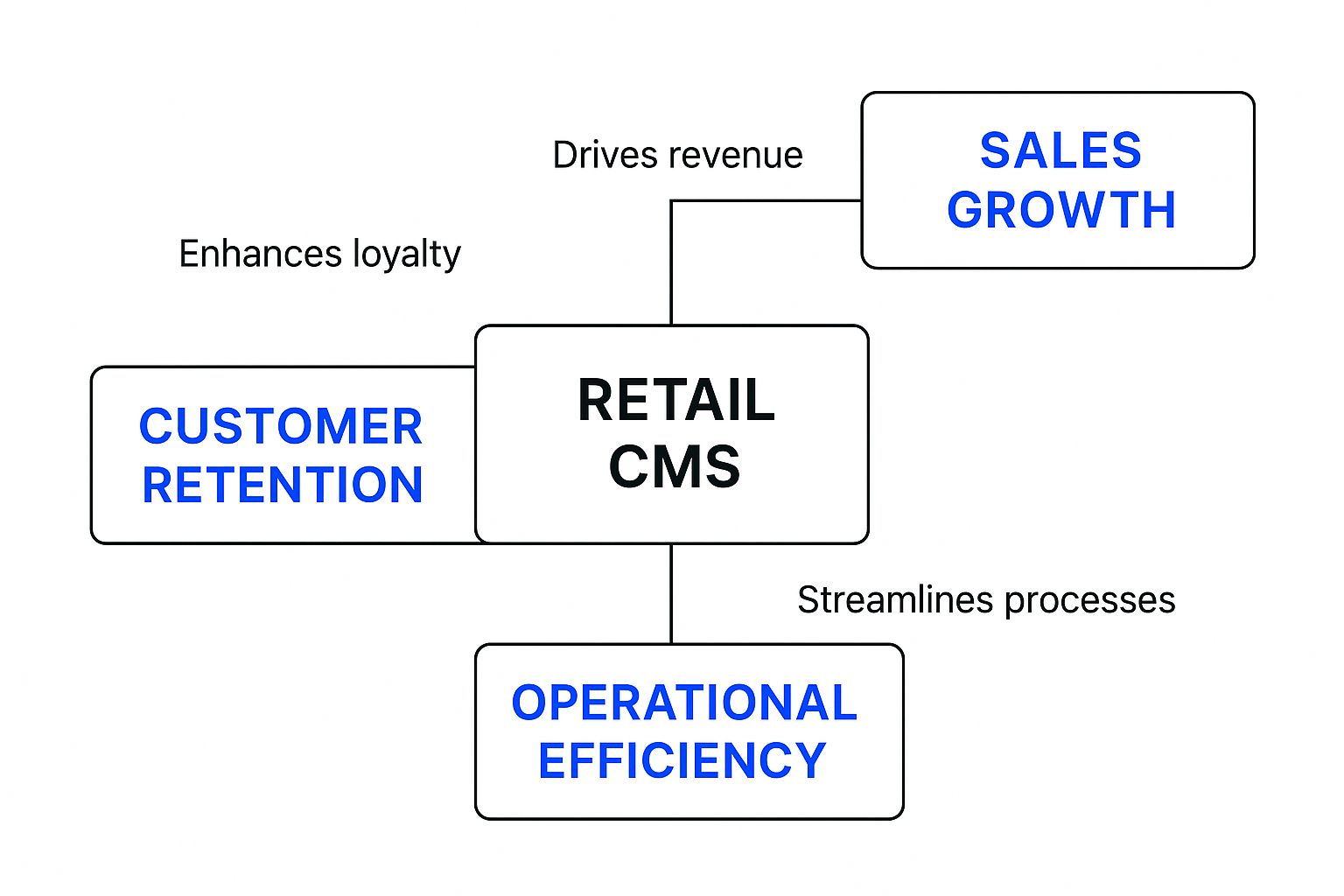
As you can see, a central system isn't just a piece of tech; it's the engine driving real business results.
Building Loyalty and Driving Repeat Business
Another game-changer is loyalty program management. This feature automates the entire process of rewarding your best customers, helping turn one-time shoppers into lifelong fans. It can be a simple points system (earn 1 point for every dollar) or a tiered program with escalating perks like free shipping or exclusive event access. The software handles all the tedious tracking, freeing up your team to focus on great service.
There's a reason so much money is flowing into this space. The market for cloud-based CRM systems—the technology powering this software—is expected to grow at a rate of 13.43% annually from 2022 to 2027. And the entire CRM market, which was worth $58.82 billion in 2022, is projected to keep growing by nearly 13.9% per year through 2030.
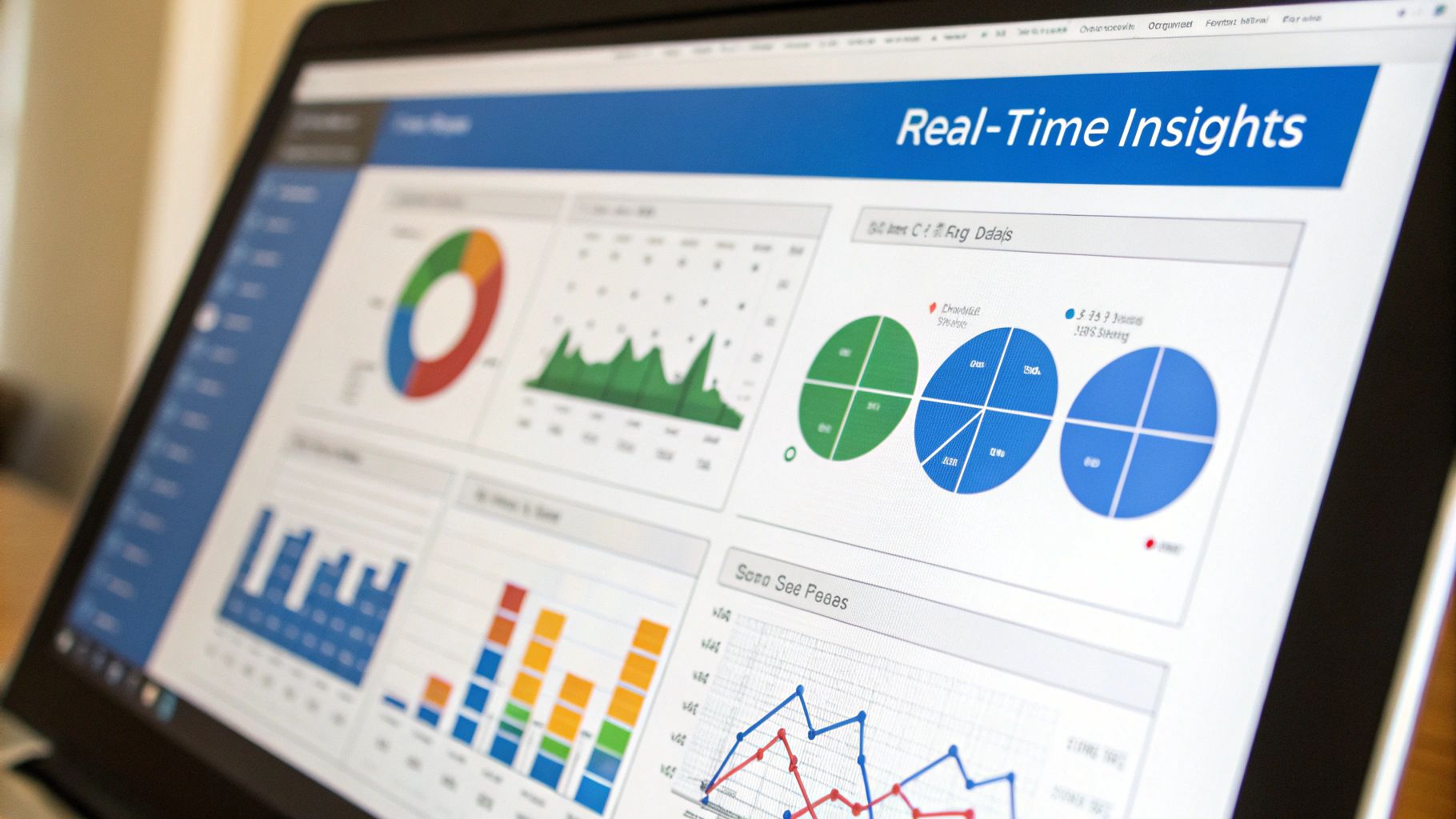
Finally, none of this works without clear analytics and reporting. A mountain of data is useless, but a few key insights can be priceless. A good system will serve up this information on clean, visual dashboards. In a glance, you can spot your top-spending customers, see if a marketing campaign is working, or find out which products your loyalty members love most. These dashboards are your command center, giving you the clarity to make smart decisions that fuel real growth.
The Real-World Benefits of a Centralized System
It’s one thing to list the features of retail customer management software, but what really matters is how those features translate into actual business growth. So let's get past the "what" and focus on the "why." A centralized system doesn’t just gather data—it turns that raw information into outcomes that can genuinely reshape your entire operation, boosting both your revenue and your customer relationships.
The first and most obvious win is the ability to personalize everything. When you have a single, unified profile for each customer that tracks every purchase, every interaction, and every preference, you can stop blasting generic ads and start making helpful suggestions.
Imagine a customer who regularly buys gluten-free products. With a centralized system, you can send them a quick alert the moment a new line of gluten-free snacks hits your shelves. That kind of targeted message feels helpful, not pushy, and it's far more likely to result in a sale because it’s genuinely relevant.
Drive Loyalty Through Recognition
A centralized system is the secret to making every single shopper feel seen. People don’t just buy products; they stay loyal to businesses that remember them. This software essentially gives your business a perfect memory, ensuring every customer gets consistent, personal recognition no matter how they shop with you.
Take a local coffee shop, for example. A regular who orders the same latte every morning could be greeted by name with their drink already being prepared. This isn't magic; it's a POS system linked to a customer profile. These small, thoughtful moments are what build fierce, lasting loyalty.
When customers feel like individuals instead of just another transaction, they come back. It’s that simple. In fact, research shows that acquiring a new customer can cost five times more than keeping an existing one. That makes loyalty more than a nice-to-have—it's a core financial strategy.
This isn’t just for cafes, either. The same principle works for small boutiques, hardware stores, and any other retail business.
Automate Communication and Free Up Your Team
One of the biggest operational headaches is all the manual follow-up. Sending emails, tracking loyalty points, or reminding customers about a sale is incredibly time-consuming. A centralized system takes that busywork off your plate.
With retail customer management software, you can automate these communications, freeing up your team from repetitive tasks. Suddenly, they have more time to focus on what they do best: creating amazing in-store experiences, providing genuinely helpful service, and connecting with shoppers face-to-face.
Here’s a glimpse of what that automation looks like in practice:
- Automated Welcome Series: New loyalty members instantly get a series of emails explaining their perks, making them feel valued from day one.
- "We Miss You" Campaigns: The system can spot customers who haven't shopped in a while and automatically send a special offer to bring them back.
- Birthday and Anniversary Rewards: Celebrate customer milestones with an automatic discount or freebie, strengthening that personal connection without any manual effort.
By letting the software handle the routine stuff, you empower your people to truly shine.
Make Smarter Inventory and Business Decisions
Finally, a centralized system connects customer behavior directly to your bottom line. Good data leads to smarter decisions, especially when it comes to managing your inventory. The same data-driven strategies that keep restaurants from running out of key ingredients can be applied to retail, and you can see how by exploring how to increase restaurant sales.
By analyzing purchase data, you can see which products your best customers buy over and over. This means you can avoid frustrating stockouts on popular items and stop wasting money on products that just sit on the shelf. You can even spot which items are frequently bought together and create bundles or promotions to increase your average sale.
This data also gives you a crystal-clear picture of who your most valuable customers are. Is it the frequent, small-purchase shoppers or the once-a-season big spenders? Knowing the answer helps you focus your marketing budget where it will have the biggest impact, ensuring every dollar is invested in smart, sustainable growth.
How to Choose the Right Software for Your Business
Picking the right retail customer management software feels like a huge decision, and honestly, it is. But it doesn't have to be overwhelming. The secret is to do your homework before you ever watch a single product demo. A little prep work upfront ensures you're choosing a real partner for growth, not just another piece of tech.
The first step has nothing to do with software and everything to do with your own business. Before you talk to any sales reps, you need to get crystal clear on your specific challenges and goals. Are you bleeding customers and don't know why? Is your online store completely disconnected from your physical shop? Nailing down these pain points will act as your compass.
Once you know what you're solving for, you can start weighing your options against a handful of crucial criteria. This helps you look past the slick marketing and focus on what will actually make a difference in your day-to-day operations.
Define Your Core Needs and Priorities
Every retail business is unique. A bustling coffee shop has a completely different set of needs than a high-end clothing boutique. So, before you do anything else, grab your team and figure out your non-negotiables.
This is the time for some real talk. What are the biggest time-sucks in your current workflow? Where are sales falling through the cracks? The answers will build the foundation for your software search.
Make a simple checklist of your top priorities. It might look something like this:
- Ease of Use: How fast can a brand-new hire get up to speed? A clunky interface is a recipe for slow lines and frustrated staff—and customers.
- Integration Power: Does it play nice with the tools you already use? A system that can’t talk to your point-of-sale (POS) or e-commerce platform just creates more manual work.
- Scalability: Will this software grow with you? You need a solution that won't buckle under the pressure of more customers, more products, or even a second location.
Having this list handy keeps you laser-focused and prevents you from getting distracted by flashy features you'll never actually use.
Evaluate Key Functional Areas
With your priorities straight, you can start digging into what different platforms actually do. A great system should be the central nervous system of your business, connecting sales data with rich customer profiles to give you the full story. This is where the good software gets separated from the great.
Pay close attention to integrations. The link between your POS and your customer management tool is especially critical. For businesses in hospitality, the little details of that connection matter immensely. You can see a full breakdown of what to look for in our ultimate guide to restaurant POS software solutions.
Choosing the right software is less about finding a product with the most features and more about finding one with the right features for your business. A tool that perfectly solves three of your biggest problems is far more valuable than one that partially solves twenty.
Zero in on the functions that will directly boost your bottom line and make your customers happier.
To help you stay organized during your search, use a structured checklist. It ensures you're comparing apples to apples and not missing any critical details.
Software Evaluation Checklist
Here’s a simple framework to guide your evaluation process. Ask these questions for every single software solution you consider.
| Evaluation Criteria | Key Questions to Ask | Why It Matters |
|---|---|---|
| User Experience (UX) | Is the interface intuitive? Can a new team member learn it in a day? | A complex system leads to user error, slows down service, and requires costly, time-consuming training. |
| Integration Capabilities | Does it connect seamlessly with my POS, e-commerce site, and accounting software? | Poor integrations create data silos and force you into manual data entry, defeating the purpose of the software. |
| Customer Support | What are their support hours? Is help available during my busiest times? Who do I call in an emergency? | When something goes wrong on a busy Saturday, you need a responsive partner, not a support ticket that sits for days. |
| Scalability and Growth | Can the system handle more locations, users, and transactions as my business expands? | You're investing for the future. Outgrowing your software in a year or two is a costly mistake. |
| Pricing and TCO | What is the total cost of ownership? Are there hidden fees for setup, training, or support? | The sticker price is just the beginning. Understand the full investment to avoid budget surprises down the road. |
This checklist forces you to think beyond the sales pitch and evaluate each option based on how it will actually perform in the real world of your business.
Assess Support and Long-Term Partnership
Finally, always remember that you're not just buying a piece of software—you're starting a relationship. The quality of customer support you receive can make or break your entire experience. Think about it: what happens when your system goes down during the holiday rush?
Don't be shy about asking potential vendors direct questions about their support. Is it available 24/7? Do you get a dedicated person to help you? Dig into online reviews and see what real users are saying. A company with a reputation for stellar, responsive support is worth its weight in gold.
This isn't just about getting set up. It's about finding a partner who is invested in your success for the long haul, ensuring your investment continues to pay off year after year.
Getting Your New System Up and Running for Maximum Impact
Choosing your new retail customer management software is a huge step, but let's be honest—the real work starts now. A great implementation is what turns that software investment into actual profit. Without a smart plan, even the best system can fall flat. But with a strategic approach, you'll ensure a smooth transition and start seeing a return from day one.
The whole process kicks off with your most valuable asset: your data. Moving over your customer lists, sales history, and loyalty program info is the foundation. Think of it like moving into a new house. You wouldn't just dump all your boxes in the living room; you’d sort, label, and organize everything first to make unpacking a breeze. Same principle here.
Mastering Your Data Migration
Your new system is only as good as the information you feed it. Before you even think about importing, take the time to scrub your existing data. This is your chance to merge duplicate customer profiles, fix typos in names and emails, and get all your formatting consistent. A clean database at the start saves you from a world of headaches later on.
Once your data is sparkling clean, you can start the import. Most modern systems have tools to make this pretty painless, but it’s still crucial to follow the instructions to the letter. A solid data migration means your team can trust the information they see from the get-go, which builds their confidence in the new tool right away.
A seamless implementation isn’t just about the tech; it’s about your people. The goal is to cause as little disruption as possible for your staff and customers while unlocking the benefits of the new system fast. A thoughtful rollout makes everyone feel supported and genuinely excited about the change.
Getting this right is more important than ever. The global retail enterprise software market, which includes these platforms, was valued at around $44.59 billion in 2024. That number is expected to nearly double to $87.12 billion by 2030—a clear sign of a massive industry shift. This boom underscores the need for solutions that are not just powerful but also easy to weave into daily operations. You can discover more insights about retail software strategies to see how vendors are rising to meet these demands.
Empowering Your Team with Effective Training
With your data securely in its new home, the spotlight turns to your team. A great training program is about so much more than showing people which buttons to click. The real mission is to help your staff understand how this software makes their jobs easier and helps them create better experiences for your customers.
So, frame the training around real-world wins. Don't just show them the customer lookup feature; show them how it lets them greet a regular by name and mention their last purchase. That small shift in perspective turns a technical task into a powerful customer service moment.
Here’s a simple game plan for training that actually sticks:
- Start with the "Why": Explain how the new software helps hit goals they care about, like smashing sales targets or earning those five-star reviews.
- Let Them Practice: Give everyone access to a test version of the system. This lets them get comfortable and make mistakes without the pressure of working with live data.
- Create Cheat Sheets: Nobody remembers everything from a training session. Simple, one-page guides for common tasks are a lifesaver during a busy Saturday rush.
Setting Goals and Measuring Success
Finally, how do you know if all this effort is actually paying off? You have to define what success looks like from the very beginning. By setting clear goals and key performance indicators (KPIs) before you go live, you can measure the software's impact and prove its value.
Your KPIs need to be specific and tied to real business outcomes. A vague goal like "improve loyalty" won't cut it. Instead, aim for something you can measure, like "increase our repeat purchase rate by 15% in the next six months."
Other powerful metrics to track include customer lifetime value (CLV), average order value, and customer retention. This data-driven mindset turns your new software from a simple tool into a predictable engine for growth.
Frequently Asked Questions
Diving into the world of retail customer management software can definitely spark a few questions. To help you feel confident as you explore your options, we’ve put together some straightforward answers to the things retailers ask us most. Let's clear up any lingering doubts you might have.
Is Retail Customer Management Software Only for Large Businesses?
Not at all. While big-box retailers have relied on these systems for ages, today's cloud-based software is built to be affordable and scalable for small and medium-sized shops. Think of it as a tool that grows right alongside your business.
The best systems offer flexible plans, so even a single-location boutique can tap into powerful features. You might start with the basics—like building customer profiles and tracking purchase history—and later add on a loyalty program or automated marketing as your business expands. The trick is to find a system designed for that kind of growth.
The real value isn't tied to the size of your business but to the value you place on your customer relationships. Any retailer, regardless of size, benefits from knowing their customers better and encouraging them to return.
This completely levels the playing field, giving independent retailers the same powerful customer insight tools that were once exclusive to major corporations.
What Is the Difference Between CRM and Retail Customer Management Software?
This is a great question, and it's easy to see why people get them confused. A general Customer Relationship Management (CRM) system is a jack-of-all-trades tool, built to manage client interactions across any industry you can think of, from real estate to B2B sales. It’s versatile, but often generic.
On the other hand, retail customer management software is a specialist. It’s a specific type of CRM that's been designed from the ground up for the unique rhythm and demands of a retail environment. Its secret sauce is its tight integration with retail-specific tools, especially the point-of-sale (POS) system.
That direct pipeline to your sales data is what makes all the difference. It’s laser-focused on:
- Transaction History: Tying every single purchase directly to a customer's profile.
- Loyalty Programs: Automatically managing points, rewards, and special customer tiers.
- Inventory Insights: Showing you exactly which products your best customers can't get enough of.
Ultimately, it’s tailored to answer retail questions and drive repeat business in a way a general CRM simply can't.
How Long Does Implementation Take?
The timeline can definitely vary, but for most modern, user-friendly systems, it's a lot faster than you might think. Getting the basic technical side set up can often happen in just a couple of days. The two biggest factors that will shape your timeline are the state of your existing data and how deeply you train your team.
Getting your customer lists and sales history prepped and cleaned up for import is usually the most time-consuming part of the process. But with a solid plan and good support from your software provider, you can expect to be up and running—and seeing real results—within a few weeks, not months.
Can This Software Unify My Online and In-Store Sales?
Yes, absolutely—and this is easily one of its most powerful features. A great system serves as the central hub for all your sales channels, pulling everything together to create a single, unified view of each customer.
By connecting with both your physical POS and your e-commerce platform, the software tracks every interaction, no matter where it happens. This means you’ll know if a customer who just bought something in your store had abandoned that same item in their online cart last week. This complete "omnichannel" view is essential for creating the kind of seamless, consistent experience modern shoppers demand.
Ready to turn your customer data into your greatest asset? Biyo POS combines a powerful point-of-sale system with integrated customer management tools to give you the complete picture. Start your free trial today and see how easy it is to build loyalty and drive growth.