
In today’s competitive foodservice environment, an AI Voice Phone Assistant for Deli Stores is quickly becoming one of the most valuable tools for improving customer service and operational efficiency. Customers expect fast responses, accurate orders, and convenient ways to interact with businesses. Traditional phone ordering often struggles to keep pace with these expectations, especially during busy lunch periods when employees are already managing food preparation, customer service, and daily operations.
For many deli owners, incoming phone calls create a constant interruption that affects productivity. Staff members must stop preparing orders, assisting customers, or completing other tasks to answer questions and take orders. During peak hours, this challenge becomes even more significant. Missed calls, long hold times, incorrect orders, and frustrated customers can all negatively impact revenue and customer satisfaction.
An AI Voice Phone Assistant helps eliminate these challenges by answering calls instantly, capturing order details accurately, and integrating directly with business systems. Rather than replacing employees, it supports them by automating repetitive communication tasks and allowing staff to focus on food quality, customer service, and operational efficiency.
As customer expectations continue to evolve, deli stores that embrace intelligent automation are often better positioned to improve service quality, increase order volume, and create a more seamless customer experience.
Table of Contents
- Seamless Ordering Experience with AI
- Streamlining Deli Store Operations
- Boosting Sales and Customer Loyalty
- Integrating AI with POS and Other Systems
- Why AI Voice Phone Assistants Are the Future for Delis
- How Biyo Helps Deli Stores Modernize Phone Ordering
- Frequently Asked Questions
Seamless Ordering Experience with AI
The most noticeable benefit of an AI Voice Phone Assistant for Deli Stores is the improvement in customer interactions. Instead of waiting on hold or struggling to communicate during busy periods, customers receive immediate assistance whenever they call. Every conversation follows a consistent process that guides customers from greeting to order confirmation without unnecessary delays.
For deli stores that handle large numbers of phone orders throughout the day, this consistency helps create a smoother experience while reducing pressure on employees.
Automated Ordering with Voice Recognition
Modern voice recognition technology can accurately understand customer requests, including detailed modifications and special instructions. This capability is particularly important for deli stores where customers frequently customize sandwiches, salads, wraps, and catering orders.
Instead of relying on handwritten notes or rushed order entry, the system automatically captures each detail and records it accurately. This structured process reduces misunderstandings and helps ensure that kitchen staff receive complete and correct order information.
Because the assistant can handle multiple calls simultaneously, deli stores avoid the common problem of missed calls during peak hours. Customers receive immediate attention, and businesses capture more ordering opportunities throughout the day.
Natural Language Processing for Menu Navigation
Natural Language Processing allows the assistant to understand customer intent and respond conversationally. Customers often ask questions such as which sandwiches are most popular, whether vegetarian options are available, or which items pair well together. Rather than simply recognizing keywords, the assistant understands the context of these questions and provides helpful responses.
This conversational approach creates a more natural customer experience while helping guests discover menu items they may not have otherwise considered. Recommendations can also support upselling opportunities by suggesting complementary products that enhance the order.
Unlike human staff who may be distracted during busy periods, the assistant consistently communicates featured menu items, promotions, and special offers with every caller.
Order Customization and Real-Time Confirmation
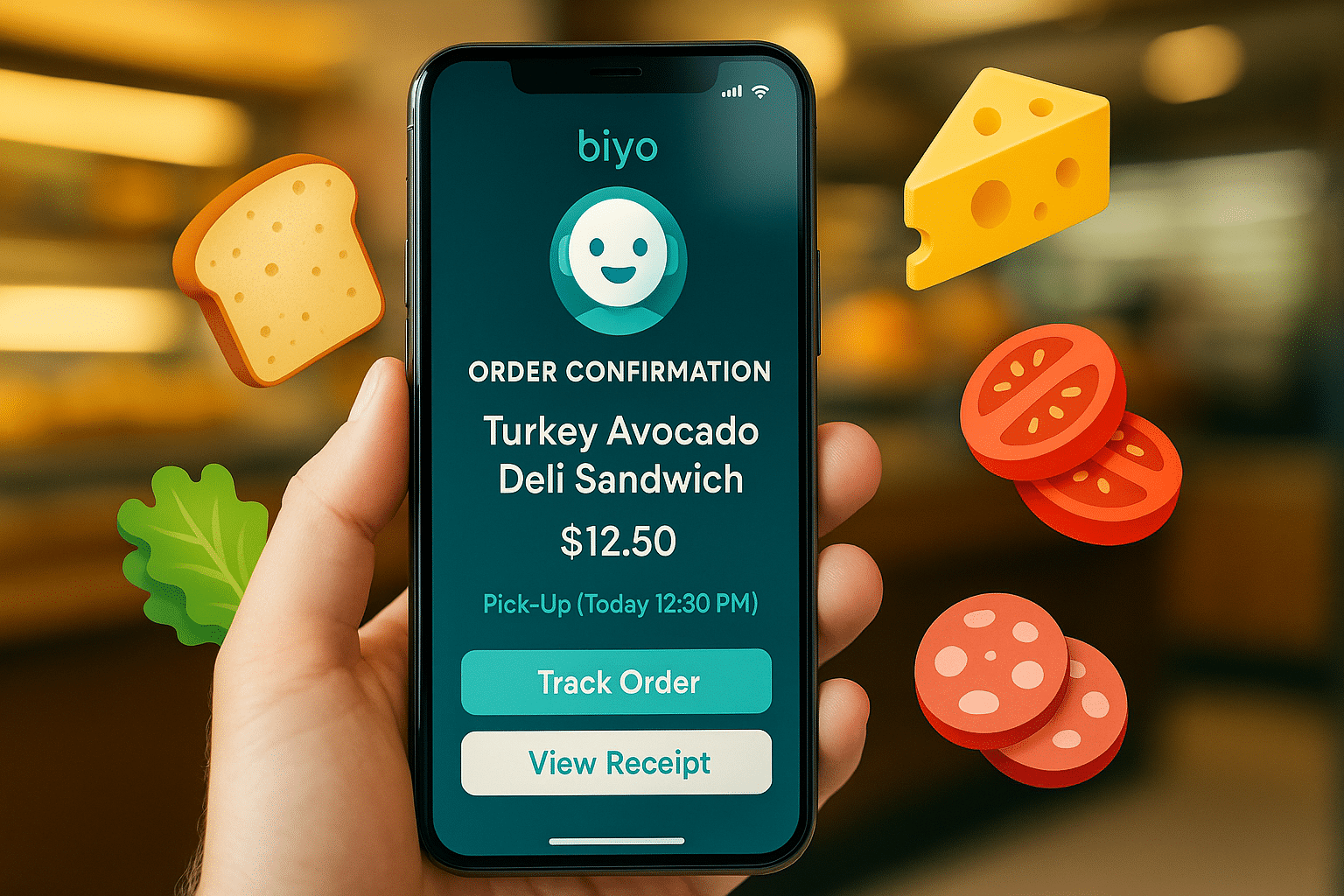
Customization is a major part of the deli experience. Customers often request specific bread choices, ingredient substitutions, extra toppings, or dietary accommodations. An AI Voice Phone Assistant captures these requests accurately and confirms all order details before final submission.
This confirmation process helps reduce mistakes while increasing customer confidence. Integration with the POS system ensures that orders are transmitted immediately to the kitchen and preparation teams.
Customers also receive more accurate pickup estimates based on real-time operational data, helping improve satisfaction and reduce congestion during busy periods.
Streamlining Deli Store Operations
Operational efficiency plays a critical role in deli profitability. Rising labor costs, increasing order volume, and growing customer expectations require businesses to find ways to improve productivity without sacrificing service quality. An AI Voice Phone Assistant provides significant operational benefits by reducing interruptions and streamlining communication.
AI Call Handling and Smart Routing
Phone calls often interrupt employees during food preparation, customer service interactions, and inventory management tasks. Constant interruptions reduce focus and make it more difficult for staff to maintain efficiency.
Automated call handling ensures that every customer receives immediate attention without disrupting ongoing operations. The system can answer common questions, route specialized inquiries appropriately, and gather detailed information before escalating calls when necessary.
This structured communication process improves productivity while ensuring that important customer inquiries never go unanswered.
Inventory-Linked Ordering Intelligence
Inventory awareness helps the assistant provide more accurate recommendations and prevent ordering issues. If a specific ingredient becomes unavailable, customers can be informed immediately and offered suitable alternatives before the order is finalized.
This capability helps preserve sales opportunities while reducing customer disappointment. Rather than discovering unavailable items during preparation, customers receive proactive guidance during the ordering process.
Inventory-linked recommendations can also help promote products that utilize available ingredients, supporting both profitability and inventory control.
24/7 Order Capture and Catering Growth
Many catering inquiries and large-order requests occur outside normal operating hours. An AI Voice Phone Assistant allows deli stores to capture these opportunities around the clock without requiring additional staff.
Customers can place orders, request catering information, and submit inquiries at any time. The information is automatically recorded and organized for follow-up when employees return.
By remaining available 24 hours a day, businesses can expand revenue opportunities while improving accessibility for customers.
Boosting Sales and Customer Loyalty
While operational efficiency is important, long-term success also depends on increasing revenue and strengthening customer relationships. Intelligent automation can support both goals by helping businesses create more personalized and consistent customer experiences.
Upselling and Cross-Selling Automation
Automated recommendations create opportunities to increase average order value without adding pressure to employees. When customers place an order, the assistant can suggest complementary products such as beverages, desserts, chips, soups, or catering add-ons.
These recommendations are delivered consistently and conversationally, helping customers discover products that enhance their purchases.
Even modest increases in average order value can generate meaningful revenue growth over time.
Multilingual Support for Inclusive Service
Many deli stores serve diverse communities with customers who prefer different languages. Multilingual support helps businesses create a more inclusive ordering experience while reducing communication barriers.
Customers can place orders confidently in their preferred language, improving accuracy and overall satisfaction.
This accessibility helps deli stores serve a broader audience while strengthening relationships within their local communities.
Repeat Customer Recognition
Customer recognition plays an important role in building loyalty. When integrated with customer databases, an AI Voice Phone Assistant can identify returning customers and personalize interactions based on previous purchases.
Frequent orders can be processed more efficiently, helping customers save time while creating a more personalized experience.
These small conveniences contribute to stronger customer relationships and increased repeat business.
Integrating AI with POS and Other Systems
The value of automation increases significantly when systems work together seamlessly. Integrating AI voice technology with existing business systems helps eliminate duplicate work while improving data accuracy.
POS Synchronization for Accuracy
Direct POS integration allows phone orders to flow automatically into the ordering system without requiring manual entry. Product modifiers, pricing rules, discounts, and promotions are applied consistently across every order channel.
This automation reduces errors while helping staff process orders more efficiently.
Accurate order data also improves reporting and provides greater visibility into overall business performance.
Voice-Enabled Secure Payments
Secure payment capabilities allow customers to complete transactions during the ordering process. Prepaid orders reduce the risk of no-shows while helping streamline pickup experiences.
Faster transactions improve convenience for customers and reduce congestion during busy service periods.
Modern payment security measures help protect customer information while maintaining trust in the business.
Real-Time Updates and Operational Analytics
Automated notifications keep customers informed about order status and pickup timing. These updates reduce the number of incoming status calls while improving transparency throughout the ordering process.
At the same time, business owners gain access to valuable analytics regarding call volume, order trends, customer behavior, and peak operating periods.
These insights help support better staffing decisions, menu optimization, and long-term growth strategies.
Why AI Voice Phone Assistants Are the Future for Delis
Customer expectations continue to evolve toward faster service, greater personalization, and more convenient communication. Businesses that embrace intelligent automation are often better prepared to meet these demands while maintaining operational efficiency.
Scalable Customer Service Without Additional Labor
As order volume increases, businesses need systems that can scale without requiring proportional increases in staffing costs. AI-powered phone assistants allow deli stores to handle more customer interactions while maintaining consistent service quality.
This scalability helps businesses grow without creating additional operational strain.
By automating repetitive communication tasks, employees can focus on higher-value responsibilities that improve customer experiences.
Enhanced Customer Expectations
Modern consumers increasingly expect businesses to provide immediate responses and convenient ordering options. AI technology helps meet these expectations by eliminating hold times and improving communication accuracy.
Faster responses and more reliable service contribute directly to customer satisfaction and retention.
Businesses that provide convenient ordering experiences are often better positioned to compete in crowded markets.
Preparing for Future Innovation
Artificial intelligence continues to evolve rapidly. Future advancements may include predictive ordering, deeper customer personalization, automated loyalty engagement, and advanced promotional capabilities.
Businesses that adopt AI-powered systems today create a foundation that can support these innovations as they become available.
Early adoption helps deli stores remain competitive while preparing for the future of customer engagement.
How Biyo Helps Deli Stores Modernize Phone Ordering
Deli stores need technology that supports fast service, accurate order management, operational efficiency, and customer satisfaction. Biyo helps businesses achieve these goals by combining modern POS capabilities with intelligent voice automation.
Through BiyoAI, deli stores can answer calls instantly, capture orders accurately, manage customer interactions efficiently, and integrate voice ordering directly into their operational workflows. Orders flow seamlessly into the POS system while inventory, reporting, and business management tools remain connected through a unified platform.
Rather than relying on disconnected systems, businesses gain greater visibility into operations while reducing the workload associated with manual phone ordering.
Whether you’re looking to improve customer service, increase order volume, or modernize your deli operations, Biyo provides a scalable solution designed for long-term growth.
To learn more about how Biyo can help your deli store, schedule a consultation. You can also explore the capabilities of BiyoAI and discover how AI-powered phone ordering can transform customer experiences and operational efficiency.
Frequently Asked Questions
How does an AI Voice Phone Assistant work for deli stores?
An AI Voice Phone Assistant answers incoming calls, understands customer requests using voice recognition and natural language processing, captures order details, confirms information, and sends orders directly to the POS system.
Can it manage catering orders?
Yes. The system can capture detailed catering requests, collect customer information, and record order requirements at any time of day for staff review and fulfillment.
Does it reduce labor costs?
By automating phone-based tasks, employees spend less time managing calls and more time focusing on food preparation, customer service, and operational responsibilities.
Is multilingual ordering supported?
Many AI Voice Phone Assistants support multiple languages, allowing businesses to serve diverse customer communities more effectively.
Are payments secure?
Yes. Secure payment technologies help protect customer information while enabling convenient voice-assisted transactions.
Will customers accept AI ordering?
Most customers prioritize convenience, speed, and accuracy. When implemented effectively, AI-powered ordering systems often improve customer satisfaction by reducing wait times and minimizing ordering mistakes.