

PCI compliance for small business owners is a requirement that often gets ignored until something goes wrong. Any business that accepts credit or debit card payments must follow PCI rules, no matter its size. As digital payments increase, small businesses face higher risks if payment security is not handled properly.
Many owners believe PCI compliance is complicated or only applies to large companies. However, the reality is much simpler. When broken into clear steps, PCI compliance for small business owners becomes manageable and practical. It protects customer trust, reduces financial risk, and supports sustainable growth.
Table of Contents
- What PCI Compliance Means for Small Businesses
- Why PCI Compliance Is Critical for Small Business Owners
- Understanding PCI Compliance Requirements
- Common PCI Compliance Mistakes Small Businesses Make
- Steps to Maintain Ongoing PCI Compliance
- How Biyo POS Helps Support PCI Compliance
- FAQs
What PCI Compliance Means for Small Businesses
Before focusing on actions, it is important to understand what PCI compliance actually means. Clear definitions remove confusion and help business owners make informed decisions.
What PCI DSS Really Is
PCI DSS stands for Payment Card Industry Data Security Standard. It is a set of security requirements designed to protect cardholder data during payment processing.
These standards apply to any business that stores, processes, or transmits payment card information. Therefore, PCI compliance for small business owners applies even to single-location stores.
The goal of PCI DSS compliance is to reduce fraud and improve payment card security.
This definition leads naturally into who enforces these standards.
Who Enforces PCI Compliance
Major card networks such as Visa and Mastercard require PCI compliance. Payment processors and acquiring banks enforce these rules on their behalf.
If a business fails to comply, processors may impose fines or restrict payment services. As a result, noncompliance creates serious financial and operational risks.
PCI compliance for small business owners helps prevent these enforcement issues.
Understanding enforcement also clarifies responsibility.
Who Must Be PCI Compliant
Any business that accepts card payments must follow PCI rules. This includes in-store, online, and mobile transactions.
Even businesses that use third-party processors still share responsibility for secure environments.
Small business PCI compliance applies across industries and payment methods.
 Why PCI Compliance Is Critical for Small Business Owners
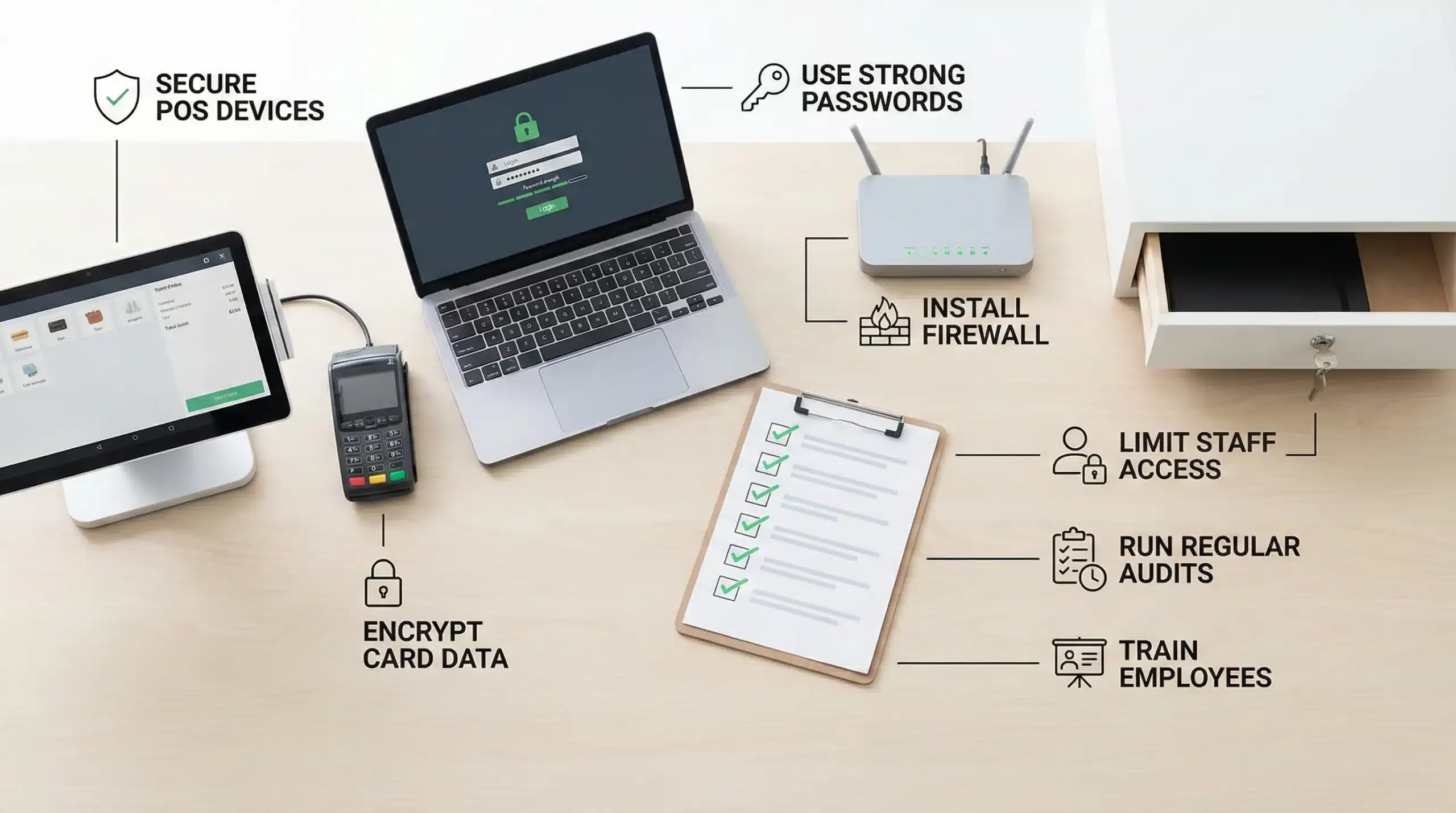 Why PCI Compliance Is Critical for Small Business Owners
PCI compliance is not only about avoiding penalties. It directly affects trust, reputation, and long-term stability.
Protecting Customer Trust
Customers expect their payment information to remain secure. A data breach can damage trust immediately.
Once trust is broken, winning customers back becomes difficult. Therefore, revenue often suffers long after an incident.
PCI compliance for small business owners protects both customers and brand credibility.
Trust also connects closely to financial risk.
Avoiding Fines and Penalties
Noncompliance may lead to fines from payment processors. These costs often exceed the effort required to stay compliant.
Meanwhile, businesses may face higher processing fees or service termination.
Small business PCI compliance helps avoid unnecessary financial strain.
Legal exposure also decreases with compliance.
Reducing Fraud and Data Breaches
Secure systems reduce fraud risk significantly. Hackers often target small businesses due to weaker defenses.
PCI rules focus on prevention rather than reaction. As a result, compliance lowers the likelihood of breaches.
PCI compliance for small business owners supports proactive protection.
Understanding PCI Compliance Requirements
PCI requirements may seem complex at first. Breaking them into categories makes them easier to understand and follow.
Protecting Cardholder Data
Cardholder data includes card numbers, expiration dates, and security codes. PCI standards limit how this data is handled.
Businesses should avoid storing sensitive data whenever possible. When storage is required, encryption becomes essential.
PCI compliance for small business owners emphasizes reducing data exposure.
Network security supports this protection.
Securing Payment Networks
Secure networks prevent unauthorized access. Firewalls and protected Wi-Fi configurations play a key role.
Public or weak networks increase vulnerability. Therefore, payment systems should remain isolated from guest networks.
Small business PCI compliance includes maintaining secure infrastructure.
Access controls strengthen security further.
Limiting Access to Sensitive Systems
Only authorized staff should access payment systems. Role-based permissions reduce internal risks.
Strong passwords and regular updates help prevent misuse.
PCI compliance for small business owners depends on controlled system access.
Common PCI Compliance Mistakes Small Businesses Make
Many compliance failures result from misunderstandings. Awareness helps prevent costly errors.
Assuming the Payment Processor Handles Everything
Some owners believe payment processors handle all PCI responsibilities. However, compliance duties are shared.
Processors secure transactions, while businesses secure their environments.
PCI compliance for small business owners requires active involvement.
Documentation is another frequent issue.
Ignoring Annual PCI Validation
Most businesses must complete annual validation, often through a self-assessment questionnaire.
Missing this step can trigger penalties or fees.
Small business PCI compliance includes timely validation.
Training often gets overlooked as well.
Failing to Train Employees
Employees handle payments daily. Without training, mistakes are more likely.
Basic security awareness reduces accidental breaches.
PCI compliance for small business owners depends on informed teams.
Steps to Maintain Ongoing PCI Compliance
PCI compliance is not a one-time task. Continuous effort keeps systems secure.
Choosing Secure Payment Solutions
Modern POS systems simplify compliance. Secure payment processing reduces exposure.
Encryption and tokenization protect cardholder data automatically.
PCI compliance for small business owners becomes easier with secure tools.
Regular maintenance supports these tools.
Monitoring and Updating Systems
Outdated software creates vulnerabilities. Regular updates close security gaps.
Monitoring systems helps detect unusual activity early.
Small business PCI compliance relies on consistent maintenance.
Documentation completes the process.
Keeping Clear Compliance Records
Clear records demonstrate compliance efforts. They also simplify audits.
Documentation includes policies, assessments, and training logs.
PCI compliance for small business owners improves with organized records.
How Biyo POS Helps Support PCI Compliance
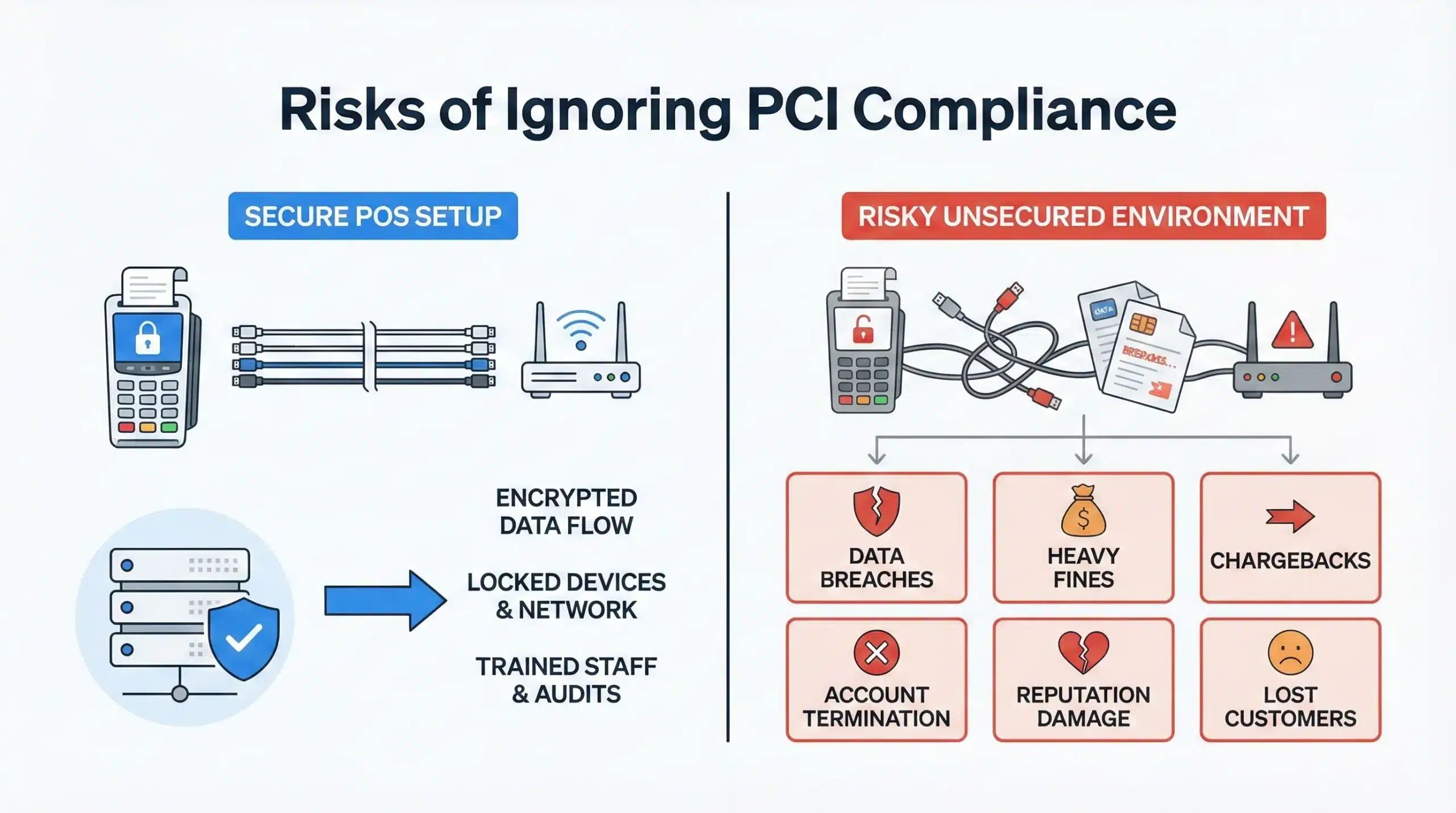 How Biyo POS Helps Support PCI Compliance
Biyo POS helps small businesses manage secure payment processing with confidence. It supports encryption, controlled access, and modern security practices that align with PCI compliance for small business owners.
With built-in reporting and system controls, Biyo POS reduces exposure to cardholder data while keeping operations efficient. You can schedule a call to learn how Biyo POS supports secure payment environments or sign up here to get started.
FAQs
Is PCI compliance required for very small businesses?
Yes. Any business that accepts card payments must follow PCI rules, regardless of size.
How often must PCI compliance be validated?
Most small businesses complete validation annually through a self-assessment questionnaire.
What happens if a small business is not PCI compliant?
Noncompliance can result in fines, higher processing fees, or loss of payment services.