
Understanding the difference between RFID vs barcode retail inventory tracking systems is essential for modern retailers managing fast-moving stock, multi-location operations, or growing product catalogs. Inventory visibility is no longer optional—it directly impacts revenue, customer satisfaction, and operational efficiency.
Retailers lose billions annually due to inventory inaccuracies, with studies showing error rates can reach up to 8% in traditional tracking systems. These errors lead to stockouts, overstocking, and missed sales opportunities. Choosing between RFID and barcode is not just about technology—it’s about how efficiently your business operates.
This guide provides a clear, practical comparison of RFID vs barcode systems, covering speed, accuracy, cost, scalability, and real-world application so you can make a confident, data-driven decision.
Table of Contents
- RFID vs Barcode Inventory Efficiency and Speed
- RFID vs Barcode Inventory Accuracy and Shrinkage
- Cost Comparison of RFID vs Barcode Tracking
- POS Integration with RFID vs Barcode Inventory Systems
- Scalability of RFID vs Barcode Retail Tracking
- Which One Should You Choose?
- Why Choose Biyo POS for RFID or Barcode
- FAQ
RFID vs Barcode Inventory Efficiency and Speed
Efficiency in retail operations starts with how quickly inventory can be tracked, updated, and restocked. The difference between RFID and barcode becomes most obvious in daily operations where speed directly affects productivity.
Scanning Speed in RFID vs Barcode Systems
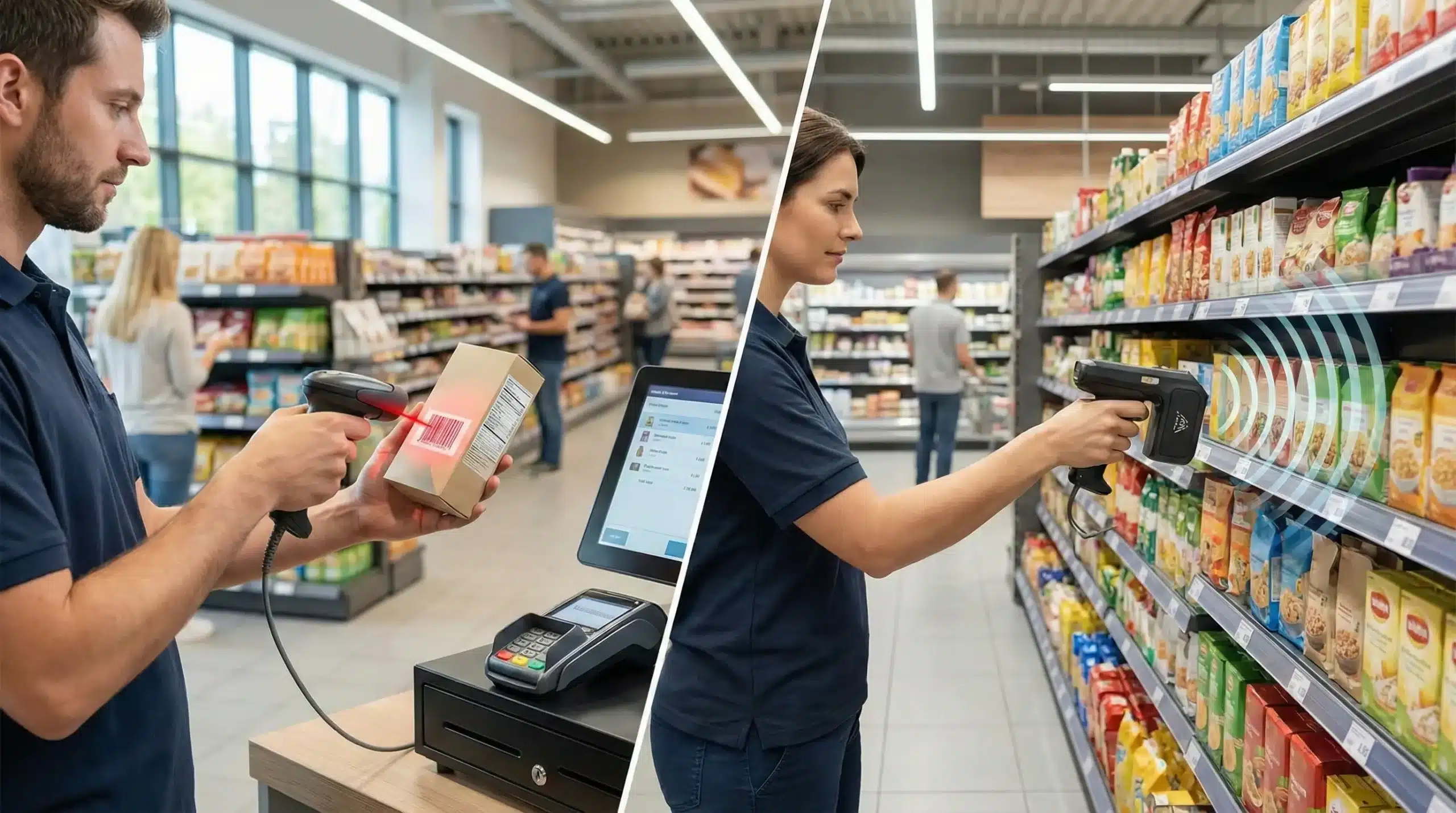
RFID systems can scan hundreds of items simultaneously without requiring direct line-of-sight. This allows entire shelves, racks, or shipments to be processed in seconds. Retailers can conduct full inventory counts without disrupting store operations.
Barcode systems require each item to be scanned individually. While reliable, this process becomes slow and inefficient in high-volume environments. For example, counting 5,000 items manually with barcodes can take hours, while RFID can complete the same task in minutes.
Operational Efficiency with RFID vs Barcode
RFID automates inventory tracking, reducing the need for manual input. Stock levels update automatically as items move through the store. This eliminates delays and improves real-time visibility.
Barcode systems rely heavily on staff to scan and update inventory manually. This creates gaps in data accuracy and slows down operations, especially during busy periods.
Labor Productivity Gains with RFID vs Barcode
Retailers using RFID report up to 80% reduction in inventory counting time. This directly improves labor efficiency and reduces operational costs.
With barcode systems, staff spend more time on repetitive scanning tasks. This limits productivity and increases dependency on manual processes.

RFID vs Barcode Inventory Accuracy and Shrinkage
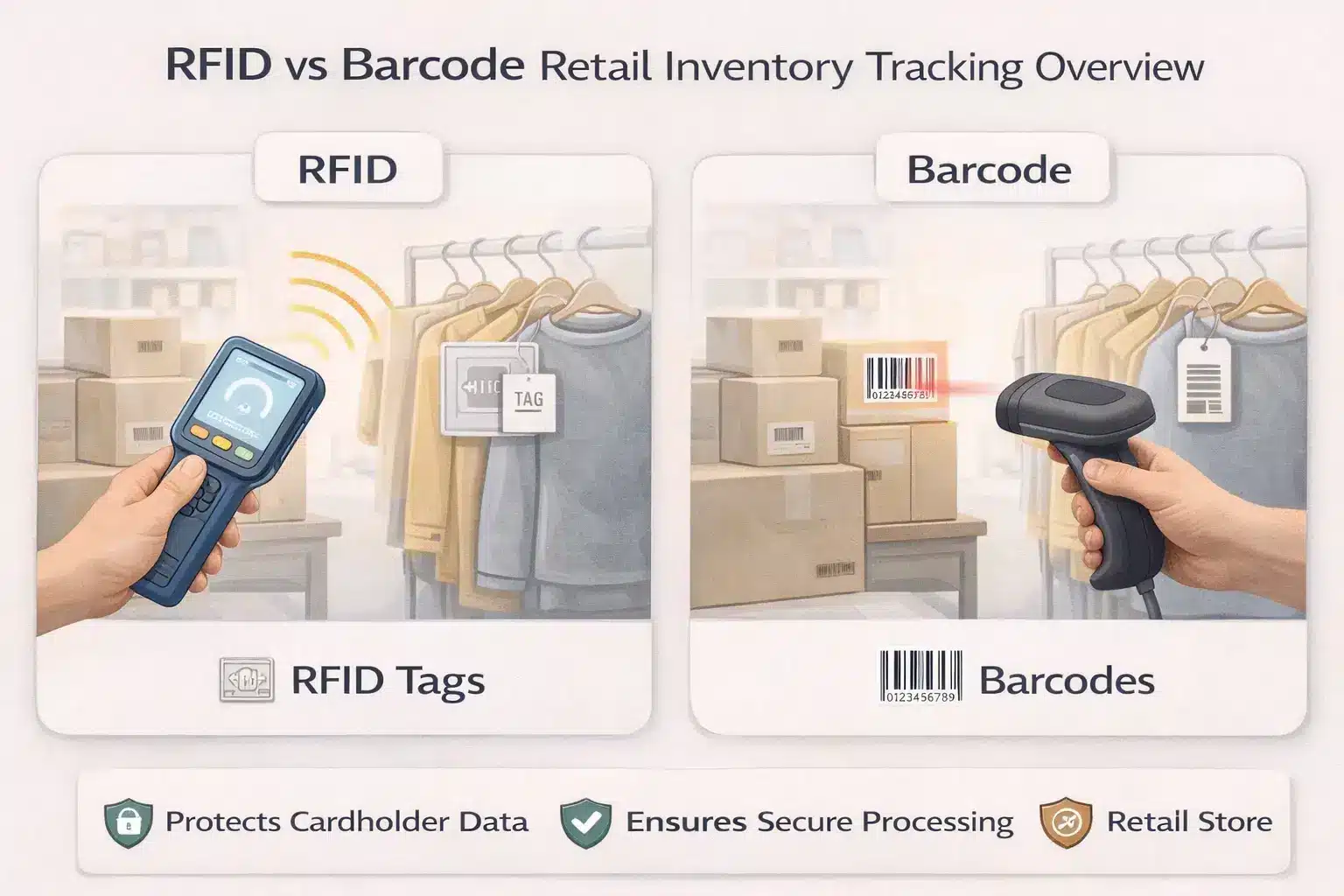
Accuracy is one of the most critical factors in inventory management. Even small discrepancies can lead to lost sales and poor customer experiences.
RFID vs Barcode Error Rates
Barcode systems depend on manual scanning, which introduces human error such as missed items or incorrect entries. These small errors accumulate over time and create unreliable inventory data.
RFID systems automate data capture, significantly reducing errors. Many retailers achieve accuracy rates above 98% with RFID tracking.
Shrinkage Prevention with RFID
RFID provides real-time tracking of inventory, making it easier to identify misplaced or stolen items. Alerts can be triggered when products move unexpectedly.
Barcode systems lack this real-time visibility. Issues are typically discovered only during manual audits, which can delay corrective action.
Data Synchronization Benefits
RFID systems sync data automatically across platforms, ensuring consistent inventory records. This improves decision-making and forecasting accuracy.
Barcode systems may require manual updates, leading to delays and inconsistencies across systems.
Cost Comparison of RFID vs Barcode Tracking
Cost is often the deciding factor for retailers choosing between RFID and barcode systems. However, focusing only on upfront costs can lead to poor long-term decisions.
Startup Costs for RFID vs Barcode
RFID systems require investment in tags, readers, and compatible software. This makes the initial setup more expensive.
Barcode systems are significantly cheaper to implement. Labels and scanners are low-cost and widely available, making them ideal for smaller retailers.
Operational Costs
RFID reduces labor costs by automating inventory processes. Over time, this can offset the higher initial investment.
Barcode systems require ongoing manual work, increasing labor expenses and reducing efficiency.
Return on Investment Over Time
For large or growing businesses, RFID often delivers higher ROI through improved efficiency, reduced shrinkage, and better data accuracy.
Barcode systems provide quick, low-cost implementation but may limit scalability and long-term efficiency.
POS Integration with RFID vs Barcode Inventory Systems
Modern retail operations require systems that integrate seamlessly with POS platforms to provide a complete view of inventory and sales performance.
POS Compatibility
Barcode systems are compatible with most POS solutions. RFID requires more advanced systems with integration capabilities.
Platforms like Biyo POS support both RFID and barcode systems, allowing businesses to scale without switching platforms.
Asset Management Features
RFID enables real-time asset tracking across locations. Retailers can monitor stock movement from warehouse to storefront.
Barcode systems provide basic tracking but depend on manual scanning to update inventory.
Data Flow and Reporting
RFID delivers real-time data updates, improving reporting speed and accuracy. This allows retailers to make faster and better decisions.
Barcode systems rely on manual triggers, which can delay reporting and reduce data reliability.
Scalability of RFID vs Barcode Retail Tracking
As retail businesses grow, their inventory systems must scale efficiently. Choosing the wrong system early can create operational challenges later.
Multi-Location Retail Management
RFID allows centralized inventory tracking across multiple locations. Data updates automatically, ensuring consistency across stores.
Barcode systems require manual updates at each location, increasing the risk of inconsistencies.
System Upgrades and Expansion
RFID systems can be expanded by adding readers and extending coverage. This makes scaling straightforward and efficient.
Barcode systems often require process changes and additional labor when expanding operations.
Adaptability for Omnichannel Retail
RFID simplifies integration between online and offline inventory systems. This is critical for retailers operating across multiple channels.
Barcode systems can support omnichannel operations but require more manual coordination.
Which One Should You Choose?
The decision between RFID and barcode depends on your business size, budget, and growth plans.
- Choose RFID if: you manage large inventory, multiple locations, or need real-time tracking and high accuracy
- Choose Barcode if: you run a smaller operation with limited inventory and need a low-cost solution
Many retailers start with barcode systems and transition to RFID as they scale. Planning for this transition early can reduce future disruption.
Why Choose Biyo POS for RFID or Barcode

Biyo POS supports both RFID and barcode inventory systems, allowing retailers to start with simple solutions and scale seamlessly as their business grows.
With real-time inventory tracking, automated reporting, and multi-location management, Biyo POS provides the control and visibility needed to run efficient retail operations.
You can sign up here or schedule a call to get started.
FAQ
Is RFID better than barcode?
RFID is faster and more accurate, making it ideal for large retailers. Barcode is more affordable and suitable for smaller operations.
Can RFID work with any POS system?
Not all POS systems support RFID. Choosing a compatible platform like Biyo POS ensures smooth integration.
How much does RFID cost compared to barcodes?
RFID has higher upfront costs but offers long-term savings. Barcode systems are cheaper initially but require more manual effort.