If you’re working in the food industry in Texas, understanding the Texas food handler permit requirements is not optional—it’s essential. Restaurants, food trucks, catering services, and any operation that handles food must comply with regulations set by the Texas Department of State Health Services (DSHS). These rules exist to reduce foodborne illness risks and ensure consistent safety standards across the industry.
For business owners, compliance is more than avoiding fines. It directly impacts customer trust, operational efficiency, and long-term reputation. For employees, certification builds confidence and ensures they understand proper hygiene, handling, and storage practices.
This guide breaks down everything you need to know—from who needs a permit to how certification works, how to stay compliant, and why it ultimately benefits your business.
In Texas, any employee who handles, prepares, or serves food must obtain a food handler permit. This requirement applies across all types of food service businesses, including restaurants, cafés, food trucks, and catering operations.
Frontline Staff and Food Contact
Any employee who touches food, utensils, or food-contact surfaces must hold a valid permit. This includes cooks, servers, bartenders, dishwashers, and even cashiers who package food. If there is any risk of cross-contamination, certification is required.
Failing to certify staff can lead to fines, failed inspections, or even temporary closure. Employers are responsible for ensuring compliance from day one.
Exemptions and Special Cases
Some exceptions apply. Certified food managers may not need separate handler certification. Volunteers at nonprofit events may also be exempt depending on local regulations.
However, cities like Austin or Houston may enforce stricter rules. Always verify with local health departments before assuming exemptions apply.
Legal Enforcement and Inspections
Health departments conduct surprise inspections to verify compliance. Inspectors will check permits, food safety practices, and documentation.
In addition to routine inspections, follow-up visits may occur if violations are found. These inspections are stricter and focus on unresolved issues. Repeated violations can escalate into serious penalties or shutdowns.
Maintaining organized records and ensuring staff certification reduces inspection stress and demonstrates professionalism.
Understanding the Training and Certification Process
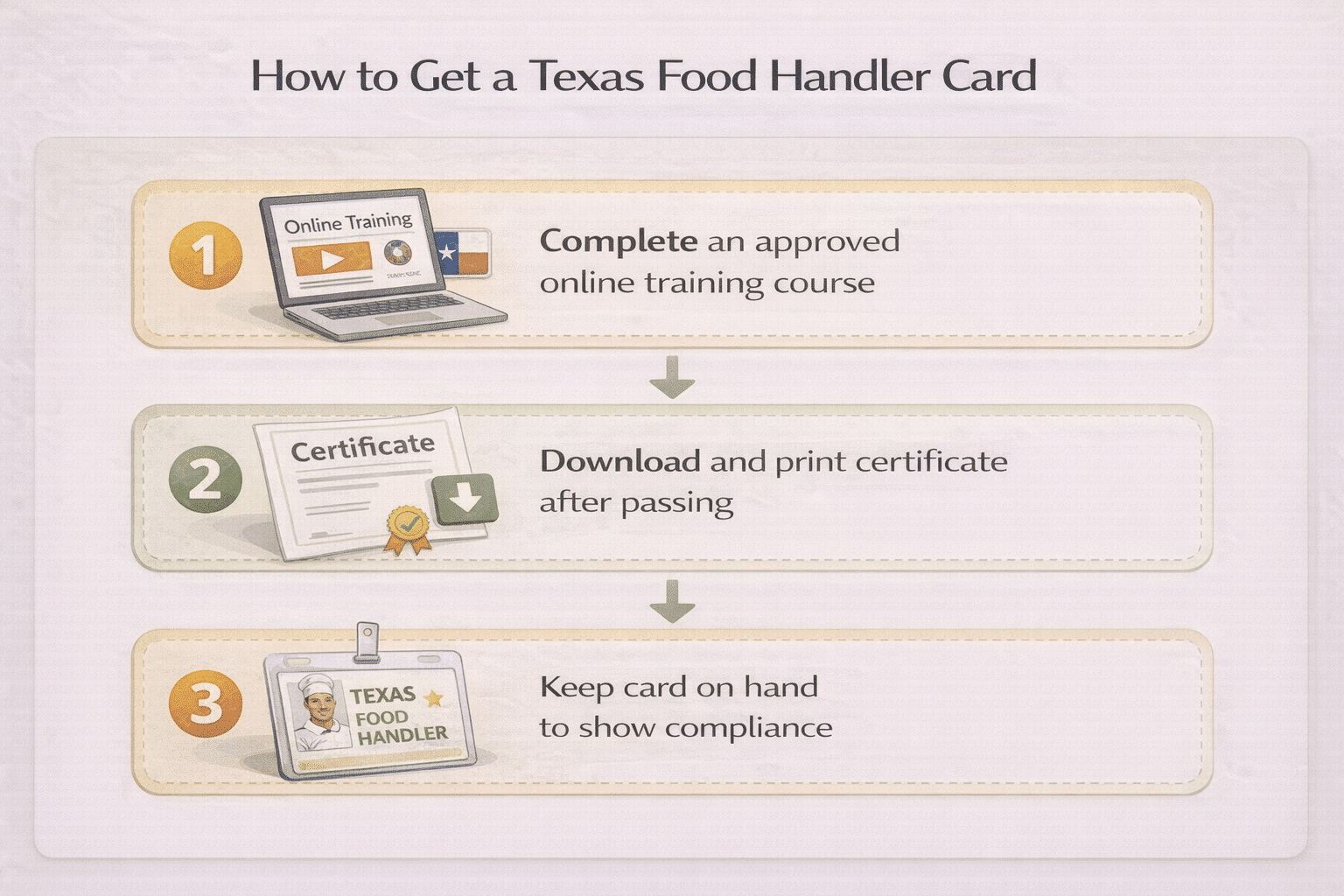
Getting certified as a food handler in Texas is straightforward but must be done through approved providers. Training focuses on essential food safety practices.
Training Duration and Structure
Most courses take 1–2 hours and are divided into easy-to-follow modules. Topics include hygiene, foodborne illness prevention, cross-contamination, and safe temperature handling.
Courses often include visuals and quizzes, making them accessible and engaging. Upon completion, participants receive a certificate immediately.
Cost of Certification
Certification typically costs between $7 and $20. Many employers cover this cost to ensure compliance.
While inexpensive, skipping training can lead to much higher costs through fines or business disruption. Smart operators treat certification as a necessary investment.
Some businesses include certification in onboarding, ensuring new hires are compliant from the start.
Online vs. In-Person Training
Both online and in-person options are available. Online courses offer flexibility, while in-person sessions may help those who prefer hands-on learning.
Regardless of format, the provider must be approved by DSHS.
Approved Training Providers and Formats
Choosing the right provider ensures compliance and a smooth certification process.
Finding a Recognized Provider
Visit the DSHS website to find approved vendors. Look for providers with strong reviews, mobile-friendly platforms, and fast certification delivery.
Certificates and Recordkeeping
Certificates must be stored and accessible during inspections. Many businesses keep both digital and printed copies.
Using software to track certification status can simplify management and prevent lapses.
State vs. Local Rules
State rules provide a baseline, but local regulations may differ. Always verify requirements at the city or county level.
Compliance, Renewals, and Monitoring
Compliance doesn’t end with certification. Ongoing monitoring is essential.
Tracking Expiration Dates
Permits typically expire every two years. Employers must track expiration dates carefully.
Using reminders or software helps prevent lapses that could lead to violations.
Team Communication and Accountability
Clear communication ensures employees understand their responsibilities. Including certification policies in onboarding helps maintain consistency.
Penalties for Non-Compliance
Non-compliance can lead to fines, closures, and reputational damage. Food safety violations can also result in customer illness and legal issues.
It is always more cost-effective to maintain compliance than to recover from violations.
Trained staff work more efficiently and make fewer mistakes. This improves service speed and reduces waste.
Building Customer Trust
Customers feel safer when they see certified staff. Trust leads to repeat business and positive reviews.
Protecting Business Reputation
Food safety incidents can spread quickly online. Certification reduces risk and protects your brand.
In the digital age, one negative review can impact hundreds of potential customers. Maintaining compliance ensures your reputation stays strong.
How Biyo POS Supports Food Safety Compliance
Managing compliance manually can become overwhelming, especially as your business grows. Biyo POS simplifies this process by centralizing employee data, tracking certification status, and setting automated alerts for renewals.
With built-in employee management tools, businesses can store digital copies of permits, monitor expiration dates, and ensure every team member remains compliant. This reduces administrative workload and prevents costly oversights.
Biyo POS also integrates scheduling and reporting, allowing managers to align staffing with certified employees. This ensures that every shift meets regulatory requirements without disruption.
If you’re ready to streamline your operations and stay compliant effortlessly, you can sign up here or explore features tailored for food businesses.
FAQ
How long does it take to get a Texas food handler permit?
Most courses take 1–2 hours and provide instant certification.
Is online training accepted?
Yes, as long as the provider is approved by DSHS.
Do permits expire?
Yes, typically every two years.
Can employers require certification before hiring?
Yes, many businesses require it as a condition of employment.