Grocery Store Margins Explained is one of the most misunderstood topics in retail. Many shoppers assume grocery stores earn huge profits because of constant foot traffic and daily sales volume. In reality, grocery store profit margins are thin, complex, and heavily influenced by pricing strategy, supplier relationships, and operational discipline. If you are running, managing, or planning to invest in a grocery business, you need a clear picture of how supermarket margins actually work.
To truly understand Grocery Store Margins Explained, you must look beyond shelf prices and focus on cost structures, inventory movement, shrinkage, and high-margin grocery items. Meanwhile, technology and data now play a bigger role than ever in protecting supermarket margins. This article breaks down every major factor step by step so you can see where the money is made, where it leaks, and how successful operators stay profitable.
Table of Contents
- Understanding Grocery Store Profit Margin Basics
- How Grocery Pricing Strategy Shapes Margins
- High Margin Grocery Items and Category Performance
- Private Label Profits and Store Brands
- Operational Factors That Impact Grocery Store Margins
- How Biyo POS Helps Protect Grocery Store Margins
- Frequently Asked Questions
Understanding Grocery Store Profit Margin Basics
Before diving deeper into Grocery Store Margins Explained, it helps to understand the fundamentals. Grocery stores operate on volume rather than large per-item profits. As a result, even small inefficiencies can erase profits quickly.
What Grocery Store Profit Margins Really Look Like
Grocery store profit margins typically range between one and three percent. That number surprises many people because it sounds dangerously low. However, consistent daily sales allow stores to survive on small margins.
When Grocery Store Margins Explained correctly, the focus shifts from gross revenue to net profit. For instance, a store might sell millions in groceries each year, yet only keep a small fraction after expenses. Rent, labor, utilities, and spoilage consume most of the revenue.
Because margins are tight, grocery owners watch costs closely. Even a small increase in waste or theft can turn a profitable store into a struggling one.
The Difference Between Gross Margin and Net Margin
Gross margin refers to the difference between product cost and selling price. Net margin, on the other hand, reflects what remains after all operating expenses. Grocery Store Margins Explained often fail when people confuse these two numbers.
Many grocery items show decent gross margins at the shelf level. However, labor costs and shrinkage eat away those gains over time. As a result, net margins shrink rapidly.
Understanding this difference helps owners avoid false confidence. A strong-looking gross margin does not guarantee long-term profitability.
Why Volume Matters More Than Markup
Grocery stores rely on volume because customers shop frequently. Instead of high markups, supermarkets focus on repeat visits and basket size. This approach keeps pricing competitive while maintaining steady cash flow.
When Grocery Store Margins Explained through volume, success depends on inventory turnover. Faster-moving products reduce storage costs and spoilage. Therefore, efficient replenishment becomes critical.
Stores that fail to move inventory quickly often suffer losses. Slow sellers quietly damage profitability over time.
 How Grocery Pricing Strategy Shapes Margins
 How Grocery Pricing Strategy Shapes Margins
Pricing decisions sit at the core of Grocery Store Margins Explained. A grocery pricing strategy must balance customer expectations with cost recovery. Small pricing errors can have outsized effects.
Everyday Low Pricing vs Promotional Pricing
Some supermarkets adopt everyday low pricing to attract consistent traffic. Others rely on promotions to drive short-term sales spikes. Each approach impacts grocery store profit margins differently.
Promotions often increase volume but reduce per-item margin. However, they can improve cash flow and clear inventory. Meanwhile, everyday pricing offers predictability but requires strict cost control.
Choosing the wrong strategy for your market can hurt profitability. Local competition and customer behavior should guide pricing decisions.
Psychological Pricing and Customer Perception
Pricing is not just math; it also involves perception. Prices ending in .99 or .95 still influence buying decisions. Grocery Store Margins Explained must include psychology to be complete.
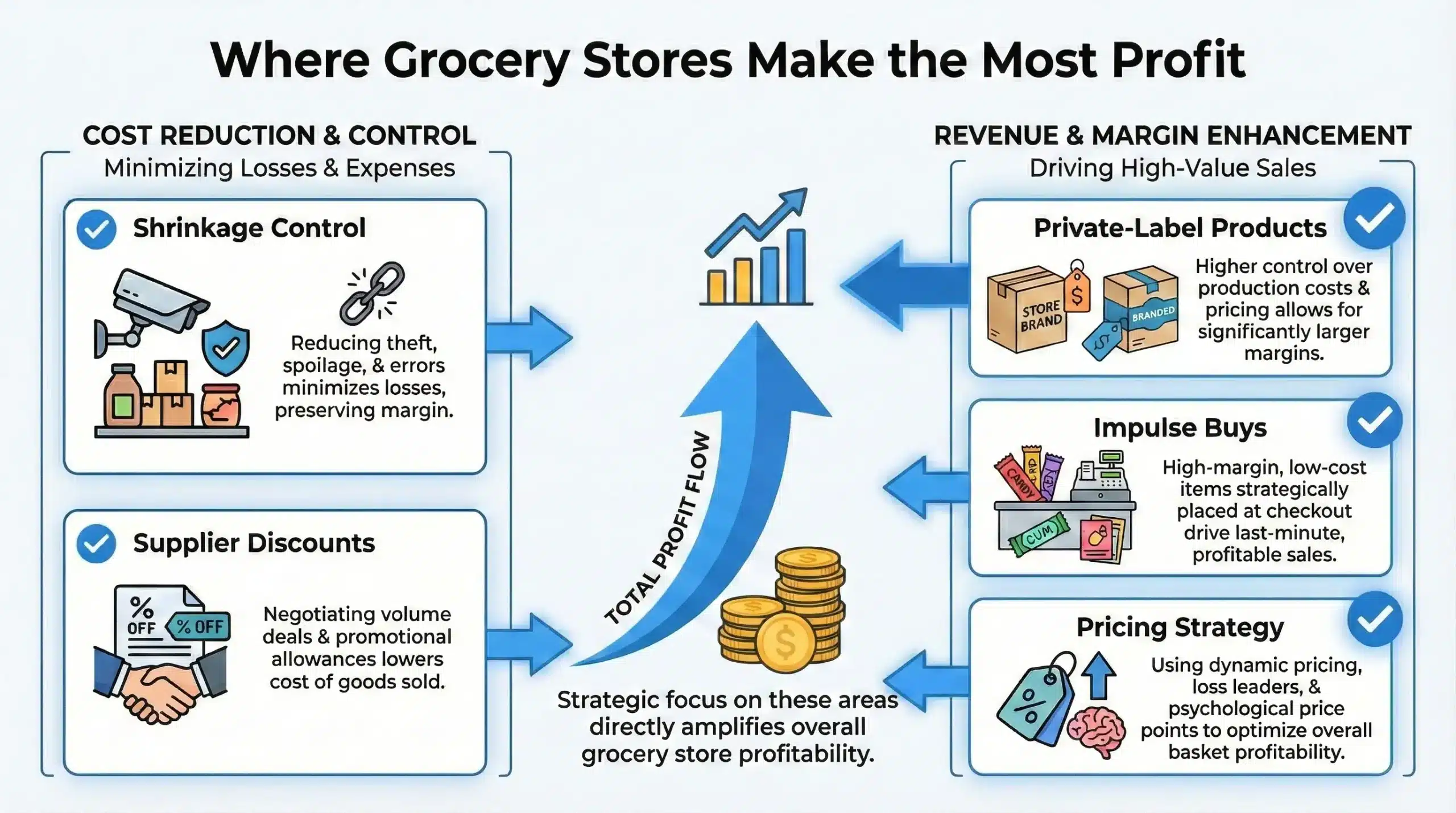
Customers often compare prices on staple items like milk or bread. As a result, stores keep margins low on these products. Meanwhile, they recover profits on less price-sensitive items.
This strategy protects brand trust while quietly supporting overall profitability.
Supplier Pricing and Negotiation Power
Supplier pricing plays a major role in supermarket margins. Larger chains negotiate better rates due to buying power. Smaller stores must manage margins more carefully.
When Grocery Store Margins Explained from a supplier angle, relationships matter. Long-term contracts and consistent volume can unlock better terms. Meanwhile, poor negotiation raises costs across the board.
Smart operators track supplier performance closely. Even small cost reductions can significantly improve net margins.
High Margin Grocery Items and Category Performance
Not all products contribute equally to profits. Grocery Store Margins Explained becomes clearer when examining category-level performance. Some items quietly carry the business.
High Margin Grocery Items You Might Overlook
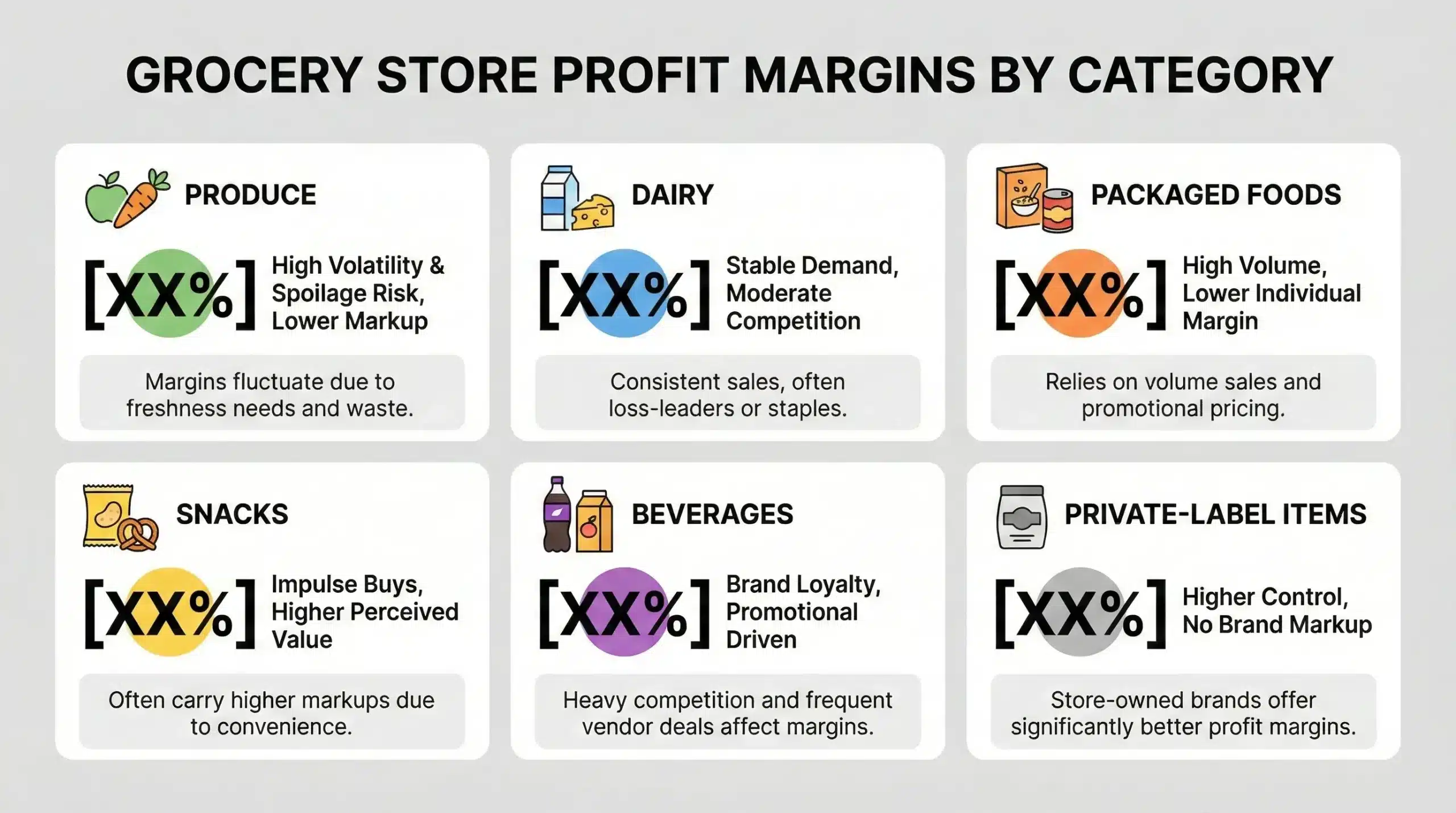
Non-perishable items often deliver higher margins than fresh goods. Snacks, beverages, and household essentials perform especially well. These products also have longer shelf lives.
High margin grocery items reduce spoilage risk. Therefore, they offer more predictable profitability. Customers may not notice slight price differences in these categories.
Because of this, stores often expand shelf space for these items. Strategic placement boosts both visibility and margin contribution.
Fresh Foods and the Shrinkage Impact
Fresh produce, meat, and dairy attract customers but come with risk. Shrinkage from spoilage and damage cuts into margins quickly. Grocery Store Margins Explained must account for this loss.
Although fresh foods can drive traffic, they demand tight inventory control. Overordering increases waste, while underordering disappoints shoppers.
Successful stores use data to forecast demand accurately. As a result, they limit shrinkage without hurting availability.
Inventory Turnover and Profit Efficiency
Inventory turnover measures how often products sell and restock. Faster turnover improves cash flow and reduces holding costs. This metric is central to Grocery Store Margins Explained.
Slow-moving inventory ties up cash and risks expiration. Meanwhile, fast sellers support consistent revenue streams.
Tracking turnover by category allows smarter purchasing decisions. Over time, this improves overall supermarket margins.
Private Label Profits and Store Brands
Private labels have transformed grocery profitability. Grocery Store Margins Explained is incomplete without examining store-brand economics. These products often outperform national brands.
Why Private Label Profits Are Higher
Private label products eliminate brand licensing costs. Stores control pricing, packaging, and distribution. As a result, margins increase.
Customers now trust store brands more than ever. Quality improvements have changed perceptions. Meanwhile, lower prices attract budget-conscious shoppers.
This combination boosts both volume and profit per unit.
Brand Loyalty and Margin Protection
Private labels strengthen customer loyalty. Shoppers return specifically for those products. Grocery Store Margins Explained often highlight this advantage.
Because competitors cannot sell identical items, price comparison becomes harder. This protects margins from aggressive price wars.
Over time, strong private labels stabilize revenue streams.
Balancing National Brands and Store Brands
National brands still matter for credibility and choice. However, overreliance on them reduces margin flexibility. Smart assortments strike a balance.
When Grocery Store Margins Explained through assortment strategy, diversity matters. Offering alternatives at multiple price points captures more customers.
This approach maximizes basket value without alienating shoppers.
Operational Factors That Impact Grocery Store Margins
Operations quietly determine profitability. Even strong pricing fails without disciplined execution. Grocery Store Margins Explained must include operational realities.
Labor Costs and Scheduling Efficiency
Labor represents one of the largest expenses in grocery retail. Inefficient scheduling drains profits. Meanwhile, understaffing hurts service quality.
Stores that align staffing with traffic patterns perform better. Data-driven scheduling improves both margins and morale.
Automation and smart POS systems further reduce unnecessary labor hours.
Technology and Loss Prevention
Theft and errors erode supermarket margins daily. Loss prevention strategies protect profits. Grocery Store Margins Explained often underestimate this factor.
Modern POS systems track transactions and inventory in real time. As a result, discrepancies surface quickly.
Early detection prevents small losses from becoming systemic problems.
Data-Driven Decision Making
Gut instinct no longer works in modern grocery retail. Data reveals patterns humans miss. Therefore, analytics now drive profitability.
When Grocery Store Margins Explained through data, insights emerge clearly. Stores identify top sellers, weak categories, and pricing gaps.
This clarity leads to smarter decisions and stronger margins.
How Biyo POS Helps Protect Grocery Store Margins
 How Biyo POS Helps Protect Grocery Store Margins
Biyo POS supports grocery stores by turning data into action. With real-time inventory tracking, sales analytics, and shrinkage monitoring, operators gain full visibility into their margins. As a result, grocery pricing strategy becomes more precise and inventory turnover improves.
Biyo POS also simplifies labor tracking and loss prevention. These features directly support healthier grocery store profit margins. If you want to see how Biyo POS fits your store, you can schedule a call to explore the system in detail. When you are ready to get started, you can also sign up here and take control of your supermarket margins.
Frequently Asked Questions
What is the average grocery store profit margin?
Most grocery stores operate with net margins between one and three percent. Although this seems low, consistent volume keeps stores viable.
Which grocery items have the highest margins?
High margin grocery items include snacks, beverages, household goods, and private label products. These items have longer shelf lives and lower spoilage risk.
How does shrinkage affect supermarket margins?
Shrinkage from theft, damage, and spoilage directly reduces profits. Tight inventory control and technology help limit this loss.
Why are private labels so profitable?
Private label profits are higher because stores control costs and pricing. Brand exclusivity also protects margins from direct competition.
Can technology really improve grocery store margins?
Yes, modern POS systems improve visibility, reduce waste, and optimize pricing. These improvements add up quickly in low-margin environments.