The restaurant industry is shifting fast. However, one group is driving much of that change: Generation Z. Understanding Gen Z Restaurant Trends is no longer optional. It is essential for survival and growth. This generation values speed, authenticity, sustainability, and digital convenience. Therefore, restaurants must adapt quickly.
Unlike previous generations, Gen Z grew up with smartphones, social media, and instant access to information. As a result, their dining expectations look very different. In this guide, we break down the most important Gen Z Restaurant Trends, from digital dining trends to personalized food experiences, so you can position your restaurant for long-term success.
Technology sits at the center of many Gen Z Restaurant Trends. This generation expects seamless digital experiences from discovery to payment. Therefore, restaurants must prioritize digital integration.
Mobile Ordering as the Standard
Mobile ordering is no longer a luxury. It has become a baseline expectation among Gen Z dining trends. Young consumers prefer ordering from their phones because it feels fast and convenient.
Apps reduce wait times and eliminate ordering errors. Meanwhile, digital menus allow easy customization. As a result, restaurants for Gen Z must invest in smooth mobile ordering systems.
Strong digital dining trends show that speed and simplicity drive loyalty. If your mobile experience feels clunky, customers quickly move on.
Beyond ordering, payment methods also matter deeply.
Contactless and Digital Payments
Gen Z prefers digital wallets and tap-to-pay systems. Cash usage continues to decline among this demographic. Therefore, contactless payment options are critical.
Fast checkout improves the overall dining experience. Meanwhile, digital receipts simplify tracking for customers. As a result, convenience becomes part of your brand identity.
These behaviors define modern Gen Z Restaurant Trends and reshape how transactions happen in restaurants.
However, digital engagement goes beyond transactions.
Seamless Online-to-Offline Experiences
Gen Z often discovers restaurants online before visiting. They check reviews, menus, and photos in advance. Therefore, your digital presence must match the in-store experience.
Consistent branding across platforms builds trust. Meanwhile, updated menus prevent disappointment. As a result, customers arrive with confidence.
Integrated systems support digital dining trends and help restaurants stay competitive.
Social Media Influence on Dining Decisions
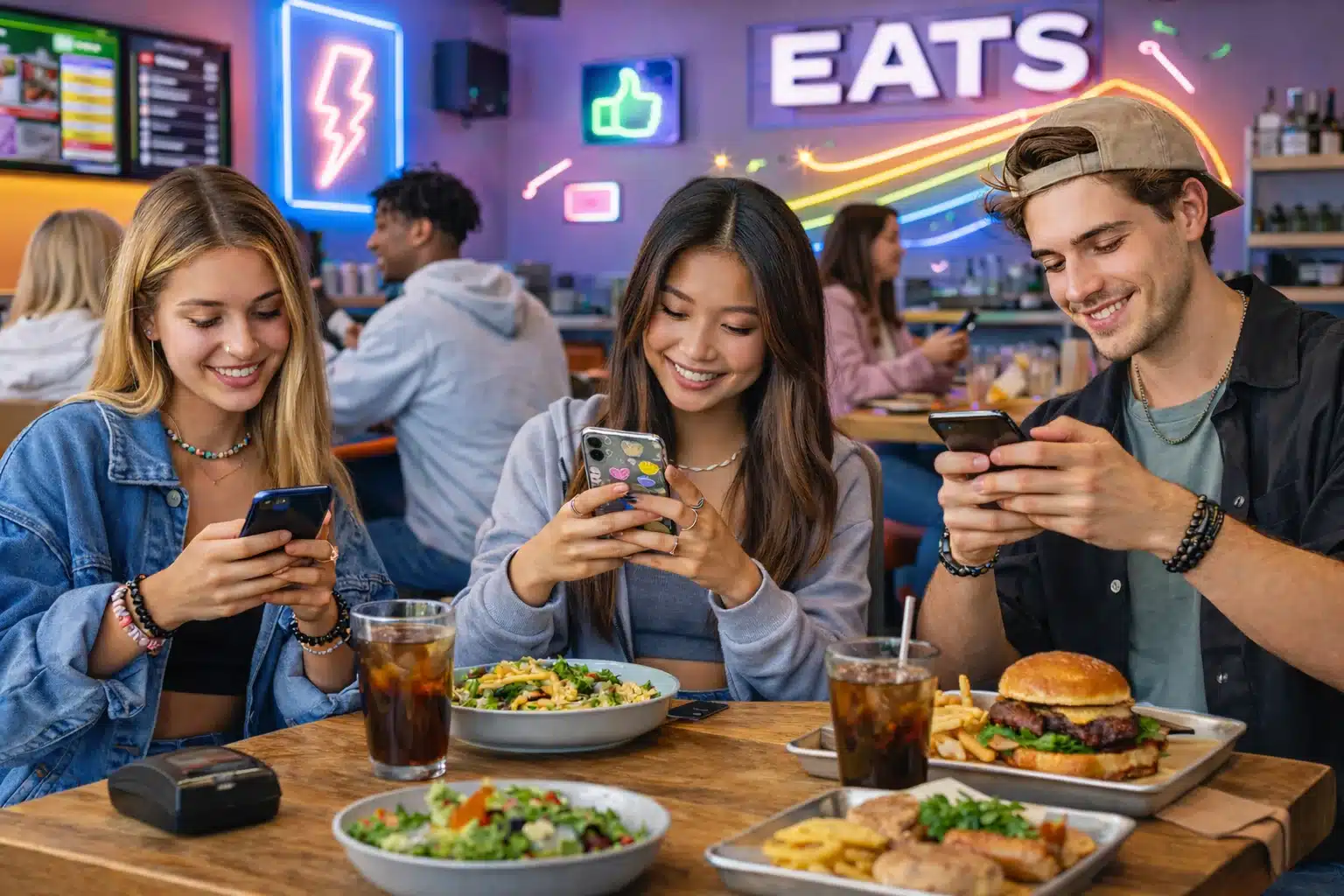
Social media influence plays a major role in Gen Z Restaurant Trends. Platforms like TikTok and Instagram shape where young consumers choose to eat. Therefore, visibility matters more than ever.
Instagrammable Spaces
Gen Z values aesthetics. Restaurants with unique decor often attract attention online. For instance, colorful walls and creative plating generate shareable moments.
When customers post photos, they become brand ambassadors. Meanwhile, user-generated content increases reach organically. As a result, experiential dining extends beyond the table.
Design choices now influence marketing performance directly.
Content creation also influences menu choices.
Viral Menu Items
Viral dishes can drive massive traffic. A single trending item may attract new customers overnight. Therefore, innovation becomes essential.
Limited-time offers encourage urgency. Meanwhile, unique presentations boost social sharing. As a result, restaurants for Gen Z benefit from creative experimentation.
Menu trends spread quickly online, shaping broader Gen Z dining trends.
Influencer partnerships add another layer.
Collaborating with Micro-Influencers
Gen Z trusts peer recommendations more than traditional ads. Micro-influencers often feel authentic and relatable. Therefore, collaborations can boost credibility.
Local influencers introduce restaurants to niche audiences. Meanwhile, sponsored posts drive targeted traffic. As a result, marketing budgets stretch further.
Strategic partnerships align perfectly with evolving Gen Z Restaurant Trends.
Experiential Dining and Personalization
Gen Z seeks more than food. They want memorable experiences. Therefore, experiential dining plays a central role in modern restaurant strategy.
Interactive Dining Concepts
Interactive elements create excitement. Open kitchens, DIY stations, and chef storytelling enhance engagement. As a result, visits feel special.
Hands-on experiences encourage social sharing. Meanwhile, customers feel more connected to the brand. Therefore, engagement drives loyalty.
These immersive concepts reflect key Gen Z Restaurant Trends.
Personalization also drives satisfaction.
Customized Menu Options
Gen Z values personalized food experiences. Customizable bowls and build-your-own menus appeal strongly. For instance, dietary preferences can be accommodated easily.
Clear labeling improves transparency. Meanwhile, flexible ingredient swaps increase comfort. As a result, guests feel understood.
Restaurants that embrace customization stay aligned with Gen Z food preferences.
Loyalty programs must evolve as well.
Digital Loyalty and Rewards
Gen Z prefers app-based loyalty programs. Digital rewards feel convenient and immediate. Therefore, paper punch cards no longer work.
Gamified systems increase engagement. Meanwhile, personalized offers boost repeat visits. As a result, retention improves.
These reward systems reinforce broader digital dining trends.
Sustainable Restaurants and Ethical Choices
Sustainability influences many purchasing decisions. Ethical sourcing matters deeply to younger consumers. Therefore, environmental responsibility shapes Gen Z Restaurant Trends.
Eco-Friendly Packaging
Single-use plastics discourage Gen Z customers. Compostable packaging sends a strong message. As a result, brand perception improves.
Local sourcing reduces environmental impact. It also supports community businesses. Therefore, sustainability becomes tangible.
Farm-to-table storytelling resonates with younger diners. Meanwhile, transparency improves credibility. As a result, customer loyalty grows.
Ethical sourcing aligns strongly with modern Gen Z dining trends.
Social responsibility completes the picture.
Supporting Social Causes
Gen Z favors brands that support meaningful causes. Community involvement influences purchasing decisions. Therefore, restaurants should highlight partnerships.
Donation campaigns create emotional connections. Meanwhile, transparent communication builds trust. As a result, guests feel aligned with your values.
Purpose-driven branding reinforces evolving Gen Z Restaurant Trends.
Evolving Gen Z Food Preferences
Flavor exploration defines many Gen Z Restaurant Trends. Younger diners seek bold tastes and global inspiration. Therefore, menu innovation becomes essential.
Global and Fusion Flavors
Gen Z embraces international cuisine. Korean, Middle Eastern, and Latin flavors gain popularity. As a result, diverse menus attract attention.
Fusion dishes combine cultures creatively. Meanwhile, limited-time global features generate excitement. Therefore, experimentation drives traffic.
Restaurants for Gen Z must embrace culinary diversity.
Health also influences choices.
Plant-Based and Health-Focused Options
Plant-based options continue growing. Many young diners seek lighter alternatives. Therefore, menu balance matters.
Clear nutritional information builds trust. Meanwhile, high-quality ingredients improve perception. As a result, restaurants meet evolving expectations.
Health-conscious choices reflect long-term Gen Z food preferences.
Affordability remains critical.
Value Without Sacrificing Quality
Gen Z often operates on tight budgets. However, they still demand quality. Therefore, value-driven pricing becomes essential.
Combo deals and shareable portions appeal strongly. Meanwhile, transparent pricing builds confidence. As a result, loyalty strengthens.
Balancing affordability and quality defines successful Gen Z Restaurant Trends.
How Biyo POS Supports Restaurants for Gen Z
Biyo POS helps restaurants adapt to Gen Z Restaurant Trends through integrated mobile ordering, digital payments, and real-time analytics. As a result, digital dining trends become easier to manage. The platform supports personalized food experiences and efficient operations.
If you want to attract younger diners, Biyo POS provides modern tools designed for today’s expectations. You can schedule a call here to explore features. You may also sign up directly at this signup page.
Frequently Asked Questions
Why are Gen Z Restaurant Trends important?
Gen Z represents a growing consumer segment. Understanding their preferences helps restaurants remain competitive.
What technology matters most to Gen Z diners?
Mobile ordering, digital payments, and seamless apps rank highly among Gen Z dining trends.
How does social media influence restaurants for Gen Z?
Social media influence drives discovery and menu popularity. Viral posts often increase traffic quickly.
Are sustainable restaurants more appealing to Gen Z?

 Social Media Influence on Dining Decisions
 Social Media Influence on Dining Decisions