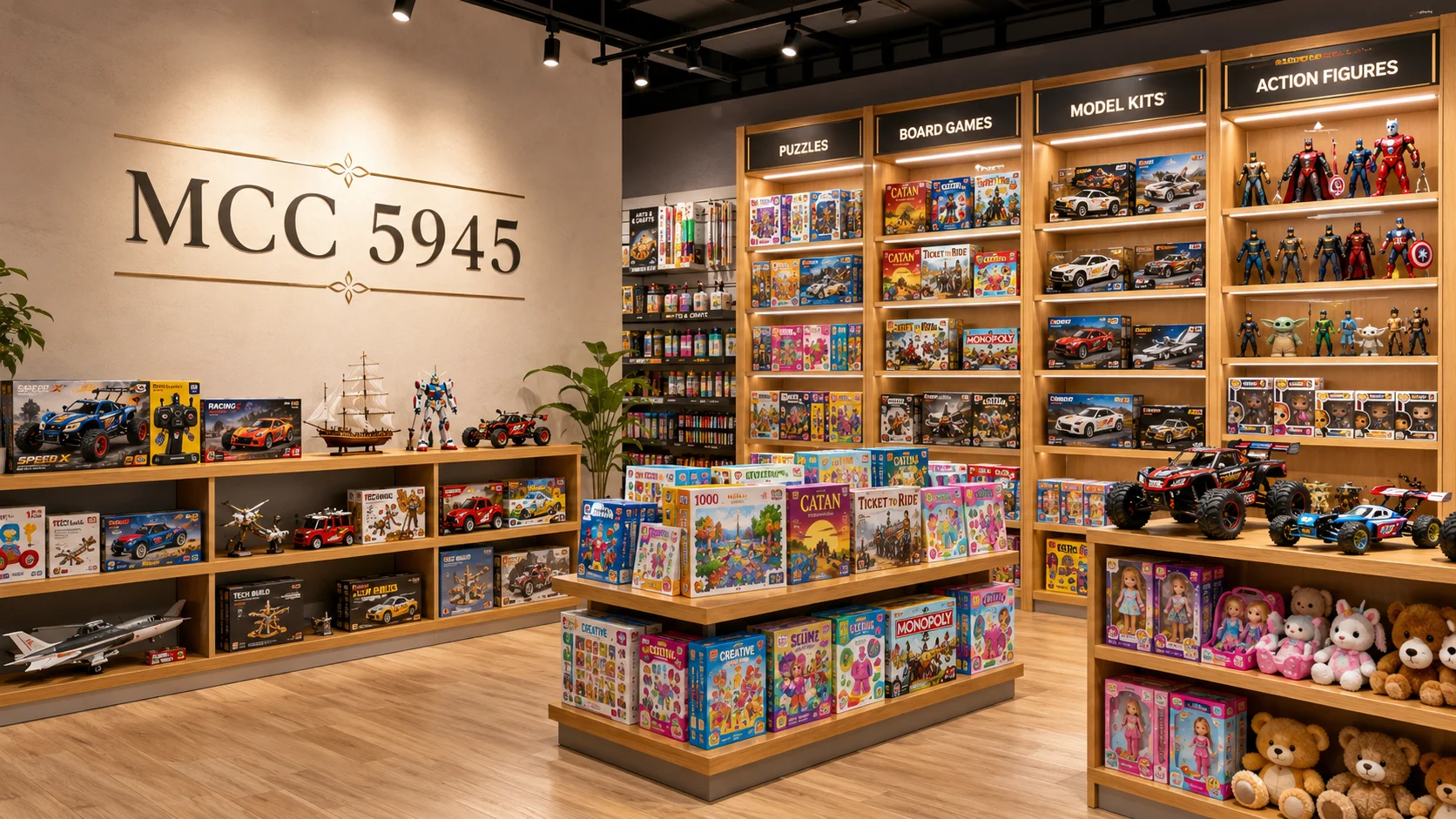

On a Saturday afternoon, a toy store buzzes with excitement. A child proudly carries their first building set toward the checkout, a family debates which board game will become the centerpiece of game night, and a collector carefully examines trading card packs in search of a rare find. At the same time, hobby enthusiasts browse model kits, paints, and remote-controlled vehicles for their next project. These stores do far more than fill shelves with products—they inspire creativity, learning, and lasting memories.
While every purchase brings excitement to the customer, every card payment follows a standardized process behind the scenes. Banks, card networks, and payment processors use Merchant Category Codes (MCCs) to identify the type of business accepting each transaction. For many toy stores and hobby retailers, that classification is MCC 5945.
If you own a toy store, hobby shop, game retailer, or collectible store, understanding MCC 5945 can help you better understand how your business is classified, why that classification matters, and how it supports payment processing throughout the retail industry.
At a Glance: MCC 5945
| Category | Details |
|---|---|
| Merchant Category Code | 5945 |
| Category Name | Hobby, Toy & Game Shops |
| Industry | Toy, Hobby & Specialty Games Retail |
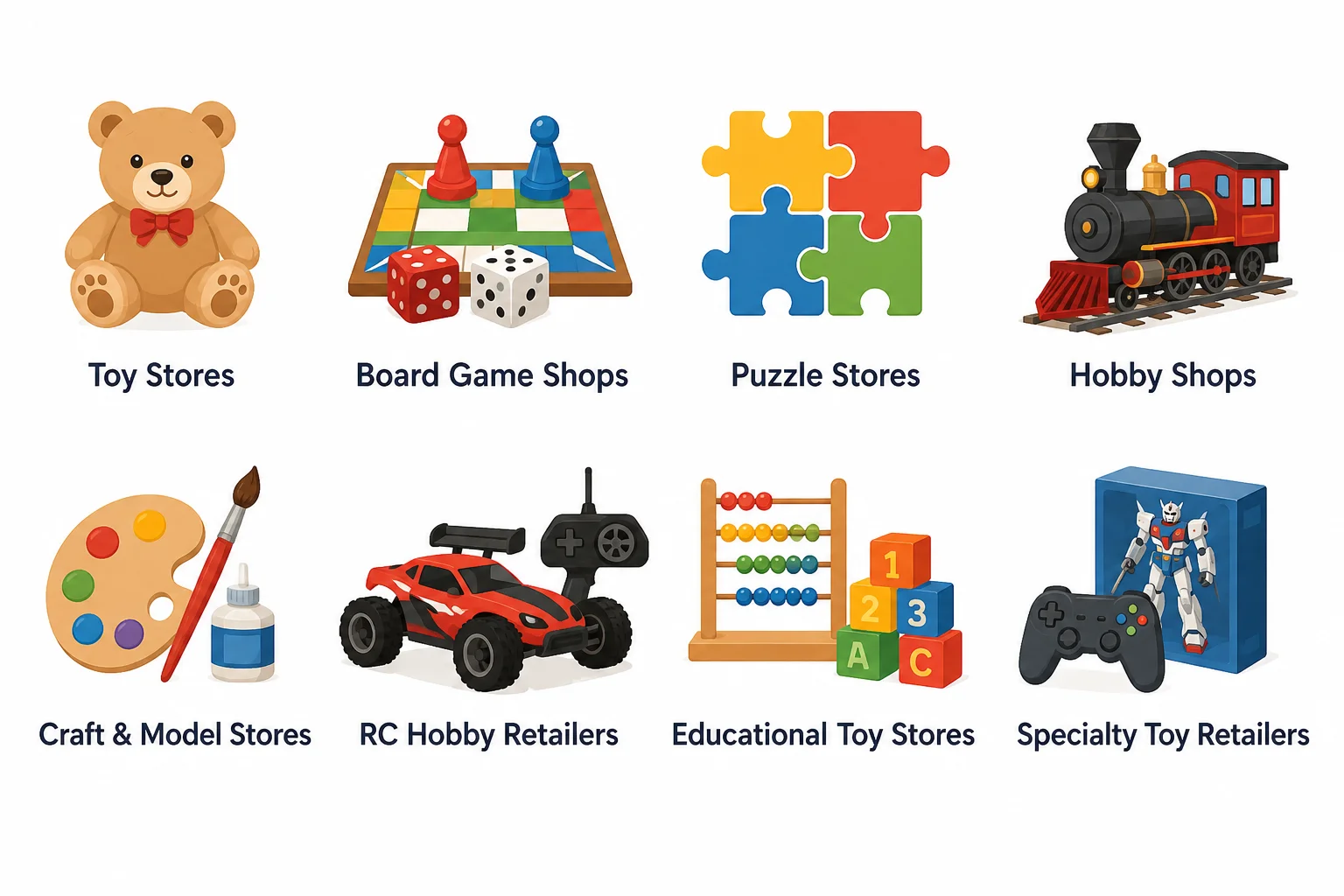
| Typical Businesses | Toy stores, hobby shops, board game retailers, trading card stores, model train shops, RC hobby retailers, puzzle stores, collectible shops, and educational toy stores. |
| Assigned By | Payment processors and acquiring banks |
| Purpose | Classifies businesses that primarily sell toys, games, hobby supplies, collectibles, and related products. |
Table of Contents
- What Is MCC 5945?
- Which Businesses Qualify for MCC 5945?
- Businesses That Usually Don’t Qualify
- Why Merchant Category Codes Matter
- How Payment Processors Use MCC 5945
- Benefits and Challenges of MCC 5945
- How to Verify Your Merchant Category Code
- MCC 5945 Compared to Similar Merchant Categories
- How Biyo Helps Hobby & Toy Retailers
- Frequently Asked Questions
What Is MCC 5945?
Understanding MCC 5945
Hobby and toy stores occupy a unique place in retail because they serve customers of every age. A child may visit for their favorite action figure, while an adult collector searches for a limited-edition trading card. Nearby, a hobbyist compares model paints for an intricate project, and another customer shops for educational toys that encourage creativity and problem-solving. Despite their different interests, they’re all visiting businesses built around recreation, imagination, and shared experiences.
MCC 5945 is the Merchant Category Code assigned to businesses whose primary activity is selling toys, hobby supplies, games, collectibles, puzzles, and related merchandise. The classification helps payment providers distinguish these specialty retailers from department stores, bookstores, electronics retailers, and other general merchandise businesses.
How Merchant Category Codes Are Assigned
When a retailer opens a merchant account, the payment processor or acquiring bank reviews the overall business before assigning a Merchant Category Code. Instead of evaluating every individual product, they focus on the merchant’s primary source of revenue, inventory, and day-to-day operations.
A hobby store may also sell snacks, gift items, branded apparel, or accessories for collectors. As long as toys, games, hobby products, and collectibles remain the primary focus of the business, MCC 5945 is generally the appropriate classification.
Why Hobby and Toy Stores Have Their Own Classification
Unlike many retailers, hobby and toy stores sell products that bring people together. Families gather around board games, children develop new skills through educational toys, collectors build carefully curated collections, and hobbyists spend hours assembling detailed models. Many stores also create communities by hosting game nights, collectible tournaments, painting workshops, and hobby demonstrations that encourage customers to return long after their initial purchase.
Because these retailers combine entertainment, creativity, education, and community engagement, payment providers assign them a dedicated Merchant Category Code that accurately reflects how they operate.
Which Businesses Qualify for MCC 5945?
Businesses Commonly Assigned MCC 5945
MCC 5945 generally applies to businesses whose primary activity involves selling toys, hobby supplies, games, collectibles, and related specialty products. These retailers serve families, collectors, educators, hobbyists, and gaming communities throughout the year.
- Toy stores
- Hobby shops
- Board game retailers
- Trading card stores
- Model train shops
- Remote-control hobby stores
- Puzzle retailers
- Educational toy stores
- Collectible shops
- Tabletop gaming retailers
More Than a Shopping Trip
Walk into a hobby or toy store and you’ll often find customers doing much more than browsing shelves. Parents ask for age-appropriate educational toys, hobbyists compare paints and modeling tools, friends gather around demonstration tables to learn a new strategy game, and collectors discuss the latest product releases. These stores don’t simply sell merchandise—they create places where hobbies grow and communities form.
That customer experience is one of the defining characteristics that separates hobby retailers from many other specialty stores and makes MCC 5945 the appropriate classification.
How Payment Providers Determine Eligibility
Payment processors classify merchants according to their primary business activity rather than every product they carry. A retailer whose revenue comes mainly from toys, games, hobby products, or collectibles will generally qualify for MCC 5945, even if it also sells books, apparel, snacks, or gift items.
The goal is to assign a Merchant Category Code that accurately reflects the merchant’s overall business while maintaining consistency across the payments ecosystem.
Businesses That Usually Don’t Qualify
Retailers with Different Merchant Category Codes
Many retailers sell toys or games, but that doesn’t automatically place them under MCC 5945. Payment providers assign different Merchant Category Codes to businesses whose primary operations belong to another retail category.
- Department stores
- Bookstores
- Sporting goods stores
- Electronics retailers
- Gift shops
- Warehouse clubs
- General merchandise stores
Understanding the Difference
A bookstore may dedicate an aisle to educational games and puzzles, while a department store often expands its toy section during the holiday season. Although these businesses sell similar products, toys and hobby supplies represent only one part of their overall inventory.
A dedicated hobby retailer builds its identity around games, collectibles, creativity, and hands-on activities, making MCC 5945 the more appropriate classification.
Why Business Focus Matters
Merchant Category Codes identify what a business primarily does rather than every item it offers for sale. Two retailers may stock the same board game or collectible figure, yet receive different Merchant Category Codes because one specializes in hobby products while the other operates as a department store.
Looking at the merchant’s overall business activity allows payment providers to classify retailers consistently while maintaining accurate merchant records throughout the payments industry.
Why Merchant Category Codes Matter
Creating Consistency Across Retail Payments
Every electronic payment travels through multiple financial institutions before approval. Merchant Category Codes provide a standardized system that allows banks, payment processors, and card networks to identify businesses consistently across millions of daily transactions.
Without standardized merchant classifications, organizing retailers across thousands of industries would become far more difficult.
Supporting Reporting and Business Analysis
Merchant Category Codes help payment providers organize merchants with similar business models, improving reporting and industry analysis. For hobby and toy retailers, this standardized classification creates clearer insight into transaction activity across the specialty retail sector.
Some credit card issuers also use Merchant Category Codes when determining eligibility for cashback or rewards, although qualification depends on the individual card issuer and the terms of its rewards program.
Helping Monitor Transaction Activity
Merchant Category Codes also contribute to payment security by providing financial institutions with additional context about the businesses processing transactions. Understanding purchasing patterns commonly associated with hobby and toy retailers helps payment providers identify unusual activity more effectively.
Although MCC 5945 isn’t a fraud prevention tool by itself, it strengthens the broader systems that help keep electronic payments secure.
How Payment Processors Use MCC 5945
Recognizing Hobby and Toy Retailers
When a hobby or toy store begins accepting card payments, MCC 5945 becomes part of its merchant profile. Every eligible transaction processed by the business carries this classification, allowing payment processors to recognize the merchant as a retailer specializing in toys, games, hobby supplies, and collectibles.
The Merchant Category Code identifies the business rather than the individual product being purchased. Whether a customer buys a model airplane kit, a board game, a collectible trading card, or a remote-controlled vehicle, the transaction reflects the retailer’s primary business activity instead of the specific item leaving the store.
Supporting Merchant Account Management
Merchant Category Codes help payment providers better understand the businesses they serve. While MCC 5945 doesn’t determine payment processing fees on its own, it provides valuable context during merchant onboarding, account reviews, and ongoing account management.
Payment processors also consider monthly sales volume, average transaction values, refund activity, chargeback history, and overall account performance. Hobby and toy retailers often experience seasonal demand, limited-edition product launches, and collector-driven purchasing patterns, making these insights useful when managing merchant accounts.
Improving Reporting and Transaction Monitoring
Toy and hobby retailers often see significant sales increases during the holiday season, while collectible releases, tabletop gaming events, and back-to-school shopping create additional spikes throughout the year. Merchant Category Codes help organize transaction data, giving merchants and financial institutions a clearer understanding of sales activity across the hobby and specialty retail industry.
MCC 5945 also provides valuable context for fraud monitoring. Understanding the purchasing behavior commonly associated with toy and hobby retailers helps payment providers recognize unusual transaction activity while minimizing unnecessary interruptions for legitimate customers.
Benefits and Challenges of MCC 5945
Benefits of Accurate Classification
Having the correct Merchant Category Code ensures your business is grouped with retailers that share a similar operating model. This creates consistency across the payments ecosystem while improving merchant reporting and supporting more effective account management.
Accurate classification also makes communication with payment providers easier because your business is immediately recognized as a hobby and toy retailer rather than a department store or general merchandise merchant.
Potential Challenges
The most common challenge isn’t MCC 5945 itself but receiving an incorrect classification. Since many retailers sell toys, puzzles, or games alongside other merchandise, payment providers must determine whether hobby products represent the merchant’s primary business activity.
Businesses also evolve over time. A retailer that expands into books, educational products, or electronics as its primary business may eventually require a different Merchant Category Code if its operations change significantly.
Best Practices for Hobby and Toy Retailers
Review your merchant account information periodically to ensure your Merchant Category Code continues to reflect how your business operates. If you’ve significantly expanded your inventory, introduced new product categories, or changed your retail focus, discuss your classification with your payment processor.
Maintaining an accurate merchant profile helps prevent misunderstandings while ensuring your payment account accurately represents your business.
How to Verify Your Merchant Category Code
Review Your Merchant Account Information
If you’re unsure whether your business has been assigned MCC 5945, begin by reviewing your merchant account documents. Many payment processors include the Merchant Category Code in onboarding paperwork, monthly statements, or online merchant dashboards.
If you can’t locate the information, your payment provider can usually verify your classification within a few minutes.
Request a Merchant Category Code Review
If you believe your hobby or toy store has been assigned the wrong Merchant Category Code, contact your payment processor and request a review. They may ask about your inventory, website, customer base, and primary revenue sources before determining whether another classification better reflects your business.
The review considers your overall retail operation rather than individual products, helping ensure your Merchant Category Code accurately reflects your primary business activity.
Know When Your Classification May Change
Merchant Category Codes aren’t permanent. As businesses grow, diversify, or change direction, payment processors may review the assigned classification and update it if another Merchant Category Code becomes more appropriate.
For example, a hobby retailer that evolves into a bookstore, educational retailer, or entertainment venue may eventually receive a different merchant classification.
 MCC 5945 Compared to Similar Merchant Categories
 MCC 5945 Compared to Similar Merchant Categories
MCC 5945 vs. Bookstores and Educational Retailers
Bookstores primarily sell books, magazines, and educational reading materials, while hobby and toy stores focus on games, collectibles, model kits, puzzles, and products designed for recreation and creative expression. Although both may carry educational products, their core retail experience is very different.
MCC 5945 vs. Sporting Goods and Department Stores
Sporting goods stores specialize in athletic equipment and outdoor recreation, while department stores carry toys as one department among many. A dedicated hobby retailer builds its business around play, collecting, creativity, and shared experiences, often creating communities through tournaments, demonstrations, and special events. That’s what makes MCC 5945 the appropriate classification.
Comparison Table
| Merchant Category Code | Business Type | Primary Business Activity |
|---|---|---|
| 5945 | Hobby, Toy & Game Shops | Retail sale of toys, games, collectibles, hobby supplies, puzzles, and model kits. |
| 5942 | Book Stores | Retail sale of books, magazines, and educational reading materials. |
| 5941 | Sporting Goods Stores | Retail sale of sporting equipment, outdoor recreation gear, and athletic merchandise. |
| 5311 | Department Stores | Retailing merchandise across multiple departments and product categories. |
| 5947 | Gift, Card, Novelty & Souvenir Shops | Retail sale of gifts, greeting cards, novelty items, and souvenirs. |
How Biyo Helps Hobby & Toy Retailers
Hobby and toy stores often manage thousands of SKUs, including collectibles, seasonal releases, educational toys, board games, and hobby supplies. Biyo POS helps retailers track inventory in real time, speed up checkout, monitor product performance, and manage multiple locations from a single platform. Whether you’re selling collectible cards, model kits, puzzles, or family games, Biyo provides the tools to keep your store organized while delivering a great shopping experience. Schedule a demo to see Biyo in action or create your account to explore the platform.
Frequently Asked Questions
What is MCC 5945?
MCC 5945 is the Merchant Category Code assigned to businesses that primarily sell toys, games, hobby supplies, collectibles, puzzles, and related specialty merchandise.
Who assigns MCC 5945?
Merchant Category Codes are assigned by payment processors or acquiring banks when a business opens a merchant account. The assigned code reflects the merchant’s primary business activity.
Can a department store use MCC 5945?
Generally, no. Although department stores often sell toys and games, they are usually classified under a Merchant Category Code that reflects their broader retail operations. MCC 5945 is intended for businesses primarily focused on hobby products and toys.
Does MCC 5945 affect credit card rewards?
Some credit card issuers use Merchant Category Codes when determining eligibility for cashback or rewards. Whether purchases qualify depends on the individual card issuer and the terms of its rewards program.
How do I verify my Merchant Category Code?
You can verify your Merchant Category Code by reviewing your merchant account documents, checking your payment processor’s online dashboard, or contacting your payment provider directly.
Can my Merchant Category Code change?
Yes. If your business changes significantly over time, your payment processor may review your account and assign a different Merchant Category Code that better reflects your current operations.