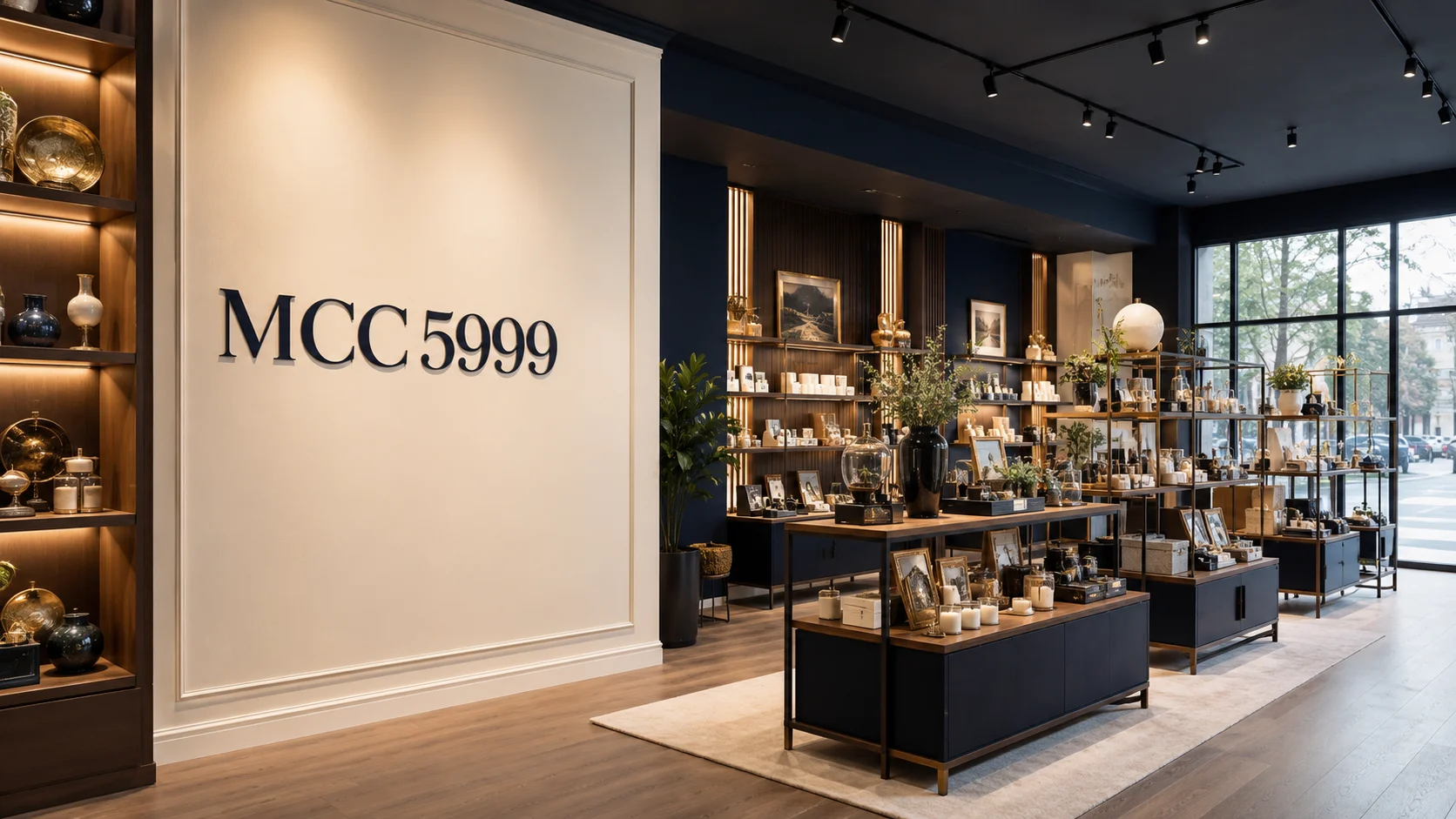

Not every specialty retailer fits neatly into a single retail category. Some businesses sell highly specialized products that don’t qualify under a more specific Merchant Category Code, while others offer unique merchandise that serves niche markets or combines several specialty product lines. From collectible shops and novelty retailers to specialty boutiques with distinctive inventories, these businesses often fall under Merchant Category Code (MCC) 5999.
MCC 5999 is one of the broadest retail Merchant Category Codes because it serves as a classification for miscellaneous specialty retail businesses that do not fit into another established retail MCC. Payment processors, acquiring banks, and major card networks use this code to categorize eligible merchants for payment processing, transaction reporting, fraud monitoring, merchant analytics, and, in some cases, credit card reward eligibility. Although customers rarely notice this classification, it plays an important role in the electronic payment ecosystem.
This guide explains what MCC 5999 covers, which businesses typically qualify, the products commonly sold, why accurate merchant classification matters, and how modern retail technology helps specialty retailers efficiently manage diverse inventories and changing customer demand.
Table of Contents
Understanding MCC 5999
What Is MCC 5999?
MCC 5999 is the Merchant Category Code assigned to miscellaneous specialty retail businesses whose primary products or services do not fall under a more specific retail Merchant Category Code. It serves as a catch-all classification for unique retailers operating in specialized markets with merchandise that cannot be accurately categorized elsewhere.
Rather than describing a single type of store, MCC 5999 encompasses a wide variety of businesses that share one common characteristic—they primarily sell specialty products that do not fit into another established retail classification.
How Merchant Category Codes Work
Merchant Category Codes classify businesses according to their primary commercial activity. Payment processors, financial institutions, and card networks rely on MCCs to support payment authorization, transaction reporting, merchant analytics, fraud prevention, and certain credit card reward programs.
Assigning the appropriate Merchant Category Code helps create consistency throughout the payment industry while ensuring merchants are categorized according to their principal business activities.
When Does a Business Qualify for MCC 5999?
A business generally qualifies for MCC 5999 when its primary retail activity does not align with another established Merchant Category Code. Qualification depends on the merchant’s principal source of revenue rather than individual products, making MCC 5999 suitable for many niche retailers with specialized inventories that fall outside traditional retail classifications.
 Businesses Classified Under MCC 5999
 Businesses Classified Under MCC 5999
Specialty Retail Shops
Many independent specialty retailers operate unique stores focused on niche markets that cannot be accurately classified elsewhere. These businesses may sell distinctive merchandise, limited-edition products, or highly specialized goods that appeal to specific customer interests.
Collectible and Novelty Stores
Retailers specializing in collectibles, novelty merchandise, memorabilia, souvenirs, decorative items, and other unique products may qualify for MCC 5999 when another specialized retail code does not better describe their primary business activity.
Seasonal and Niche Merchants
Some businesses operate seasonally or focus on emerging retail niches that have no dedicated Merchant Category Code. These merchants often maintain flexible inventories that evolve with consumer trends, holidays, or specialized markets while remaining classified under MCC 5999.
Products Commonly Sold
Unique Specialty Merchandise
Businesses classified under MCC 5999 frequently offer distinctive products unavailable through traditional retailers. Merchandise varies significantly depending on the retailer’s niche but often emphasizes originality, exclusivity, or specialized customer interests.
Collectibles and Gift Items
Many miscellaneous specialty retailers sell collectible products, keepsakes, decorative merchandise, novelty gifts, seasonal items, and limited-production goods designed for enthusiasts and gift shoppers.
Accessories and Complementary Products
Alongside their primary merchandise, retailers commonly stock accessories, replacement items, display products, storage solutions, branded merchandise, and complementary goods that enhance customer purchases while increasing average transaction value.
Why MCC 5999 Matters
Supports Accurate Payment Processing
MCC 5999 allows payment providers to accurately classify specialty retail businesses that do not fit more specific Merchant Category Codes. Proper classification supports payment authorization, merchant reporting, transaction processing, and payment network consistency.
Improves Business Reporting
Accurate merchant classification contributes to meaningful financial reporting, inventory analysis, sales tracking, and purchasing decisions. Retailers benefit from improved operational visibility while monitoring product performance across diverse inventories.
May Influence Credit Card Rewards
Some credit card issuers use Merchant Category Codes when determining cashback categories and promotional reward eligibility. Depending on the issuer’s program, purchases made at businesses classified under MCC 5999 may receive different rewards than purchases at merchants assigned more specific retail classifications.
MCC 5999 Comparison Table
| Category | MCC 5999 Miscellaneous Specialty Retail Stores |
|---|---|
| Primary Business | Retail sale of specialty products not covered by another retail MCC |
| Typical Customers | Consumers seeking niche, collectible, seasonal, or specialty merchandise |
| Popular Products | Collectibles, novelty items, gifts, specialty merchandise, and unique retail products |
| Sales Channels | Independent retailers, specialty boutiques, online stores, and niche retail shops |
| Inventory Characteristics | Diverse product catalogs with changing merchandise and specialty inventory |
| Revenue Sources | Retail sales, seasonal merchandise, exclusive products, and specialty accessories |
| Operational Priorities | Inventory accuracy, product sourcing, merchandising, and customer experience |
Industry Operations
Managing Diverse Product Inventories
Unlike retailers that focus on a single product category, businesses classified under MCC 5999 often manage broad and constantly changing inventories. New product lines, seasonal merchandise, limited-edition items, and specialty goods require frequent inventory updates and careful purchasing decisions. Retailers must continuously evaluate customer demand while maintaining an assortment that differentiates their stores from larger general merchandise competitors.
Modern inventory management systems help track stock levels, identify best-selling products, monitor slow-moving inventory, and automate replenishment decisions. This visibility allows specialty retailers to maintain an appealing product mix while reducing excess inventory.
Building Supplier Relationships for Unique Merchandise
Many miscellaneous specialty retailers rely on multiple suppliers to source distinctive products that cannot be purchased through standard wholesale distributors. Some merchandise is imported, handmade, produced in limited quantities, or purchased directly from small manufacturers and artisans. Maintaining reliable supplier relationships helps businesses consistently introduce fresh inventory while preserving product quality.
Diversifying suppliers also reduces the risk of inventory shortages and allows retailers to respond more quickly to changing consumer preferences and emerging retail trends.
Creating an Engaging Customer Experience
Many customers visit specialty retailers looking for products they cannot easily find elsewhere. Attractive merchandising, knowledgeable staff, personalized recommendations, and thoughtfully organized displays encourage shoppers to browse longer and discover additional items. Businesses that regularly refresh product displays and introduce new merchandise create reasons for customers to return throughout the year.
Inventory and Operational Challenges
Forecasting Demand for Niche Products
Because many specialty products appeal to smaller customer segments, accurately forecasting demand can be difficult. Overstocking slow-moving merchandise ties up valuable capital, while underestimating demand may lead to missed sales opportunities. Retailers must regularly analyze sales performance and purchasing patterns to improve inventory planning.
Managing Frequently Changing Product Lines
Many miscellaneous specialty retailers introduce new products throughout the year to keep their merchandise fresh and relevant. This continuous rotation requires frequent inventory updates, accurate product data, barcode management, and efficient merchandising to ensure products remain easy for both employees and customers to locate.
Balancing Variety with Inventory Efficiency
Offering a wide selection attracts customers, but maintaining excessive inventory can increase storage costs and reduce profitability. Successful retailers balance product variety with disciplined purchasing practices, focusing on merchandise that delivers strong sales while regularly clearing discontinued or underperforming inventory.
Industry Trends
Growing Consumer Interest in Unique Products
Many shoppers are increasingly seeking products that feel distinctive, personalized, or difficult to find through large online marketplaces. This trend benefits specialty retailers that curate carefully selected merchandise and offer products tailored to specific hobbies, lifestyles, or personal interests.
Expansion of Omnichannel Retail
Miscellaneous specialty retailers are combining physical stores with online shopping experiences to reach broader audiences. Customers increasingly expect accurate online inventory visibility, convenient pickup options, and consistent service across both digital and in-store channels.
Technology Supports Smarter Retail Operations
Cloud-based POS platforms, inventory management software, customer loyalty programs, and sales analytics help specialty retailers operate more efficiently. These technologies improve inventory accuracy, simplify purchasing decisions, enhance customer engagement, and provide valuable business insights that support sustainable long-term growth.
How Biyo Helps Miscellaneous Specialty Retail Stores
 How Biyo Helps Miscellaneous Specialty Retail Stores
Managing a specialty retail business often means handling diverse product catalogs, frequent inventory changes, seasonal merchandise, and multiple suppliers. Biyo POS helps simplify these operations with real-time inventory tracking, barcode scanning, centralized reporting, and cloud-based management, giving retailers greater visibility into stock levels, product performance, and purchasing trends.
Whether you operate a collectible shop, novelty store, specialty boutique, or another niche retail business, Biyo helps streamline inventory management, improve checkout efficiency, and support better business decisions. You can sign up for Biyo POS or schedule a personalized demo to see how it can support your retail operation.
Frequently Asked Questions
What is MCC 5999?
MCC 5999 is the Merchant Category Code assigned to miscellaneous specialty retail businesses whose primary products do not fit within another specific retail Merchant Category Code.
Which businesses qualify for MCC 5999?
Independent specialty retailers, collectible shops, novelty stores, niche boutiques, seasonal merchants, and other businesses selling unique merchandise that is not covered by another retail MCC may qualify under MCC 5999.
What products are commonly sold under MCC 5999?
Products vary widely but often include collectibles, novelty merchandise, specialty gifts, seasonal products, decorative items, exclusive retail goods, accessories, and other niche merchandise.
Does MCC 5999 affect credit card rewards?
It can. Some credit card issuers use Merchant Category Codes to determine cashback categories and promotional rewards. Eligibility depends on the issuer’s specific rewards program and card terms.
Why is MCC 5999 important?
MCC 5999 helps payment processors and financial institutions accurately classify specialty retailers for payment processing, merchant reporting, transaction analytics, and fraud monitoring when another retail MCC is not a better fit.
How can miscellaneous specialty retailers improve inventory management?
Using a cloud-based POS system with real-time inventory tracking, barcode scanning, centralized reporting, and sales analytics helps retailers manage diverse product catalogs, monitor inventory performance, optimize purchasing, and improve overall operational efficiency.