Bubble tea has evolved from a Taiwanese street drink into one of the world’s most recognizable beverage trends. What began as a simple tea mixed with milk and chewy tapioca pearls has transformed into an enormous industry filled with creative flavors, colorful toppings, seasonal specials, and highly customizable drinks.
Today, a well-designed bubble tea menu offers far more than just tea.
Customers now expect variety, personalization, visual presentation, dietary flexibility, and unique drink experiences that go beyond traditional beverages. Whether someone wants a classic black milk tea, a fruity refresher, a creamy taro smoothie, or a dairy-free matcha latte, the bubble tea menu becomes the center of the entire customer experience.
This is one reason bubble tea continues growing globally. The menu itself feels interactive.
Customers are not simply choosing a drink. They are building combinations of flavors, sweetness levels, toppings, textures, and customizations that reflect personal taste preferences.
For bubble tea shop owners, this creates both opportunity and complexity.
A strong menu can increase repeat business, social media visibility, upselling opportunities, and customer loyalty. However, poorly structured menus often overwhelm customers, slow down operations, complicate inventory management, and reduce profitability.
Successful bubble tea businesses carefully balance creativity with operational efficiency. They understand which drinks attract new customers, which toppings generate the highest margins, which seasonal flavors drive excitement, and which menu designs improve ordering speed.
Modern bubble tea culture is also heavily influenced by social media. Visually appealing drinks often generate free online marketing because customers enjoy sharing colorful beverages and creative topping combinations online.
At the same time, customer expectations continue evolving.
Many consumers now look for:
vegan-friendly options, lower sugar levels, fresh fruit ingredients, dairy-free milk alternatives, premium tea blends, and unique seasonal drinks.
In this guide, we’ll explore the structure of a successful bubble tea menu, the most popular milk teas and fruit teas, creative topping options, customization strategies, seasonal specials, customer behavior trends, and how platforms like Biyo POS help bubble tea shops manage modern operations efficiently.
Table of Contents
- Classic Milk Tea Favorites
- Refreshing Fruit Tea Selections
- Popular Bubble Tea Toppings
- Drink Customization and Specialty Orders
- Seasonal Specials and Limited-Time Drinks
- Why Presentation Matters in Bubble Tea
- Bubble Tea Menu Psychology and Customer Behavior
- Managing Bubble Tea Operations Efficiently
- Future Trends in Bubble Tea Menus
- How Biyo POS Helps Bubble Tea Shops
- Frequently Asked Questions
Classic Milk Tea Favorites
The foundation of most bubble tea menus begins with milk tea.
These drinks combine brewed tea with milk or non-dairy creamers to create smooth, flavorful beverages that balance sweetness, creaminess, and tea flavor.
Traditional black milk tea remains the most recognizable and widely ordered option.
Its popularity comes from simplicity and consistency.
Strong black tea paired with creamy milk creates a familiar flavor profile that works well for both first-time customers and experienced bubble tea drinkers.
When combined with tapioca pearls, black milk tea becomes the iconic bubble tea experience most customers expect.
Many shops customize black milk tea using:
Assam tea, roasted oolong, brown sugar syrup, honey, or specialty creamers.
These small adjustments help differentiate one shop from another.
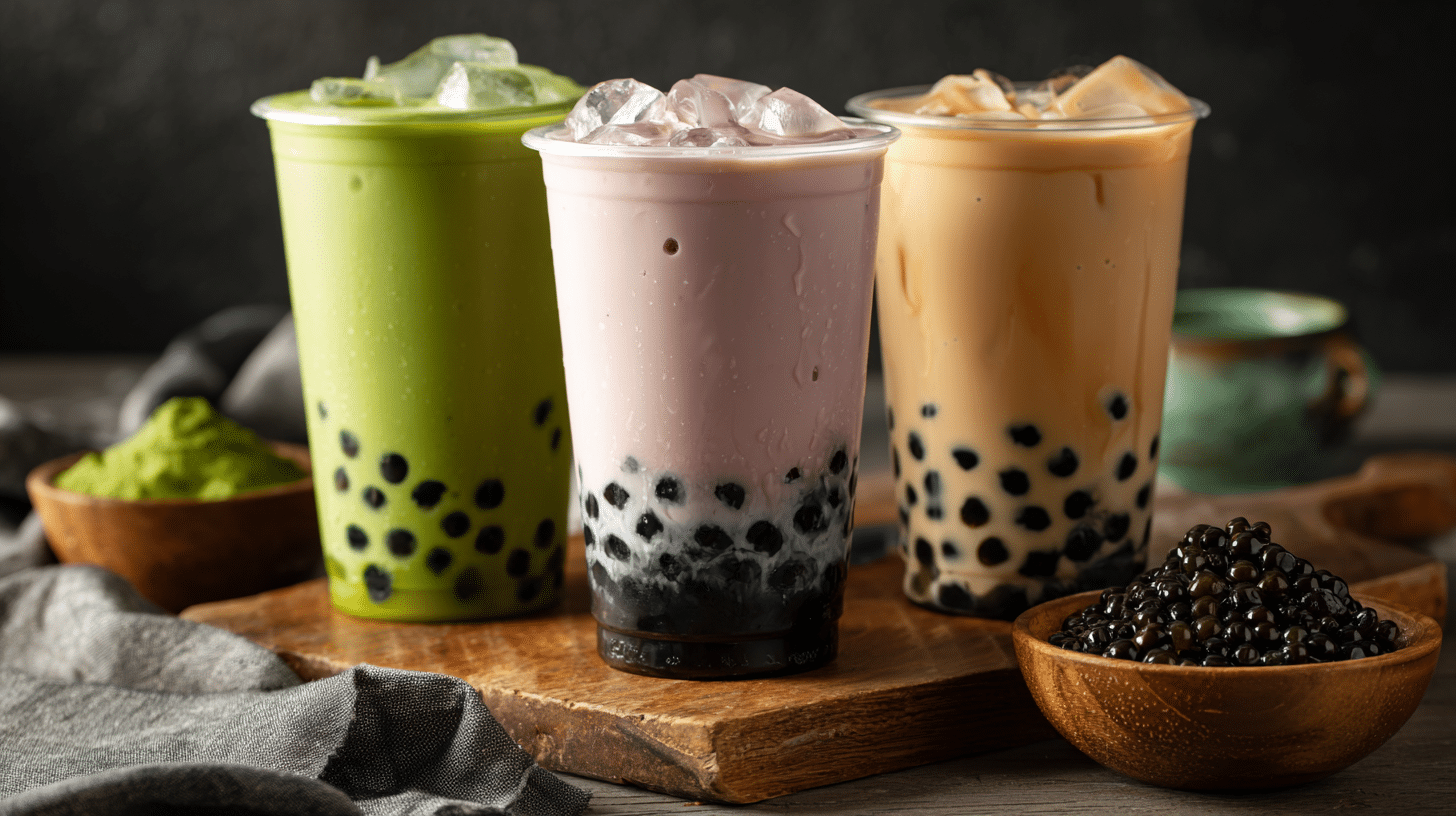
Taro milk tea is another globally popular favorite.
Known for its purple color and creamy texture, taro offers a naturally sweet and nutty flavor profile that feels almost dessert-like.
Taro drinks are especially popular on social media because of their vibrant appearance.
Matcha-based drinks have also grown significantly in popularity.
Matcha lattes and green tea milk teas appeal strongly to customers looking for:
earthy flavors, lower sweetness, antioxidant-rich ingredients, and more premium tea experiences.
Other common milk tea options often include:
Thai tea, jasmine milk tea, wintermelon milk tea, honey milk tea, brown sugar milk tea, and coffee-flavored variations.
Successful bubble tea shops usually balance classic menu staples with signature house drinks that create brand identity.
Refreshing Fruit Tea Selections
While milk teas dominate many bubble tea menus, fruit teas have become increasingly important because they attract customers looking for lighter and more refreshing drinks.
Fruit teas also appeal strongly to:
customers avoiding dairy, younger audiences, and people looking for lower-calorie alternatives.
Citrus-based teas remain especially popular.
Lemon green tea, orange black tea, and grapefruit tea offer refreshing acidity that balances sweetness naturally.
These drinks perform particularly well during warmer months because they feel lighter and more hydrating.
Tropical fruit teas also drive strong customer interest.
Mango, passionfruit, pineapple, and lychee teas create bright flavors and colorful presentations that work extremely well for visual marketing.
Berry-based drinks such as:
strawberry tea, blueberry green tea, and raspberry lemonade tea appeal to wide customer demographics because of their balanced sweet-tart flavor profiles.
Fruit teas are also highly compatible with toppings like:
popping boba, aloe vera jelly, coconut jelly, and fresh fruit pieces.
These combinations create drinks that feel playful, interactive, and highly customizable.
Many bubble tea businesses now emphasize fresh fruit ingredients heavily because customers increasingly value freshness and ingredient quality.
Fresh fruit teas often justify premium pricing while improving brand perception.
Popular Bubble Tea Toppings
Toppings are one of the most important parts of the bubble tea experience.
They transform basic beverages into interactive drinks with multiple textures and flavor combinations.
Tapioca pearls remain the signature topping most associated with bubble tea culture.
Made from cassava starch, these chewy pearls absorb sweetness from syrups and teas while providing the distinctive texture customers expect.
Cooking consistency is extremely important because improperly prepared pearls quickly damage customer satisfaction.
Popping boba has become another major topping category.
Unlike tapioca pearls, popping boba bursts with juice when bitten, creating a lighter and more playful drinking experience.
Popular flavors include:
mango, strawberry, lychee, passionfruit, and blueberry.
Jellies also provide important variety.
Coconut jelly, grass jelly, aloe vera jelly, and coffee jelly offer softer textures that pair especially well with fruit teas and lighter beverages.
Puddings are common in dessert-style drinks.
Egg pudding, chocolate pudding, and custard-style toppings increase richness while making drinks feel more indulgent.
Modern bubble tea menus increasingly offer topping combinations that allow customers to personalize drinks heavily.
This customization encourages experimentation while increasing average order value through upselling opportunities.
Drink Customization and Specialty Orders
Customization is one of the biggest reasons bubble tea became globally successful.
Unlike traditional beverage menus, bubble tea allows customers to modify nearly every aspect of the drink.
Most bubble tea shops allow adjustments to:
sugar levels, ice levels, tea strength, milk type, toppings, and flavor combinations.
Sugar customization is especially important because customers increasingly prioritize healthier beverage options.
Many shops offer sweetness levels ranging from:
0%, 25%, 50%, 75%, and 100% sweetness.
This flexibility helps attract health-conscious consumers without removing sweeter options for customers who prefer indulgent drinks.
Ice level customization also improves customer experience.
Some customers prefer extra ice for refreshment, while others request less ice to maximize drink volume.
Dairy-free customization has become increasingly important too.
Many modern bubble tea shops now offer:
oat milk, almond milk, soy milk, and coconut milk alternatives.
This inclusivity helps businesses serve:
vegan customers, lactose-intolerant customers, and consumers seeking plant-based options.
Specialty signature drinks also help businesses stand out in competitive markets.
Unique layered beverages, brown sugar swirl drinks, cheese foam teas, smoothie-style bubble teas, and seasonal combinations create stronger brand identity.
Seasonal Specials and Limited-Time Drinks
Seasonal drinks play a major role in keeping bubble tea menus exciting.
Limited-time items create urgency while encouraging repeat visits from customers curious about new flavors.
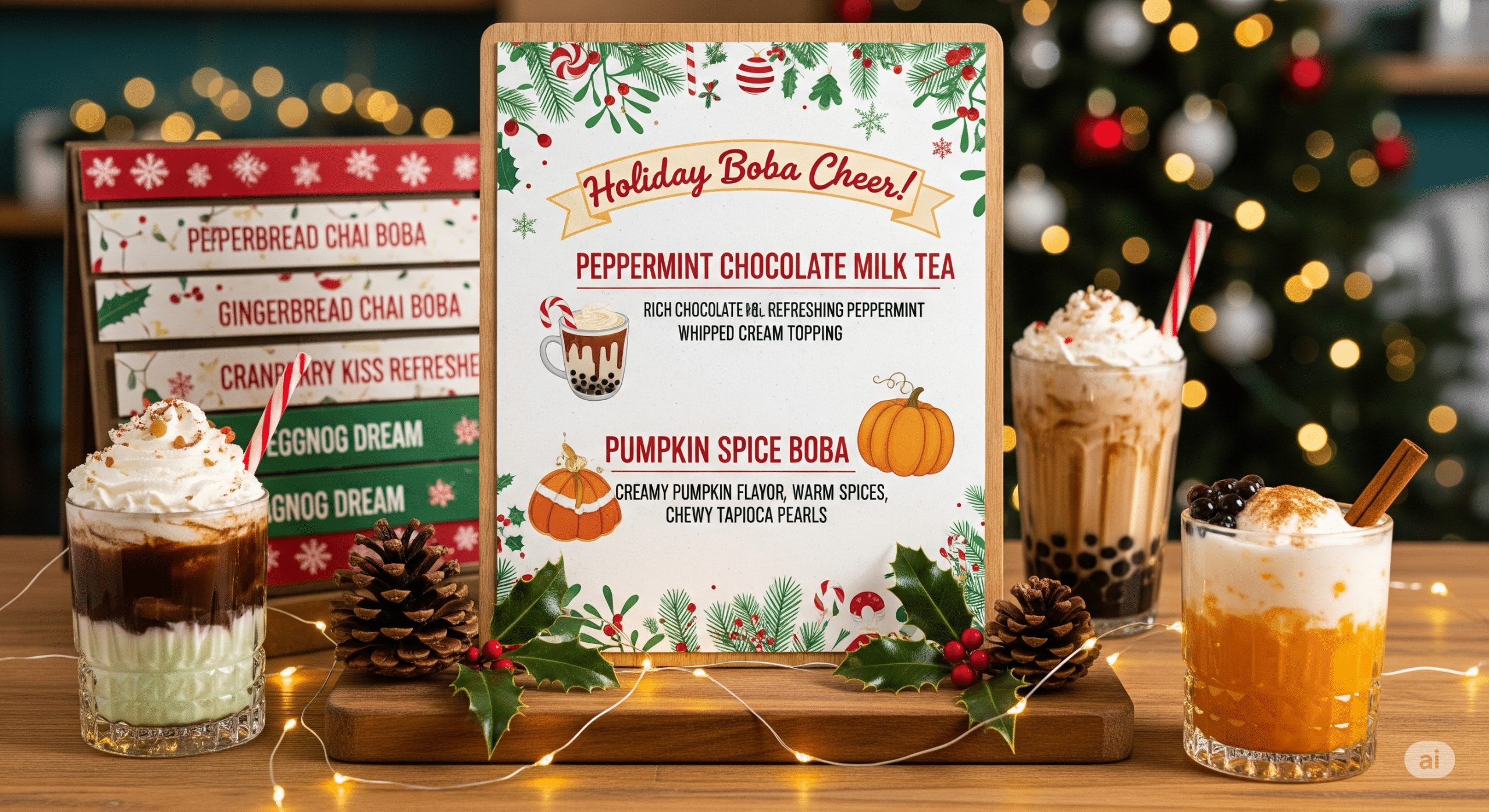
Holiday-themed beverages are especially effective.
Pumpkin spice milk tea during autumn, peppermint chocolate teas during winter, and tropical fruit coolers during summer help shops align with seasonal customer behavior.
Presentation also matters heavily in seasonal promotions.
Special toppings, layered colors, themed cups, and visually creative drinks often generate strong social media attention.
Many bubble tea businesses also introduce seasonal ingredients tied to freshness and local sourcing.
Fresh strawberries, watermelon, peach, chestnut, and lychee flavors often rotate depending on regional availability.
Limited-time drinks also serve as low-risk testing opportunities.
If a seasonal drink performs exceptionally well, businesses may later integrate it into the permanent menu.
This strategy helps shops innovate continuously without overwhelming operational workflows.
Why Presentation Matters in Bubble Tea
Bubble tea is one of the most visually driven beverage industries today.
Colorful drinks, layered textures, transparent cups, and creative toppings naturally encourage customers to share photos online.
This creates free marketing opportunities through social media platforms.
Many successful bubble tea brands intentionally design drinks for visual impact.
Bright fruit colors, brown sugar streaks, layered matcha effects, colorful jellies, and artistic topping placement all contribute to stronger customer engagement.
Presentation influences customer perception significantly.
A visually attractive drink often feels more premium even before the customer tastes it.
This explains why packaging, cup design, and branding have become major competitive factors within the bubble tea industry.
Bubble Tea Menu Psychology and Customer Behavior
The structure of a bubble tea menu strongly affects customer decisions.
Overly complicated menus often overwhelm customers, especially first-time visitors unfamiliar with bubble tea terminology.
Successful menus balance variety with clarity.
Most shops organize drinks into categories such as:
milk teas, fruit teas, smoothies, specialty drinks, and seasonal items.
Highlighting best-sellers helps guide uncertain customers toward popular options.
Signature drinks placed prominently usually generate stronger sales because customers assume these items represent the shop’s specialty.
Upselling opportunities also play a major role.
Toppings, larger cup sizes, premium tea upgrades, and combo pairings significantly increase average ticket value.
Psychological pricing strategies often influence customer perception too.
Menu placement, drink naming, and visual presentation all affect purchasing behavior more than many business owners realize.
Managing Bubble Tea Operations Efficiently
As menus become more customizable, operational complexity increases.
Bubble tea businesses must manage:
inventory tracking, topping preparation, tea brewing, seasonal ingredients, staff training, and fast customer service simultaneously.
Without strong operational systems, customization can quickly slow service speed and create order mistakes.
Inventory management is especially important because bubble tea shops rely on many ingredients with varying shelf lives.
Tapioca pearls, fresh fruits, syrups, tea leaves, dairy products, toppings, and specialty ingredients require careful monitoring.
Modern POS systems help businesses track:
inventory movement, top-selling drinks, seasonal demand trends, and operational performance.
Efficient workflows also improve profitability.
Well-designed preparation stations and digital order management systems reduce wait times while improving order accuracy.
Future Trends in Bubble Tea Menus
The bubble tea industry continues evolving rapidly.
Health-conscious trends are increasing demand for:
reduced sugar drinks, natural sweeteners, fresh fruit ingredients, plant-based milk alternatives, and functional beverages.
Premium tea experiences are also growing.
Customers increasingly appreciate:
high-quality tea leaves, artisanal brewing methods, and authentic regional tea varieties.
Cheese foam drinks, sparkling teas, yogurt-based beverages, and protein bubble teas are also becoming more common.
Technology will likely continue shaping the industry as well.
Self-order kiosks, app-based customization, loyalty systems, and AI-powered ordering tools are becoming increasingly important for high-volume bubble tea businesses.
How Biyo POS Helps Bubble Tea Shops
Biyo POS helps bubble tea shops manage operations more efficiently through cloud-based restaurant and beverage management tools.
The platform supports:
inventory tracking, menu updates, seasonal specials, payment processing, customer analytics, online ordering integration, and real-time reporting.
Bubble tea businesses can track ingredient usage, monitor top-selling drinks, simplify customization workflows, and improve operational visibility through centralized management tools.
Biyo POS also helps shops manage fast-paced ordering environments while reducing errors and improving customer experience.
If you want to modernize bubble tea operations and improve efficiency, you can explore the platform directly through the Biyo POS signup page.
Frequently Asked Questions
What is the most popular bubble tea flavor?
Traditional black milk tea remains one of the most popular bubble tea flavors worldwide because of its balanced tea flavor and creamy texture.
What toppings are commonly added to bubble tea?
Common toppings include tapioca pearls, popping boba, coconut jelly, grass jelly, aloe vera jelly, and pudding.
Why do customers like customizable bubble tea drinks?
Customization allows customers to adjust sweetness, ice levels, toppings, and milk types based on personal preferences.
Are there dairy-free bubble tea options?
Yes. Many bubble tea shops offer oat milk, almond milk, soy milk, and coconut milk alternatives for dairy-free and vegan customers.
Why are seasonal bubble tea drinks important?
Seasonal drinks create excitement, encourage repeat visits, and help shops introduce new flavors tied to holidays and ingredient availability.
How does Biyo POS help bubble tea shops?
Biyo POS helps bubble tea shops manage inventory, seasonal menus, reporting, customer orders, payments, and operational workflows through integrated cloud-based tools.