
The FIFO Inventory Method plays a critical role in how businesses manage stock, control costs, and reduce waste. Whether you operate a restaurant, retail store, or multi-location business, inventory decisions directly affect profitability and daily operations. When inventory piles up, expires, or moves too slowly, the result is lost revenue and unnecessary stress.
At its core, the FIFO Inventory Method focuses on using or selling the oldest inventory first. This approach aligns closely with how real-world businesses operate, especially those handling perishable goods or fast-moving products. When applied correctly, FIFO inventory management improves organization, supports better decision-making, and keeps inventory flowing smoothly.
This guide explains the FIFO Inventory Method in depth, explores how it works in practice, and shows how modern POS systems help businesses apply FIFO more consistently.
Table of Contents
Understanding the FIFO Inventory Method
The FIFO Inventory Method, short for First In, First Out inventory, ensures that the earliest inventory received is the first inventory sold or used. This approach mirrors how businesses naturally handle stock, especially when freshness or shelf life matters.
Because FIFO inventory management follows a logical flow, it helps businesses avoid confusion, reduce expired stock, and maintain consistent product quality. When inventory flows correctly, teams spend less time correcting mistakes and more time serving customers.
To fully understand FIFO, it helps to look at how it applies to both physical inventory movement and inventory tracking.
What First In, First Out Inventory Means
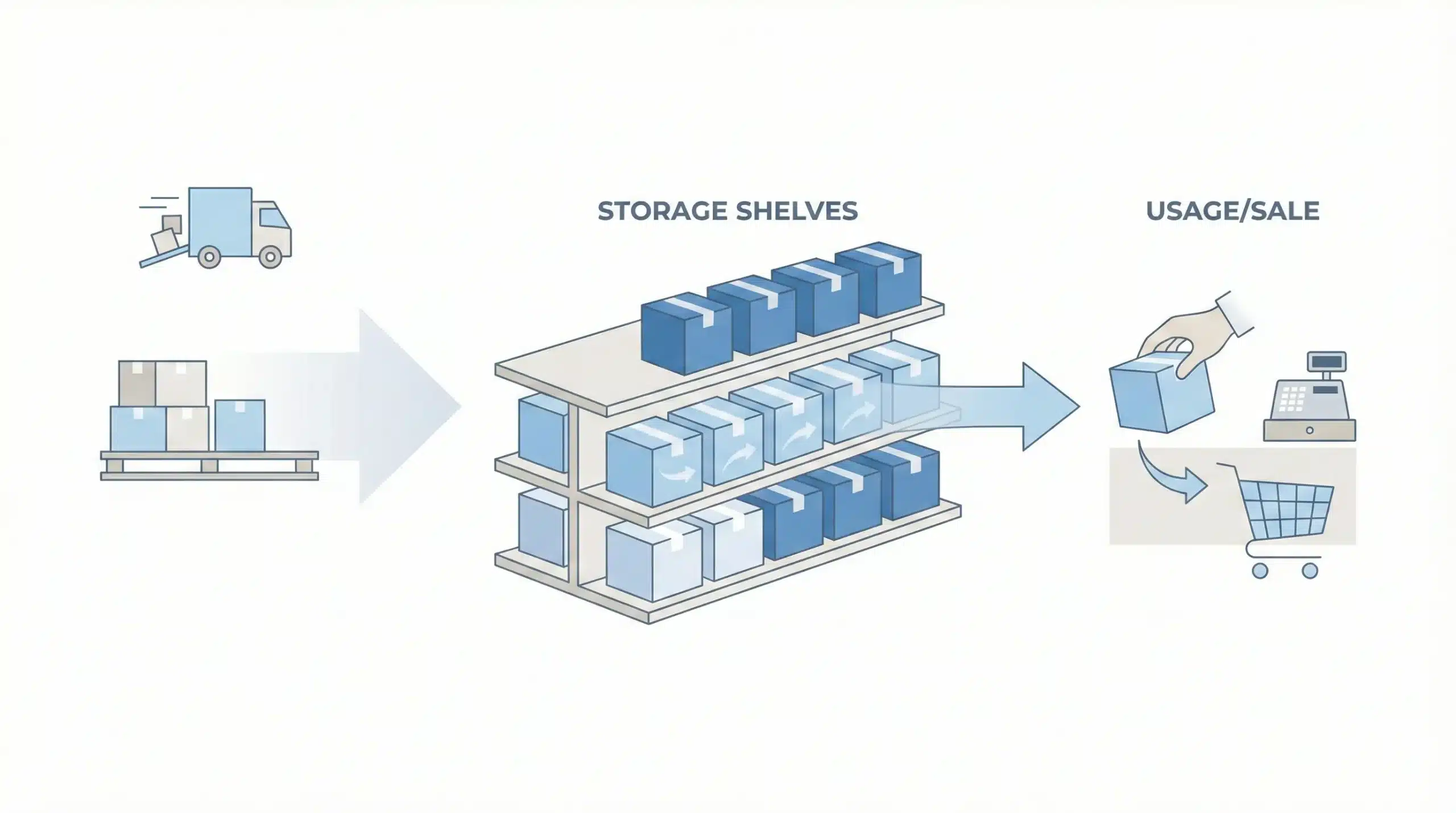
First in first out inventory means that older products leave inventory before newer ones. In practice, staff place new inventory behind existing stock so older items get used first.
As a result, FIFO stock rotation reduces the chance that products sit untouched until they expire. This method supports better organization while reinforcing good inventory habits across teams.
When employees follow FIFO rules daily, inventory stays cleaner and easier to manage. Over time, these habits create noticeable improvements in efficiency.
FIFO Inventory Method vs Inventory Accounting
The FIFO Inventory Method applies both to physical stock movement and accounting practices. From an accounting perspective, FIFO records the cost of older inventory first.
Therefore, financial records reflect more accurate inventory values during periods of price changes. Businesses often prefer FIFO inventory management because it aligns closely with real purchasing behavior.
By combining physical FIFO stock rotation with proper accounting, businesses gain clearer insight into inventory costs and margins.
Industries That Rely on FIFO Inventory Management
Restaurants depend heavily on FIFO because food inventory has limited shelf life. Using older ingredients first helps prevent waste and protect food safety.
Retail businesses also rely on FIFO inventory management, especially for seasonal products. When older items sell first, retailers avoid markdowns and dead stock.
Pharmacies, grocery stores, and warehouses also use the FIFO Inventory Method to maintain quality and consistency.
 Why the FIFO Inventory Method Matters
 Why the FIFO Inventory Method Matters
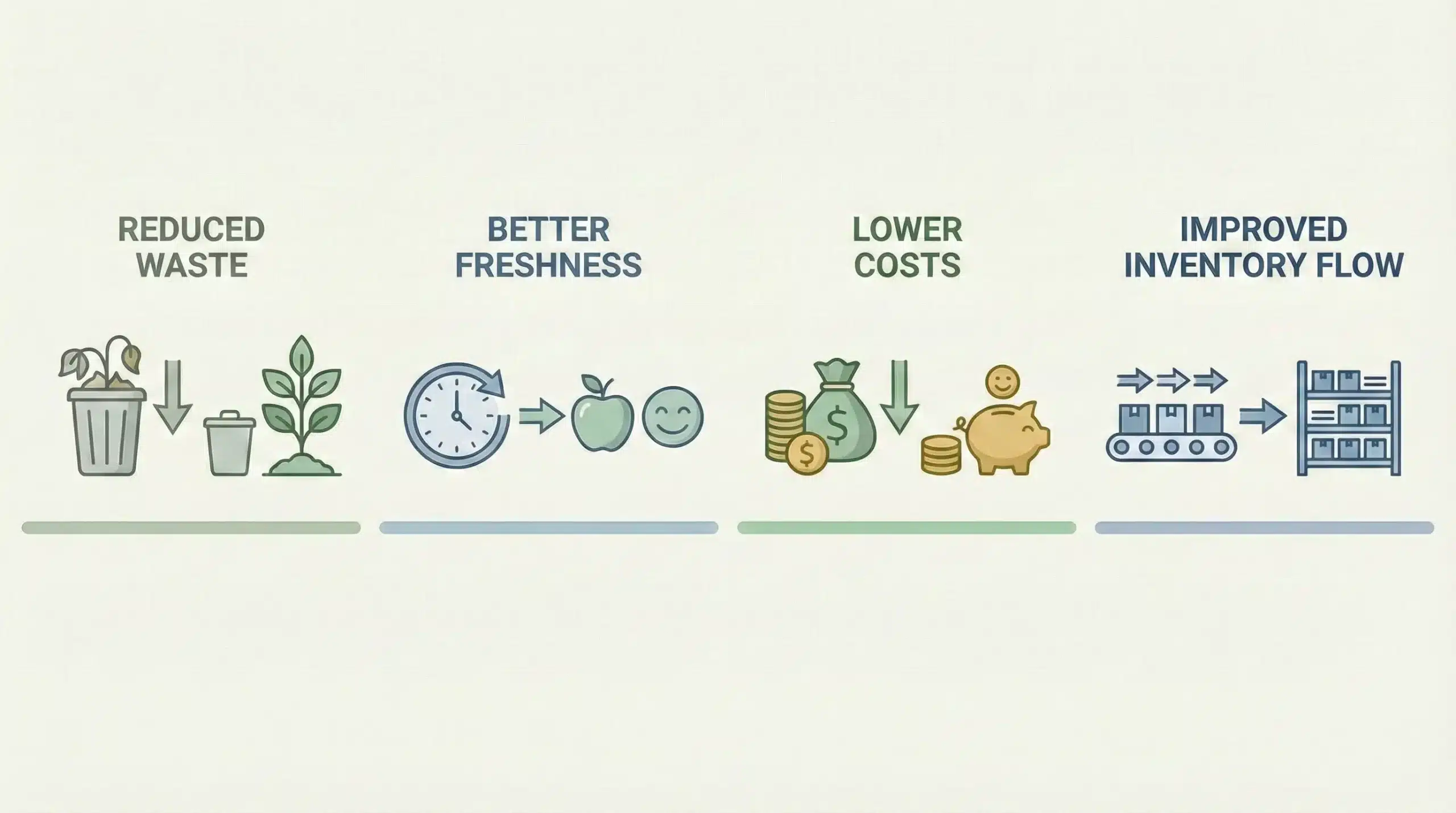
The FIFO Inventory Method delivers benefits that extend beyond basic organization. When businesses apply FIFO consistently, they gain better control over inventory movement and costs.
Although FIFO sounds simple, its impact can be significant when teams follow it daily. From reducing waste to improving customer satisfaction, FIFO supports long-term growth.
Understanding these benefits helps businesses see why FIFO inventory management remains a standard best practice.
Inventory Waste Reduction
One of the biggest advantages of the FIFO Inventory Method is inventory waste reduction. When businesses use older stock first, fewer products expire or spoil.
As a result, restaurants throw away less food and retailers avoid discarding unsold items. Waste reduction directly improves profit margins.
Over time, consistent FIFO stock rotation leads to measurable savings and more predictable inventory planning.
Prevent Expired Stock and Quality Issues
FIFO inventory management helps prevent expired stock from reaching customers. When staff always move older items forward, product freshness stays consistent.
Therefore, customer satisfaction improves because products meet quality expectations. In industries like food service, this consistency supports safety compliance.
Preventing expired stock also reduces the risk of recalls and reputational damage.
Inventory Cost Control
FIFO Inventory Method supports better inventory cost control by aligning usage with purchasing order. Businesses see clearer cost patterns over time.
When inventory costs rise, FIFO helps businesses understand how price changes affect margins. This visibility supports smarter purchasing decisions.
Accurate cost control allows businesses to plan pricing strategies with more confidence.
How FIFO Inventory Management Works in Practice
Applying FIFO inventory management requires more than knowing the concept. Businesses must build daily habits and workflows that support FIFO stock rotation.
Without proper execution, FIFO can break down quickly. Clear processes and training help teams follow FIFO consistently.
Operational discipline turns FIFO Inventory Method from theory into daily practice.
FIFO Stock Rotation on Shelves
FIFO stock rotation starts with proper shelf organization. Staff should place new inventory behind older items whenever stock arrives.
For example, in retail, employees move older products to the front of shelves. In restaurants, kitchen staff rotate ingredients during prep.
Simple visual cues and shelf layouts make FIFO easier to follow during busy shifts.
Labeling and Date Tracking
Clear labeling supports FIFO inventory management. Date labels help staff identify which items need to be used first.
When labels remain visible and consistent, FIFO stock rotation becomes second nature. This practice reduces guesswork during peak hours.
Labeling systems work best when combined with regular inventory checks.
Staff Training and Accountability
FIFO Inventory Method depends on staff behavior. Training ensures everyone understands why FIFO matters.
Therefore, managers should reinforce FIFO rules during onboarding and daily operations. Accountability keeps standards consistent across shifts.
When teams understand the impact of FIFO, compliance improves naturally.
Common FIFO Inventory Challenges
Despite its simplicity, FIFO inventory management presents challenges when systems lack structure. Many businesses struggle due to manual processes.
These challenges often appear as inventory grows or operations expand. Recognizing them early helps prevent costly mistakes.
Addressing FIFO issues requires both process improvements and better tools.
Manual Tracking Errors
Manual inventory tracking increases the risk of mistakes. Staff may forget to rotate stock during busy periods.
As a result, FIFO breaks down and expired stock builds up. Over time, errors compound and create larger problems.
Automation reduces reliance on memory and manual checks.
Limited Inventory Visibility
Without real-time inventory visibility, FIFO inventory management becomes difficult. Businesses may not know which items arrived first.
Therefore, decisions rely on estimates rather than data. This lack of clarity increases waste.
Visibility improves when inventory data updates automatically with sales.
Multi-Location Complexity
FIFO challenges multiply across multiple locations. Inventory may move unevenly between stores.
As a result, older stock sits unused while other locations reorder unnecessarily. Centralized tracking solves this issue.
Multi-location FIFO requires connected systems.
Using POS Software to Support FIFO Inventory Management
Modern POS systems simplify FIFO inventory management by connecting sales and inventory data. Automation removes many manual steps.
When inventory updates in real time, FIFO stock rotation becomes easier to enforce. Software supports consistency.
Technology plays a key role in scaling FIFO practices.
Real-Time Inventory Updates
POS software tracks inventory movement as sales occur. Older items leave inventory first.
As a result, businesses gain accurate insight into stock levels. Real-time data supports better purchasing.
This accuracy strengthens FIFO Inventory Method compliance.
Centralized Inventory Management
Centralized systems allow managers to monitor FIFO across locations. Inventory transfers become more strategic.
Therefore, businesses reduce overstock and shortages. Central control improves efficiency.
Consistency across locations protects margins.
Reporting and Inventory Insights
Inventory reports reveal how FIFO affects sales and waste. Managers spot patterns quickly.
With better insights, businesses adjust ordering strategies. Continuous improvement becomes possible.
Data-driven FIFO management supports long-term growth.
How Biyo POS Supports FIFO Inventory Method
 How Biyo POS Supports FIFO Inventory Method
Biyo POS helps businesses apply the FIFO Inventory Method without relying on disconnected tools. The system connects sales, inventory, and reporting in one platform.
Restaurants and retailers use Biyo POS to track inventory in real time, manage multiple locations, and reduce manual errors. These features support consistent FIFO inventory management.
If you want to explore how Biyo POS fits your inventory workflow, you can schedule a call with the Biyo POS team. Businesses ready to move forward can also sign up and simplify inventory management.
FAQs
What is the FIFO Inventory Method?
The FIFO Inventory Method ensures that the oldest inventory is sold or used before newer stock.
Is FIFO inventory management good for restaurants?
Yes. FIFO helps restaurants reduce food waste and maintain consistent quality.
Can retail stores use FIFO inventory management?
Retail businesses use FIFO to prevent expired stock and manage seasonal inventory.
Does FIFO require POS software?
FIFO can be done manually, but POS software makes it easier and more accurate.