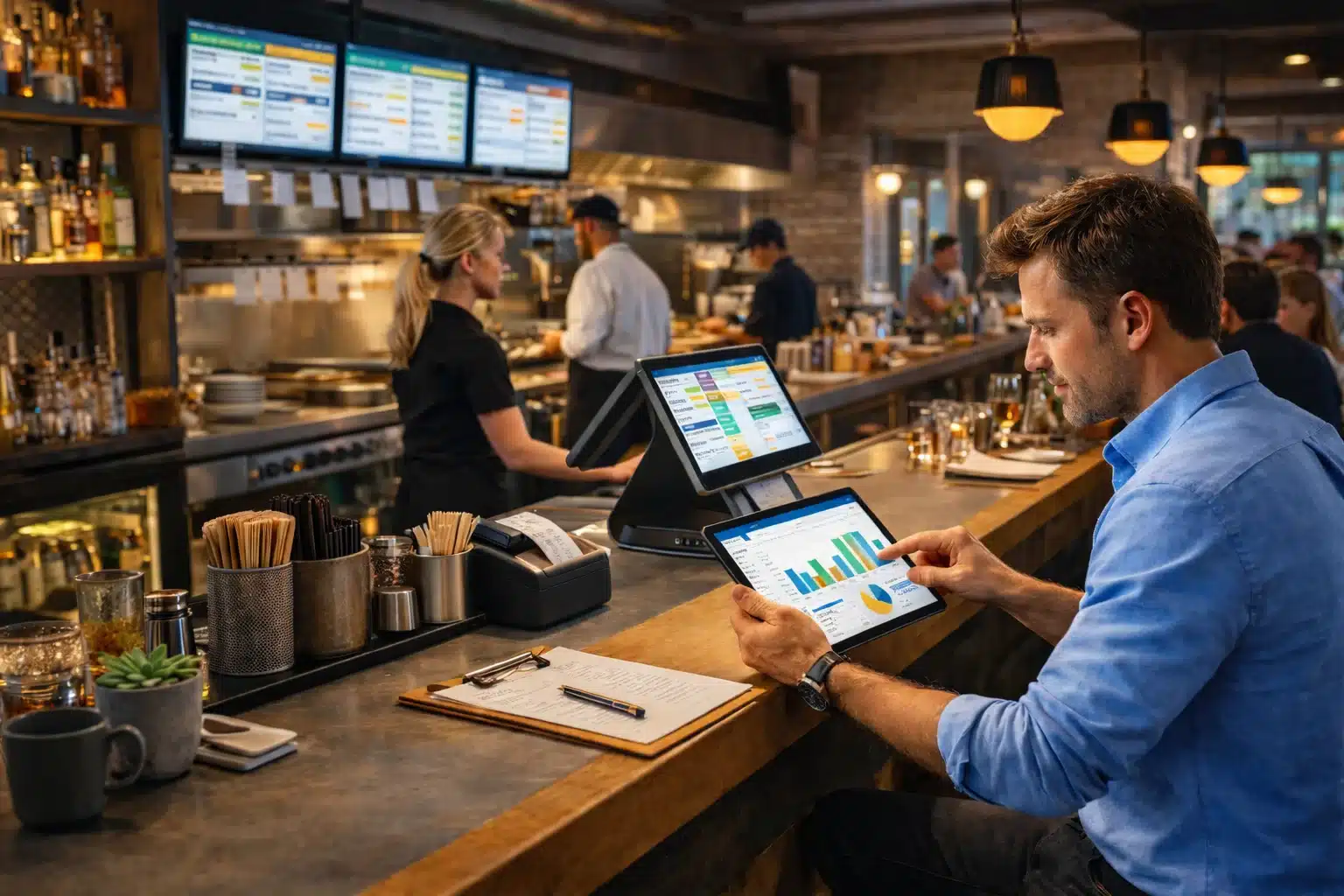

Restaurant operations have changed dramatically over the past decade. Modern restaurants no longer rely solely on manual processes, paper tickets, or disconnected systems to manage daily operations. Today, Restaurant Technology Solutions influence nearly every part of the business, including online ordering, kitchen communication, inventory management, payment processing, analytics, employee scheduling, and customer engagement.
As customer expectations continue evolving, convenience and speed have become just as important as food quality. Guests expect seamless online ordering, accurate delivery updates, fast checkout experiences, and personalized service whether they dine in, order through mobile apps, or use self-service kiosks. Restaurants that fail to modernize often struggle with operational inefficiencies, slower service, higher labor costs, and reduced customer satisfaction.
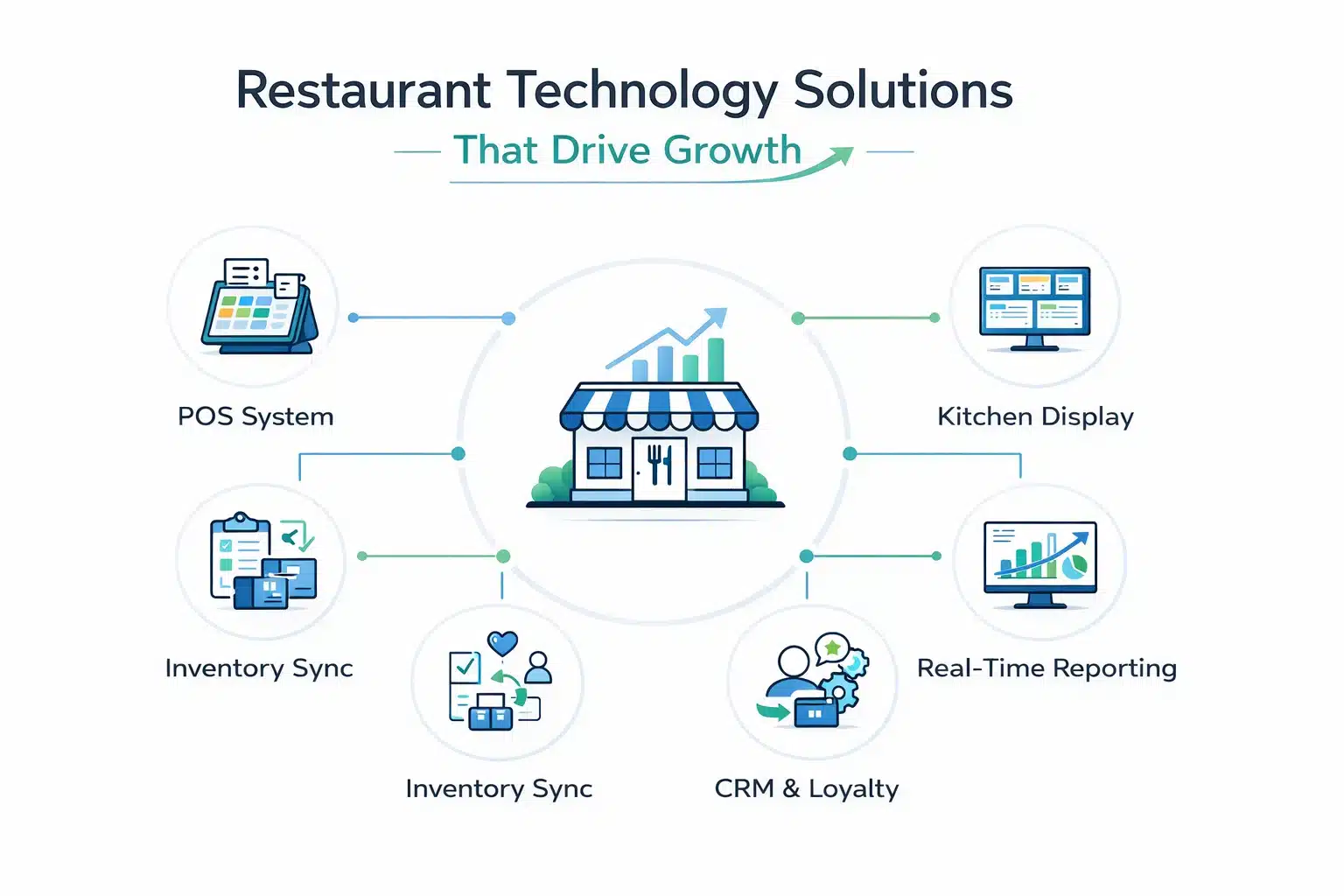
Modern Restaurant Technology Solutions help businesses streamline workflows, reduce manual errors, improve financial visibility, and create stronger guest experiences. Integrated systems allow restaurants to connect digital ordering, POS software, kitchen display systems, inventory automation, and reporting tools into one centralized operational ecosystem.
Instead of operating reactively, restaurant owners and managers can make smarter, data-driven decisions using real-time analytics and automation. In this guide, we’ll explore how restaurant technology improves guest experience, kitchen efficiency, payment processing, inventory management, analytics, scalability, and long-term business growth.
Table of Contents
- Digital Ordering and Guest Experience
- Kitchen Systems and Workflow Efficiency
- Payment Technology and Checkout Speed
- Inventory Automation and Cost Management
- Analytics and Performance Insights
- Scaling with Smart Restaurant Tech
- The Future of Restaurant Technology
- How Biyo Supports Modern Restaurants
- Frequently Asked Questions
Digital Ordering and Guest Experience
Customer behavior has shifted heavily toward convenience-driven dining experiences. Modern guests expect restaurants to provide flexible ordering methods that fit their lifestyle, whether they are ordering from smartphones, using self-service kiosks, dining in, or arranging delivery. As a result, digital ordering systems have become one of the most important components of modern Restaurant Technology Solutions.
Online Ordering Integration
Online ordering integration allows restaurants to connect websites, mobile apps, and third-party delivery platforms directly with their POS systems. Instead of manually re-entering orders from multiple channels, integrated systems automatically transfer orders into the kitchen workflow instantly.
This automation significantly reduces human error while improving order accuracy during busy hours. Restaurants can process larger volumes of online orders without placing additional pressure on front-counter staff.
Integrated online ordering systems also improve operational visibility. Managers can monitor order flow, track sales channels, and analyze customer behavior more effectively through centralized reporting dashboards.
For restaurants handling high delivery volumes, integration becomes critical because disconnected systems often create delays, duplicate orders, and communication breakdowns.
Mobile Ordering and Self-Service Kiosks
Mobile ordering and self-service kiosks have become increasingly popular because they improve speed, convenience, and customer control during the ordering process.
Self-service kiosks allow guests to browse menus, customize orders, apply discounts, and complete payments independently without waiting for cashier assistance. This reduces front-counter congestion while improving order accuracy.
Restaurants also benefit from built-in upselling opportunities. Kiosks and mobile ordering platforms can automatically recommend add-ons, combo upgrades, desserts, or premium options during checkout, increasing average ticket value.
Customers often feel more comfortable customizing orders digitally because they can review selections carefully without feeling rushed.
Customer Experience and Personalization
Modern Restaurant Technology Solutions also support personalized customer experiences through loyalty programs, customer profiles, and purchase history tracking.
Restaurants can use customer data to create targeted promotions, personalized discounts, and rewards programs that encourage repeat visits. Personalized marketing improves customer retention because guests feel recognized and valued.
Digital ordering platforms also improve communication by providing estimated pickup times, delivery tracking, and automated notifications that reduce uncertainty for customers.
As competition increases, customer experience has become one of the strongest differentiators between restaurants.
 Kitchen Systems and Workflow Efficiency
 Kitchen Systems and Workflow Efficiency
Kitchen efficiency directly impacts service speed, order accuracy, and overall customer satisfaction. Restaurants with poor communication between front-of-house and kitchen teams often experience delays, mistakes, and inconsistent service quality.
Modern Restaurant Technology Solutions improve kitchen coordination by replacing manual workflows with digital systems designed for speed and organization.
Kitchen Display Systems
Kitchen display systems (KDS) replace traditional paper tickets with digital screens that display orders instantly and clearly. Orders are organized automatically by priority, timing, and preparation station.
Digital order visibility reduces confusion and eliminates problems associated with lost or damaged paper tickets. Kitchen staff can view modifications, allergy instructions, and timing requirements more accurately.
During peak hours, this visibility becomes extremely valuable because it helps kitchens maintain consistent output without overwhelming staff.
Restaurants using kitchen display systems often improve ticket times and reduce preparation errors significantly.
Automated Order Routing
Advanced Restaurant Technology Solutions also support automated order routing. Different items within an order can automatically route to the correct preparation stations based on category.
For example, beverages can route directly to the bar while grilled items route to the kitchen grill station and desserts route separately to dessert preparation teams.
This automation prevents communication bottlenecks and keeps workflows organized even during heavy service periods.
Improved kitchen coordination directly translates into faster service and better customer experiences.
Kitchen Performance Tracking
Some restaurant systems also provide kitchen performance analytics that monitor preparation speed, order completion times, and workflow bottlenecks.
Managers can identify operational inefficiencies and adjust staffing or kitchen processes based on real performance data.
These insights help restaurants maintain consistency while improving productivity over time.
Payment Technology and Checkout Speed
The checkout experience heavily influences customer satisfaction because it represents the final stage of the dining experience. Slow or inconvenient payment processes can negatively affect customer perception even if the food and service were excellent.
Modern payment technology focuses on speed, flexibility, security, and convenience.
Contactless and Digital Payments
Today’s customers increasingly expect support for contactless cards, mobile wallets, tap-to-pay systems, and digital payment platforms.
Integrated payment gateways process transactions quickly while reducing physical contact and improving convenience. Faster checkout helps reduce lines, improve table turnover, and support high-volume service environments more efficiently.
Payment flexibility also improves customer satisfaction because guests can choose their preferred payment method easily.
Encrypted payment systems additionally strengthen transaction security while reducing fraud risks.
Integrated Financial Reconciliation
Integrated payment systems automatically synchronize transaction data directly with POS reporting dashboards and accounting records.
This automation reduces manual reconciliation work and minimizes accounting errors caused by disconnected systems.
Managers gain immediate visibility into revenue, tips, taxes, refunds, and payment activity through centralized financial reporting tools.
Real-time reporting improves financial accuracy and strengthens operational control.
Split Payments and Digital Receipts
Restaurants increasingly rely on digital payment flexibility such as split billing, QR code payments, and digital receipts.
Group dining experiences become much smoother when guests can divide checks easily without manual calculations or delays.
Digital receipts also reduce paper waste while improving customer convenience through email or text-based delivery options.
Inventory Automation and Cost Management
Inventory management remains one of the most critical areas affecting restaurant profitability. Food waste, inaccurate stock counts, over-ordering, and ingredient shortages can significantly damage margins.
Modern Restaurant Technology Solutions automate inventory tracking and improve purchasing decisions using real-time operational data.
Real-Time Inventory Tracking
Integrated inventory systems automatically deduct ingredients from stock levels as menu items are sold.
For example, when a customer purchases a burger, the system adjusts inventory quantities for buns, meat, cheese, and toppings instantly.
This real-time visibility helps restaurants monitor stock levels more accurately while reducing unexpected shortages during service.
Low-stock alerts allow managers to reorder supplies proactively before inventory problems impact operations.
Waste Reduction and Cost Control
Inventory automation helps restaurants reduce food waste by improving purchasing accuracy and tracking consumption patterns.
Managers can identify overused ingredients, spoilage trends, and inefficient purchasing behavior more effectively through inventory reporting tools.
Reducing food waste directly improves profitability because even small inventory losses accumulate significantly over time.
Data-Driven Purchasing Decisions
Advanced Restaurant Technology Solutions analyze historical sales data to generate purchasing recommendations automatically.
Instead of relying entirely on estimates or intuition, managers can make purchasing decisions based on actual consumption trends and projected demand.
This reduces excess inventory while improving operational efficiency.
Analytics and Performance Insights
Modern restaurant systems generate valuable operational data that helps businesses make smarter decisions across multiple areas of the business.
Sales and Revenue Reporting
Detailed reporting dashboards provide visibility into hourly sales trends, menu performance, customer spending behavior, and revenue patterns.
Managers can quickly identify peak business periods, underperforming menu items, and promotional opportunities using real-time analytics.
Data-driven decision-making improves operational consistency while reducing reliance on assumptions.
Labor and Productivity Tracking
Labor costs represent one of the largest operational expenses for restaurants. Digital restaurant systems track labor hours, scheduling efficiency, and employee productivity more accurately.
Managers can compare staffing levels against sales performance to optimize schedules while avoiding unnecessary labor costs.
Balanced staffing improves service quality without overspending on payroll expenses.
Customer Behavior Insights
Analytics systems also help restaurants understand customer preferences and purchasing behavior.
Restaurants can identify popular menu combinations, repeat customer patterns, and loyalty program engagement more effectively.
This information supports smarter marketing campaigns and menu optimization strategies.
Scaling with Smart Restaurant Tech
As restaurants grow, operational complexity increases significantly. Multi-location management, inventory consistency, centralized reporting, and workforce coordination become much harder without integrated systems.
Cloud-Based Infrastructure
Cloud-based Restaurant Technology Solutions allow owners and managers to access reports, inventory data, and operational dashboards remotely from any device.
Cloud infrastructure also improves system reliability through automatic backups and centralized software updates.
Businesses gain flexibility while reducing the risks associated with local hardware failures.
Multi-Location Oversight
Centralized dashboards help restaurant groups compare performance across multiple locations consistently.
Owners can monitor revenue trends, inventory levels, labor performance, and customer activity across all stores from one platform.
This level of visibility improves scalability and operational consistency significantly.
Standardization Across Locations
Integrated systems also help maintain standardized pricing, menus, reporting structures, and operational procedures across expanding restaurant brands.
Consistency becomes increasingly important as businesses scale because operational differences between locations can quickly create management challenges.
The Future of Restaurant Technology
Restaurant technology continues evolving rapidly as automation, artificial intelligence, machine learning, and predictive analytics become more advanced.
Future systems will likely provide even deeper operational insights, personalized guest experiences, automated forecasting, and enhanced kitchen automation capabilities.
Voice ordering, AI-powered recommendations, robotics, and advanced delivery integrations may become increasingly common in both quick-service and full-service restaurants.
Restaurants that adapt early to technological innovation often gain stronger long-term competitive advantages.
How Biyo Supports Modern Restaurants
 How Biyo Supports Modern Restaurants
Biyo POS provides integrated Restaurant Technology Solutions designed to support modern restaurant operations through one centralized platform.
The cloud-based system combines digital ordering, kitchen display systems, contactless payments, inventory automation, analytics, employee management, and reporting tools to improve operational efficiency and customer experience simultaneously.
Because Biyo supports multi-device and multi-location operations, restaurants gain the flexibility and scalability required for long-term growth. Real-time reporting also provides managers with immediate visibility into performance, inventory, labor costs, and customer trends.
If you want to see how Biyo can support your restaurant operations, you can schedule a live demo here or begin directly through the signup page.
Frequently Asked Questions
What are Restaurant Technology Solutions?
Restaurant Technology Solutions are digital systems such as POS software, online ordering platforms, kitchen display systems, inventory management tools, and analytics platforms that help streamline restaurant operations.
Why are digital restaurant systems important?
They improve speed, reduce manual errors, automate reporting, enhance customer experience, and support data-driven operational decisions.
Can restaurant technology support multiple locations?
Yes. Cloud-based systems provide centralized dashboards and standardized reporting across multiple restaurant locations.
How does technology improve restaurant profitability?
Technology improves profitability by reducing waste, optimizing labor, increasing operational efficiency, improving inventory control, and supporting faster service.
How does Biyo POS support restaurant growth?
Biyo POS integrates digital ordering, kitchen systems, payments, analytics, inventory management, and reporting into one scalable platform designed for modern restaurants.