
Running a restaurant without reliable data is risky. Costs change daily, customer behavior shifts quickly, and small mistakes can quietly damage profits. That is why understanding how POS reporting helps restaurant owners make better decisions is no longer optional. It is a core requirement for running a modern restaurant.
A POS system captures sales, payments, labor activity, and inventory movement in real time. When this data is organized into clear reports, owners gain visibility into what is actually happening in their business. Better visibility leads directly to better decisions.
Table of Contents
- Understanding the Value of Restaurant POS Reporting
- Using Sales Reports to Improve Daily Operations
- Tracking Weekly Sales Trends for Smarter Planning
- Revenue Analysis for Long-Term Restaurant Growth
- Turning POS Reports Into Actionable Decisions
- Why Biyo POS Makes Reporting Easier
- FAQs
Understanding the Value of Restaurant POS Reporting
Restaurant POS reporting transforms daily transactions into meaningful insights. Instead of relying on memory or assumptions, owners see exactly how their business performs. This clarity removes emotional decision-making.
What Restaurant POS Reporting Includes
POS reporting includes sales reports, payment summaries, labor data, and product performance. Each report focuses on a specific area of the business. Together, they create a complete operational picture.
A daily sales report shows revenue totals and item-level sales. Weekly and monthly reports reveal longer-term trends that would otherwise stay hidden.
When owners understand these reports, they stop reacting and start planning.
Why Guesswork Is Dangerous
Many restaurants fail not because of poor food, but because of poor decisions. Guessing leads to overstaffing, wasted inventory, and ineffective promotions.
POS reporting replaces assumptions with evidence. Owners see what works and what does not, which lowers risk.
This shift alone improves consistency and profitability.
How Data Improves Leadership
Access to clear data changes how owners lead. Decisions become calm and deliberate rather than reactive.
Managers gain confidence when expectations are based on real numbers. Staff performance improves as a result.
Strong leadership begins with strong information.

Using Sales Reports to Improve Daily Operations
Sales reports are the backbone of daily restaurant management. They show what happened today and why it happened.
Using the Daily Sales Report
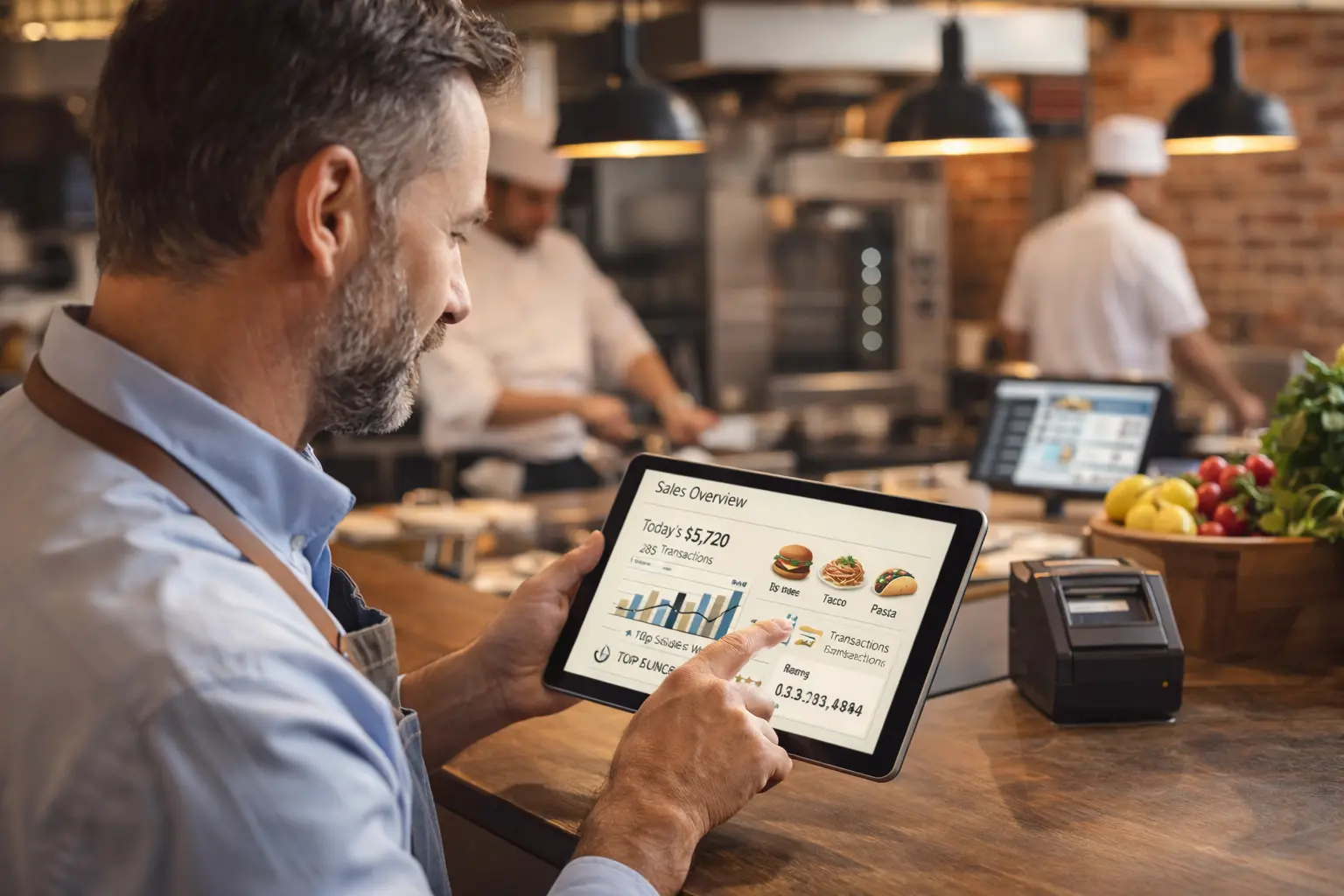
The daily sales report highlights total revenue, order volume, and payment methods. This information helps owners measure daily success accurately.
Item-level details reveal which menu items perform best. Poor performers become obvious.
These insights allow immediate operational adjustments.
Menu Performance Optimization
Sales reports show which dishes customers choose most often. High-margin items deserve more visibility.
Low-performing items can be improved, replaced, or removed. This keeps the menu focused and profitable.
Data-driven menus outperform guess-based menus every time.
Staffing and Inventory Control
Sales volume directly affects staffing needs. POS reports help owners schedule accurately.
Inventory planning also improves when sales patterns are clear. Waste drops significantly.
Daily reports create operational discipline.
 Tracking Weekly Sales Trends for Smarter Planning
 Tracking Weekly Sales Trends for Smarter Planning
Weekly sales trends reveal patterns that daily reports cannot. These patterns support better forecasting.
Identifying High and Low Demand Days
Weekly data highlights predictable busy and slow days. Owners can plan accordingly.
Marketing efforts become targeted instead of random.
This improves both revenue and customer experience.
Smarter Promotions
Promotions perform best when timed correctly. Weekly trends show ideal opportunities.
POS reporting tracks promotion results clearly.
Successful offers are repeated. Failed ones are dropped.
Forecasting with Confidence
Weekly trends improve demand forecasting. Preparation becomes proactive.
Better forecasting leads to smoother operations and fewer surprises.
Confidence replaces uncertainty.
Revenue Analysis for Long-Term Restaurant Growth
Revenue analysis helps owners think beyond daily survival and toward growth.
Understanding Revenue Sources
POS reports break revenue into dine-in, takeout, and online orders. Each behaves differently.
This breakdown guides investment decisions.
Owners allocate resources where returns are strongest.
Profitability vs Sales Volume
High sales do not always mean high profit. Discounts and costs matter.
Revenue analysis reveals true performance.
Profitable growth becomes achievable.
Supporting Expansion Decisions
Consistent revenue data supports expansion planning.
Investors trust businesses that understand their numbers.
POS reporting reduces expansion risk.
Turning POS Reports Into Actionable Decisions
 Turning POS Reports Into Actionable Decisions
Reports matter only when acted upon.
Weekly Review Habits
Successful owners review reports on a schedule. Problems are caught early.
Metrics stay aligned with goals.
Consistency creates results.
Team Alignment Through Data
Sharing insights improves accountability.
Teams perform better when expectations are clear.
Transparency strengthens culture.
Continuous Improvement
POS data supports testing and refinement.
Small improvements compound over time.
Growth becomes predictable.
Why Biyo POS Makes Reporting Easier
Biyo POS simplifies restaurant POS reporting with clear dashboards, real-time sales reports, and easy-to-read analytics. Restaurant owners can easily track daily sales reports, weekly sales trends, and revenue analysis without dealing with technical headaches or complex setups.
Biyo POS also supports online ordering, inventory management, and staff tracking within one unified platform. If you want to see how it fits your restaurant workflow, you can schedule a call with their team or sign up here to get started.
FAQs
How often should POS reports be reviewed?
Daily sales reports should be reviewed every day, while weekly trends should be reviewed weekly.
Is POS reporting useful for small restaurants?
Yes. Small restaurants often benefit the most from accurate reporting.
What is the most important POS report?
The daily sales report is essential, supported by weekly trend analysis.