
Setting prices is one of the hardest decisions a restaurant owner makes. Charge too little and profit disappears. Charge too much and guests hesitate. A strong Restaurant Pricing Strategy helps you balance value perception with profitability. It allows you to grow revenue without pushing customers away.
Many operators rely only on instinct. However, profitable menu pricing requires structure, psychology, and data. In this guide, you will learn how to build a Restaurant Pricing Strategy using cost-based pricing, contribution margin analysis, menu engineering, and pricing psychology restaurants use successfully.
Table of Contents
- Building the Foundation of a Restaurant Pricing Strategy
- Using Cost-Based Pricing and Contribution Margin
- Applying Pricing Psychology in Restaurants
- Menu Engineering and Price Optimization
- Continuous Restaurant Price Optimization
- Frequently Asked Questions
Building the Foundation of a Restaurant Pricing Strategy
Before adjusting numbers, you must define your positioning. A Restaurant Pricing Strategy always reflects brand identity and target audience. Therefore, understanding your concept is the first step.
Defining Your Market Position
Your concept determines acceptable price ranges. A fast-casual brand cannot price like fine dining. As a result, clarity prevents misalignment.
Analyze competitors in your area. Meanwhile, study guest spending habits. Therefore, you position your menu realistically.
A thoughtful Restaurant Pricing Strategy begins with honest market evaluation.
Next, customer perception plays a central role.
Understanding Value Perception
Guests do not buy food alone. They buy experience and atmosphere. As a result, value perception influences pricing decisions.
For instance, premium plating increases perceived worth. Meanwhile, strong branding justifies higher prices. Therefore, pricing psychology restaurants apply must align with experience.
Value perception directly shapes a sustainable Restaurant Pricing Strategy.
Clear financial goals guide structure.
Setting Profit Targets
Define target food cost percentages before setting prices. Without targets, margins become unpredictable. As a result, financial control weakens.
Calculate desired contribution margin for each item. Meanwhile, ensure overhead expenses are covered. Therefore, pricing decisions remain strategic.
Every successful Restaurant Pricing Strategy starts with profit planning, not guesswork.
 Using Cost-Based Pricing and Contribution Margin
 Using Cost-Based Pricing and Contribution Margin
Numbers form the backbone of pricing. Although branding matters, cost-based pricing ensures sustainability. Therefore, this section explains financial fundamentals.
Calculating Food Cost Accurately
Start by calculating total ingredient cost per dish. Include every component, from sauces to garnishes. As a result, you avoid underpricing.
Update costs regularly to reflect supplier changes. Meanwhile, track waste carefully. Therefore, accuracy improves.
A precise Restaurant Pricing Strategy depends on disciplined cost tracking.
Contribution margin reveals deeper insight.
Analyzing Contribution Margin
Contribution margin measures revenue minus variable costs. High-margin items contribute more to profit. As a result, they deserve promotion.
Identify low-margin dishes quickly. Meanwhile, adjust pricing or ingredients if necessary. Therefore, profitability improves.
Strong menu pricing strategy decisions rely on contribution margin analysis.
Balanced pricing ensures sustainability.
Balancing Cost and Competitiveness
Pure cost-based pricing may ignore market realities. Therefore, compare competitor pricing carefully.
If your price exceeds competitors significantly, justify it through quality or experience. Meanwhile, avoid race-to-the-bottom discounts. Therefore, brand positioning remains intact.
A well-rounded Restaurant Pricing Strategy balances internal costs and external competition.
Applying Pricing Psychology in Restaurants
Numbers influence profit, yet psychology influences decisions. Therefore, pricing psychology restaurants use can increase revenue without raising food costs.
Using Price Anchoring
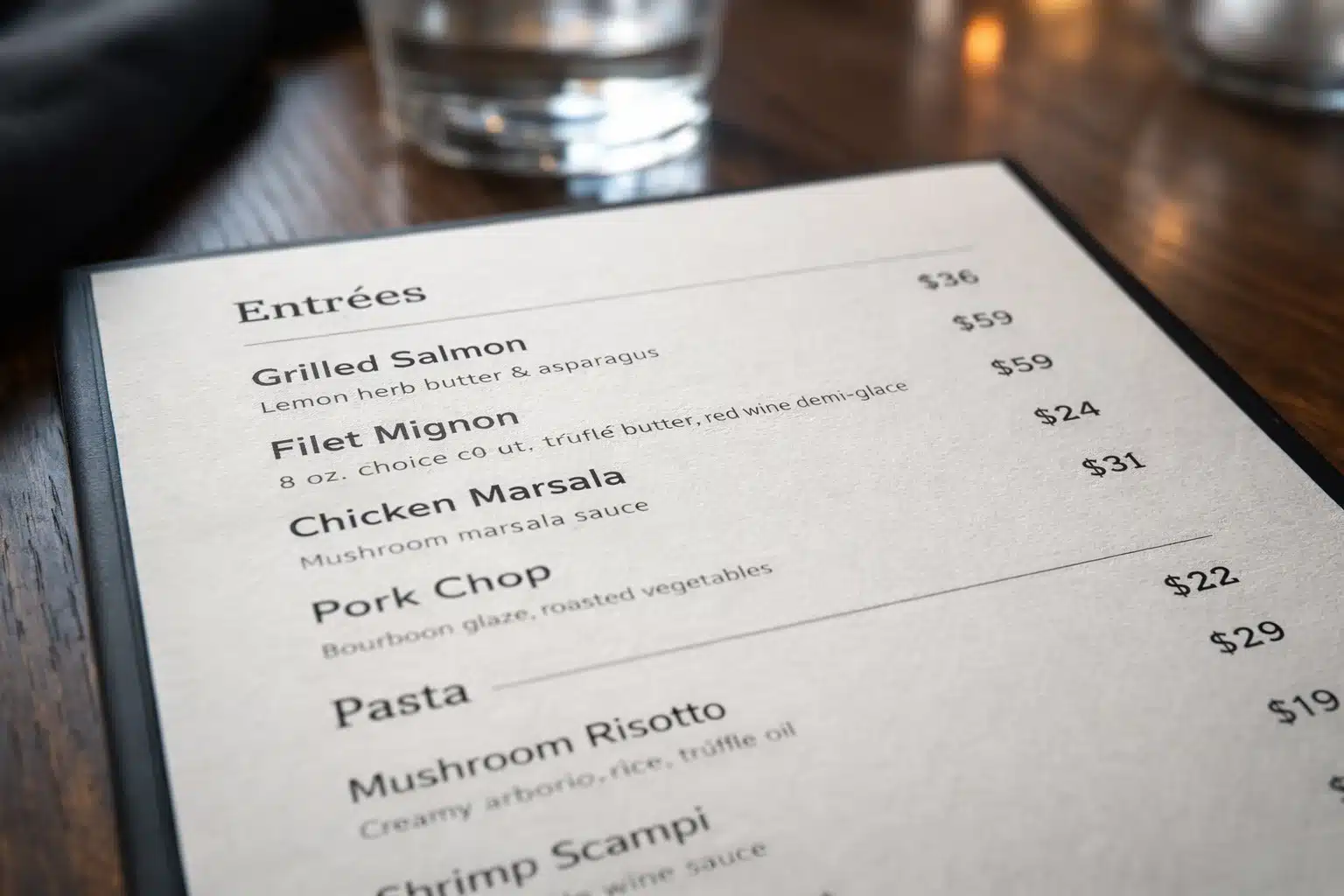
Price anchoring highlights premium items first. When guests see a high-priced dish, mid-range items feel reasonable. As a result, average ticket size increases.
Place anchor items strategically on the menu. Meanwhile, design them visually distinct. Therefore, comparisons shift perception.
Price anchoring strengthens Restaurant Pricing Strategy outcomes subtly.
Presentation of numbers matters too.
Removing Currency Symbols
Studies show that removing currency signs reduces spending hesitation. Guests focus on the dish, not the cost. As a result, psychological resistance decreases.
Use clean typography without excessive decimals. Meanwhile, avoid clutter. Therefore, reading feels effortless.
Small adjustments improve menu pricing strategy effectiveness significantly.
Ending digits influence perception.
Choosing Strategic Price Endings
Prices ending in .95 or .99 feel lower psychologically. However, luxury restaurants often use whole numbers. Therefore, endings must match positioning.
Test different endings and measure impact. Meanwhile, align formatting across categories. As a result, consistency builds trust.
Strategic endings refine a Restaurant Pricing Strategy without altering core costs.
Menu Engineering and Price Optimization
Menu engineering connects data and design. It categorizes dishes based on popularity and profitability. Therefore, this method strengthens restaurant price optimization.
Identifying Star and Puzzle Items
Stars combine high popularity and high margin. Promote these heavily. As a result, revenue grows quickly.
Puzzle items generate high margin but low sales. Meanwhile, adjust descriptions or placement. Therefore, visibility improves.
Menu engineering plays a critical role in Restaurant Pricing Strategy execution.
Placement increases effectiveness.
Strategic Menu Layout
Guests scan menus in predictable patterns. Highlight profitable items in key visual zones. As a result, selection rates rise.
Use boxes or subtle color contrasts. Meanwhile, avoid overcrowding. Therefore, clarity improves decision-making.
Layout decisions enhance menu pricing strategy performance.
Bundling can increase perceived value.
Creating Bundled Offers
Bundling appetizers and drinks increases total check size. Guests perceive added value. As a result, contribution margin expands.
Ensure bundles remain profitable. Meanwhile, monitor cost fluctuations. Therefore, financial balance remains stable.
Bundled pricing strengthens overall Restaurant Pricing Strategy outcomes.
Continuous Restaurant Price Optimization
Pricing is not static. Markets shift, costs change, and guest expectations evolve. Therefore, ongoing evaluation ensures long-term success.
Monitoring Sales Data Regularly
Track sales by item weekly. Identify trends early. As a result, you react quickly to performance changes.
Compare seasonal patterns. Meanwhile, analyze guest behavior shifts. Therefore, adjustments remain data-driven.
Regular review strengthens Restaurant Pricing Strategy effectiveness.
Testing supports innovation.
Running Controlled Price Experiments
Test small increases on selected items. Monitor guest reactions carefully. As a result, you gather insight safely.
A/B testing menus reveals behavioral patterns. Meanwhile, evaluate contribution margin impact. Therefore, price optimization becomes scientific.
Controlled experimentation refines restaurant price optimization over time.
Communication builds trust.
Explaining Value Transparently
If prices increase, communicate openly. Guests appreciate honesty about rising costs. As a result, loyalty remains strong.
Highlight quality improvements. Meanwhile, emphasize sustainability or sourcing transparency. Therefore, value perception strengthens.
Transparent messaging protects your Restaurant Pricing Strategy from backlash.
How Biyo POS Supports Smarter Pricing Decisions
 How Biyo POS Supports Smarter Pricing Decisions
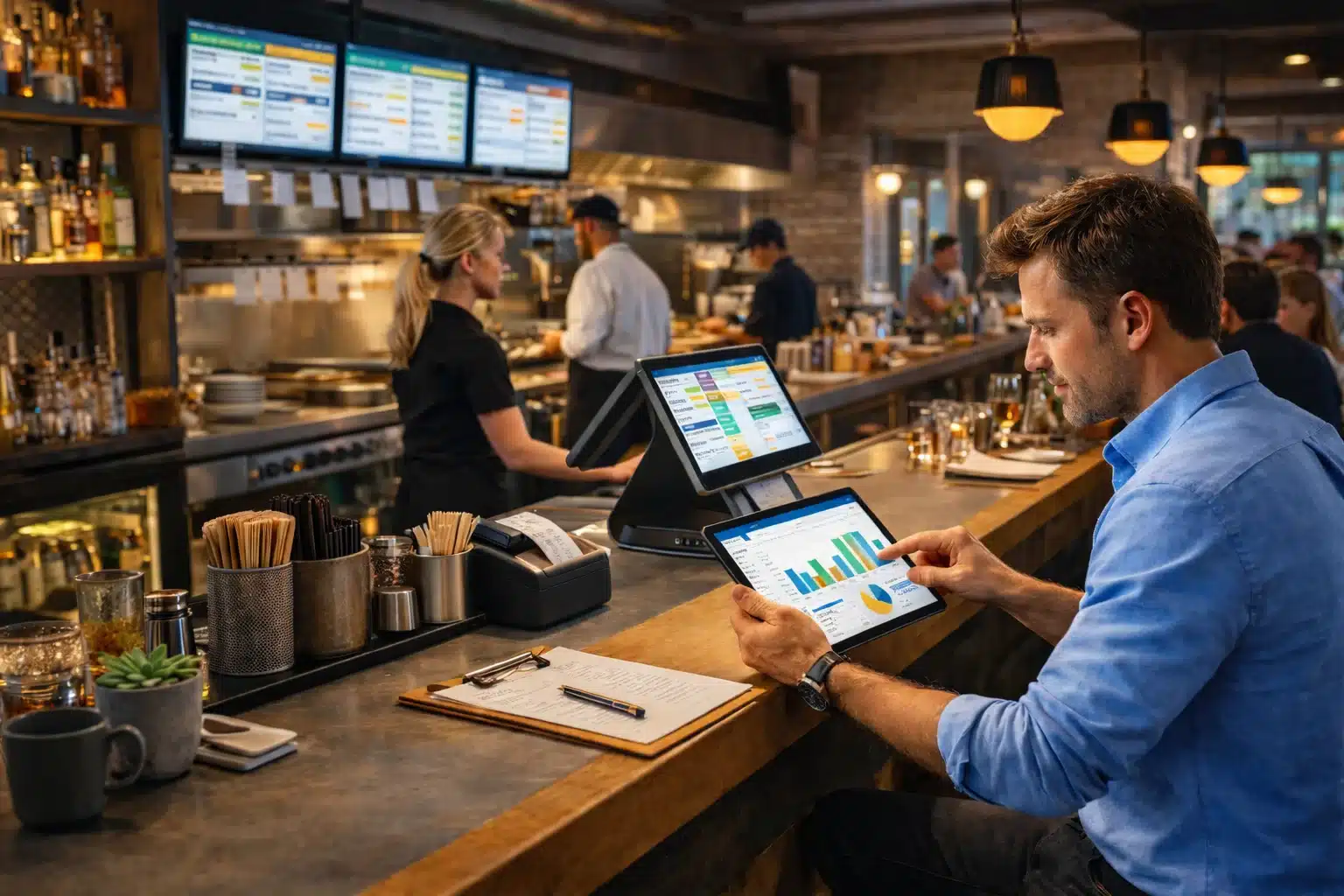
Biyo POS provides real-time reporting on contribution margin, item popularity, and revenue trends. As a result, Restaurant Pricing Strategy decisions become data-driven. The system helps operators identify high-margin items and adjust menu pricing strategy quickly.
If you want to optimize your Restaurant Pricing Strategy with accurate analytics, Biyo POS offers powerful tools. You can schedule a call here to explore features. You may also sign up directly at this signup page.
Frequently Asked Questions
What is a Restaurant Pricing Strategy?
A Restaurant Pricing Strategy defines how menu prices are set to balance profitability and customer value perception.
How often should restaurants adjust prices?
Review prices quarterly or when ingredient costs shift significantly.
What is contribution margin in restaurants?
Contribution margin equals revenue minus variable costs and reveals profitability per dish.
Does pricing psychology really work?
Yes, price anchoring and formatting influence customer decisions noticeably.
Can price optimization increase profit without losing customers?
Yes, strategic adjustments improve margins while maintaining perceived value.