The future of fast-casual dining is unfolding faster than many restaurant owners expected. Consumer expectations continue to evolve, while technology reshapes how food is ordered, prepared, and delivered. As a result, fast-casual brands now sit at the intersection of convenience, quality, and digital innovation.
In recent years, the future of fast-casual dining has shifted away from traditional counter service toward seamless, technology-driven dining experiences. Guests want speed without sacrificing freshness, personalization without complexity, and transparency without friction. Because of this shift, operators are rethinking menus, layouts, staffing models, and payment flows.
As you explore the future of fast-casual dining, it becomes clear that success depends on adapting to changing consumer dining habits while using smart tools to stay profitable. From digital ordering and automation in kitchens to sustainability focus and loyalty programs, the industry is moving toward a more connected and data-driven model.
Table of Contents
- Technology-Driven Transformation in Fast-Casual Dining
- Changing Consumer Expectations and Dining Habits
- Ghost Kitchens and Delivery-First Concepts
- Data, Automation, and Operational Efficiency
- Sustainability and Health-Conscious Innovation
- Loyalty Programs and Omnichannel Ordering
- Frequently Asked Questions
Technology-Driven Transformation in Fast-Casual Dining
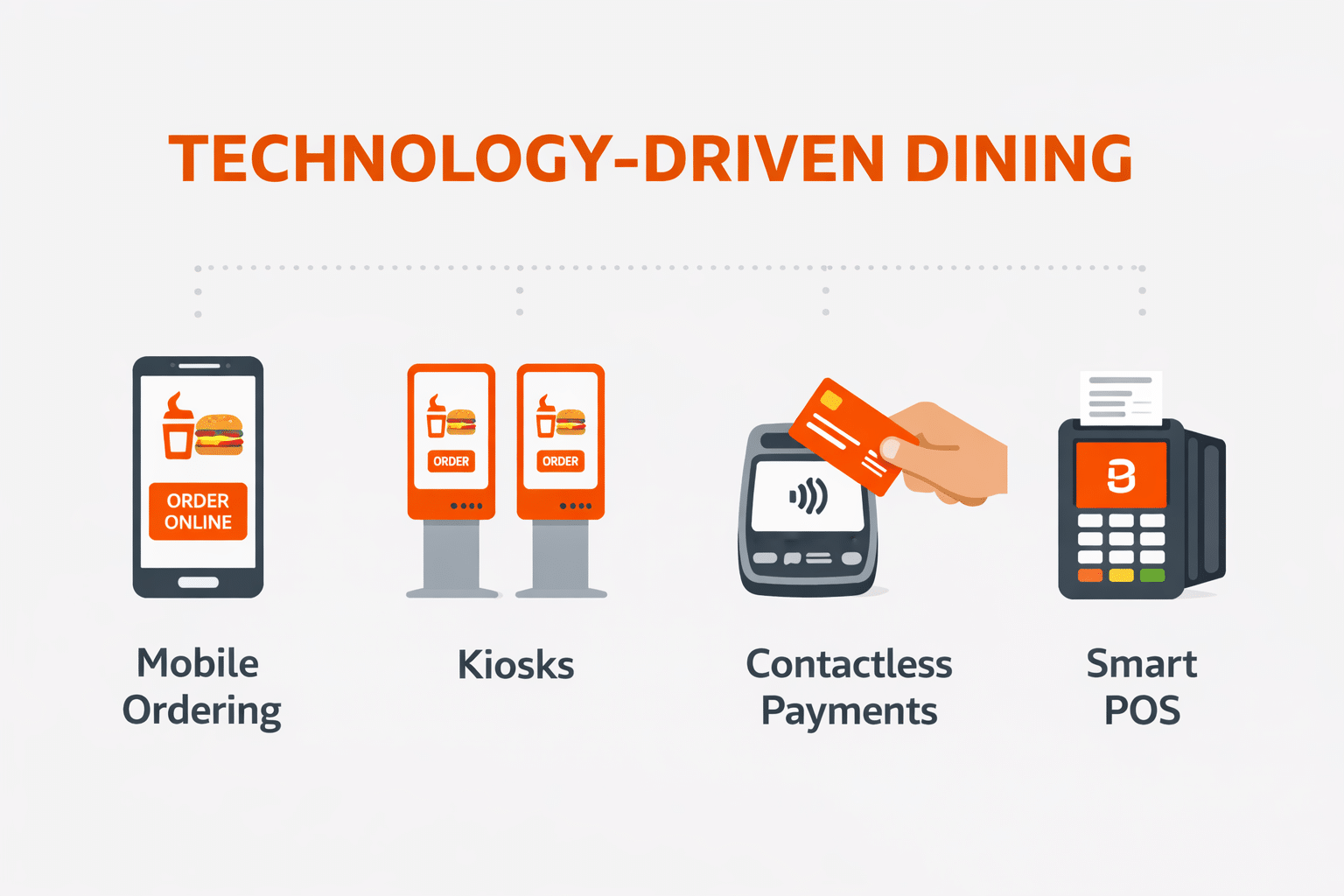
Technology sits at the core of the future of fast-casual dining. Digital tools now shape how customers interact with brands and how operators manage daily workflows. Because expectations continue to rise, technology adoption is no longer optional.
Digital Ordering and Mobile Experiences
Digital ordering has become a defining feature of the future of fast-casual dining. Mobile ordering apps allow guests to browse menus, customize meals, and place orders in seconds. As a result, lines shorten and order accuracy improves.
Many fast-casual brands now prioritize mobile-first design to support frictionless customer experiences. For instance, guests can save favorite meals, reorder quickly, and track preparation status in real time. Meanwhile, operators benefit from faster throughput and reduced labor pressure.
Because mobile ordering integrates with smart POS systems, data flows directly into kitchen workflows. This connection helps teams prepare orders faster while maintaining consistency across locations.
Self-Service Kiosks and In-Store Automation
Self-service kiosks continue to redefine the future of fast-casual dining. These kiosks empower customers to order at their own pace while exploring menu customization options. Consequently, upsells and average ticket sizes often increase.
Kiosks also reduce front-of-house congestion during peak hours. Because guests interact directly with the menu, staff can focus on food quality and hospitality instead of order entry.
Over time, kiosks generate valuable ordering data. That data helps brands refine layouts, adjust pricing, and identify popular combinations.
Contactless Payments and Frictionless Checkout
Contactless payments play a major role in the future of fast-casual dining. Guests expect fast, secure transactions that work across cards, mobile wallets, and alternative payment methods. Therefore, checkout speed has become a competitive advantage.
When contactless payments integrate with mobile ordering apps, the entire experience feels seamless. Customers order, pay, and pick up without stopping at a counter.
This frictionless approach also improves table turnover and reduces abandoned orders. As a result, operators see higher satisfaction and better operational flow.

Changing Consumer Expectations and Dining Habits
Consumer behavior continues to shape the future of fast-casual dining. Guests now value speed, transparency, and flexibility more than ever. Because habits evolve quickly, brands must stay responsive.
Menu Customization and Personalization
Menu customization defines modern fast-casual innovation. Customers expect the ability to adjust ingredients, portions, and dietary preferences. Therefore, personalization has become a baseline requirement.
AI-powered personalization takes this further by recommending meals based on past orders. For example, a guest who prefers plant-based menus may see tailored suggestions automatically.
This level of personalization builds loyalty while increasing order confidence. Over time, it strengthens the emotional connection between guests and brands.
Speed, Convenience, and Transparency
Speed remains critical in the future of fast-casual dining. However, speed alone no longer satisfies guests. They also want visibility into preparation times and ingredient sourcing.
Digital displays and mobile updates help manage expectations. When customers know exactly when their food will be ready, satisfaction improves.
Transparency also extends to pricing and nutrition. Clear information builds trust and encourages repeat visits.
Experience Over Traditional Service Models
The future of fast-casual dining prioritizes experience over formal service. Guests prefer intuitive systems that work without assistance. As a result, staff roles continue to evolve.
Rather than focusing on order-taking, employees now support quality control and guest engagement. This shift improves morale and reduces burnout.
Ultimately, experience-driven models allow brands to scale without sacrificing consistency.
Ghost Kitchens and Delivery-First Concepts
Ghost kitchens represent a major shift in the future of fast-casual dining. These delivery-first concepts reduce overhead while expanding reach. Because of this, many brands now operate hybrid models.
Rise of Ghost Kitchens
Ghost kitchens allow brands to operate without traditional dining rooms. This model lowers rent, staffing, and utility costs. As a result, experimentation becomes easier.
Brands can launch new concepts quickly and test markets with minimal risk. Meanwhile, customers enjoy faster delivery times.
Ghost kitchens also support menu specialization. Focused menus improve efficiency and consistency.
Delivery-First and Omnichannel Models
Delivery-first concepts now shape the future of fast-casual dining. Customers expect seamless ordering across apps, websites, and in-store kiosks.
Omnichannel ordering ensures consistency regardless of platform. Orders flow into the same kitchen system, reducing errors.
This unified approach strengthens brand identity while improving operational clarity.
Balancing On-Premise and Off-Premise Demand
Fast-casual brands must balance dine-in, pickup, and delivery. The future of fast-casual dining depends on flexible layouts and workflows.
Separate prep zones help manage volume during peak periods. This separation improves speed and accuracy.
When systems communicate clearly, staff adapt quickly to demand shifts.
Data, Automation, and Operational Efficiency
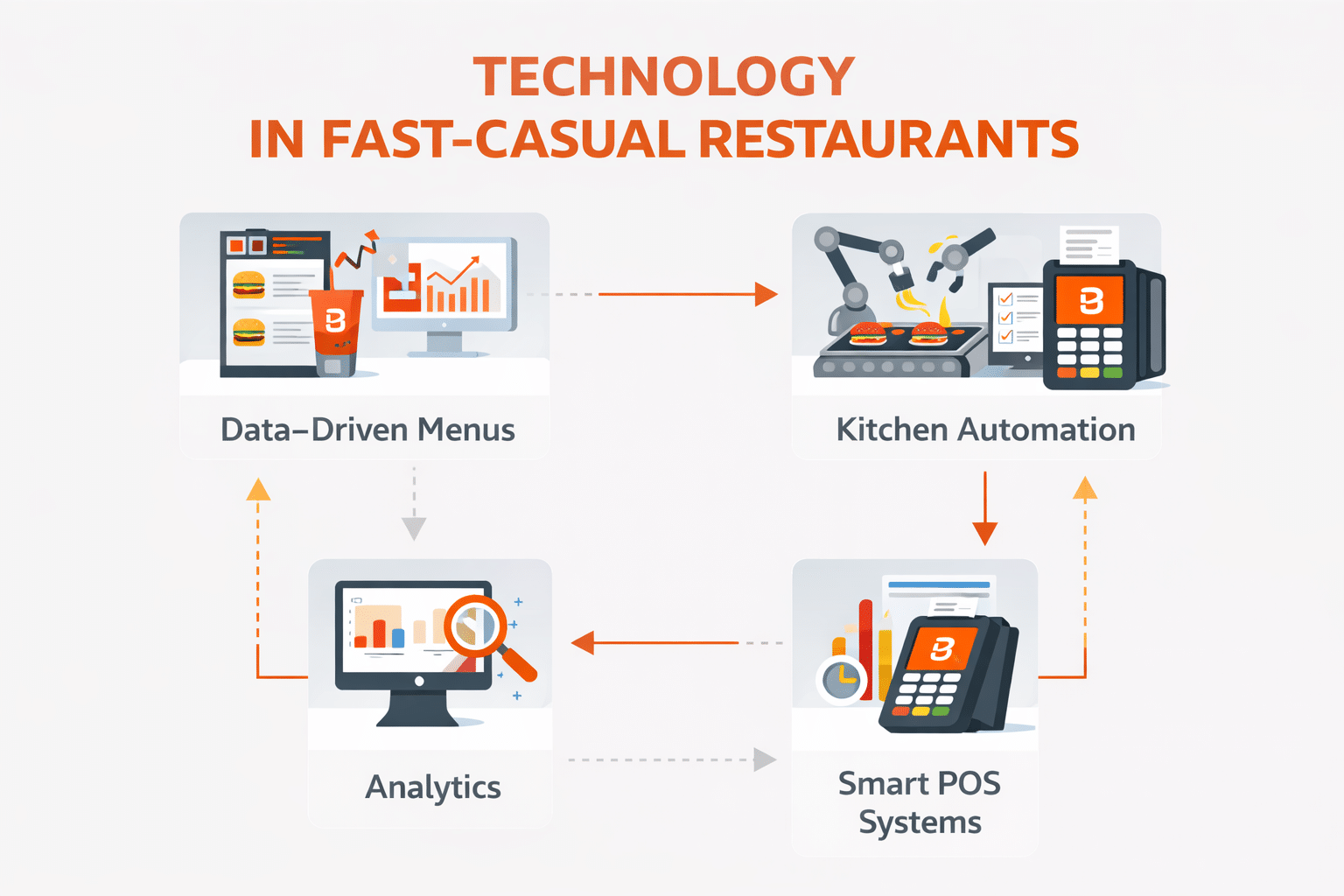
Data-driven decisions define the future of fast-casual dining. Automation and analytics help brands optimize performance while reducing waste.
Automation in Kitchens
Kitchen automation improves speed and consistency. Automated prep tools reduce manual errors and improve throughput.
As labor challenges persist, automation supports sustainable operations. Staff focus on quality rather than repetitive tasks.
This efficiency allows brands to maintain margins while scaling.
Data-Driven Menus and Dynamic Pricing
Data-driven menus enable smarter decisions. Sales data reveals popular items and underperforming options.
Dynamic pricing adjusts menus based on demand, time, or inventory. This strategy protects margins during high-cost periods.
When pricing adapts intelligently, guests still perceive value.
Smart POS Systems and Insights
Smart POS systems anchor the future of fast-casual dining. These platforms unify orders, payments, and analytics.
Real-time insights help managers react quickly to trends. Inventory, labor, and sales data live in one dashboard.
This visibility supports better planning and reduced waste.
Sustainability and Health-Conscious Innovation
Sustainability now influences the future of fast-casual dining. Consumers care deeply about environmental and health impact.
Eco-Friendly Packaging and Waste Reduction
Eco-friendly packaging reduces environmental impact. Compostable materials and reusable options gain popularity.
Waste reduction strategies also lower costs over time. Portion control and inventory tracking help limit spoilage.
Sustainability efforts resonate strongly with younger diners.
Health-Conscious and Plant-Based Menus
Health-conscious options drive menu evolution. Guests seek balanced meals without sacrificing flavor.
Plant-based menus expand appeal across dietary preferences. These offerings also align with sustainability goals.
Clear labeling helps guests make informed choices.
Transparency and Ethical Sourcing
Ethical sourcing matters in the future of fast-casual dining. Guests want to know where ingredients come from.
Transparency builds credibility and supports brand storytelling.
When sourcing aligns with values, loyalty increases.
Loyalty Programs and Omnichannel Ordering
Loyalty programs strengthen relationships in the future of fast-casual dining. Digital tools make rewards easy and engaging.
Personalized Loyalty Programs
Modern loyalty programs rely on data. Personalized rewards feel relevant and motivating.
Mobile apps track points automatically. Guests redeem rewards without friction.
This convenience encourages repeat visits.
Omnichannel Customer Journeys
Omnichannel experiences unify touchpoints. Guests move seamlessly between in-store and online ordering.
Consistent branding builds familiarity. Systems remember preferences across channels.
This continuity enhances satisfaction.
Building Long-Term Customer Relationships
Strong relationships drive growth in the future of fast-casual dining. Engagement extends beyond transactions.
Communication through apps and email keeps brands top of mind.
When relationships deepen, lifetime value increases.

Why Fast-Casual Brands Choose Biyo POS
Biyo POS helps power the future of fast-casual dining through smart POS systems, digital ordering, self-service kiosks, and contactless payments. With built-in loyalty programs, real-time analytics, and omnichannel ordering support, Biyo POS helps operators create a frictionless customer experience while keeping daily operations simple and organized.
If you want to see how Biyo POS can support your fast-casual growth strategy, schedule a call or sign up today.
Frequently Asked Questions
What defines the future of fast-casual dining?
The future of fast-casual dining centers on technology-driven dining, personalization, and convenience. Digital ordering, automation, and data-driven menus shape the experience.
How do ghost kitchens impact fast-casual restaurants?
Ghost kitchens reduce overhead and support delivery-first concepts. They allow brands to scale quickly while testing new markets.
Why are smart POS systems important?
Smart POS systems unify orders, payments, and analytics. They provide real-time insights that improve efficiency and profitability.
How does sustainability influence fast-casual dining?
Sustainability drives menu design, packaging choices, and sourcing. Eco-friendly practices build trust and attract conscious consumers.
What role does loyalty play in fast-casual success?
Loyalty programs encourage repeat visits and deeper engagement. Personalized rewards strengthen long-term customer relationships.