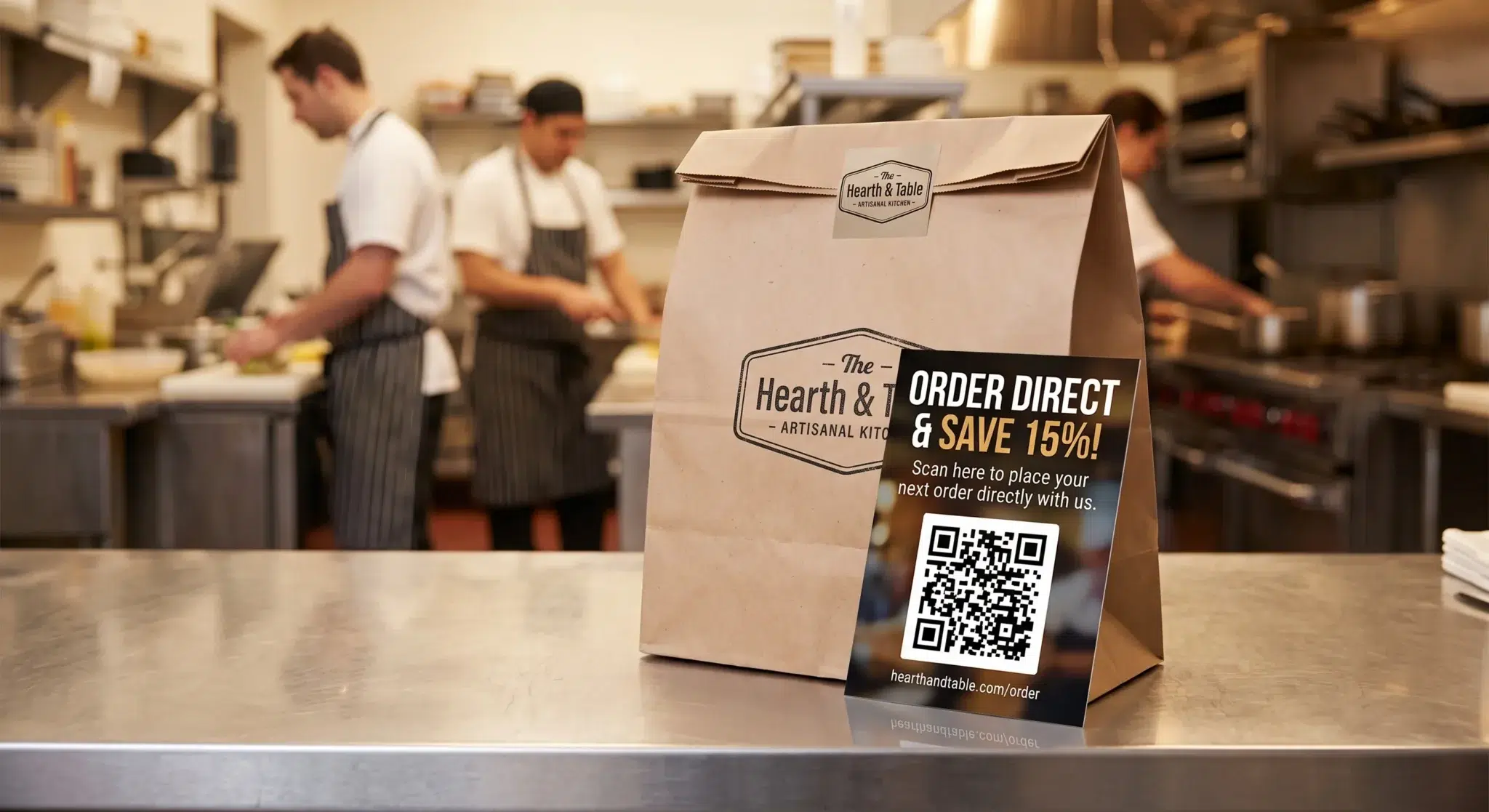

Operating a profitable restaurant requires strict margin control, but capturing direct restaurant online orders has become the single most effective way to protect your bottom line. Over the past decade, third-party delivery marketplaces like DoorDash, Uber Eats, and Grubhub transformed how consumers discover local food. However, these third-party platforms charge predatory commission rates ranging between twenty and thirty-five percent on every ticket. Consequently, restaurant operators frequently watch their profit margins disappear on high-volume delivery nights.
Even worse, third-party delivery apps withhold valuable customer data from your business. When a customer orders through a delivery marketplace, that platform owns the customer’s email address, order history, and direct communication channel. As a result, restaurant owners end up paying expensive recurring commissions for returning guests who already love their food. In addition, third-party platforms actively advertise competing neighborhood eateries directly underneath your digital menu.
Fortunately, independent restaurant operators do not have to accept these heavy marketplace fees. In fact, third-party marketplaces should serve exclusively as top-of-funnel customer acquisition channels, not permanent delivery partners. By deploying tactical packaging inserts, receipt coupon codes, first-party loyalty incentives, and commission-free ordering technology, you can easily shift diners toward your first-party platform. This comprehensive guide breaks down the true math behind third-party fees, provides a 5-step customer conversion blueprint, and demonstrates how keeping just 100 orders a month pays for your entire point-of-sale infrastructure.
Table of Contents
- The True Math of Third-Party Delivery Marketplace Commissions
- Customer Data Hijacking: Why Marketplaces Own Your Guests
- Packaging Marketing: Transforming Delivery Bags into Conversion Funnels
- Receipt Marketing: Automated Bounce-Back Discount Codes
- First-Party Loyalty: Giving Diners a Reason to Order Direct
- Menu Engineering: First-Party Pricing and Exclusive Combos
- Fulfillment Evolution: Transitioning to White-Label Flat-Fee Fleets
- The 100-Order Shift: Calculating Your Net Monthly Savings
- Side-by-Side Comparison
- How Biyo POS Powers Commission-Free Direct Restaurant Online Orders
- Frequently Asked Questions
The True Math of Third-Party Delivery Marketplace Commissions
Many restaurant owners believe that third-party delivery orders generate incremental revenue. However, when you analyze the true unit economics of a delivery ticket, the standard thirty percent commission severely damages restaurant profitability. Most independent food service businesses operate on net margins between five and twelve percent after paying for food costs, kitchen labor, utilities, and merchant processing.
Consequently, surrendering thirty percent of gross sales on delivery tickets often turns profitable dishes into net operating losses. Understanding these commission mechanics is vital for reclaiming your store margins.
The Phantom Margin Trap
Consider a typical restaurant order totaling forty dollars. In a healthy direct sales environment, your prime costs—food inventory and kitchen labor—consume roughly sixty percent of the ticket:
- Food Cost (30%): $12.00
- Labor Cost (30%): $12.00
- Packaging & Overhead (10%): $4.00
- Third-Party Marketplace Commission (30%): $12.00
- Net Restaurant Profit: $0.00
In this standard scenario, your kitchen team preps the meal, cooks the ingredients, and packages the food, yet your business earns zero dollars in profit. In contrast, shifting that guest to direct restaurant online orders immediately restores that twelve-dollar margin back to your bank account.
Why Menu Markups Fail to Solve the Problem
To offset marketplace cuts, many operators increase their third-party menu prices by twenty to thirty percent. While this tactic recovers some gross margin, it creates serious operational drawbacks. Higher prices cause sticker shock for budget-conscious diners, leading to lower conversion rates.
Furthermore, delivery marketplaces prioritize lower-priced restaurants in their algorithmic search rankings. In addition, customers who pay premium menu prices expect flawless experiences. When a third-party driver arrives late with cold food, the customer blames your kitchen rather than the delivery app. Therefore, raising marketplace prices is only a temporary band-aid, not a long-term operational solution.
 Customer Data Hijacking: Why Marketplaces Own Your Guests
 Customer Data Hijacking: Why Marketplaces Own Your Guests
Beyond excessive commission fees, the greatest danger of third-party platforms is the loss of customer relationships. When a diner places an order through a marketplace app, they are not your customer; they are the platform’s customer.
The delivery platform encrypts customer phone numbers, hides customer email addresses, and prevents you from building a direct marketing database. Understanding how marketplaces monetize guest data highlights why first-party channels are essential.
How Third-Party Apps Sell Diners to Your Competitors
Delivery marketplaces use the customer data generated by your food sales to promote competing restaurants. For example, if a customer orders tacos from your restaurant on Tuesday, the marketplace app tracks their culinary preferences.
On Friday evening, the app sends a push notification to that exact customer offering a five-dollar discount on a competing taco shop down the street. In essence, you paid a thirty percent commission on Tuesday to help the marketplace acquire a customer they will monetize against you on the weekend.
The Value of First-Party Customer Databases
When you capture direct restaurant online orders, your business retains full ownership of every guest profile. You collect verified email addresses, mobile phone numbers, order frequencies, and dietary preferences.
Consequently, you can launch automated SMS marketing campaigns, send weekly email specials, and re-engage lapsed customers without spending money on third-party ads. A proprietary customer database is one of the most valuable financial assets an independent restaurant can build.
Packaging Marketing: Transforming Delivery Bags into Conversion Funnels
The most direct way to convert marketplace diners is through the physical delivery bag. When a third-party order leaves your kitchen, that delivery bag represents an exclusive communication channel with an active diner.
Deploying high-impact packaging inserts allows you to intercept the diner at the exact moment they enjoy your food.
Designing High-Converting Bounce-Back Bag Cards
Never let a third-party delivery bag leave your restaurant without a compelling call-to-action insert. An effective bag insert must be visually distinct, easy to read, and immediately rewarding:
- Use High-Quality Postcard Stock: Avoid flimsy paper slips that get soggy from steam. Print professionally designed 4×6-inch cards on heavy, glossy cardstock.
- Lead with a Clear Financial Hook: Place a bold headline at the top, such as “Save $10 on Your Next Meal When You Order Direct!”
- Feature a Large Dynamic QR Code: Ensure the QR code routes directly to your native online ordering page, bypassing homepages or multi-step navigation menus.
- Explain the Value Proposition: Include a brief, authentic note explaining that ordering direct supports local kitchen staff and guarantees lower menu prices.
The “Unboxing” Experience and Branded Tamper Seals
Modern delivery customers care deeply about food safety and packaging quality. Utilize branded tamper-evident tape to seal your delivery bags securely.
Print a clear message on the tamper seal itself, such as “Sealed Fresh for Direct Quality — Reorder Direct at OurWebsite.com to Earn Loyalty Points.” This subtle branding reinforces your direct ordering platform before the customer takes their first bite.
Receipt Marketing: Automated Bounce-Back Discount Codes
Your thermal receipt printer is an underutilized marketing tool. In traditional restaurant operations, printed receipts simply list transaction totals and tax rates.
However, modern cloud point of sale systems can automatically print dynamic coupon graphics and custom promotional text at the bottom of every delivery ticket.
Configuring Automated Receipt Prompts
Modern POS software allows managers to customize the footer layout of standard 80mm thermal receipts:
- Automate First-Timer Discounts: Program your POS to print a bold promo code (e.g., `ORDERDIRECT15`) on all delivery receipts, offering fifteen percent off their first direct web order.
- Include Quick QR Scan Prompts: Thermal printers can print clean, scannable QR codes directly on paper receipts, enabling diners to scan and bookmark your ordering menu on their smartphones in seconds.
- Highlight Price Differences: Add a footer line that reads: “Notice: Our direct online menu features lower prices and exclusive rewards. Order direct next time to save!”
Cashier and Expo Station Workflows
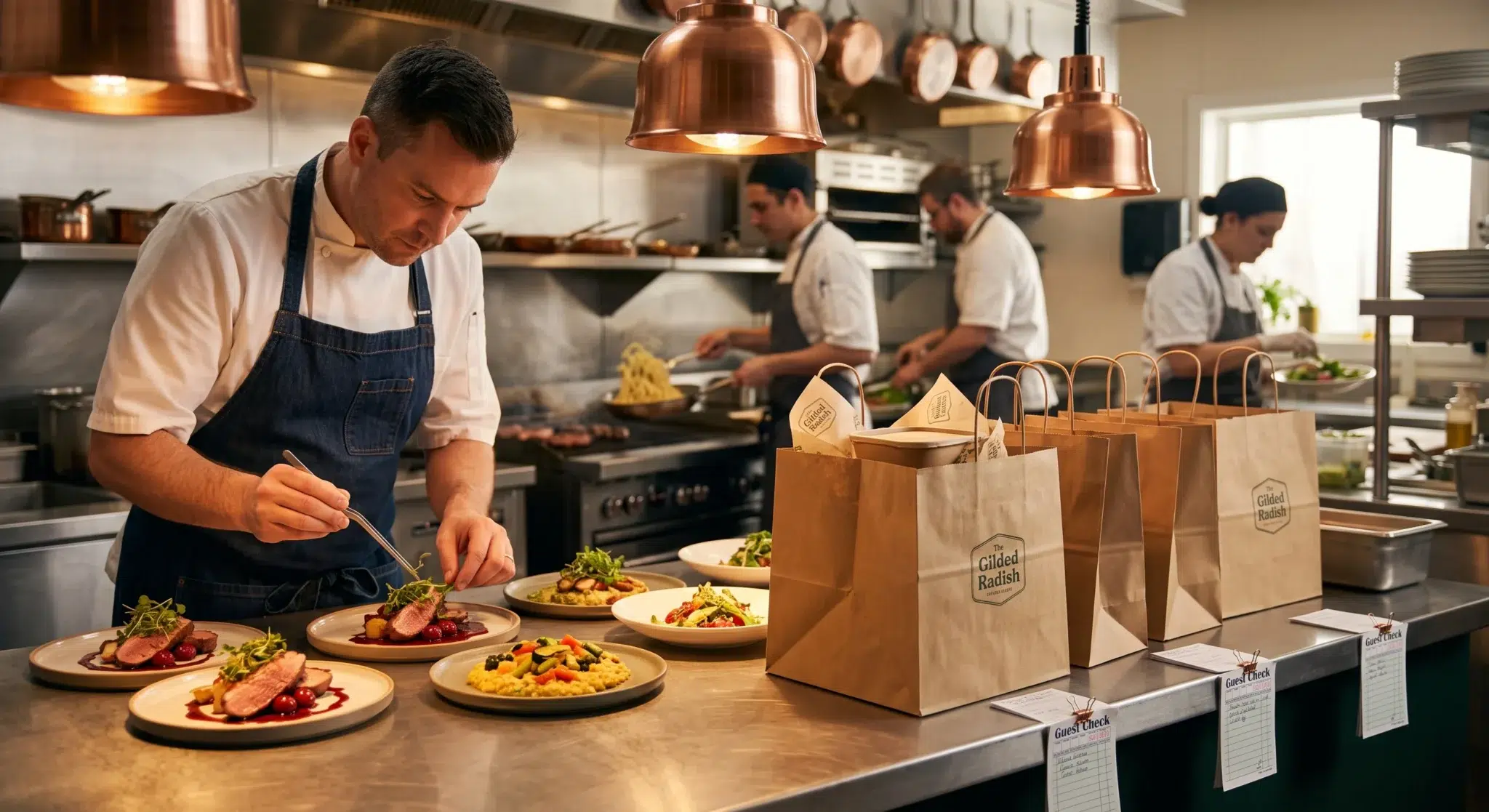
Ensure your kitchen expediter checks every outgoing third-party order. The expo staff member must attach the promotional receipt to the outside of the bag and drop the bounce-back postcard inside before handing the package to the delivery driver.
Making this step a mandatory part of your kitchen’s packaging checklist guarantees consistent marketing execution across every shift.
First-Party Loyalty: Giving Diners a Reason to Order Direct
A common mistake restaurants make is assuming customers will switch to direct ordering out of pure goodwill. In reality, consumers use third-party apps because those apps are convenient and familiar.
To change consumer habits permanently, you must provide compelling structural incentives through an integrated digital loyalty program.
Structuring Irresistible First-Party Reward Perks
A first-party loyalty program provides ongoing financial value that third-party marketplaces cannot match:
- Instant Signup Points: Award new guests enough reward points upon signup to earn five dollars off their first direct order immediately.
- Earn-Back Spending Tiers: Give guests five to ten percent back in reward credits on every dollar spent through your direct online portal.
- Exclusive Birthday and Anniversary Rewards: Send automated promotional offers during special occasions to drive predictable repeat orders.
- Free Item Milestones: Offer free appetizers or desserts after a guest completes three direct orders through your website.
Automated SMS Re-Engagement Triggers
Once a customer joins your first-party loyalty program, your cloud POS can automate targeted retention campaigns. If a regular guest has not placed an order in twenty-one days, the system can automatically send a personalized SMS message:
*”We miss you at [Restaurant Name]! Here is a special 15% discount for your dinner tonight. Tap here to order direct: [Menu Link].”*
These automated text reminders generate high open rates and drive steady direct restaurant online orders without requiring daily management effort.
Menu Engineering: First-Party Pricing and Exclusive Combos
Your menu structure plays a decisive role in shifting customer ordering behavior. If your direct website offers the exact same items at the exact same prices as third-party apps, customers have little reason to change their routines.
Strategic menu engineering creates clear financial and culinary advantages for customers who order directly from your restaurant.
Maintaining Lower Direct Menu Pricing
Keep your direct online menu prices five to fifteen percent lower than your third-party marketplace listings. When customers compare your website against DoorDash or Uber Eats, the price difference should be immediately obvious.
Clearly highlight these savings on your direct website banner: *”Enjoy our lowest guaranteed prices and zero service markups when you order directly through our kitchen!”*
Creating Direct-Exclusive Family Combos and Bundles
Reserve high-margin bundle meals, family dinner packages, and secret seasonal dishes exclusively for your first-party ordering platform:
- Family Feast Packages: Create bundled meal packs (e.g., 2 Entrees + 2 Kids Meals + Large Appetizer) available only on your direct site.
- Exclusive Seasonal Specials: Launch exciting limited-time menu items exclusively on your first-party portal for the first two weeks before releasing them elsewhere.
- Free Add-On Promotions: Offer a free side dish or dessert on all direct orders exceeding forty-five dollars.
Fulfillment Evolution: Transitioning to White-Label Flat-Fee Fleets
A major reason restaurant operators remain tied to third-party marketplaces is the challenge of delivery logistics. Hiring in-house delivery drivers involves high insurance costs, vehicle liabilities, and complex payroll management.
Fortunately, modern cloud POS platforms solve this problem by integrating with **white-label on-demand delivery networks** like DoorDash Drive and Uber Direct.
How White-Label Flat-Fee Delivery Works
White-label delivery separates order generation from physical driver dispatch:
1. The customer visits your branded website and places an order for home delivery.
2. The transaction processes through your commission-free POS merchant account.
3. Your point of sale automatically calls a nearby on-demand driver from a nationwide dispatch pool.
4. A professional courier arrives at your kitchen, picks up the meal, and delivers it to the customer.
5. The customer receives automated real-time SMS delivery tracking branded with your restaurant name.
Flat-Fee Delivery vs. Percentage Commissions
Instead of taking twenty to thirty percent of the ticket total, white-label delivery networks charge a flat fee per trip (typically $6.50 to $8.50, depending on distance).
You can easily pass a portion of this delivery fee to the customer (e.g., $4.99 delivery fee), meaning the restaurant pays only two or three dollars for professional fulfillment. Consequently, on a seventy-dollar dinner order, your business saves fifteen to twenty dollars in marketplace commissions on a single delivery run.
 The 100-Order Shift: Calculating Your Net Monthly Savings
 The 100-Order Shift: Calculating Your Net Monthly Savings
Shifting your delivery volume away from third-party marketplaces does not require converting your entire customer base overnight. In fact, moving just a small fraction of your monthly orders produces dramatic financial results.
Reviewing the mathematical impact of shifting one hundred orders per month illustrates the power of first-party ordering.
The 100-Order Monthly Financial Model
Assume an independent restaurant processes orders with an average ticket size of $45.00:
- Third-Party Marketplace Model (100 Orders):
- Gross Sales: $4,500.00
- Average 30% Commission: -$1,350.00
- Customer Data Collected: 0 Profiles
- Net Restaurant Revenue: $3,150.00
- Direct First-Party Ordering Model (100 Orders):
- Gross Sales: $4,500.00
- Biyo Software Commission: $0.00 (Commission-Free)
- Flat White-Label Dispatch Subsidy ($3.00/order): -$300.00
- Standard Merchant Processing (~2.7%): -$121.50
- Customer Data Collected: 100 Verified Profiles
- Net Restaurant Revenue: $4,078.50
- Net Monthly Profit Increase: +$928.50 per month
- Annual Net Profit Increase: +$11,142.00 per year
As this financial model demonstrates, shifting just 100 orders a month back to your kitchen generates over eleven thousand dollars in annual profit. That extra cash flow easily covers the cost of your entire point of sale software and hardware infrastructure multiple times over.
Side-by-Side Comparison
| Operational Dimension | Third-Party Delivery Apps | Direct Online Ordering (Biyo POS) |
|---|---|---|
| Commission Rate | 20% to 35% on every ticket | 0% Commission (Flat software rate) |
| Customer Data Access | Data withheld; emails encrypted | 100% merchant-owned customer database |
| Menu Pricing Control | Forced markups to offset heavy fees | Guaranteed lowest pricing for diners |
| Competitive Advertising | Promotes rival restaurants on your page | Zero ads; pure branded ordering portal |
| Loyalty Integration | Tied to marketplace app programs | Fully customized first-party VIP rewards |
| Delivery Logistics | Marketplace dispatch only | Automated flat-fee white-label dispatch |
| Marketing Re-Engagement | Prohibited; no direct access to guests | Automated SMS and email retention triggers |
| Annual Profit Retention | Thousands lost to marketplace cuts | Maximizes net profit on every order |
How Biyo POS Powers Commission-Free Direct Restaurant Online Orders
Biyo POS empowers independent restaurant operators to break free from predatory delivery marketplace commissions. Built as a comprehensive cloud point of sale operating directly inside the Google Chrome web browser on any PC, Mac, iPad, or Android tablet, Biyo provides a complete, commission-free online ordering ecosystem out of the box.
With Biyo, your restaurant gets a fully branded, mobile-responsive online ordering website that connects directly to your kitchen. Customers can place direct restaurant online orders for pickup or delivery with zero percentage fees deducted from your sales. Every dollar earned goes straight to your business. In addition, Biyo seamlessly routes incoming web orders directly to your kitchen printers or the **Biyo Kitchen Display (KDS) app available on Google Play**, ensuring fast prep times without manual order re-entry.
Furthermore, Biyo gives you total control over customer relationships and delivery logistics. Build automated customer loyalty programs, collect verified contact profiles, and send targeted SMS promotions with ease. When delivery orders come in, Biyo can automatically dispatch flat-fee couriers through integrated white-label networks, providing professional delivery at a fraction of marketplace costs. In addition, retail and cafe concepts can perform rapid stock audits using the **Biyo Inventory Scanner app on the Apple App Store**, while maintaining continuous uptime during internet outages using Biyo’s true offline transaction mode.
To discover how easily your restaurant can eliminate third-party commission cuts and drive direct online sales, you can schedule a live demo with an onboarding specialist or create your account today on the Biyo signup page.
Frequently Asked Questions
What are direct restaurant online orders?
Direct restaurant online orders are pickup and delivery orders placed by customers directly through a restaurant’s proprietary website or mobile portal, bypassing third-party marketplace apps and avoiding percentage commission fees.
How much do third-party delivery marketplaces charge restaurants?
Third-party delivery platforms typically charge restaurants commissions between fifteen and thirty-five percent on every order, significantly reducing net profit margins on food sales.
How do bag inserts help convert third-party delivery diners?
Bag inserts intercept customers while they enjoy their meal, offering exclusive discount codes, dynamic QR codes, and loyalty reward perks that encourage them to place their next order directly through the restaurant’s website.
What is flat-fee white-label delivery?
Flat-fee white-label delivery is a fulfillment model where a restaurant uses nationwide driver networks (like DoorDash Drive or Uber Direct) to deliver orders placed on the restaurant’s direct website for a flat per-trip fee rather than a percentage commission.
How many direct orders are needed to offset POS software costs?
Because third-party apps charge twelve to fifteen dollars in commissions on average ticket sizes, converting just ten to fifteen orders per month to your direct platform completely covers standard monthly POS software costs.
Can Biyo POS integrate online ordering with kitchen display systems?
Yes. Biyo POS automatically synchronizes online orders with kitchen ticket printers and the Biyo Kitchen Display (KDS) app on Google Play, eliminating the need to manually re-type orders from separate tablets.