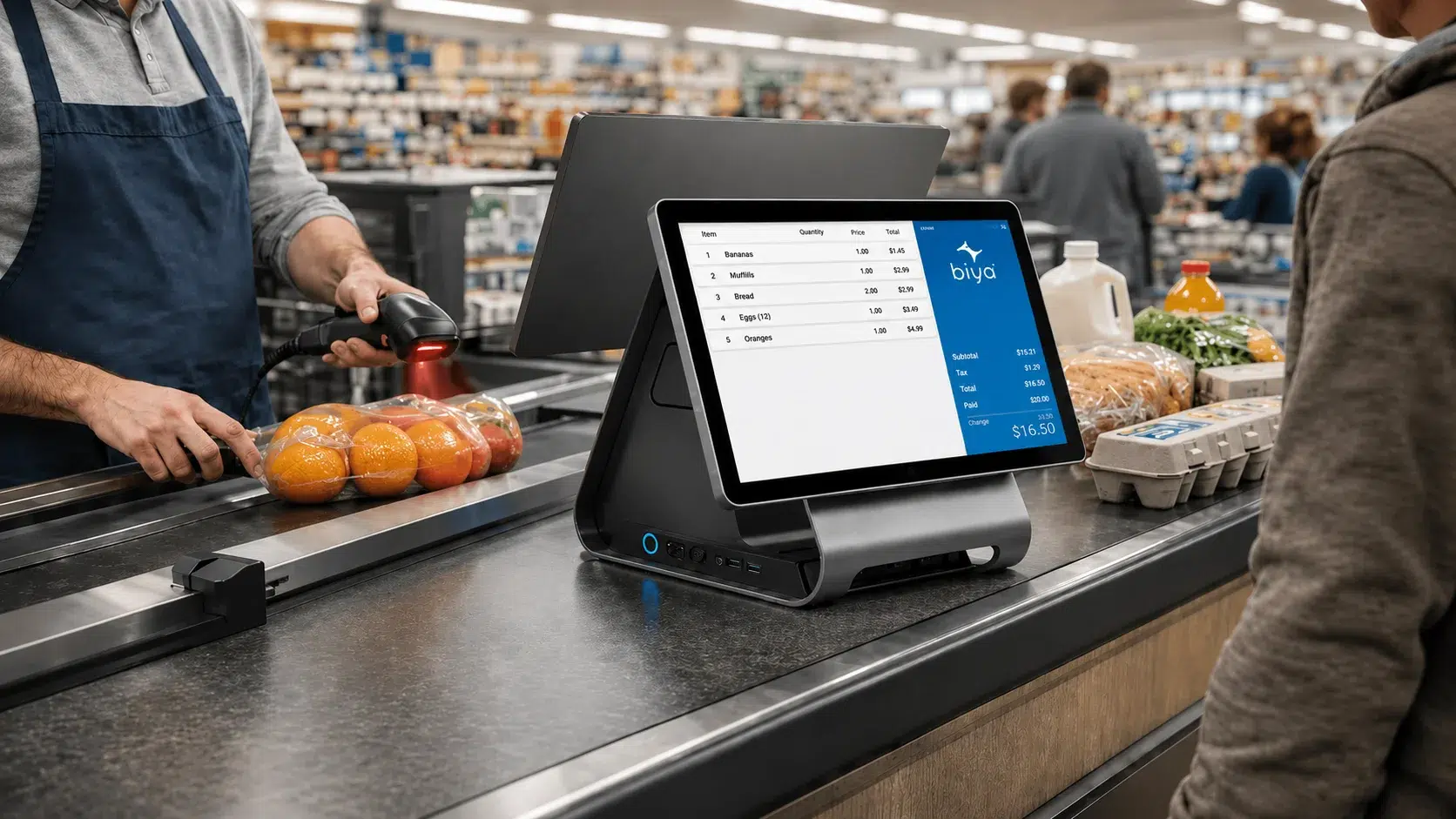

In modern supermarkets, few debates matter more than Grocery Checkout Speed vs Accuracy. Customers want to move fast. Meanwhile, store owners want every transaction to be correct. When either side dominates too much, problems begin.
Fast checkout lanes reduce wait times and improve customer satisfaction. However, rushing transactions increases scanning errors and shrinkage. On the other hand, focusing only on precision can slow cashier productivity and create long lines. Grocery Checkout Speed vs Accuracy becomes a daily operational balancing act.
This guide explains how grocery stores can optimize Grocery Checkout Speed vs Accuracy without sacrificing revenue or trust. You will learn how technology, training, and workflow design work together to improve both speed and transaction accuracy.
Table of Contents
- Why Speed and Accuracy Must Work Together
- The Hidden Cost of Prioritizing Speed
- When Accuracy Slows Down Operations
- How POS Technology Improves Both Metrics
- Cashier Productivity and Training Strategies
- How Biyo POS Optimizes Checkout Performance
- FAQ
Why Speed and Accuracy Must Work Together
Grocery Checkout Speed vs Accuracy is not a competition. Instead, it is a partnership. When stores ignore one side, the other suffers.
Customer Expectations in Modern Retail
Today’s shoppers expect fast service. Long wait times create frustration. As a result, customers may switch stores.
However, shoppers also expect accurate receipts. Incorrect pricing damages trust. Therefore, Grocery Checkout Speed vs Accuracy directly impacts brand reputation.
Balancing both metrics ensures customer satisfaction while protecting revenue.
Operational performance depends on measurable results.
The Financial Impact of Checkout Errors
Scanning errors reduce profitability. For instance, incorrect barcodes or missed items create revenue loss.
Meanwhile, overcharges lead to complaints and refunds. These mistakes often stem from rushing transactions.
Maintaining strong transaction accuracy protects margins and reduces shrinkage.
Operational efficiency must include both speed and precision.
The Role of Grocery POS Performance
Modern POS systems influence Grocery Checkout Speed vs Accuracy. Fast hardware supports rapid scanning. Meanwhile, intelligent software reduces manual input.
Integrated barcode scanning minimizes human error. Therefore, technology supports balanced performance.
When systems lag, both speed and accuracy decline.
 The Hidden Cost of Prioritizing Speed
 The Hidden Cost of Prioritizing Speed
Many stores emphasize faster checkout lanes. However, extreme focus on speed introduces hidden risks.
Increased Scanning Errors
Cashiers under pressure may skip confirmation steps. As a result, incorrect prices slip through.
These small mistakes accumulate over time. Grocery Checkout Speed vs Accuracy becomes unbalanced when speed dominates.
Consistent scanning protocols reduce error rates even during busy hours.
Accuracy also connects to retail loss prevention.
Higher Shrinkage Rates
Unscanned items contribute to inventory loss. Meanwhile, rushed bagging increases missed products.
Loss prevention strategies must align with checkout efficiency goals.
Balancing Grocery Checkout Speed vs Accuracy protects inventory integrity.
Customer satisfaction may also decline.
Customer Disputes and Refund Processing
Incorrect charges create friction at the service desk. Therefore, refunds consume additional labor time.
Even minor errors weaken trust. Meanwhile, online reviews amplify complaints.
Fewer errors mean smoother operations and better retention.
When Accuracy Slows Down Operations
While precision matters, excessive verification slows service. Grocery Checkout Speed vs Accuracy requires balance, not perfection.
Overcomplicated Verification Steps
Some stores introduce too many confirmation prompts. However, excessive steps frustrate cashiers.
Smart systems automate verification without slowing transactions.
Streamlined processes maintain high transaction accuracy without delays.
Workflow design also affects speed.
Inefficient POS Interfaces
Outdated systems require manual price lookups. As a result, queues grow longer.
Modern interfaces improve grocery checkout efficiency through intuitive layouts.
Upgrading POS performance enhances both metrics simultaneously.
Training gaps also slow operations.
Inconsistent Cashier Training
New employees may double-check every item. Meanwhile, experienced staff move faster.
Standardized training improves consistency across shifts.
Clear performance benchmarks align speed with accuracy goals.
How POS Technology Improves Both Metrics
Technology plays a central role in resolving Grocery Checkout Speed vs Accuracy challenges.
Advanced Barcode Scanning
High-speed scanners reduce manual entry. Therefore, error rates decline.
Instant item recognition speeds up lanes while preserving precision.
Better hardware directly supports operational efficiency.
Software intelligence adds another layer.
Real-Time Inventory Sync
Accurate stock updates prevent pricing discrepancies. Meanwhile, centralized systems reduce confusion.
When inventory matches checkout data, disputes decrease.
Integrated POS tools enhance grocery POS performance across locations.
Analytics further optimize results.
Performance Reporting and Analytics
Checkout analytics reveal bottlenecks. For instance, managers can measure items scanned per minute.
Data-driven decisions improve cashier productivity.
Continuous monitoring ensures Grocery Checkout Speed vs Accuracy remains balanced.
Cashier Productivity and Training Strategies
Technology alone cannot solve operational challenges. Staff training remains essential.
Structured Onboarding Programs
Clear onboarding reduces early mistakes. Meanwhile, defined expectations guide performance.
Practice sessions improve scanning speed without sacrificing precision.
Well-trained teams support consistent checkout efficiency.
Performance tracking motivates improvement.
Measuring Items per Minute
Tracking items per minute offers insight into speed. However, managers must also monitor error rates.
Balanced performance metrics protect Grocery Checkout Speed vs Accuracy goals.
Recognition programs encourage healthy competition.
Feedback loops enhance long-term results.
Continuous Improvement Culture
Regular coaching sessions refine technique. Meanwhile, open communication addresses workflow concerns.
Stores that prioritize improvement reduce recurring mistakes.
Strong culture strengthens both customer satisfaction and profitability.
 How Biyo POS Optimizes Checkout Performance
 How Biyo POS Optimizes Checkout Performance
Biyo POS supports balanced Grocery Checkout Speed vs Accuracy through fast hardware compatibility and intelligent software design. The system integrates high-speed barcode scanning, real-time inventory updates, and detailed reporting dashboards.
Because Biyo operates in the cloud, managers gain centralized oversight across locations. Meanwhile, performance analytics highlight cashier productivity and transaction accuracy trends. This allows proactive adjustments instead of reactive corrections.
If you want to improve grocery checkout efficiency while reducing scanning errors, you can schedule a consultation. You may also explore features directly and sign up here to upgrade your checkout performance.
FAQ
Why is checkout accuracy important in grocery stores?
Accurate transactions prevent revenue loss, reduce disputes, and strengthen customer trust.
How can stores improve checkout speed?
High-speed scanners, optimized workflows, and proper cashier training improve lane efficiency.
What causes scanning errors?
Rushed transactions, outdated POS systems, and insufficient training commonly lead to errors.
Can one system improve both speed and accuracy?
Yes. Modern POS solutions combine fast processing, automation, and analytics to balance performance.