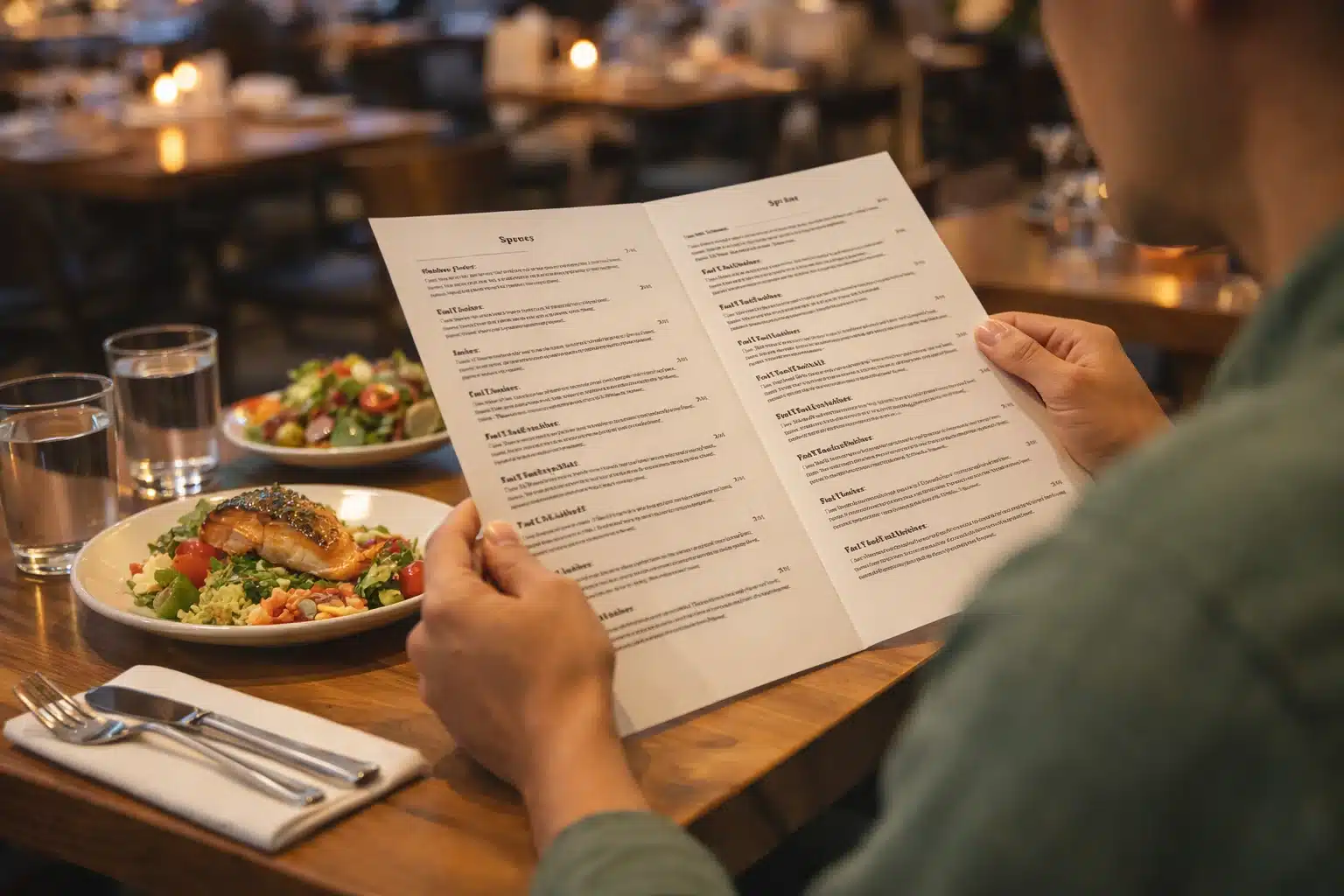

Your menu is more than a list of dishes. It is a silent salesperson working at every table. Strong Restaurant Menu Descriptions shape perception, trigger cravings, and guide purchasing decisions. When written strategically, they influence menu psychology and help increase restaurant sales without raising prices.
Many operators underestimate the power of words. However, persuasive menu descriptions can dramatically impact revenue. In this guide, you will learn how to craft compelling Restaurant Menu Descriptions using sensory language, menu engineering, and proven upselling techniques that move high margin items consistently.
Table of Contents
- Understanding Menu Psychology and Buying Behavior
- Using Sensory Language in Descriptive Food Writing
- Menu Engineering and Strategic Placement
- Persuasive Techniques That Drive Higher Spending
- Aligning Menu Copywriting with Brand Identity
- Frequently Asked Questions
Understanding Menu Psychology and Buying Behavior
Before writing effective Restaurant Menu Descriptions, you must understand how guests make decisions. Customers rarely analyze every detail. Instead, they scan quickly and respond emotionally. Therefore, strategic language matters.
How Menu Psychology Influences Choices
Menu psychology examines how layout and wording guide decisions. Guests often choose items that sound indulgent or unique. As a result, descriptive food writing increases perceived value.
For instance, “slow-roasted garlic butter chicken” feels more appealing than “chicken with sauce.” The words create anticipation. Therefore, guests justify higher prices.
Effective Restaurant Menu Descriptions leverage emotional triggers. They make dishes feel irresistible rather than ordinary.
However, emotional language must align with pricing strategy.
The Role of Price Perception
Guests do not simply compare numbers. They evaluate value. Therefore, wording should support the price point.
Premium ingredients signal quality. Meanwhile, detailed preparation methods justify cost. As a result, guests feel confident ordering higher-priced dishes.
Strong Restaurant Menu Descriptions reduce price resistance by enhancing perceived quality.
Placement also affects attention.
Guiding Eyes to High Margin Items
Guests often scan menus in predictable patterns. Highlighted items capture focus quickly. Therefore, placement works hand in hand with wording.
Pairing persuasive menu descriptions with visual emphasis increases selection rates. Meanwhile, menu engineering supports revenue growth.
Strategic positioning helps increase restaurant sales without adding new menu items.
 Using Sensory Language in Descriptive Food Writing
 Using Sensory Language in Descriptive Food Writing
Sensory language transforms ordinary listings into vivid experiences. Therefore, this section explores how descriptive food writing enhances Restaurant Menu Descriptions.
Appealing to Taste and Texture
Words like “crispy,” “velvety,” and “tender” activate imagination. Guests begin tasting the dish before it arrives. As a result, desire increases.
Texture descriptions add depth. Meanwhile, flavor adjectives create emotional connections. Therefore, sensory language strengthens engagement.
Memorable Restaurant Menu Descriptions rely heavily on vivid taste and texture cues.
Aromas also play a psychological role.
Highlighting Aroma and Freshness
Describing aroma triggers powerful memories. Phrases like “wood-fired” or “freshly baked” create warmth. As a result, dishes feel comforting and authentic.
Freshness signals quality. Meanwhile, local sourcing adds credibility. Therefore, emphasizing ingredient origin enhances trust.
Well-crafted Restaurant Menu Descriptions connect emotionally through scent and freshness imagery.
Preparation methods further elevate perception.
Showcasing Cooking Techniques
Guests associate certain techniques with expertise. For example, “hand-rolled” or “slow-braised” signals craftsmanship. Therefore, dishes feel premium.
Cooking methods differentiate similar items. Meanwhile, detailed preparation increases perceived effort. As a result, higher prices feel justified.
Detailed Restaurant Menu Descriptions that highlight preparation techniques increase restaurant sales effectively.
Menu Engineering and Strategic Placement
Menu engineering combines psychology and profitability analysis. It identifies high margin items and promotes them strategically. Therefore, wording must support financial goals.
Identifying High Margin Items
Not all dishes generate equal profit. Analyzing food cost reveals which items deliver stronger margins. As a result, operators prioritize promotion.
High margin items deserve enhanced visibility. Meanwhile, compelling copy increases selection rates. Therefore, profitability rises.
Smart Restaurant Menu Descriptions focus attention on the most profitable dishes.
Once identified, placement becomes crucial.
Using Visual Anchoring Techniques
Visual anchors guide the eye toward targeted dishes. Boxes, bold fonts, or callouts increase visibility. As a result, guests notice premium options first.
Strategic positioning reduces comparison shopping. Meanwhile, highlighted descriptions create perceived popularity. Therefore, upselling techniques become subtle yet effective.
Thoughtful layout enhances the power of persuasive menu descriptions.
Descriptions should remain concise but impactful.
Balancing Detail and Clarity
Too much text overwhelms guests. However, too little detail reduces appeal. Therefore, balance remains essential.
Short, vivid descriptions perform best. Meanwhile, clear formatting improves readability. As a result, decision-making becomes easier.
Effective Restaurant Menu Descriptions combine precision with persuasion.
Persuasive Techniques That Drive Higher Spending
Persuasion goes beyond adjectives. It includes subtle cues that increase average ticket size. Therefore, this section explores proven upselling techniques.
Using Suggestive Pairings
Suggestive selling encourages add-ons. For example, pairing wine with pasta increases check totals. As a result, revenue grows naturally.
Cross-selling within descriptions feels organic. Meanwhile, guests appreciate helpful recommendations. Therefore, satisfaction improves.
Integrated Restaurant Menu Descriptions subtly guide guests toward complete meals.
Scarcity also motivates action.
Creating Urgency and Exclusivity
Limited-time offers trigger faster decisions. Guests fear missing out. As a result, they order quickly.
Seasonal items enhance exclusivity. Meanwhile, rotating features maintain excitement. Therefore, repeat visits increase.
Strategic wording amplifies urgency within Restaurant Menu Descriptions.
Storytelling builds connection.
Telling Ingredient Stories
Storytelling adds authenticity. Mentioning family recipes or local farms builds emotional bonds. As a result, dishes feel meaningful.
Personal narratives increase memorability. Meanwhile, transparency boosts trust. Therefore, loyalty strengthens.
Compelling Restaurant Menu Descriptions often include short, relatable stories.
Aligning Menu Copywriting with Brand Identity
Consistency builds recognition. Therefore, restaurant menu copywriting must reflect brand personality clearly.
Matching Tone with Concept
A fine-dining restaurant uses elegant language. In contrast, a casual café adopts playful wording. As a result, tone shapes expectations.
Brand alignment prevents confusion. Meanwhile, consistent voice builds familiarity. Therefore, loyalty grows.
Unified Restaurant Menu Descriptions reinforce brand identity effectively.
Visual presentation complements tone.
Design and Typography Choices
Font styles influence perception. Clean typography suggests modernity. Meanwhile, script fonts feel traditional. Therefore, design enhances message.
Spacing improves readability. As a result, guests engage longer. Clear structure supports persuasive menu descriptions.
Layout and wording must work together seamlessly.
Finally, measurement drives improvement.
Testing and Refining Descriptions
Menu updates should be data-driven. Tracking sales before and after changes reveals impact. As a result, strategy improves.
Small wording adjustments often increase restaurant sales noticeably. Meanwhile, A/B testing refines performance. Therefore, optimization remains ongoing.
Continuous improvement ensures Restaurant Menu Descriptions remain effective over time.
How Biyo POS Supports Smarter Menu Optimization
 How Biyo POS Supports Smarter Menu Optimization
Biyo POS helps restaurants analyze item performance and identify high margin items through real-time reporting. As a result, menu engineering becomes data-driven. The platform allows operators to track which Restaurant Menu Descriptions convert best.
If you want to increase restaurant sales and refine persuasive menu descriptions, Biyo POS provides powerful analytics tools. You can schedule a call here to explore features. You may also sign up directly at this signup page.
Frequently Asked Questions
Why are Restaurant Menu Descriptions important?
They influence purchasing decisions and increase perceived value. Strong descriptions directly impact revenue.
How do persuasive menu descriptions increase restaurant sales?
They use sensory language, storytelling, and upselling techniques to guide choices naturally.
What is menu psychology?
Menu psychology studies how wording and layout influence guest decisions and spending patterns.
How often should restaurants update descriptions?
Restaurants should review descriptions quarterly and adjust based on performance data.
Can menu engineering really boost profits?
Yes, identifying and promoting high margin items increases profitability without raising prices.