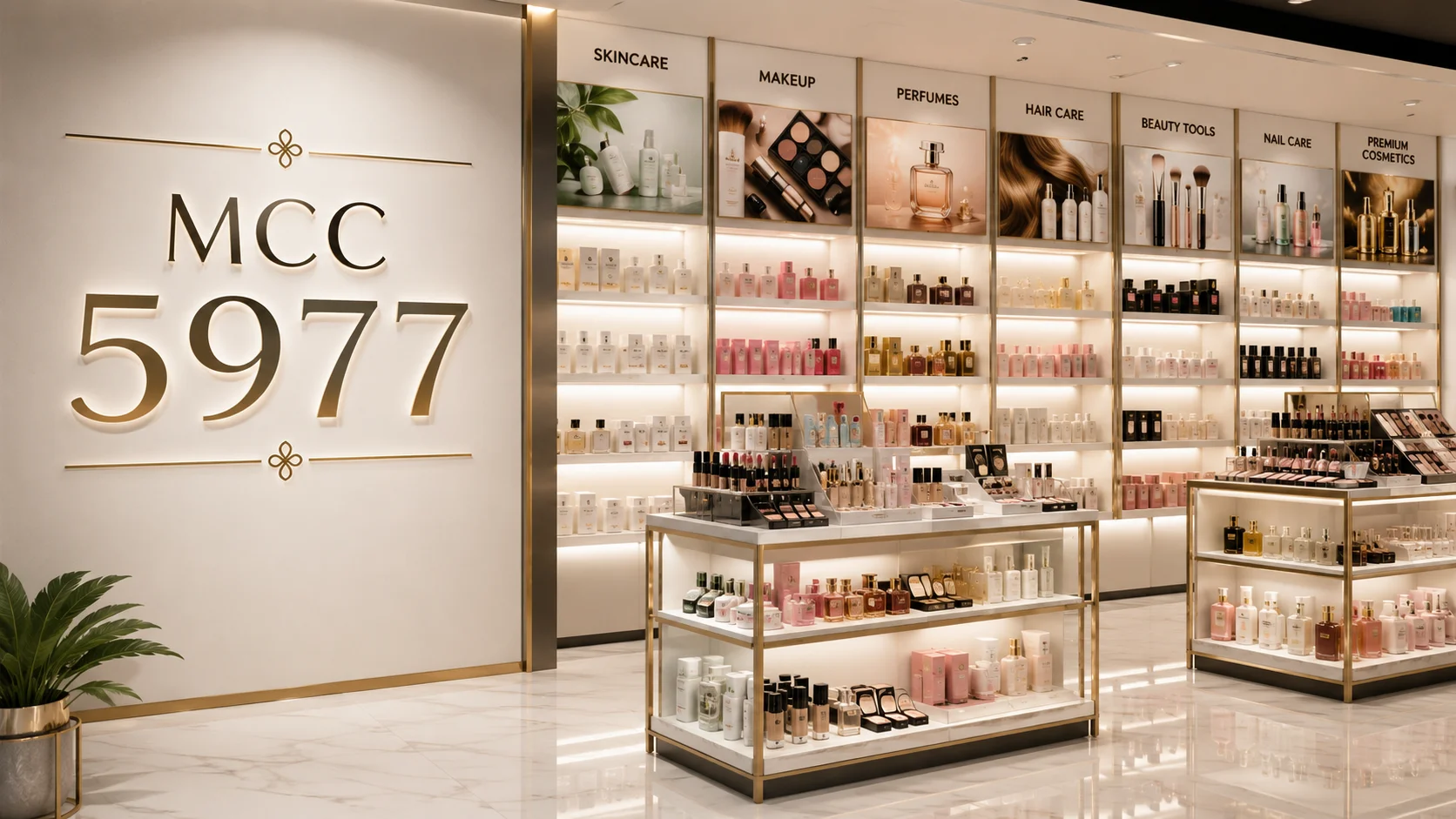

A customer pauses in front of a wall of foundation shades, comparing colors under bright lighting to find the perfect match. Nearby, someone samples a new fragrance while searching for a birthday gift, and another shopper consults a beauty advisor about building an effective skincare routine. Every purchase is highly personal, and every recommendation is built on trust, expertise, and product knowledge.
Behind these carefully curated retail experiences is Merchant Category Code (MCC) 5977, the payment industry classification assigned to cosmetic stores and beauty retailers. Whether operating an independent skincare boutique, a luxury fragrance shop, or a national beauty chain, businesses within this category share similar payment processing requirements, inventory challenges, and customer expectations.
Although shoppers rarely notice Merchant Category Codes during checkout, financial institutions, payment processors, and credit card networks rely on them every day to classify transactions, organize merchant activity, and support payment processing systems. Using the correct MCC helps cosmetic retailers maintain accurate reporting while ensuring their business is properly categorized.
This guide explores everything businesses need to know about MCC 5977, including which retailers qualify, the products commonly sold under this merchant category, operational challenges unique to beauty businesses, and how modern retail technology helps cosmetic stores deliver exceptional customer experiences.
Understanding MCC 5977
What Is Merchant Category Code 5977?
MCC 5977 is the Merchant Category Code assigned to businesses whose primary activity involves selling cosmetics, skincare products, fragrances, makeup, beauty supplies, and related personal care merchandise. Payment processors use this standardized code to identify cosmetic retailers and categorize their transactions within the global payment ecosystem.
Merchant Category Codes help financial institutions distinguish one retail sector from another. Rather than viewing every retailer the same way, payment networks assign businesses codes based on their primary products and services, allowing transactions to be processed and reported more accurately.
Why Cosmetic Retailers Use MCC 5977
Using the correct merchant category code benefits both retailers and payment providers. It supports consistent payment processing, improves transaction reporting, assists with fraud monitoring, and allows financial institutions to better understand purchasing behavior within the beauty industry.
Consumers may also benefit, as some credit card issuers organize spending categories and promotional rewards based on merchant classifications. While reward eligibility varies between card providers, accurate merchant categorization remains an important part of the overall payment ecosystem.
 Businesses Classified Under MCC 5977
 Businesses Classified Under MCC 5977
Cosmetic & Makeup Stores
Traditional cosmetic retailers specializing in makeup products, beauty brands, and color cosmetics are among the most common businesses assigned MCC 5977. These stores typically offer foundations, lipsticks, mascaras, eyeshadows, primers, and other makeup essentials from both premium and affordable brands.
Skincare Boutiques
Retailers dedicated to facial skincare, anti-aging treatments, moisturizers, cleansers, serums, sunscreens, and wellness beauty products also commonly fall within this merchant category. Many combine retail sales with skincare consultations that help customers select products suited to their individual needs.
Beauty Supply Stores
Professional beauty supply retailers serving salons, makeup artists, estheticians, and everyday consumers often operate under MCC 5977. Their inventory frequently includes haircare products, styling accessories, beauty tools, nail care supplies, and professional-grade cosmetics.
Fragrance Retailers
Stores focused primarily on perfumes, colognes, body mists, scented lotions, and luxury fragrance collections are also commonly classified under MCC 5977. Many expand their offerings with gift sets, seasonal collections, and exclusive product launches throughout the year.
Products Commonly Sold by Cosmetic Retailers
Makeup & Color Cosmetics
Beauty retailers carry extensive selections of foundations, concealers, powders, blushes, bronzers, lipsticks, glosses, eyeliners, mascaras, eyeshadow palettes, primers, setting sprays, and makeup brushes. These products often exist in numerous shades and finishes, making product variety one of the defining characteristics of cosmetic retail.
Skincare Products
Modern beauty stores typically devote significant shelf space to cleansers, toners, moisturizers, serums, exfoliants, facial masks, sunscreens, and specialty treatments. As consumers become more educated about skincare ingredients, retailers increasingly provide detailed product information and personalized recommendations.
Fragrances & Beauty Accessories
Many cosmetic retailers also stock perfumes, colognes, body care products, beauty sponges, applicators, nail products, grooming tools, travel-size collections, and seasonal gift bundles that encourage larger basket sizes during holidays and promotional events.
Why MCC 5977 Matters
Supports Accurate Payment Processing
Every card transaction passes through a payment network that relies on Merchant Category Codes to identify the type of business accepting the payment. For cosmetic retailers, MCC 5977 ensures transactions are recognized as beauty-related purchases rather than being grouped with unrelated retail categories.
Accurate classification helps payment processors organize merchant accounts correctly while reducing confusion during transaction reporting. It also contributes to more reliable financial records and allows retailers to better analyze payment activity over time.
Improves Financial Reporting
Beyond payment authorization, MCC 5977 plays an important role in accounting and business reporting. Organized transaction data makes it easier for retailers to reconcile sales, monitor revenue trends, and evaluate overall business performance.
Whether operating a single boutique or multiple beauty locations, accurate merchant categorization supports cleaner financial reporting and provides valuable insights that assist with budgeting, purchasing decisions, and long-term planning.
May Influence Customer Rewards Programs
Many credit card issuers categorize purchases based on Merchant Category Codes when determining bonus rewards, cashback opportunities, or promotional offers. While every issuer establishes its own eligibility rules, maintaining the correct MCC helps ensure purchases are categorized appropriately whenever beauty retailers qualify for those programs.
Running a Successful Cosmetic Store
Delivering Personalized Customer Experiences
Unlike many retail environments where customers already know exactly what they want, cosmetic shopping often involves discovery and education. Beauty advisors guide customers through product comparisons, explain ingredients, recommend routines, and help match products to individual preferences. This personalized service creates confidence while encouraging repeat business.
Customers frequently return to stores where they trust the recommendations, making knowledgeable staff one of the most valuable assets for cosmetic retailers.
Launching New Collections Throughout the Year
The beauty industry rarely stands still. Cosmetic brands continuously introduce new product lines, limited-edition packaging, influencer collaborations, and seasonal collections designed to keep shoppers engaged. Retailers must coordinate product launches carefully to ensure shelves are stocked, promotional displays are ready, and marketing campaigns align with inventory availability.
Successful launches depend on accurate forecasting, timely replenishment, and close collaboration with suppliers to avoid disappointing customers during periods of high demand.
Building Long-Term Customer Loyalty
Beauty products naturally encourage repeat purchases. Once customers find a favorite foundation, moisturizer, or fragrance, they often return to purchase the same products again. Retailers strengthen these relationships through loyalty programs, personalized promotions, birthday rewards, exclusive product previews, and recommendations based on previous purchases.
Creating lasting customer relationships is often more valuable than acquiring new shoppers, making customer retention an essential part of every successful cosmetic business.
Inventory Challenges in Beauty Retail
Managing Thousands of Product Variants
Few retail industries manage as many product variations as cosmetics. A single makeup collection may include dozens of shades, multiple finishes, different package sizes, and promotional bundles. Without an organized inventory system, tracking these variations quickly becomes overwhelming.
Retailers must maintain accurate stock counts while ensuring popular shades remain available and slower-moving products do not occupy valuable shelf space.
Monitoring Product Shelf Life
Many skincare and cosmetic products have recommended shelf lives or expiration dates. Retailers must rotate inventory regularly, monitor aging stock, and prevent outdated products from reaching customers. Proper inventory rotation not only protects product quality but also helps reduce unnecessary waste.
Balancing Seasonal Demand
Beauty purchasing patterns change throughout the year. Holiday gift sets, summer skincare, wedding-season cosmetics, and limited-edition collections create predictable fluctuations in customer demand. Successful retailers analyze historical sales alongside current beauty trends to ensure inventory levels remain balanced without creating costly overstocks.
Beauty Industry Trends Shaping Retail
 Beauty Industry Trends Shaping Retail
Clean Beauty & Ingredient Transparency
Today’s consumers pay closer attention to ingredients than ever before. Demand for clean beauty, cruelty-free products, vegan formulations, sustainable packaging, and dermatologist-tested skincare continues to reshape purchasing decisions. Retailers increasingly provide educational resources that help shoppers understand product formulations before making purchases.
Social Media’s Influence on Beauty Sales
Platforms such as TikTok, Instagram, and YouTube have transformed how consumers discover beauty products. A single viral recommendation can dramatically increase demand within days, requiring retailers to respond quickly with inventory adjustments and supplier coordination.
Businesses that closely monitor emerging trends are better positioned to capitalize on sudden shifts in consumer interest while avoiding missed sales opportunities.
The Rise of Omnichannel Beauty Shopping
Modern shoppers move seamlessly between physical stores and digital channels. They may discover products online, read customer reviews, check inventory availability, and complete purchases either in-store or through ecommerce platforms. Cosmetic retailers that synchronize inventory, pricing, and customer data across every sales channel create smoother shopping experiences while improving operational efficiency.
MCC 5977 Compared with Similar Merchant Categories
| Merchant Category Code | Primary Business Type | Main Products | Key Difference |
|---|---|---|---|
| MCC 5977 | Cosmetic & Beauty Retailers | Makeup, skincare, fragrances, beauty supplies | Specializes exclusively in beauty and cosmetic merchandise. |
| MCC 5912 | Drug Stores & Pharmacies | Prescription medications, health products, limited cosmetics | Healthcare-focused businesses where beauty products represent only one department. |
| MCC 5311 | Department Stores | Clothing, home goods, cosmetics, electronics | Cosmetics are one product category within a much larger retail operation. |
| MCC 5331 | Variety Stores | General merchandise, household goods, seasonal products | Offers a broad selection of merchandise rather than specializing in beauty products. |
How Biyo Helps Cosmetic Retailers
Managing a successful cosmetic business requires more than processing transactions. Retailers must accurately track thousands of product variations, monitor inventory across multiple locations, coordinate seasonal launches, and provide exceptional customer service—all while keeping pace with rapidly changing beauty trends.
Biyo POS helps cosmetic retailers simplify these daily operations through real-time inventory management, barcode scanning, detailed product catalogs, and centralized reporting. Whether managing foundation shades, fragrance sizes, skincare collections, or promotional gift sets, Biyo provides complete visibility into inventory movement across every sales channel.
The platform also supports multi-location inventory synchronization, customer purchase history, loyalty programs, detailed sales analytics, and integrated online ordering. These tools help beauty retailers replenish inventory more efficiently, identify best-selling products, create personalized shopping experiences, and make informed business decisions using real-time retail data.
If you’re looking to modernize your cosmetic retail business, sign up for Biyo POS or schedule a free consultation to discover how Biyo can streamline inventory management, improve operational efficiency, and support long-term business growth.
Frequently Asked Questions
What businesses qualify for MCC 5977?
MCC 5977 typically applies to cosmetic stores, beauty supply retailers, skincare boutiques, fragrance shops, makeup stores, and other businesses whose primary focus is selling beauty and personal care products.
Does MCC 5977 include online cosmetic stores?
Yes. Ecommerce businesses that primarily sell cosmetics, skincare, fragrances, and related beauty products may also be classified under MCC 5977, depending on their primary business activity.
Why is the correct Merchant Category Code important?
Using the correct MCC helps payment processors accurately classify transactions, improves financial reporting, supports fraud monitoring, and ensures merchant activity reflects the retailer’s primary business.
Can cosmetic retailers manage multiple store locations more efficiently?
Yes. Modern retail management systems allow businesses to synchronize inventory, monitor stock levels across locations, analyze sales performance, and provide consistent customer experiences throughout their retail network.
How does Biyo help cosmetic retailers?
Biyo POS helps cosmetic retailers manage complex inventories, monitor product variants, synchronize online and in-store sales, track customer purchases, and generate detailed business insights that support better operational decisions.