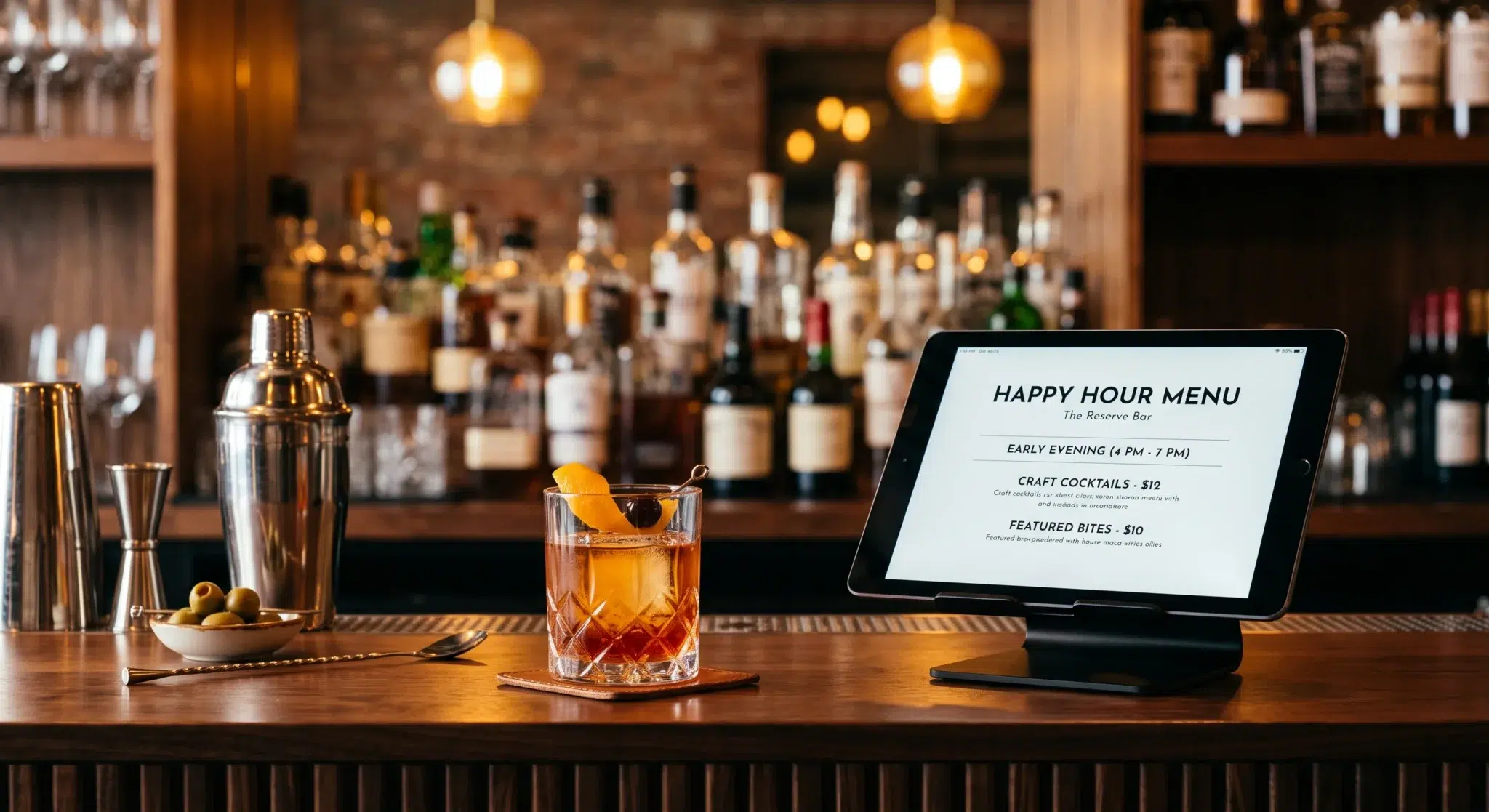

Implementing reliable **automated happy hour pricing** is essential for maximizing weekday revenue without creating operational friction behind the bar. Across the hospitality industry, afternoon and early evening drink specials remain a powerful magnet for driving customer traffic during slower dayparts. Whether offering discounted draft beers, half-price craft cocktails, or discounted small plates, happy hours transform empty dining rooms into lively social hubs. However, managing time-sensitive price changes manually across multiple point-of-sale terminals and handheld devices creates severe accounting vulnerabilities.
Traditionally, bars rely on manual cashier memory and price overrides to execute daily happy hours. When 4:00 PM arrives, bartenders must manually remember which draft beers are discounted, calculate markdown percentages in their heads, or dig through physical menu folders to apply custom discounts on the register. This unautomated approach invites constant human error. Bartenders frequently forget to end specials at 7:00 PM, accidentally selling premium spirits at discounted rates for hours after the happy hour window closes. Even worse, during a chaotic Friday afternoon rush, overworked staff lose valuable seconds trying to recall promotional pricing, slowing down service and frustrating waiting patrons.
Fortunately, modern cloud point-of-sale architecture allows operators to automate time-based price changes completely. By programming a centralized promotional scheduling engine, your venue can execute automated price drops across all stationary registers and handheld ordering terminals simultaneously. This comprehensive guide breaks down the financial risks of manual price overrides, explains daypart scheduling architectures, and demonstrates how automated promotional tools protect your profit margins.
Table of Contents
- The Financial Risks of Manual Happy Hour Price Overrides
- Daypart Scheduling Architecture: Time-Triggers vs. Manual Toggles
- Multi-Terminal Synchronization Across Main Bars, Patios, and Handhelds
- State Liquor Laws, Minimum Pricing Regulations, and Happy Hour Compliance
- Modeling the Profit Impact: Balancing High Volume Against Lower Margins
- Side-by-Side Comparison
- How Biyo POS Automates Time-Based Happy Hour Pricing
- Frequently Asked Questions
The Financial Risks of Manual Happy Hour Price Overrides
Many bar managers assume that asking bartenders to apply manual price reductions during happy hour is a harmless shortcut. In reality, manual overrides create significant financial leaks and operational inefficiencies. When pricing relies on human memory rather than software automation, mistakes are inevitable.
As a result, your venue suffers from unrecorded inventory shrinkage, lost gross profit, and inconsistent customer billing. Understanding these operational risks highlights why automation is critical.
The Forgotten Expiration Time and Margin Bleed
The most common financial disaster in unautomated bar operations is the “forgotten expiration.” Consider a neighborhood pub running a Monday through Thursday happy hour from 4:00 PM to 7:00 PM, offering five-dollar craft pints instead of the standard eight-dollar price.
At 7:00 PM, the evening dinner rush hits full swing. The bartender, slammed with drink orders, forgets to switch the POS pricing back to standard rates. For the next three hours during peak prime-time service, every craft pint sells at the discounted happy hour rate. On a busy night, selling sixty pints at a three-dollar discount drains nearly two hundred dollars of pure profit from a single station. Multiplying this oversight across a multi-terminal venue over a full year results in thousands of dollars in unrecovered revenue.
Cashier Mental Math Errors and Discrepancy Audits
When management relies on custom percentage discounts (e.g., “take 20% off all appetizers during happy hour”), staff must calculate reductions manually on the touchscreen or issue line-item voids.
Manual calculations slow down service throughput and create accounting discrepancies during end-of-day cash drawer reconciliations. When a cashier applies inconsistent discounts, managers waste valuable morning hours auditing guest receipts and trying to explain inventory variances. Automated scheduling eliminates manual math entirely, ensuring that every guest receives the exact, pre-programmed promotional rate without cashier intervention.
 Daypart Scheduling Architecture: Time-Triggers vs. Manual Toggles
 Daypart Scheduling Architecture: Time-Triggers vs. Manual Toggles
To eliminate human error, modern point-of-sale systems utilize automated daypart scheduling engines. Instead of relying on a bartender to click buttons on a screen, the software monitors internal clock telemetry and executes programmed price transitions automatically.
Understanding how time-trigger architecture functions helps operators build structured, foolproof promotional calendars.
Configuring Automated Daypart Rules by Day and Hour
An enterprise-grade cloud POS allows management to build permanent scheduling rules directly into the master menu catalog:
- Recurrence Rules: Assign specific promotional windows to recur automatically on designated days of the week (e.g., Monday through Thursday, 4:00 PM to 7:00 PM).
- Item-Specific Grouping: Target price drops exclusively to designated category groups—such as draft beers, house wines, and select appetizers—while keeping premium spirits and bottled craft beers at standard pricing.
- Automatic Reversion: Program the software to revert menu prices back to standard baseline rates the exact second the happy hour window closes, eliminating forgotten expiration risks.
Exception Handling and Holiday Blackout Dates
A sophisticated promotional engine must also handle calendar exceptions gracefully. For example, if a major national holiday or private venue buyout falls on a Tuesday evening, management needs the ability to suspend regular weekday happy hour rules instantly.
Advanced POS platforms allow operators to configure holiday blackout dates or apply temporary schedule overrides with a single click, preventing discounted specials from firing during high-volume holiday events when full margins are required.
Multi-Terminal Synchronization Across Main Bars, Patios, and Handhelds
In modern multi-terminal hospitality venues, drinks are ordered from multiple physical locations—the main indoor bar, the outdoor patio service station, portable handheld tablets carried by floor servers, and customer self-service kiosks.
If your happy hour pricing requires manual configuration on each individual register, your staff will experience synchronization failures.
The Danger of Fragmented Terminal Pricing
Imagine a bustling gastropub where the main bar manager updates register prices for happy hour, but forgets to update the outdoor patio terminal or the handheld servers’ tablets.
When a patio guest orders a discounted happy hour IPA, the handheld terminal rings it up at full price. When the customer receives their bill, they notice the overcharge and demand a correction. The server must flag a manager, void the transaction, and re-ring the order, creating awkward service delays and damaging guest trust. Multi-terminal synchronization ensures that price changes push to every hardware endpoint instantly.
Real-Time Cloud Propagation via WebSockets
Modern cloud POS platforms use low-latency WebSockets to maintain real-time menu synchronization across all hardware endpoints. When the internal cloud clock strikes 4:00 PM, the central server broadcasts a time-trigger payload to every connected terminal, tablet, and mobile device in the building.
Within 500 milliseconds, every screen in your venue updates its active pricing structure. A bartender pouring a draft beer at the main bar and a server ringing up an appetizer on a patio tablet experience identical, automated promotional pricing without manual rebooting.
State Liquor Laws, Minimum Pricing Regulations, and Happy Hour Compliance
Automating beverage pricing requires strict adherence to state and local alcohol control board regulations. Many jurisdictions enforce rigorous statutory limitations on how, when, and what kind of alcohol specials a licensed venue can offer.
Failing to comply with local liquor laws can result in severe fines, license suspensions, or mandatory alcohol-service retraining.
Navigating Statutory Happy Hour Restrictions
State liquor authorities across the country maintain diverse compliance frameworks:
- Time Restrictions: Some states prohibit happy hour pricing after designated evening hours (e.g., no discounted drinks allowed after 8:00 PM) to curb excessive consumption.
- Prohibition of “All-You-Can-Drink” Models: Many jurisdictions strictly ban flat-fee open bar specials or unlimited drink promotions.
- Mandatory Food Pairings: Certain local laws require venues to offer discounted food items concurrently with beverage happy hours.
- Minimum Pricing Floors: Several states establish statutory minimum retail prices below which alcohol cannot legally be sold, preventing predatory pricing wars.
Hard-Coding Compliance Guardrails into Your POS
Automated point-of-sale scheduling software acts as a safeguard against accidental compliance violations. By pre-programming your state-mandated pricing floors and allowable time windows directly into your POS promotional engine, your system prevents staff from launching illegal specials.
The software enforces legal boundaries automatically, protecting your liquor license and maintaining absolute regulatory compliance during every shift.
Modeling the Profit Impact: Balancing High Volume Against Lower Margins
Implementing happy hour specials involves a strategic trade-off: sacrificing unit margin in exchange for higher customer volume and increased food attachment rates.
To ensure your promotional strategy remains profitable, managers must model the financial impact of time-based price drops against baseline operating costs.
The Volume-to-Margin Balancing Equation
Consider a craft cocktail lounge evaluating a daily happy hour featuring eight-dollar signature cocktails (marked down from twelve dollars). The liquor, mixer, and garnish cost for each cocktail is three dollars:
- Standard Pricing Margin: $12.00 Retail – $3.00 Cost = **$9.00 Gross Profit per Drink (75% Margin)**.
- Happy Hour Pricing Margin: $8.00 Retail – $3.00 Cost = **$5.00 Gross Profit per Drink (62.5% Margin)**.
While the gross profit per drink drops by four dollars during happy hour, the increased foot traffic drives secondary spending. Happy hour patrons routinely order high-margin food items—such as gourmet sliders, truffle fries, and shareable plates—where food cost percentages sit at a comfortable twenty-five percent.
Furthermore, guests who arrive for a discounted 5:00 PM drink often stay through the dinner service, transitioning to full-price menu items as the evening progresses. Automating your happy hour ensures you capture this valuable early-evening rush seamlessly.
Side-by-Side Comparison
| Operational Dimension | Manual Happy Hour Overrides | Automated Time-Based POS Scheduling (Biyo POS) |
|---|---|---|
| Price Transition Accuracy | Low; staff frequently forget to start or end specials | 100% Precise; automated clock-triggers start and end on schedule |
| Service Speed & Checkout Flow | Slow; cashiers waste time calculating custom overrides | Instant; pre-programmed promotional rates apply automatically |
| Multi-Terminal Consistency | Inconsistent; main bar updated while patio/tablets missed | Universal; cloud sync updates all registers and handhelds instantly |
| Revenue Leakage Risk | High; forgotten evening price drops drain daily profits | Zero; prices revert automatically at closing time |
| Liquor Law Compliance | Vulnerable to illegal after-hours discounting | Protected; pre-set scheduling windows enforce local regulations |
| End-of-Day Reconciliation | Difficult; manual overrides create audit discrepancies | Clean; automated reporting tracks promotional volume accurately |
| Staff Cognitive Stress | High; bartenders distracted by mental math during rushes | Zero; staff focus entirely on drink pouring and guest hospitality |
| Promotional Profitability | Unpredictable due to human error and extended discounting | Optimized; precise daypart tracking measures campaign ROI |
How Biyo POS Automates Time-Based Happy Hour Pricing
 How Biyo POS Automates Time-Based Happy Hour Pricing
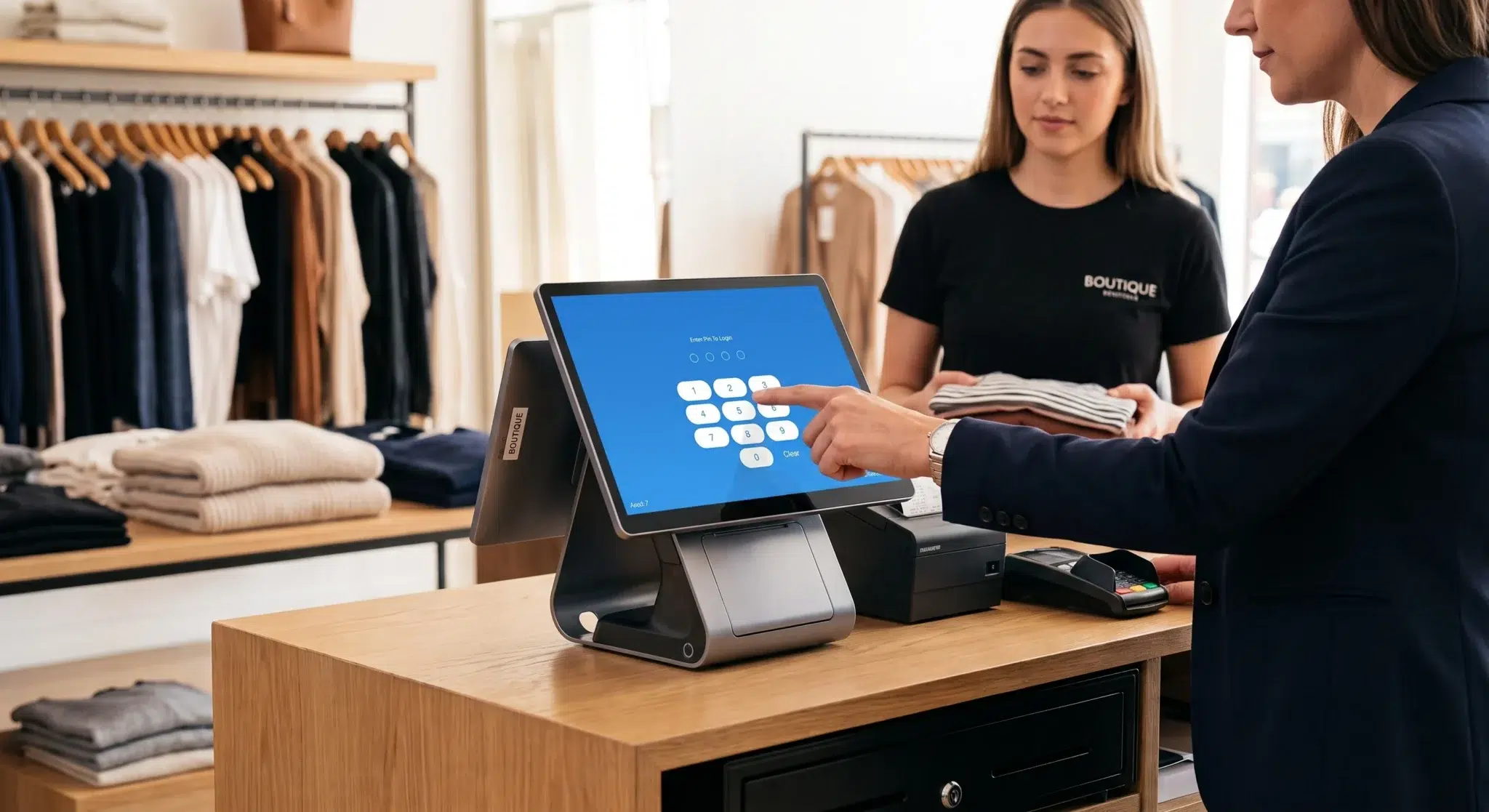
Biyo POS delivers a specialized cloud point-of-sale and beverage management platform engineered specifically to handle the complex pricing and fast-paced operational demands of bars, pubs, and restaurants. Operating natively inside the Google Chrome browser on any PC, Mac, iPad, or Android tablet, Biyo provides enterprise-grade promotional scheduling without forcing operators into expensive proprietary hardware contracts.
With Biyo’s automated promotional engine, establishing **automated happy hour pricing** is fast and effortless. Configure Monday–Thursday 4:00 PM to 7:00 PM pricing rules once in your master catalog, and Biyo automatically switches draft beer, well drink, and appetizer prices across all stationary terminals and handheld devices with zero manual intervention. When the happy hour window concludes, Biyo reverts prices back to standard baseline rates automatically, protecting your evening profit margins from forgotten price drops and cashier calculation errors.
Furthermore, Biyo connects your front-of-house bar stations directly with back-of-house kitchen and beverage operations. Route complex food and drink tickets to preparation lines via the **Biyo Kitchen Display (KDS) app available on Google Play**, perform rapid bottle-level liquor inventory audits using the **Biyo Inventory Scanner app on the Apple App Store**, and consolidate multi-room sales through Kitchen Hub. With Biyo’s true offline transaction mode, your bar registers continue ringing up drinks, opening tabs, and processing happy hour orders seamlessly even during complete internet outages.
To discover how easily your venue can eliminate manual pricing errors and automate time-based beverage specials, you can schedule a live demo with a bar systems specialist or create your account today on the Biyo signup page.
Frequently Asked Questions
What is automated happy hour pricing in a bar POS?
Automated happy hour pricing is a point-of-sale feature that uses internal scheduling rules to start and end time-based beverage or food discounts across all registers automatically without requiring manual staff overrides.
How does POS automation prevent happy hour revenue leaks?
POS automation prevents revenue leaks by pre-programming strict expiration times, ensuring that promotional prices automatically revert to standard baseline rates the exact second the happy hour window closes.
Can automated happy hour pricing sync across handheld servers and patio terminals?
Yes. Modern cloud POS platforms use real-time WebSockets to broadcast price schedule changes instantly across all connected stationary registers, patio terminals, and mobile handheld ordering devices.
How do automated scheduling rules help with liquor law compliance?
Automated scheduling rules enforce state and local alcohol control regulations by hard-coding allowable serving hours and minimum pricing floors, preventing staff from accidentally running illegal drink specials.
Does Biyo POS require manual toggles to start daily happy hours?
No. Biyo POS features a built-in automated promotional engine that switches draft, well, and appetizer prices according to your custom calendar rules with zero manual staff intervention.