If you’re working in the food industry in Texas, understanding the Texas food handler permit requirements is not optional—it’s essential. Restaurants, food trucks, and any business that serves food must comply with regulations set by the Texas Department of State Health Services (DSHS). This article will break down everything you need to know to stay compliant and protect your business.
In Texas, any employee who handles, prepares, or serves food must obtain a food handler permit. Whether you’re a cashier handling baked goods or a cook in a restaurant kitchen, the rules apply equally. The goal is to ensure that everyone involved in food service understands basic food safety.
Frontline Staff and Food Contact
Any employee whose hands touch food, utensils, or food-contact surfaces must hold a valid Texas food handler card. This includes waitstaff, bartenders, food runners, and dishwashers. Essentially, if there’s any possibility of cross-contamination, certification is necessary.
Failing to certify frontline workers can lead to penalties or even closure during health inspections. Therefore, taking early steps to get your team certified is not only smart but mandatory.
Employers are responsible for verifying that all food-handling staff meet these state-mandated requirements before or shortly after employment begins.
Exemptions and Special Cases
There are some exceptions. For example, certified food managers often don’t need a separate food handler permit. Volunteers at nonprofit events may also be exempt depending on the circumstances. That said, it’s important to verify with local regulations since cities like Austin or Houston might have stricter enforcement.
Also, temporary food events may carry different standards. Always double-check with your city’s health department before making assumptions about exemptions.
Document any special cases so your business remains protected from violations or legal complications.
Legal Enforcement and Inspections
Local health departments perform surprise inspections. During these, they will verify that every food handler on staff has a current, valid permit. Missing documentation can result in immediate citations or worse.
Having your team fully certified shows inspectors that your establishment takes food safety seriously. That makes them more likely to pass your facility without issue.
Compliance also improves internal morale. Certified workers tend to feel more confident and empowered in their roles.
Understanding the Training and Certification Process
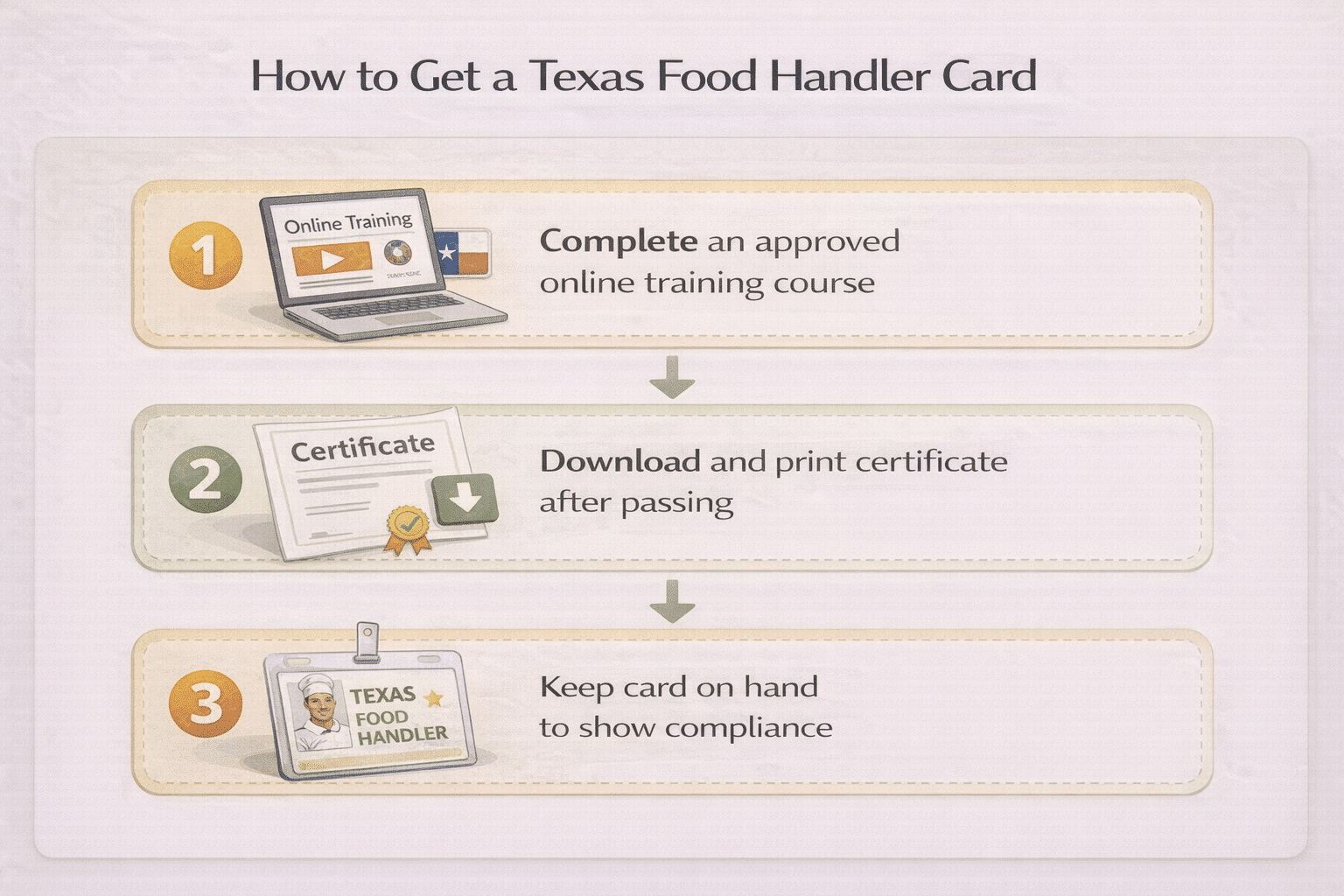
Becoming a certified food handler in Texas is straightforward but must be done through state-approved channels. The certification covers basic topics like hygiene, foodborne illnesses, and proper food storage.
Training Duration and Structure
Most courses take just 1-2 hours to complete. They’re designed to be accessible and easy to follow, often broken into modules. Topics range from personal cleanliness to safe temperature zones for different types of food.
These training sessions often include visuals, interactive quizzes, and real-world examples to make learning more engaging. Many courses are offered in multiple languages to accommodate diverse workforces.
Upon completion, the student takes a short exam and immediately receives their printable certificate.
Cost of Certification
Training programs generally cost between $7 and $20. Many employers choose to cover the cost for employees, especially in high-turnover environments like quick-service restaurants.
Keep in mind that some third-party vendors offer packages that include both training and laminated ID badges. These extras can be useful for recordkeeping and display.
There are also group discounts for businesses that need to certify multiple employees at once, so be sure to ask providers about bulk rates.
Online vs. In-Person Training
Texas allows both online and in-person certification, provided the provider is on the official DSHS-approved list. Online options are especially convenient for remote teams or busy schedules.
In-person classes may be useful for hands-on demonstrations or for employees who struggle with digital formats. Either way, the core content remains standardized and compliant with state guidelines.
Verify that your selected provider has current DSHS approval, as rules change periodically and outdated courses will not qualify.
Approved Training Providers and Formats
The Texas Department of State Health Services maintains a list of approved food handler training programs. This ensures consistency in the material and compliance with legal standards.
Finding a Recognized Provider
Go to the DSHS website to find updated lists of approved vendors. This ensures that you’re not wasting time and money on unrecognized programs.
Many of these providers allow immediate download of certificates upon passing the test. Look for vendors with high ratings, mobile-friendly interfaces, and customer service options.
Reading reviews can also help identify the best user experience, especially if English isn’t your first language or if you prefer video-based training.
Certificates and Recordkeeping
Certificates should be stored securely and be accessible during inspections. Many businesses keep digital backups along with printed versions onsite.
Some systems integrate food handler certification status into POS or scheduling software, making tracking effortless. This kind of automation ensures that renewals are not missed.
Renewals are generally required every two years, so set calendar reminders or use HR software to keep everyone compliant.
State vs. Local Rules
While state law sets the baseline, some counties and cities enforce stricter standards. For example, certain municipalities may require food handler permits even for temporary event volunteers.
Be aware of both state and local requirements. Reach out to your county health department to clarify any region-specific expectations that apply to your staff or establishment type.
Keeping up with these distinctions reduces the risk of penalties during surprise inspections.
Compliance, Renewals, and Monitoring
Compliance with Texas food handler permit requirements doesn’t end with passing the test. You need a system to manage ongoing documentation and renewals.
Tracking Expiration Dates
Each permit has an expiration date, usually two years from issuance. Managers must track these dates carefully to ensure staff remains eligible to work in food-related roles.
Use spreadsheets, reminders, or HR software to prevent lapses. Even one expired permit can result in citations during inspections.
Some systems can auto-flag soon-to-expire certifications, giving employers a window to remind staff about upcoming renewals.
Team Communication and Accountability
Remind employees about their responsibility in maintaining certification. Clear expectations foster a culture of compliance and reduce misunderstandings.
Include food safety permit policies in your employee handbook and onboarding materials. This formal documentation helps protect your business in case of disputes.
Set periodic check-ins or audits to ensure records are up-to-date and easily retrievable at all times.
Penalties for Non-Compliance
Failure to comply can result in fines, suspension of operations, or even closure. In some cases, violations may impact your business license renewal.
Non-compliance also increases food safety risks, which could lead to customer illness, reputational damage, and lawsuits. In today’s review-driven economy, one viral food safety incident can destroy years of goodwill.
It’s always cheaper and safer to train and document than to recover from a health violation.
Why It Matters to Employers and Employees
Meeting the Texas food handler permit requirements isn’t just about checking a box—it adds tangible value to your business.
Boosting Operational Efficiency
Trained employees make fewer mistakes, follow proper procedures, and handle food more efficiently. This boosts kitchen flow, reduces waste, and improves service times.
When everyone is on the same page, team coordination becomes easier and more effective. Training empowers employees to take initiative with confidence.
Consistency leads to better customer experiences, fewer complaints, and increased retention rates.
Building Customer Trust
Customers notice when a restaurant values hygiene and professionalism. Posting visible certifications or displaying food safety credentials helps build trust and credibility.
Trust equals loyalty, and loyalty leads to repeat visits and positive reviews. Even one detail—like a badge labeled “Certified Food Handler”—can reassure customers.
People want to eat where they feel safe. Certification signals that your team is prepared and knowledgeable.
Protecting Business Reputation
Avoiding foodborne illness outbreaks protects your reputation. Negative publicity spreads quickly online, and lawsuits are expensive and damaging.
Certifying staff significantly reduces that risk. It also demonstrates that your management team takes food safety seriously, which is key for investors, partners, and regulators.
Being proactive shows professionalism and keeps your business in good standing with local and state agencies.
How Biyo POS Supports Food Safety Compliance
Biyo POS helps streamline employee management and documentation tracking. Our system allows you to store food handler permits digitally, set expiration alerts, and ensure compliance across locations. Features like employee scheduling and audit trails provide extra layers of accountability and peace of mind.
To learn how Biyo POS can support your compliance efforts, schedule a call. Ready to upgrade your system? Sign up here.
FAQ
How long does it take to get a Texas food handler permit?
Most courses take 1–2 hours and provide instant certification upon passing the test.
Is online food handler training accepted in Texas?
Yes, as long as it’s provided by a state-approved vendor listed on the DSHS website.
Do food handler permits expire?
Yes, they are typically valid for two years. It’s essential to renew before expiration.
Can employers require food handler certification before hiring?
Yes, employers can request that job candidates obtain a permit as a condition of employment.
Does each employee need their own permit?
Absolutely. Each individual must hold their own valid permit to be compliant with state regulations.