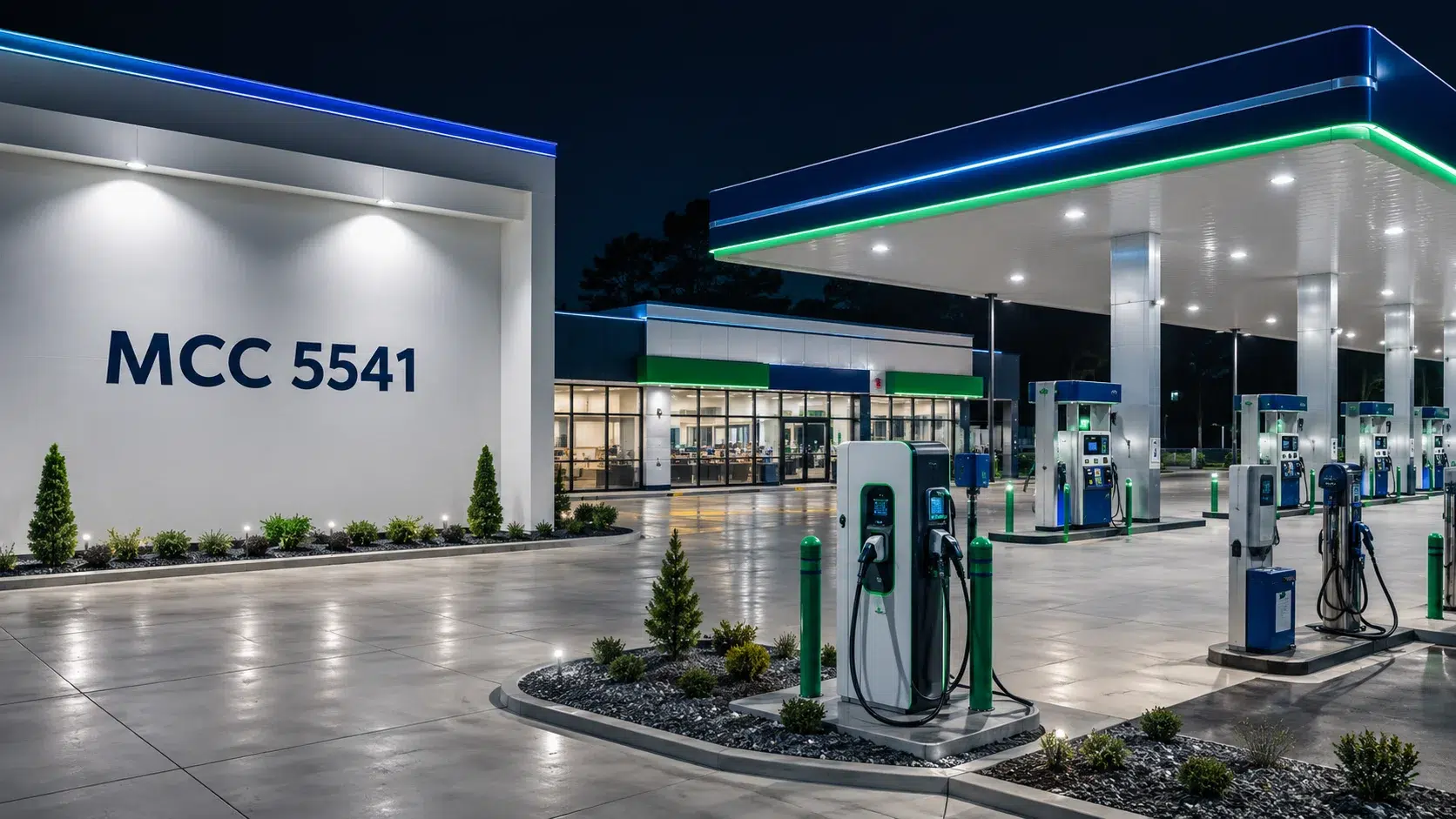

Merchant Category Codes (MCCs) help payment processors, financial institutions, and card networks classify businesses based on the products and services they primarily provide. These four-digit codes play an important role in payment processing, interchange fee calculations, merchant reporting, fraud prevention, and certain credit card rewards programs. Businesses that primarily sell automotive fuel and related convenience products are generally classified under MCC 5541.
MCC 5541 applies to service stations and fuel retailers that primarily sell gasoline, diesel, and other vehicle fuels. Many service stations also operate convenience stores that offer beverages, snacks, automotive fluids, and travel essentials, while some provide additional services such as car washes, air pumps, and vacuum stations. Understanding how MCC 5541 works helps fuel retailers maintain accurate merchant classification while ensuring payment providers correctly identify their primary business activities.
Table of Contents
- Understanding MCC 5541
- Businesses Classified Under MCC 5541
- Products and Services Offered by MCC 5541 Businesses
- Why MCC 5541 Matters
- MCC 5541 Compared to Similar Merchant Categories
- How Service Stations Operate
- Inventory and Operational Challenges
- Industry Trends
- How Biyo Helps Service Stations
- Frequently Asked Questions
Understanding MCC 5541
What Is MCC 5541?
MCC 5541 is the Merchant Category Code assigned to businesses that primarily operate service stations and fuel retail locations. These merchants generate most of their revenue from selling gasoline, diesel fuel, and other automotive fuels while often supplementing fuel sales with convenience store merchandise and travel-related products. The code identifies businesses whose core activity is fuel retailing rather than automotive repair or general retail.
How Businesses Receive This Classification
When a service station opens a merchant account, the payment processor reviews its primary business activities before assigning a Merchant Category Code. Businesses whose principal operation is selling automotive fuel are generally classified under MCC 5541. Although many locations include convenience stores, quick-service food, or vehicle services, fuel sales remain the defining factor for this classification.
Common Transactions Processed Under MCC 5541
Transactions processed under MCC 5541 commonly include gasoline purchases, diesel fuel, premium fuel, alternative fuels where available, convenience store merchandise, bottled beverages, snacks, tobacco products where permitted, motor oil, windshield washer fluid, automotive additives, propane exchanges, car wash purchases, and air or vacuum services.
 Businesses Classified Under MCC 5541
 Businesses Classified Under MCC 5541
Gas Stations and Fuel Retailers
The primary businesses classified under MCC 5541 are gas stations that sell fuel for passenger vehicles, commercial vehicles, motorcycles, and light trucks. These businesses typically operate multiple fuel pumps alongside cashier stations or automated payment terminals that allow customers to purchase fuel quickly and conveniently.
Service Stations with Convenience Stores
Many service stations include convenience stores that sell beverages, packaged food, coffee, travel essentials, automotive supplies, lottery tickets where permitted, and other everyday items. Although convenience sales contribute significantly to overall revenue, these businesses generally remain classified under MCC 5541 because fuel retailing is their primary business activity.
Truck Stops and Travel Fuel Centers
Large travel centers and truck stops may also qualify under MCC 5541 when fuel sales represent their primary source of revenue. These facilities often serve commercial trucking fleets, long-distance travelers, and professional drivers by offering diesel fuel, DEF fluid, parking, showers, food service, and additional travel amenities.
Products and Services Offered by MCC 5541 Businesses
Automotive Fuel Sales
The primary products sold by businesses classified under MCC 5541 include regular, mid-grade, and premium gasoline, diesel fuel, ethanol blends, and alternative fuels depending on regional availability. Many stations also provide commercial fueling options for fleet vehicles and heavy-duty trucks.
Convenience Store Merchandise
Most service stations generate additional revenue through convenience retail sales. Common products include bottled drinks, coffee, snacks, packaged foods, ice, energy drinks, automotive fluids, batteries, phone chargers, travel accessories, and other products designed for drivers and travelers.
Vehicle Convenience Services
Many locations offer value-added services such as automatic car washes, vacuum stations, tire air pumps, windshield cleaning supplies, propane exchanges, and loyalty programs. These services enhance customer convenience while creating additional revenue beyond fuel sales.
Why MCC 5541 Matters
Supports Accurate Merchant Classification
Using MCC 5541 allows payment processors to accurately classify businesses that primarily sell automotive fuel. Proper classification supports efficient payment processing, merchant account management, and accurate transaction reporting.
Improves Payment Reporting and Analytics
Merchant Category Codes provide valuable transaction data for accounting, fraud monitoring, spending analysis, and payment reporting. Accurate classification also helps financial institutions correctly categorize fuel purchases made by consumers and businesses.
Supports Fuel Retail Operations
Service stations process thousands of fuel transactions, convenience store purchases, fleet fuel cards, and loyalty rewards every day. Accurate merchant classification helps ensure these transactions are processed consistently while supporting payment reporting and operational management.
MCC 5541 Compared to Similar Merchant Categories
| Merchant Category Code | Primary Business Type | Typical Products and Services |
|---|---|---|
| MCC 5541 | Service Stations | Gasoline, diesel, convenience store items, travel essentials |
| MCC 5542 | Automated Fuel Dispensers | Self-service fuel purchases at automated pumps |
| MCC 5532 | Automotive Tire Stores | Tires, installation, balancing, tire maintenance |
| MCC 5533 | Automotive Parts and Accessories Stores | Auto parts, maintenance products, vehicle accessories |
How Service Stations Operate
Managing Fuel Sales and Forecourt Operations
Service stations operate around-the-clock or extended business hours to meet the needs of commuters, commercial drivers, and travelers. Daily operations focus on monitoring fuel pumps, managing underground storage tanks, verifying fuel deliveries, and ensuring payment terminals function properly. Employees also oversee safety procedures, maintain clean fueling areas, and assist customers when needed. Many stations use automated systems to track fuel inventory, monitor tank levels, and schedule replenishment before supplies run low.
Running Convenience Store Retail Operations
In addition to fuel sales, most service stations operate convenience stores that contribute a significant share of overall revenue. Staff continuously restock beverages, snacks, fresh food, automotive supplies, and travel essentials while managing inventory turnover for high-demand products. Many locations also prepare coffee, hot food, and grab-and-go meals, making efficient merchandising and inventory management essential for maximizing sales and minimizing product waste.
Serving Individual Drivers and Commercial Fleets
Service stations serve a wide variety of customers, including daily commuters, road travelers, rideshare drivers, delivery companies, and commercial fleets. Many businesses accept fleet fuel cards, loyalty memberships, and corporate accounts while offering digital receipts, mobile payment options, and promotional fuel discounts. Fast transaction processing and reliable fuel availability are critical to maintaining customer satisfaction and encouraging repeat visits.
Inventory and Operational Challenges
Managing Fuel and Retail Inventory
Operators must manage two very different inventory categories: fuel stored in underground tanks and thousands of convenience store products inside the retail location. Accurate inventory tracking helps prevent stock shortages, reduce shrinkage, improve replenishment planning, and ensure customers consistently find the products they need.
Maintaining Equipment and Regulatory Compliance
Fuel pumps, payment terminals, underground storage systems, refrigeration equipment, and safety systems require regular maintenance to operate reliably. Service stations must also comply with environmental regulations, fuel quality standards, fire safety requirements, and payment security rules while minimizing equipment downtime that could disrupt sales.
Protecting Profit Margins
Fuel prices can change frequently due to wholesale market conditions, transportation costs, and regional competition. Since fuel margins are often relatively small, many service stations rely on higher-margin convenience store products, prepared foods, beverages, and car wash services to increase overall profitability. Effective pricing strategies and inventory management play an important role in maintaining healthy business performance.
Industry Trends
Expansion of Convenience Retailing
Modern service stations are evolving into convenience destinations by expanding their selection of fresh food, specialty coffee, healthier snacks, and ready-to-eat meals. Many operators continue redesigning stores to encourage larger basket sizes while improving the overall customer experience.
Growth of Contactless Payments and Mobile Apps
Consumers increasingly expect fast, secure payment options at the pump and inside the store. Mobile wallets, contactless cards, loyalty applications, digital coupons, and app-based fuel rewards programs help speed up transactions while encouraging repeat visits and improving customer engagement.
Preparing for Alternative Fuel Vehicles
As electric vehicles and alternative fuel technologies become more common, many service stations are investing in EV charging stations, upgraded fueling infrastructure, and expanded convenience offerings. Diversifying services allows operators to meet changing transportation trends while creating new long-term revenue opportunities.
How Biyo Helps Service Stations
 How Biyo Helps Service Stations
Service stations manage fuel sales, convenience store inventory, prepared food, and high-volume transactions throughout the day. Biyo POS helps simplify these operations with real-time inventory tracking, barcode scanning, integrated payment processing, and cloud-based reporting. Operators gain better visibility into product inventory, sales performance, and purchasing trends, making it easier to reduce stock shortages and improve day-to-day efficiency.
Whether you operate a neighborhood gas station, a travel center, or multiple fuel retail locations, Biyo provides the tools needed to streamline checkout, manage convenience store inventory, and support business growth. You can sign up for Biyo POS or schedule a personalized demo to see how Biyo can help optimize your service station operations.
Frequently Asked Questions
What is MCC 5541?
MCC 5541 is the Merchant Category Code assigned to businesses that primarily operate service stations and sell gasoline, diesel fuel, and related convenience store products.
Which businesses qualify for MCC 5541?
Gas stations, fuel retailers, service stations with convenience stores, and many truck stops whose primary business is selling automotive fuel generally qualify under MCC 5541.
What products and services are commonly offered under MCC 5541?
Businesses classified under MCC 5541 commonly sell gasoline, diesel fuel, beverages, snacks, automotive fluids, travel essentials, car wash services, propane exchanges, and other convenience products.
Does MCC 5541 affect credit card rewards?
Yes. Some credit card issuers use Merchant Category Codes to determine cashback categories and rewards eligibility. Depending on the issuer, purchases made at businesses classified under MCC 5541 may qualify for fuel or travel-related rewards.
Why is MCC 5541 important?
MCC 5541 helps payment processors accurately classify service stations for payment processing, merchant account management, financial reporting, and fraud monitoring while ensuring fuel transactions are categorized correctly.
How can service stations improve operational efficiency?
Service stations can improve efficiency by using integrated POS systems, real-time inventory management, barcode scanning, automated reporting, and loyalty programs to better manage fuel sales, convenience store operations, and customer service.