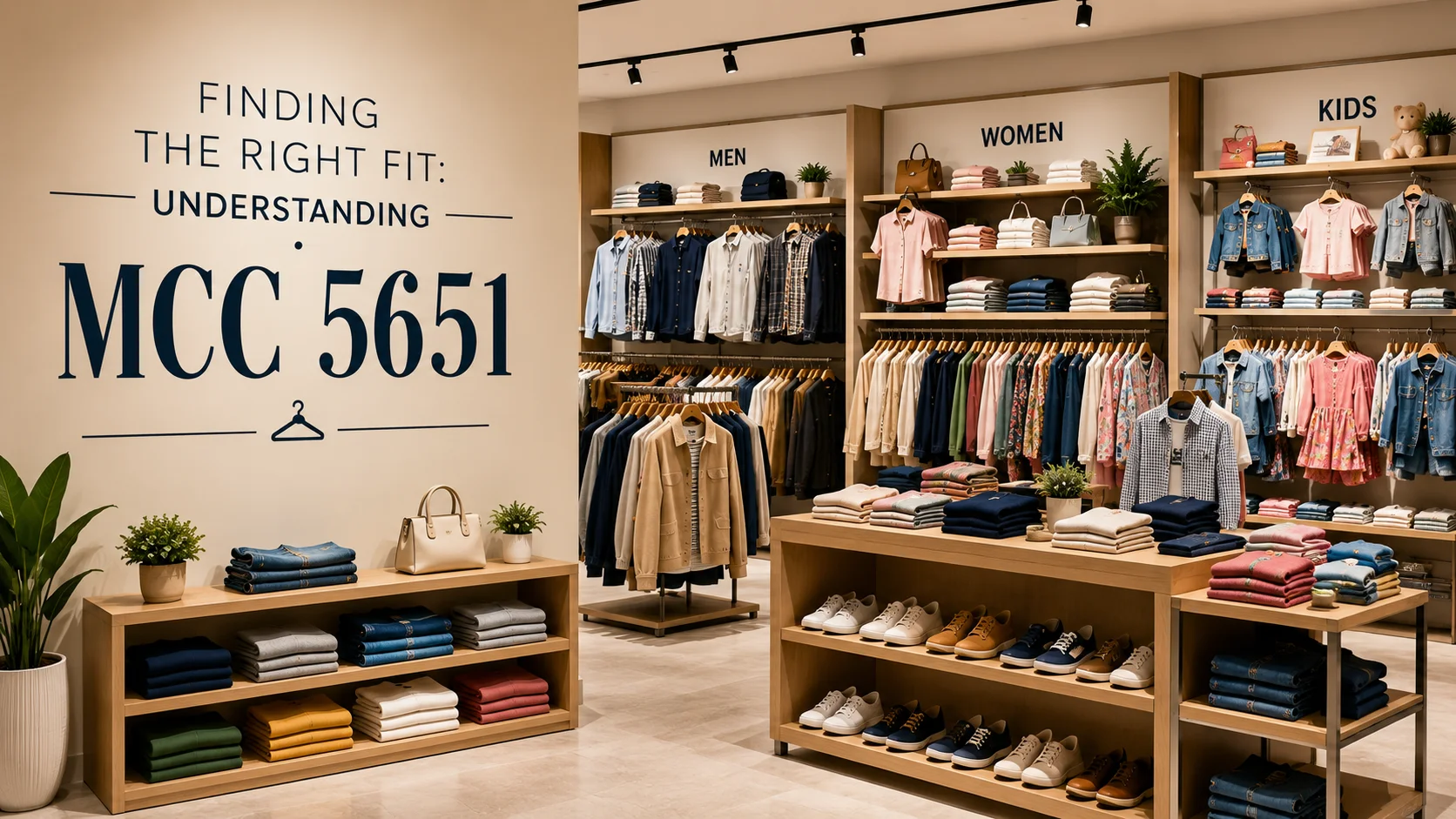

A family clothing store serves a unique purpose in retail. Parents shop for school uniforms, teenagers look for the latest trends, and adults browse for workwear or seasonal essentials—all in the same visit. Unlike boutiques that cater to a specific audience, family apparel retailers are built to meet the clothing needs of every generation under one roof. Behind every purchase, however, payment processors see something customers never do: a Merchant Category Code.
For many apparel retailers, that classification is MCC 5651. This four-digit Merchant Category Code helps payment processors, banks, and card networks identify businesses whose primary activity is selling clothing for the entire family. While shoppers rarely think about it, MCC 5651 plays an important role in merchant classification, payment processing, and financial reporting.
If you own a family clothing store or want to better understand how your merchant account works, this guide explains what MCC 5651 means, which businesses typically qualify, and why accurate merchant classification matters.
At a Glance: MCC 5651
| Category | Details |
|---|---|
| Merchant Category Code | 5651 |
| Category Name | Family Clothing Stores |
| Industry | Apparel Retail |
| Typical Businesses | Family clothing stores, apparel retailers, fashion chains, clothing boutiques serving multiple age groups, and general apparel stores. |
| Assigned By | Payment processors and acquiring banks |
| Purpose | Classifies retailers that primarily sell clothing for men, women, and children. |
Table of Contents
- What Is MCC 5651?
- Which Businesses Qualify for MCC 5651?
- Businesses That Usually Don’t Qualify
- Why Merchant Category Codes Matter
- How Payment Processors Use MCC 5651
- Benefits and Challenges of MCC 5651
- How to Verify Your Merchant Category Code
- MCC 5651 Compared to Similar Merchant Categories
- How Biyo Helps Family Clothing Stores
- Frequently Asked Questions
What Is MCC 5651?
Understanding MCC 5651
Unlike specialty apparel retailers that focus on a single audience, family clothing stores are designed to serve everyone. A single shopping trip might include children’s school clothes, casual outfits for teenagers, business attire for adults, and seasonal jackets for the entire household. Because these businesses sell apparel across multiple age groups, payment providers classify them under MCC 5651.
MCC 5651 is the Merchant Category Code assigned to retailers whose primary business is selling clothing for men, women, and children. The classification helps distinguish family apparel stores from retailers that specialize exclusively in footwear, accessories, or clothing for a specific demographic.
How Merchant Category Codes Are Assigned
When a clothing retailer applies for a merchant account, the payment processor or acquiring bank reviews the business before assigning a Merchant Category Code. Rather than evaluating individual products, they look at the retailer’s overall business model, target customers, and primary source of revenue.
A clothing store may generate strong sales from women’s fashion during one season and children’s apparel during another, but if the business serves the entire family, MCC 5651 generally remains the most appropriate classification.
Why Family Clothing Stores Have Their Own Classification
Apparel retailers operate differently from most other retail businesses. They manage inventory across sizes, colors, styles, and seasonal collections while constantly introducing new arrivals and clearing older merchandise. Family clothing stores add another layer of complexity by serving multiple customer groups under one roof.
Because of this unique retail model, payment providers assign a dedicated Merchant Category Code that accurately reflects how these businesses operate.
 Which Businesses Qualify for MCC 5651?
 Which Businesses Qualify for MCC 5651?
Businesses Commonly Assigned MCC 5651
MCC 5651 generally applies to retailers whose primary business involves selling clothing for the entire family rather than focusing on one age group or gender. These stores typically offer a broad assortment of apparel designed for everyday wear, work, school, and seasonal needs.
- Family clothing stores
- General apparel retailers
- Fashion chains
- Multi-brand clothing stores
- Neighborhood clothing retailers
- Department-style apparel stores
- Independent family fashion stores
- Casual clothing retailers
A Typical Shopping Experience
Walk into a family clothing store before the start of a new school year and you’ll probably see parents shopping with children, teenagers trying on the latest styles, and adults looking for workwear or weekend clothing. Instead of serving one specific customer, these retailers are designed to meet the wardrobe needs of entire households.
That broad customer focus is one of the defining characteristics that makes MCC 5651 the appropriate Merchant Category Code for many apparel retailers.
How Payment Providers Determine Eligibility
Payment processors classify businesses according to their primary activity rather than individual product lines. A retailer that sells apparel for men, women, and children throughout the year is generally a stronger fit for MCC 5651 than a boutique specializing only in luxury women’s fashion or children’s clothing.
The goal is to match the Merchant Category Code to the overall retail experience customers expect when they visit the business.
Businesses That Usually Don’t Qualify
Retailers with Different Merchant Category Codes
Not every clothing retailer belongs under MCC 5651. Payment processors assign different Merchant Category Codes to businesses that specialize in a particular type of apparel or operate within another retail category.
- Men’s clothing stores
- Women’s apparel boutiques
- Shoe stores
- Sporting goods retailers
- Uniform stores
- Accessory retailers
- Department stores
Understanding the Difference
A boutique that exclusively sells women’s fashion offers a very different shopping experience from a family clothing store. Likewise, a footwear retailer may carry socks, handbags, and accessories, but shoes remain its primary business. These distinctions help payment providers determine which Merchant Category Code best reflects each retailer.
Even when two stores sell similar apparel, their primary business model ultimately determines their classification.
Why Business Focus Matters
Merchant Category Codes are based on the retailer’s overall purpose rather than the number of products available for sale. Two stores may both sell children’s jackets, but if one serves the entire family while the other specializes only in children’s apparel, they’re likely to receive different Merchant Category Codes.
This consistent approach helps create a more accurate merchant classification system across the retail industry.
Why Merchant Category Codes Matter
Creating Consistency Across Retail Payments
Every card payment travels through several financial institutions before it’s approved. Merchant Category Codes provide a standardized way for banks, payment processors, and card networks to identify retailers, helping transactions move through the payment system efficiently.
Without this classification system, organizing millions of retail transactions across thousands of industries would be much more difficult.
Supporting Reporting and Merchant Analysis
Merchant Category Codes allow payment providers to group businesses with similar operating models, making merchant reporting and retail analysis more meaningful. They also support certain credit card rewards programs, although every card issuer establishes its own eligibility requirements.
For apparel retailers, consistent classification helps ensure merchant accounts accurately reflect how the business operates.
Helping Monitor Transaction Activity
Merchant Category Codes also contribute to fraud monitoring by giving payment providers additional context about the retailer processing each transaction. Understanding the normal purchasing patterns associated with clothing stores helps identify unusual payment activity more effectively.
While MCC 5651 doesn’t prevent fraud on its own, it strengthens the systems that financial institutions use to help protect electronic payments.
How Payment Processors Use MCC 5651
Recognizing Family Apparel Retailers
Once a family clothing store begins accepting card payments, MCC 5651 becomes part of its merchant profile. Every eligible transaction carries this classification, allowing payment processors to recognize the retailer as a business that primarily sells apparel for men, women, and children.
This standardized approach creates consistency throughout the payments industry. Whether a customer purchases children’s school uniforms, a winter coat, or business attire, the Merchant Category Code identifies the retailer’s primary business rather than the individual clothing item being sold.
Supporting Merchant Account Management
Merchant Category Codes help payment providers better understand the retailers they support. While MCC 5651 doesn’t determine payment processing fees by itself, it provides valuable context during merchant account reviews and ongoing account management.
Payment processors also consider factors such as monthly sales volume, average transaction value, refund rates, chargeback history, and overall account performance. The Merchant Category Code works alongside these factors to create a more complete picture of the business.
Improving Reporting and Transaction Monitoring
Family clothing stores process sales across multiple apparel categories every day, from children’s clothing and accessories to seasonal collections for adults. Merchant Category Codes help organize these transactions, making reporting and retail analysis more meaningful for financial institutions.
MCC 5651 also supports fraud monitoring by helping payment providers understand the normal purchasing patterns associated with apparel retailers. Combined with other security measures, this additional context helps identify unusual payment activity more effectively.
Benefits and Challenges of MCC 5651
Benefits of Accurate Classification
An accurate Merchant Category Code ensures your apparel business is grouped with retailers that share a similar operating model. This creates greater consistency throughout the payment ecosystem while improving merchant reporting and account management.
Correct classification also makes communication with payment providers easier because your business is immediately recognized as a family clothing retailer.
Potential Challenges
The most common issue isn’t MCC 5651 itself but receiving an inaccurate classification. If a family clothing retailer is categorized as another type of apparel business, it can create unnecessary confusion when reviewing merchant account information or discussing payment services.
Retail strategies can also change over time. A business that gradually specializes in footwear, children’s apparel, or luxury fashion may eventually require a different Merchant Category Code if its primary business model changes.
Best Practices for Clothing Store Owners
Review your merchant account details periodically to ensure your Merchant Category Code still reflects how your business operates. If you’ve significantly changed your inventory mix or target market, discuss your classification with your payment processor.
Keeping your merchant profile accurate helps reduce misunderstandings and ensures your payment account continues to represent your business correctly.
How to Verify Your Merchant Category Code
Review Your Merchant Account Information
If you’re unsure whether your business has been assigned MCC 5651, begin by reviewing your merchant account documents. Many payment processors include the Merchant Category Code in onboarding paperwork, merchant statements, or online account dashboards.
If you can’t locate the information, your payment provider can usually confirm your classification quickly.
Request a Merchant Category Code Review
If you believe your clothing store has been assigned the wrong Merchant Category Code, contact your payment processor and request a review. They may ask about your product range, customer base, website, and primary revenue sources before determining whether another classification better reflects your business.
The review focuses on your overall retail model rather than individual clothing lines, helping ensure the Merchant Category Code accurately represents your operations.
Know When Your Classification May Change
Merchant Category Codes aren’t permanent. If your business changes significantly over time, your payment processor may review your account and assign a different Merchant Category Code that better reflects your current operations.
For example, a family clothing retailer that later focuses exclusively on footwear or children’s apparel may qualify for another merchant category.
MCC 5651 Compared to Similar Merchant Categories
 MCC 5651 Compared to Similar Merchant Categories
MCC 5651 vs. Department Stores
Department stores sell clothing alongside cosmetics, home goods, electronics, and many other product categories. Family clothing stores, on the other hand, focus almost entirely on apparel, offering clothing for every member of the household instead of a broad mix of general merchandise.
MCC 5651 vs. Specialty Apparel Retailers
Some apparel businesses specialize in men’s fashion, women’s clothing, footwear, or accessories. Family clothing stores stand apart because they serve multiple age groups and customer segments within a single retail environment, making MCC 5651 the more appropriate classification for many general apparel retailers.
Comparison Table
| Merchant Category Code | Business Type | Primary Business Activity |
|---|---|---|
| 5651 | Family Clothing Stores | Retail sale of apparel for men, women, and children. |
| 5311 | Department Stores | Retailing merchandise across multiple departments and product categories. |
| 5611 | Men’s & Boys’ Clothing Stores | Retail sale of men’s and boys’ apparel. |
| 5621 | Women’s Ready-to-Wear Stores | Retail sale of women’s apparel and fashion. |
| 5661 | Shoe Stores | Retail sale of footwear and related products. |
How Biyo Helps Family Clothing Stores
Managing an apparel store means keeping track of thousands of SKUs across different sizes, colors, and seasonal collections. Biyo POS helps clothing retailers stay organized with real-time inventory tracking, fast checkout, and detailed sales reporting, making it easier to manage stock and keep popular items available.
Whether you operate a neighborhood clothing store or manage multiple retail locations, Biyo provides the tools to simplify daily operations and support business growth. Schedule a demo to see Biyo in action or create your account to explore the platform.
Frequently Asked Questions
What is MCC 5651?
MCC 5651 is the Merchant Category Code assigned to retailers that primarily sell clothing for men, women, and children.
Who assigns MCC 5651?
Merchant Category Codes are assigned by payment processors or acquiring banks when a business opens a merchant account. The assigned code reflects the merchant’s primary business activity.
Can a specialty clothing boutique use MCC 5651?
Generally, no. Boutiques that focus exclusively on men’s, women’s, or children’s apparel are often assigned a Merchant Category Code that better reflects their specialty.
Does MCC 5651 affect credit card rewards?
Some credit card issuers use Merchant Category Codes when determining eligibility for cashback or rewards. Whether purchases qualify depends on the individual card issuer and the terms of its rewards program.
How do I verify my Merchant Category Code?
You can verify your Merchant Category Code by reviewing your merchant account documents, checking your payment processor’s online dashboard, or contacting your payment provider directly.
Can my Merchant Category Code change?
Yes. If your business changes significantly over time, your payment processor may review your account and assign a different Merchant Category Code that better reflects your current business model.