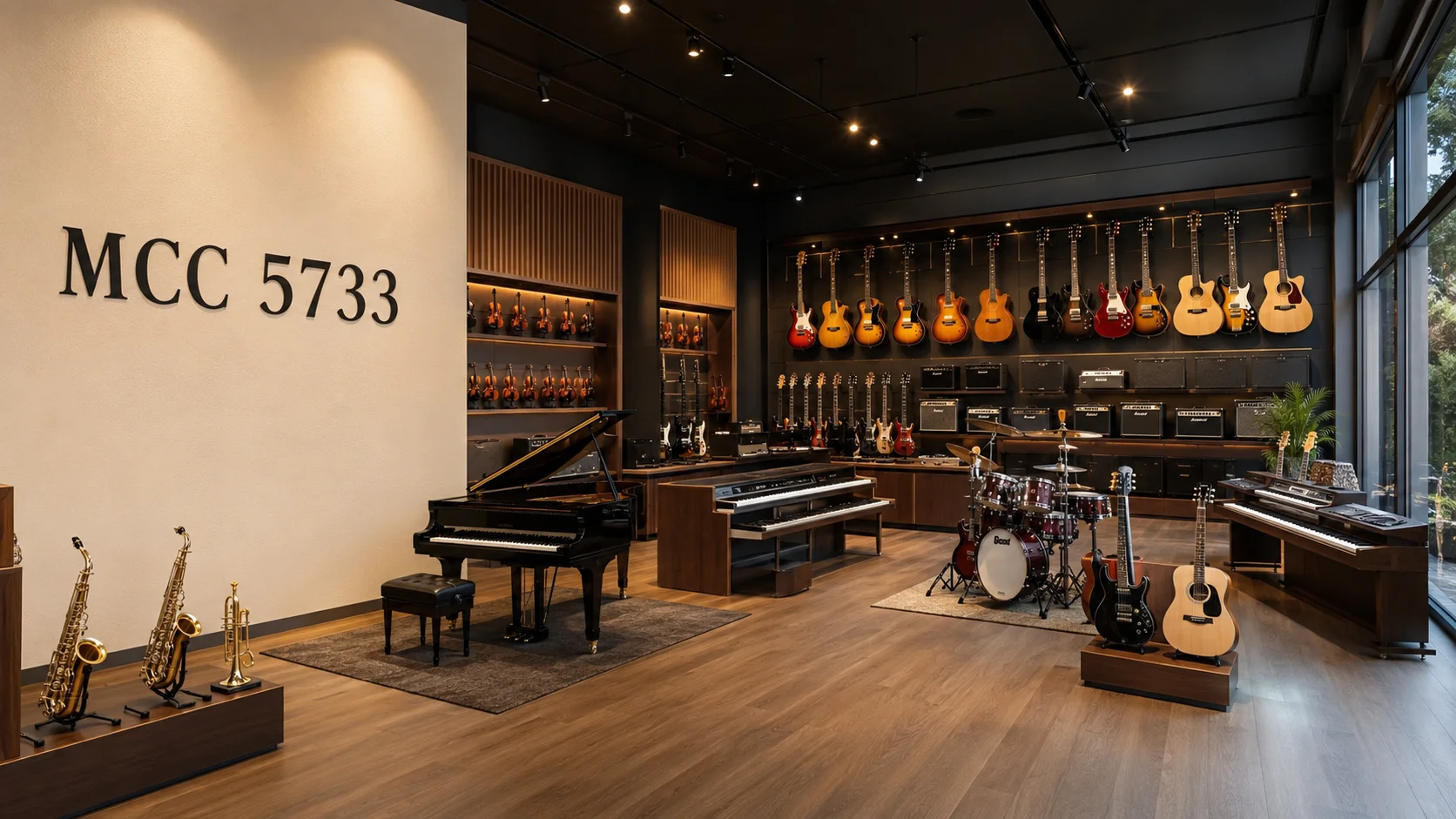

From beginners learning their first chords to professional musicians performing on stage, music stores play an essential role in supporting creativity and musical expression. These specialty retailers offer far more than instruments—they provide expert guidance, equipment maintenance, sheet music, recording gear, and accessories that help musicians of every skill level develop their craft. Whether a customer is purchasing an acoustic guitar, upgrading a digital piano, or building a home recording studio, music stores combine product expertise with personalized service that cannot easily be replicated by general retailers.
Businesses specializing in musical instruments and related equipment are commonly classified under Merchant Category Code (MCC) 5733. Payment processors, acquiring banks, and major card networks use this Merchant Category Code to identify merchants whose primary business involves selling musical instruments, amplifiers, recording equipment, sheet music, instrument accessories, and related products. Although customers rarely notice this classification during checkout, it plays an important role in payment processing, merchant reporting, transaction categorization, fraud monitoring, and certain credit card rewards programs.
This guide explains what MCC 5733 covers, the businesses that typically qualify, the products commonly sold, why proper merchant classification matters, and how modern retail technology helps music stores manage specialized inventory, customer services, instrument repairs, rentals, and multi-channel retail operations.
Table of Contents
Understanding MCC 5733
What Is Merchant Category Code 5733?
MCC 5733 is the Merchant Category Code assigned to businesses that primarily sell musical instruments, music equipment, recording gear, and related accessories. These retailers serve hobbyists, students, educators, recording professionals, live performers, churches, schools, and entertainment venues by offering products that support music creation, education, and performance.
Unlike record stores that focus on selling recorded music, businesses classified under MCC 5733 specialize in the instruments and equipment used to create, perform, record, and teach music.
How Payment Networks Use MCC 5733
Every debit or credit card transaction contains a Merchant Category Code that identifies the merchant’s primary business activity. Payment processors, banks, and card networks use MCC 5733 to classify music stores for transaction processing, merchant reporting, payment analytics, fraud monitoring, and certain credit card rewards programs.
Using standardized Merchant Category Codes helps maintain consistency across payment systems while allowing financial institutions to accurately categorize merchants based on their primary line of business.
Why Correct Merchant Classification Matters
Proper Merchant Category Code assignment ensures merchants are accurately represented within payment networks. Businesses primarily selling musical instruments, audio equipment, sheet music, and instrument accessories generally qualify under MCC 5733, while businesses focused on recorded music, consumer electronics, or general merchandise typically fall under different Merchant Category Codes.
 Businesses Classified Under MCC 5733
 Businesses Classified Under MCC 5733
Musical Instrument Retailers
Most businesses classified under MCC 5733 are dedicated music stores offering instruments for beginners, students, hobbyists, and professional musicians. Their inventory often includes acoustic and electric guitars, pianos, keyboards, drums, violins, brass instruments, woodwinds, orchestral instruments, and percussion equipment from leading manufacturers.
Professional Audio and Recording Equipment Stores
Many music retailers also specialize in professional audio equipment used for live performances, recording studios, podcasts, and content creation. These businesses commonly sell mixers, studio monitors, microphones, audio interfaces, headphones, amplifiers, digital recorders, stage lighting, and sound reinforcement systems for musicians and audio professionals.
Music Education and Instrument Service Providers
Some businesses operating under MCC 5733 extend beyond retail by offering music lessons, instrument rentals, repair services, maintenance, tuning, and equipment upgrades. These value-added services help retailers build long-term customer relationships while supporting musicians throughout the life of their instruments.
Products Commonly Sold
Musical Instruments
Music stores commonly sell guitars, bass guitars, digital pianos, acoustic pianos, keyboards, drum kits, violins, cellos, saxophones, trumpets, flutes, clarinets, ukuleles, orchestral instruments, and numerous specialty instruments designed for different musical styles and skill levels.
Audio Equipment and Performance Gear
Businesses classified under MCC 5733 frequently stock amplifiers, PA systems, speakers, microphones, wireless systems, mixers, studio monitors, recording interfaces, DJ equipment, headphones, cables, stands, and other equipment required for rehearsals, live performances, and studio production.
Accessories and Educational Materials
Retailers also offer sheet music, instructional books, tuners, metronomes, strings, drumsticks, reeds, instrument cases, gig bags, guitar picks, straps, pedals, maintenance kits, cleaning supplies, and replacement parts that help musicians maintain and improve their equipment.
Why MCC 5733 Matters
Supports Accurate Payment Processing
Merchant Category Codes help payment processors consistently classify merchants according to their primary business activity. Using MCC 5733 ensures music stores are accurately categorized during transaction processing, settlement, and financial reporting.
Improves Merchant Reporting
Accurate merchant classification contributes to organized accounting, payment analytics, transaction reporting, and business performance measurement. Consistent Merchant Category Codes also improve financial reporting for retailers, banks, and payment service providers.
May Influence Credit Card Rewards
Some credit card issuers use Merchant Category Codes when determining cashback categories or promotional rewards. Depending on the issuer’s program, purchases made at businesses classified under MCC 5733 may qualify differently than purchases from electronics retailers or entertainment merchants.
MCC 5733 Comparison Table
| Category | MCC 5733 Music Stores |
|---|---|
| Primary Business | Retail sale of musical instruments, professional audio equipment, and music accessories |
| Typical Customers | Students, hobbyists, professional musicians, educators, schools, churches, studios, and entertainment venues |
| Common Products | Musical instruments, microphones, amplifiers, keyboards, sheet music, recording equipment, and accessories |
| Sales Channels | Music stores, specialty retailers, online stores, and professional audio showrooms |
| Inventory Characteristics | High-value instruments, serialized equipment, accessories, rental inventory, and repair parts |
| Revenue Sources | Instrument sales, rentals, repairs, music lessons, audio equipment, and accessories |
| Operational Priorities | Inventory management, instrument servicing, customer expertise, equipment demonstrations, and after-sales support |
Industry Operations
Balancing High-Value Instruments with Everyday Accessories
Music stores operate with a diverse inventory that ranges from premium instruments costing several thousand dollars to inexpensive accessories purchased every day. While guitars, pianos, drum kits, and professional audio equipment represent significant investments, products such as strings, reeds, cables, picks, tuners, and sheet music generate frequent repeat sales. Successful retailers carefully balance these product categories to maintain healthy cash flow while meeting the needs of both casual musicians and professionals.
Many stores also provide demonstration areas where customers can test instruments before purchasing, making product knowledge and personalized service essential components of the sales process.
Supporting Musicians Beyond the Initial Purchase
Unlike many retail businesses, music stores often build long-term relationships with customers. Musicians regularly return for maintenance, repairs, upgrades, accessories, replacement parts, and new equipment as their skills develop. Many retailers also offer instrument rentals, trade-in programs, financing options, and music lessons that encourage customer loyalty while creating recurring revenue opportunities throughout the instrument ownership lifecycle.
Providing ongoing support helps retailers establish themselves as trusted resources within local music communities rather than simply product vendors.
Serving Schools, Studios, and Live Performance Venues
Many businesses classified under MCC 5733 work with educational institutions, churches, recording studios, orchestras, and live entertainment venues in addition to individual customers. These commercial clients often purchase multiple instruments, sound systems, microphones, classroom equipment, or recording technology through larger project-based orders. Managing these relationships requires accurate quotations, dependable supplier coordination, and efficient order fulfillment for organizations with specialized requirements.
Inventory and Operational Challenges
Managing Specialized and Serialized Inventory
Many musical instruments and professional audio products include serial numbers that must be accurately recorded for warranty registration, insurance purposes, and theft prevention. Retailers also manage numerous product variations based on brand, finish, size, configuration, and performance level, making inventory organization more complex than traditional retail categories.
Protecting High-Value Merchandise
Premium guitars, digital pianos, studio equipment, and professional audio systems represent significant investments for both retailers and customers. Proper display methods, secure storage, climate-controlled environments, and theft prevention measures help preserve product quality while reducing inventory losses and maintaining customer confidence.
Adapting to Rapid Technology Changes
Digital music production continues to evolve through new recording software, MIDI controllers, digital mixers, wireless audio systems, and streaming technologies. Music retailers must continually update their product selection while educating staff about emerging equipment to provide informed recommendations that meet the changing needs of musicians, producers, and content creators.
Industry Trends
Home Recording Continues to Grow
The increasing popularity of podcasting, streaming, online education, and independent music production has expanded demand for home studio equipment. Audio interfaces, USB microphones, studio monitors, MIDI keyboards, and recording accessories have become core product categories for many music retailers serving creators who produce professional-quality content from home.
Digital Instruments and Smart Technology Are Expanding
Manufacturers continue introducing digital pianos, electronic drum kits, smart guitars, wireless systems, and app-connected instruments that combine traditional musicianship with modern technology. These innovations attract both experienced performers seeking advanced features and beginners looking for interactive learning experiences.
Experiential Retail Strengthens Customer Relationships
Many successful music stores are investing in experiences that online retailers cannot easily replicate. Live product demonstrations, educational workshops, artist clinics, instrument maintenance events, and in-store performances encourage community engagement while allowing customers to experience instruments firsthand before making purchasing decisions.
How Biyo Helps Music Stores
 How Biyo Helps Music Stores
Music stores manage everything from high-value instruments and serialized equipment to rental inventory, accessories, and repair services. Biyo POS helps simplify these operations with real-time inventory tracking, barcode scanning, centralized reporting, and detailed sales insights, making it easier to manage inventory and monitor business performance.
Whether operating a single music shop or multiple retail locations, Biyo keeps inventory synchronized while providing visibility into bestselling products, seasonal demand, and stock movement. You can sign up for Biyo POS or schedule a personalized demo to learn how it can support your music retail business.
Frequently Asked Questions
What is MCC 5733?
MCC 5733 is the Merchant Category Code assigned to businesses that primarily sell musical instruments, professional audio equipment, recording gear, sheet music, and related accessories.
Which businesses qualify for MCC 5733?
Music stores, musical instrument retailers, professional audio equipment dealers, and businesses specializing in instrument sales, rentals, and repairs generally qualify under MCC 5733.
What products are commonly sold under MCC 5733?
Businesses operating under MCC 5733 commonly sell guitars, pianos, keyboards, drum kits, orchestral instruments, microphones, amplifiers, PA systems, recording equipment, sheet music, instrument cases, strings, and other music accessories.
Does MCC 5733 affect credit card rewards?
It may. Some credit card issuers use Merchant Category Codes to determine cashback categories or promotional rewards. Eligibility depends on the issuer’s specific rewards program.
Why is Merchant Category Code 5733 important?
MCC 5733 helps payment processors, banks, and card networks accurately classify music stores for payment processing, merchant reporting, transaction categorization, fraud monitoring, and financial analytics.
How can music stores improve inventory management?
Using a cloud-based POS system with real-time inventory tracking, barcode scanning, sales reporting, and multi-location management helps music stores manage serialized instruments, rental inventory, accessories, and customer transactions more efficiently.