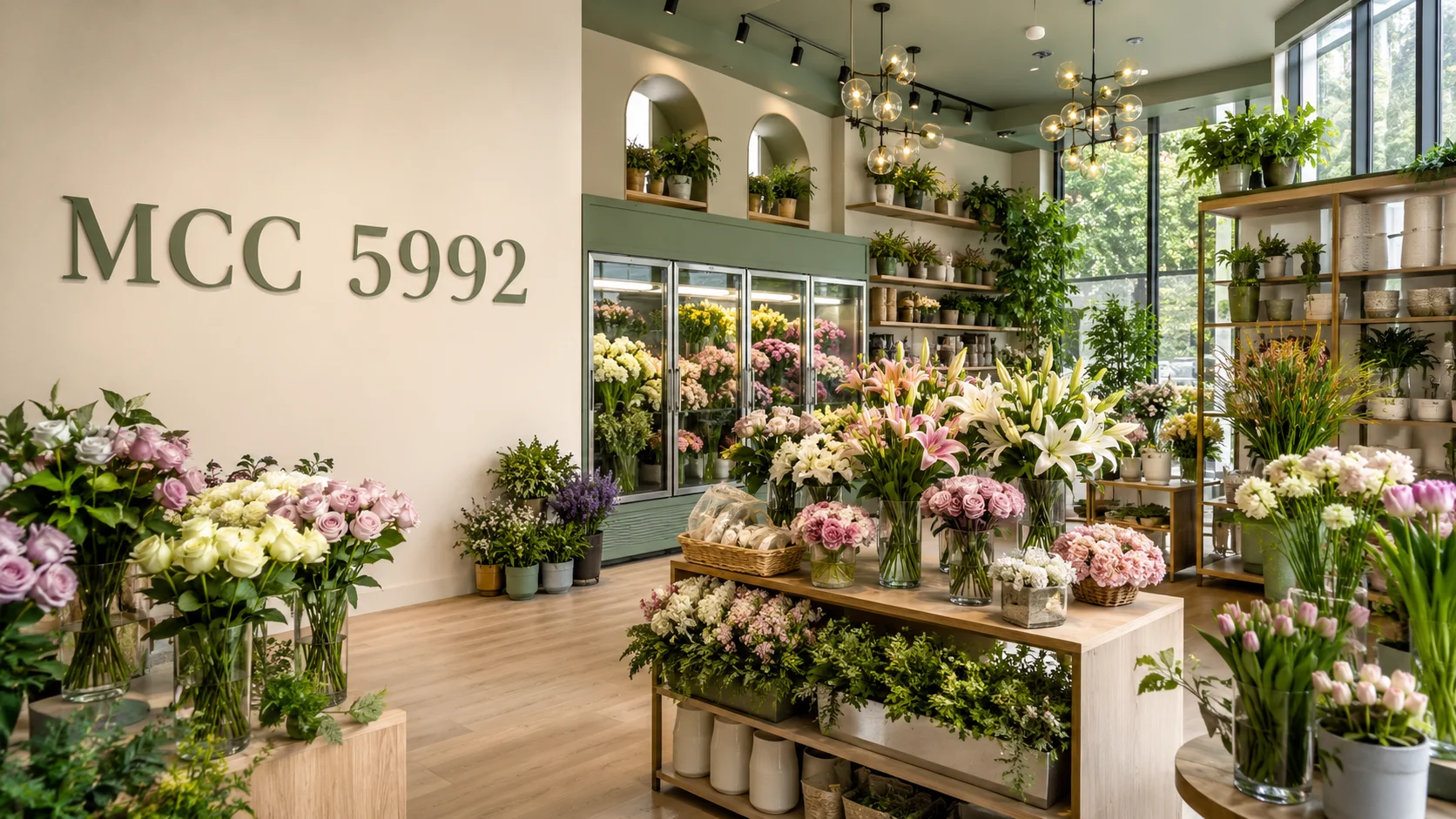

Flowers are more than decorative products—they help people celebrate milestones, express emotions, and create lasting memories. Whether it’s a birthday bouquet, wedding centerpiece, sympathy arrangement, or corporate display, florists transform fresh flowers and greenery into meaningful gifts for every occasion. Behind every arrangement is a business that balances creativity with inventory management, customer service, and timely delivery.
Businesses whose primary activity is selling fresh flowers and floral arrangements are typically classified under Merchant Category Code (MCC) 5992. Card networks, acquiring banks, and payment processors use this code to identify florist businesses for payment processing, transaction reporting, merchant categorization, fraud prevention, and, in some cases, credit card reward eligibility. While customers rarely notice the Merchant Category Code attached to a purchase, it plays an important role behind the scenes in the payment ecosystem.
This guide explains what MCC 5992 covers, which businesses qualify, the products and services commonly offered by florists, why this merchant classification matters, and how modern retail technology helps flower shops manage inventory, deliveries, and customer orders more efficiently.
Table of Contents
Understanding MCC 5992
What Is MCC 5992?
MCC 5992 is assigned to merchants whose primary business is selling fresh flowers, floral arrangements, plants, and related floral gifts. This category includes independent flower shops, specialty florists, and businesses that design custom arrangements for personal, corporate, and ceremonial occasions.
Unlike garden centers or general gift stores, florists specialize in creating custom floral designs using fresh-cut flowers and greenery. Their services often extend beyond retail sales to include consultations, event styling, delivery, and ongoing floral maintenance for commercial clients.
How Merchant Category Codes Work
Every business that accepts credit or debit card payments receives a Merchant Category Code based on its primary line of business. Payment processors and card networks use MCC 5992 to recognize florist transactions, helping support payment authorization, financial reporting, merchant analytics, fraud monitoring, and reward program classification.
Because Merchant Category Codes are standardized across major payment networks, they help ensure florist businesses are consistently categorized regardless of the payment provider they use.
When Does a Business Qualify for MCC 5992?
A business generally qualifies for MCC 5992 when selling fresh flowers and floral arrangements represents its primary source of revenue. This includes retailers that create bouquets, provide event florals, offer flower delivery, or specialize in custom floral design. Businesses whose primary focus is landscaping, nursery products, or home décor are typically assigned different Merchant Category Codes.
 Businesses Classified Under MCC 5992
 Businesses Classified Under MCC 5992
Neighborhood Flower Shops
Independent flower shops are the businesses most commonly associated with MCC 5992. They create floral arrangements for birthdays, anniversaries, graduations, new baby celebrations, sympathy services, holidays, and everyday gift giving. Many also offer same-day delivery within their local service area, making convenience an important part of their customer experience.
Wedding and Event Florists
Some florists focus almost entirely on weddings, corporate functions, and private events. Their work extends beyond bouquets to include ceremony arches, reception centerpieces, floral installations, table décor, and venue styling. These businesses often collaborate with event planners, photographers, caterers, and venues to deliver coordinated floral designs that match each event’s theme.
Luxury and Specialty Floral Studios
High-end floral studios distinguish themselves through premium blooms, artistic design, and personalized service. They may specialize in imported flowers, preserved roses, orchid arrangements, luxury gift collections, or subscription-based floral services for homes, hotels, restaurants, and corporate offices. Their customers often value originality, craftsmanship, and exceptional presentation as much as the flowers themselves.
Products and Services Offered by Florists
Fresh Flowers and Custom Arrangements
Fresh flowers remain the foundation of every florist business. Popular selections include roses, lilies, tulips, orchids, carnations, chrysanthemums, hydrangeas, sunflowers, seasonal blooms, and mixed bouquets. Florists combine these flowers with greenery, fillers, ribbons, and decorative containers to create arrangements designed for specific occasions and personal preferences.
Plants and Complementary Gifts
Many florists expand their product selection by offering potted plants, succulents, orchids, indoor greenery, decorative planters, chocolates, candles, greeting cards, balloons, stuffed animals, and curated gift baskets. These complementary products increase order value while giving customers more personalized gifting options.
Delivery, Design, and Subscription Services
Today’s florist businesses often generate revenue beyond retail sales. Many provide local flower delivery, recurring floral subscriptions, corporate floral programs, wedding consultations, event installations, and custom design services. These offerings help diversify revenue while strengthening long-term relationships with both individual customers and business clients.
Why MCC 5992 Matters
Supports Accurate Payment Processing
MCC 5992 allows payment providers to accurately identify florist businesses based on their primary activity. This supports efficient transaction processing, merchant reporting, and payment network consistency whenever customers purchase flowers or related services.
Provides Better Business Insights
Proper merchant classification contributes to more accurate reporting and financial analysis. Florists can better evaluate seasonal demand, compare sales performance across holidays, monitor delivery revenue, and make informed purchasing decisions that reduce waste and improve profitability.
May Affect Credit Card Rewards
Some credit card issuers use Merchant Category Codes when determining cashback categories or promotional rewards. While eligibility varies by issuer and card program, purchases from merchants classified under MCC 5992 may qualify differently than purchases made at supermarkets, gift shops, or department stores.
MCC 5992 Comparison Table
| Category | MCC 5992 Florists |
|---|---|
| Primary Business | Retail sale of fresh flowers, floral arrangements, plants, and floral gifts |
| Typical Customers | Individuals, businesses, event planners, wedding clients, hotels, and corporate organizations |
| Popular Products | Fresh bouquets, floral arrangements, potted plants, gift baskets, greeting cards, and balloons |
| Sales Channels | Retail flower shops, online orders, telephone orders, and local delivery services |
| Inventory Characteristics | Highly perishable products requiring temperature control and inventory rotation |
| Revenue Sources | Retail flower sales, weddings, events, subscriptions, deliveries, and corporate contracts |
| Operational Priorities | Freshness management, order accuracy, delivery scheduling, and customer satisfaction |
Industry Operations
Designing Arrangements for Every Occasion
No two days are exactly alike in a florist shop. While some customers stop in for a simple bouquet, others need elaborate floral designs for weddings, corporate events, memorial services, or holiday celebrations. Florists spend much of their day selecting fresh blooms, preparing stems, creating custom arrangements, and ensuring every order reflects the customer’s vision and the significance of the occasion.
Attention to detail is essential throughout the design process. Flower varieties, color combinations, fragrance, vase selection, and seasonal availability all influence the final arrangement, making creativity just as important as technical skill.
Coordinating Orders and Deliveries
Many florist businesses manage a combination of walk-in purchases, online orders, telephone requests, and scheduled event bookings. Each order must be prepared accurately, packaged carefully, and delivered while the flowers remain fresh. Delivery schedules often include residential addresses, hospitals, offices, churches, wedding venues, and funeral homes, requiring careful planning and reliable logistics.
During busy periods, multiple delivery drivers, designers, and customer service staff work together to keep orders moving efficiently while maintaining the quality customers expect.
Serving Individual and Business Clients
Although many purchases are made for personal occasions, florists also build long-term relationships with businesses and organizations. Hotels, restaurants, offices, event venues, healthcare facilities, and local businesses frequently require recurring floral arrangements for receptions, dining areas, conferences, and special events. These ongoing partnerships provide steady revenue while strengthening customer loyalty throughout the year.
Inventory and Operational Challenges
Maintaining Fresh Inventory
Fresh flowers are highly perishable, making inventory management one of the industry’s greatest operational challenges. Florists carefully monitor refrigeration, hydration, temperature, and stock rotation to extend product life without compromising quality. Ordering too many flowers can result in unnecessary waste, while ordering too few may lead to missed sales during peak demand.
Preparing for Seasonal Peaks
Demand for flowers rises dramatically during Valentine’s Day, Mother’s Day, Christmas, graduations, and wedding season. Florists often increase inventory, hire temporary staff, extend business hours, and coordinate additional deliveries to meet customer demand. Accurate forecasting helps balance product availability with profitability during these high-volume periods.
Managing Custom Orders Efficiently
Unlike businesses that sell standardized products, florists frequently create one-of-a-kind arrangements based on customer requests. Every custom order requires clear communication, accurate scheduling, and careful coordination between designers and delivery teams. Well-organized order management systems help reduce errors while ensuring each arrangement is completed on time and according to customer expectations.
Industry Trends
Online Flower Ordering Continues to Expand
Consumers increasingly expect the convenience of ordering flowers online for local delivery or in-store pickup. Many florist businesses now combine physical storefronts with e-commerce platforms, allowing customers to browse arrangements, customize orders, schedule deliveries, and complete purchases from any device.
Sustainable Floral Practices Are Gaining Attention
Environmental awareness is influencing purchasing decisions across the floral industry. Many florists now source flowers from local growers, reduce plastic packaging, recycle floral materials where possible, and offer reusable containers or eco-friendly wrapping. These practices appeal to customers looking for more sustainable gifting options.
Technology Is Improving Daily Operations
Modern florist businesses increasingly use cloud-based POS systems, digital order management, customer relationship tools, and inventory software to streamline operations. These technologies provide better visibility into inventory, simplify delivery scheduling, track customer preferences, and generate valuable sales insights that support better business decisions.
How Biyo Helps Florists
 How Biyo Helps Florists
Running a successful florist business means balancing fresh inventory, custom floral designs, delivery schedules, and seasonal demand. Biyo POS helps simplify these daily operations with real-time inventory tracking, barcode scanning, centralized reporting, and cloud-based management, giving florists greater visibility into stock levels and sales performance.
Whether you operate a neighborhood flower shop, a wedding floral studio, or multiple retail locations, Biyo helps streamline order management, improve inventory accuracy, and support business growth. You can sign up for Biyo POS or schedule a personalized demo to learn how it can support your florist business.
Frequently Asked Questions
What is MCC 5992?
MCC 5992 is the Merchant Category Code assigned to businesses that primarily sell fresh flowers, floral arrangements, plants, and related floral gifts.
Which businesses qualify for MCC 5992?
Flower shops, retail florists, wedding florists, event floral designers, specialty floral boutiques, and businesses primarily engaged in selling fresh flowers generally qualify under MCC 5992.
What products are commonly sold under MCC 5992?
Merchants classified under MCC 5992 commonly sell bouquets, roses, lilies, orchids, potted plants, floral arrangements, gift baskets, balloons, greeting cards, and seasonal floral gifts.
Does MCC 5992 affect credit card rewards?
It can. Some credit card issuers use Merchant Category Codes to determine cashback categories and promotional rewards. Eligibility depends on the issuer’s rewards program and card terms.
Why is MCC 5992 important?
MCC 5992 helps payment processors and financial institutions accurately classify florist businesses for payment processing, transaction reporting, merchant analytics, and fraud monitoring.
How can florists improve inventory management?
Using a cloud-based POS system with real-time inventory tracking, order management, barcode scanning, and sales reporting helps florists reduce waste, manage seasonal demand, and improve operational efficiency.