Running a successful restaurant today requires more than great food and friendly service. Technology now plays a critical role in improving efficiency, reducing operational costs, and increasing profitability. Restaurants that adopt modern tools can streamline workflows, reduce waste, and enhance customer experiences—all of which directly impact their bottom line.
From advanced point-of-sale systems to data-driven inventory management, the right technology stack allows restaurants to operate smarter rather than harder. According to recent industry reports, restaurants that adopt integrated technology platforms can improve operational efficiency by up to 20–30% while reducing administrative workload and costly human errors.
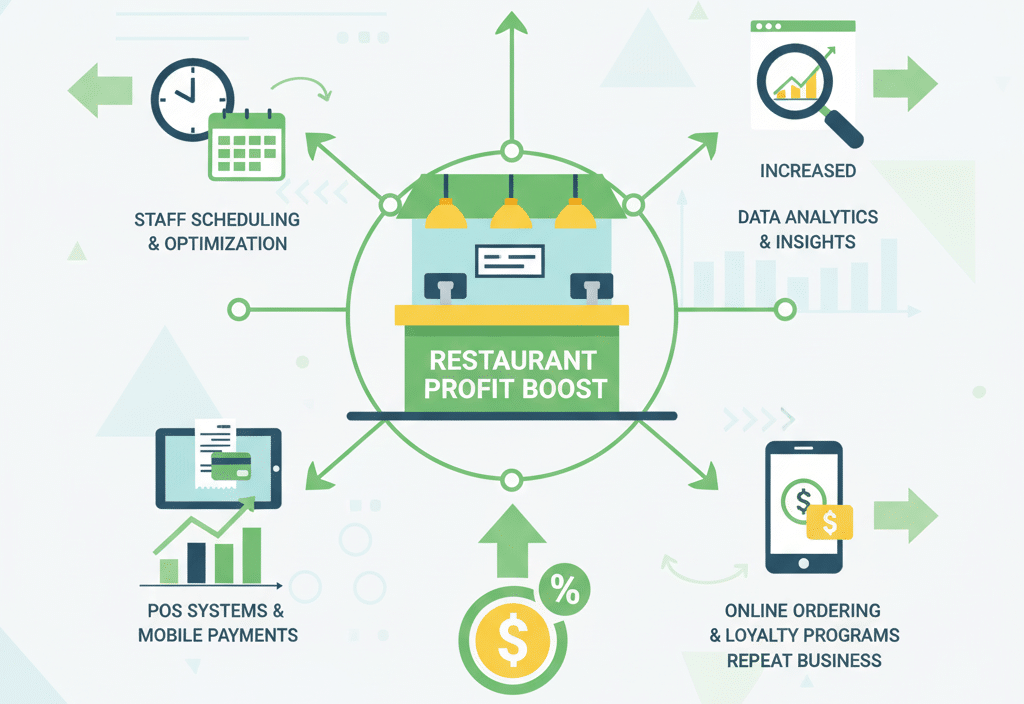
By strategically implementing digital tools across the kitchen, front-of-house operations, inventory management, staffing, and marketing, restaurants can transform their operations and significantly improve profit margins.
Understanding the Role of Technology in Restaurant Profitability
The restaurant industry operates with relatively thin profit margins, typically ranging between 3% and 6%. Because margins are tight, even small improvements in efficiency can significantly increase profitability.
Technology helps restaurants address several key operational challenges:
- Reducing food waste and inventory losses
- Improving labor efficiency and scheduling accuracy
- Increasing average order value through upselling
- Enhancing customer engagement and retention
- Speeding up service and order accuracy
When restaurants integrate the right technology tools, they gain access to actionable data that helps owners make smarter business decisions.
Table of Contents
- POS Systems and Cloud-Based Management
- Kitchen and Front-of-House Technology
- Inventory and Cost Control Solutions
- Staff and Labor Management Tools
- Customer Engagement and Growth Tools
POS Systems and Cloud-Based Management
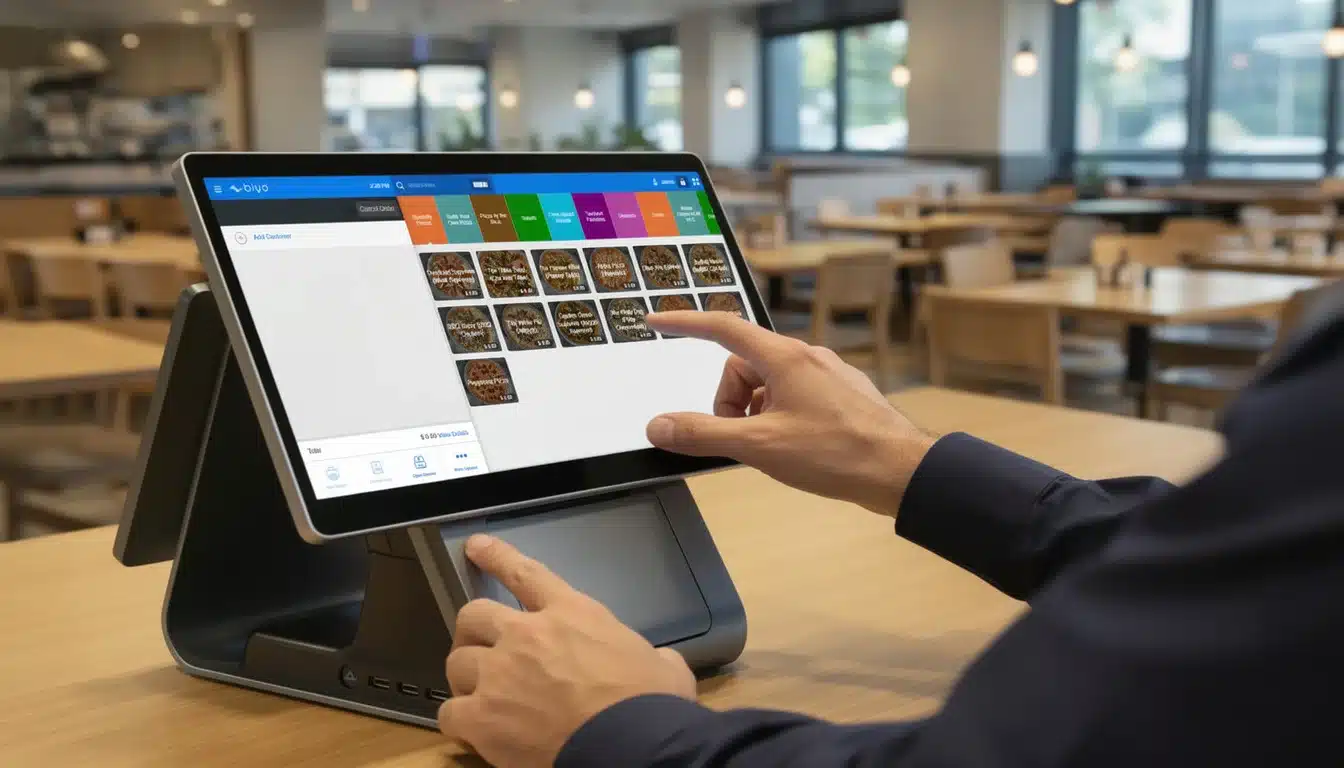
Point-of-sale systems have evolved far beyond simple payment terminals. Today’s POS platforms function as the operational hub of modern restaurants, integrating sales, inventory, customer data, reporting, and staff management into one system.
Restaurants still using outdated cash registers lose access to valuable operational insights that modern POS systems provide.
Cloud-Based POS for Better Insights
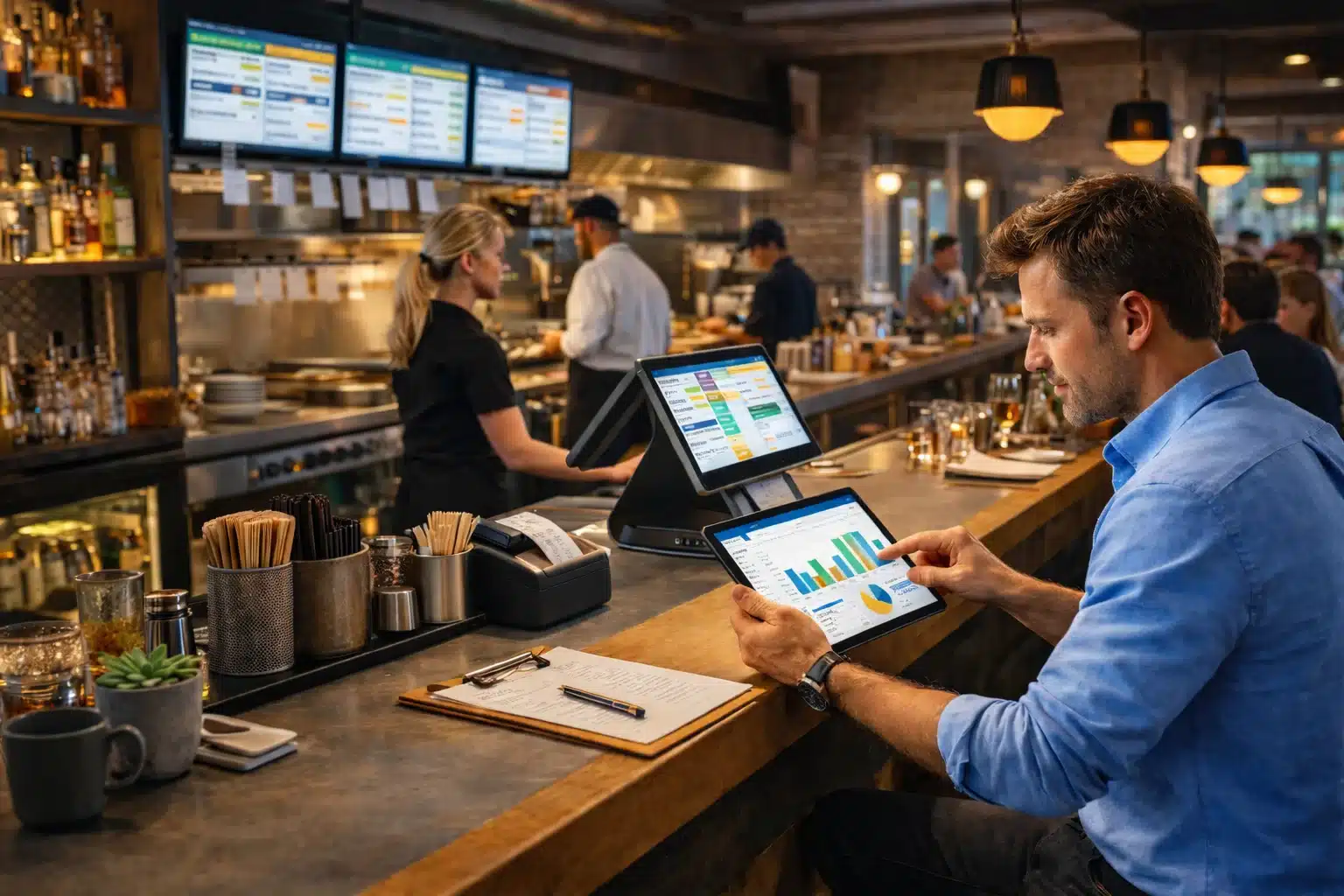
Cloud-based POS platforms allow restaurant owners to manage operations remotely while accessing real-time data. Managers can monitor sales performance, track labor costs, and analyze menu profitability from any device.
Cloud technology also reduces IT maintenance requirements because software updates and backups are handled automatically.
Key benefits of cloud POS systems include:
- Remote access to restaurant performance data
- Multi-location management dashboards
- Automatic system updates and backups
- Lower infrastructure and IT maintenance costs
This centralized control allows restaurant owners to identify issues quickly and make adjustments before they impact profitability.
Mobile and Contactless Payments
Customer expectations around payment methods have changed dramatically in recent years. Mobile wallets, contactless payments, and QR-based ordering systems are now widely expected.
Contactless payment systems offer several operational advantages:
- Faster checkout experiences
- Reduced cash handling
- Lower risk of payment disputes
- Improved customer satisfaction
Faster payment processing also increases table turnover, which can significantly increase hourly revenue in busy restaurants.
Real-Time Reporting and Data Analytics
Real-time reporting allows restaurant managers to monitor performance throughout the day instead of waiting for end-of-day reports.
Managers can track important metrics such as:
- Daily sales revenue
- Labor-to-sales ratio
- Menu item performance
- Inventory usage
Advanced analytics tools reveal long-term trends such as seasonal menu demand or peak operating hours. These insights help restaurants optimize staffing schedules, adjust menu pricing, and improve inventory purchasing decisions.
Kitchen and Front-of-House Technology
Technology improvements in both kitchen operations and front-of-house service can significantly improve restaurant efficiency and customer satisfaction.
Kitchen Display Systems for Efficiency
Kitchen Display Systems (KDS) replace traditional paper tickets with digital order screens. Orders placed through the POS appear instantly on kitchen displays, allowing chefs to begin preparation immediately.
KDS systems reduce miscommunication between servers and kitchen staff while improving order accuracy.
Benefits of KDS include:
- Reduced order errors
- Faster ticket processing
- Improved kitchen workflow
- Real-time performance monitoring
Restaurants using KDS technology often report improved service speed and lower food waste.
Digital Menus and Self-Service Kiosks
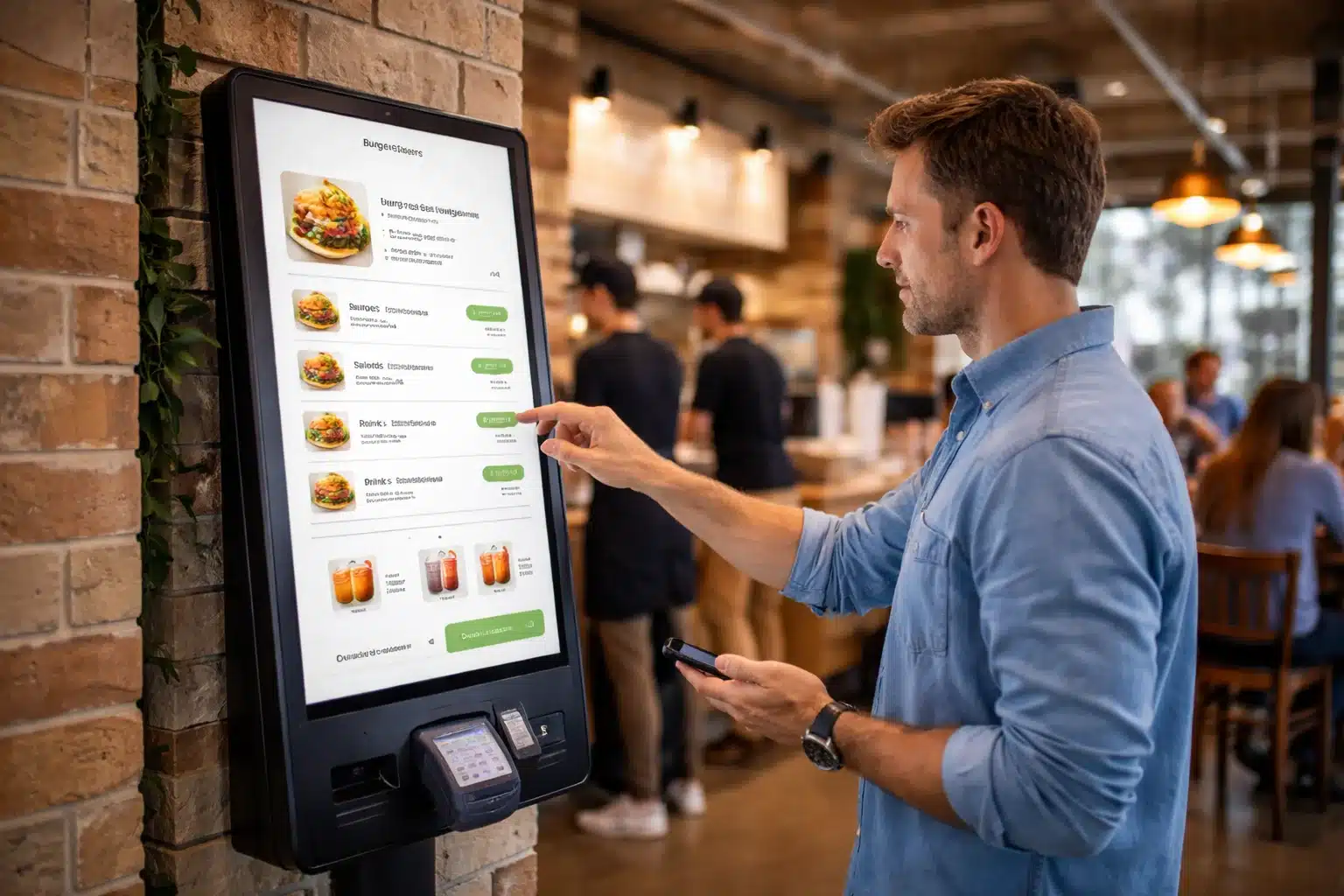
Self-service kiosks and digital menus are increasingly common in fast-casual and quick-service restaurants.
These systems allow customers to place orders independently while encouraging upselling through automated prompts.
For example, kiosks can suggest add-ons such as desserts or drink upgrades, increasing average order value.
Restaurants benefit from:
- Reduced labor requirements
- Higher order accuracy
- Shorter wait times
- Increased average ticket size
Reservation and Table Management Software
Reservation systems help restaurants maximize seating capacity and reduce lost revenue from no-shows.
Modern table management platforms provide predictive analytics that help restaurants anticipate busy periods and optimize seating arrangements.
These systems also allow restaurants to track guest preferences and dining history, enabling more personalized customer service.
Inventory and Cost Control Solutions
Food costs represent one of the largest expenses in restaurant operations. Technology solutions designed for inventory management and cost control help restaurants maintain profitability.
Inventory Management Tools
Inventory management software tracks ingredient usage and stock levels in real time.
Managers can monitor:
- Stock levels
- Ingredient usage patterns
- Supplier purchasing trends
- Waste and spoilage rates
Automated inventory tracking reduces manual counting and prevents over-ordering.
Menu Engineering and Profit Optimization
Menu engineering uses sales data to identify high-performing dishes and eliminate low-profit items.
Menu items are typically categorized into four groups:
- Stars – high profit and high popularity
- Plowhorses – popular but low profit
- Puzzles – high profit but low popularity
- Dogs – low profit and low demand
Restaurants can strategically promote profitable dishes or adjust pricing to improve margins. For example, improving seasoning or presentation of dishes can influence menu performance, as discussed in this guide to perfecting dish seasoning.
Food Waste Reduction Technology
Food waste is responsible for significant revenue loss in restaurants.
Technology solutions such as smart inventory systems, waste tracking software, and kitchen analytics tools help identify inefficiencies.
Restaurants that implement waste tracking technology can reduce food waste by up to 30% while improving sustainability.
Staff and Labor Management Tools
Labor costs often account for 25% to 35% of total restaurant expenses. Technology tools that optimize staffing and scheduling can significantly reduce labor-related costs.
Staff Scheduling Software
Staff scheduling platforms use historical sales data to predict labor needs and generate optimized work schedules.
This helps restaurants:
- Avoid overstaffing during slow hours
- Ensure adequate coverage during peak times
- Reduce labor expenses
Automated scheduling also allows employees to request time off or swap shifts digitally, reducing administrative workload.
Labor Management and Compliance
Labor management platforms monitor overtime rules, wage regulations, and payroll accuracy.
These systems prevent costly compliance violations and reduce payroll errors.
Managers also gain insights into labor-to-sales ratios, helping them adjust staffing levels to maintain profitability.
AI Assistants for Staff Productivity
Artificial intelligence tools are increasingly used in restaurants to automate routine tasks.
AI assistants can:
- Answer customer inquiries
- Manage reservations
- Support employee training
- Assist with order processing
By automating repetitive tasks, staff members can focus on delivering better customer service.
Customer Engagement and Growth Tools
Customer retention is essential for long-term profitability. Technology platforms help restaurants build stronger relationships with their guests.
Loyalty Programs and Automated Marketing
Digital loyalty programs reward repeat customers and encourage more frequent visits.
Automated marketing tools can send personalized offers based on purchase behavior.
For example, a frequent burger customer may receive a promotion when a new burger item is introduced.
Online Ordering and Delivery Integration
Online ordering platforms allow restaurants to reach customers beyond their physical locations.
Direct ordering channels such as restaurant websites or mobile apps help avoid third-party commission fees, which often range from 15% to 30% per order.
Integrated delivery management systems also ensure orders are routed efficiently to the kitchen.
Personalization Through Data Analytics
Customer analytics tools help restaurants understand dining preferences and purchasing behavior.
Restaurants can use this information to deliver personalized experiences such as:
- Birthday promotions
- Targeted discounts
- Customized menu suggestions
Personalization increases customer loyalty and improves lifetime value.
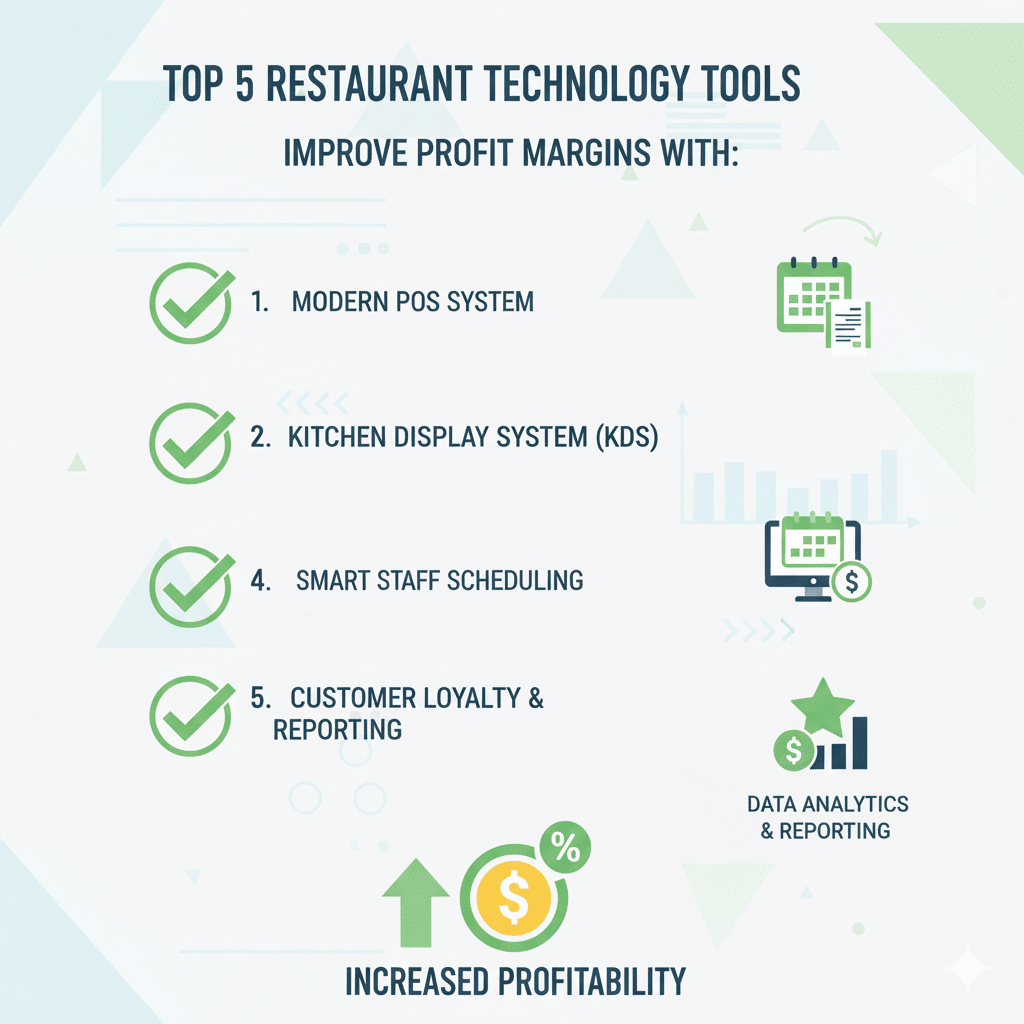
How Biyo Helps Restaurants Improve Profit Margins
Biyo POS provides restaurants with an integrated technology platform designed to simplify operations and increase profitability.
Through advanced POS systems, inventory management tools, analytics dashboards, and AI-powered automation, Biyo helps restaurants operate more efficiently while reducing operational costs.
Restaurant owners interested in improving operational efficiency can schedule a consultation with the Biyo team to explore how Biyo technology can transform restaurant operations.
Businesses ready to streamline their operations can also create a Biyo account and start using powerful restaurant management tools designed to boost efficiency, improve customer engagement, and increase profit margins.
Frequently Asked Questions
Q1: What is the most effective restaurant technology for improving profit margins?
Cloud-based POS systems, inventory management platforms, and labor scheduling tools are among the most effective technologies for improving restaurant profitability.
Q2: How do kitchen display systems improve efficiency?
Kitchen display systems eliminate paper tickets, improve communication between servers and kitchen staff, and reduce order errors.
Q3: Why is menu engineering important?
Menu engineering identifies high-profit dishes and promotes them strategically to increase overall restaurant profitability.
Q4: Do loyalty programs improve restaurant revenue?
Yes. Loyalty programs encourage repeat visits and increase customer lifetime value through targeted promotions.
Q5: How does AI help restaurants?
AI tools automate routine tasks such as answering customer questions, managing reservations, and assisting staff training, improving efficiency while reducing labor costs.