Designing an efficient foodservice space begins with a thoughtful layout. When it comes to quick-service concepts like delis or sandwich counters, the sandwich shop floor plan plays a major role in determining operational speed, staff productivity, and overall customer satisfaction. A well-designed floor plan doesn’t simply arrange furniture and equipment—it creates a workflow where ordering, preparation, pickup, and seating all function smoothly.
In high-volume foodservice environments, even small inefficiencies in layout can slow service and frustrate customers. Studies in restaurant operations suggest that thoughtful layout design can improve service speed by up to 25% while reducing staff movement and operational friction. For sandwich shops in particular—where speed, customization, and freshness are key—the floor plan directly affects how efficiently orders move from counter to assembly line and ultimately to customers.
Whether you are opening a new deli, redesigning a quick-service sandwich shop, or adding a sandwich counter inside a larger establishment, understanding the critical components of layout planning can help create a welcoming, productive, and scalable environment.
Table of Contents
- Layout Overview: Balancing Customer Seating and Operational Zones
- Order Counter and Sandwich Assembly Line Design
- Kitchen Layout and Prep Stations
- Support Spaces: Storage, Waste, and Employee Work Areas
- Flow of Traffic, Accessibility, and Safety Zones
- How Biyo POS Enhances Sandwich Shop Operations
- Frequently Asked Questions
Layout Overview: Balancing Customer Seating and Operational Zones
Every successful sandwich shop floor plan begins with a balance between customer-facing areas and operational workspaces. The goal is to create an environment where guests feel comfortable while staff can move efficiently behind the scenes.
A typical sandwich shop layout includes several key zones:
- Entrance and queue area
- Order counter and cashier
- Sandwich assembly line
- Pickup station
- Customer seating area
- Kitchen prep area
- Storage and employee workspaces
When these zones are arranged strategically, the shop maintains a natural flow from entry to order to pickup without congestion.
Customer Seating Arrangements for Comfort and Flow
Customer seating should provide comfort without overcrowding the space. Restaurants often combine several seating formats to accommodate different customer types.
Common seating options include:
- Booths for small groups and families
- Two- or four-person tables for flexibility
- Bar seating for solo diners
- Communal tables for busy lunch environments
Spacing is essential. Restaurant design guidelines recommend maintaining at least 24–30 inches between chairs and 36 inches for main walkways. These dimensions allow staff and customers to move comfortably while preventing congestion.
Natural lighting, window seating, and clear sightlines also improve the overall dining experience and encourage customers to stay longer.
Order Counter Location and Design
The order counter acts as the central hub of the sandwich shop. Ideally, customers should immediately see the counter when entering the store.
Placing the counter directly opposite the entrance or along the main path helps guide customers naturally through the ordering process.
Important elements of counter design include:
- Clearly visible menu boards
- A dedicated cashier station
- Sufficient counter space for order processing
- Integrated POS terminals
Many successful sandwich shops use a U-shaped or linear counter layout where customers order on one side while sandwiches are assembled on the other. This configuration allows staff to communicate easily and speeds up service.
Defining the Waiting and Pickup Areas
After ordering, customers need a designated waiting zone where they can comfortably wait without blocking new customers entering the queue.
A pickup counter or shelf separate from the order counter prevents congestion. Clear signage indicating where to collect orders ensures customers understand the process.
Digital order displays or number systems can further streamline this process, especially during busy lunch hours.
Order Counter and Sandwich Assembly Line Design
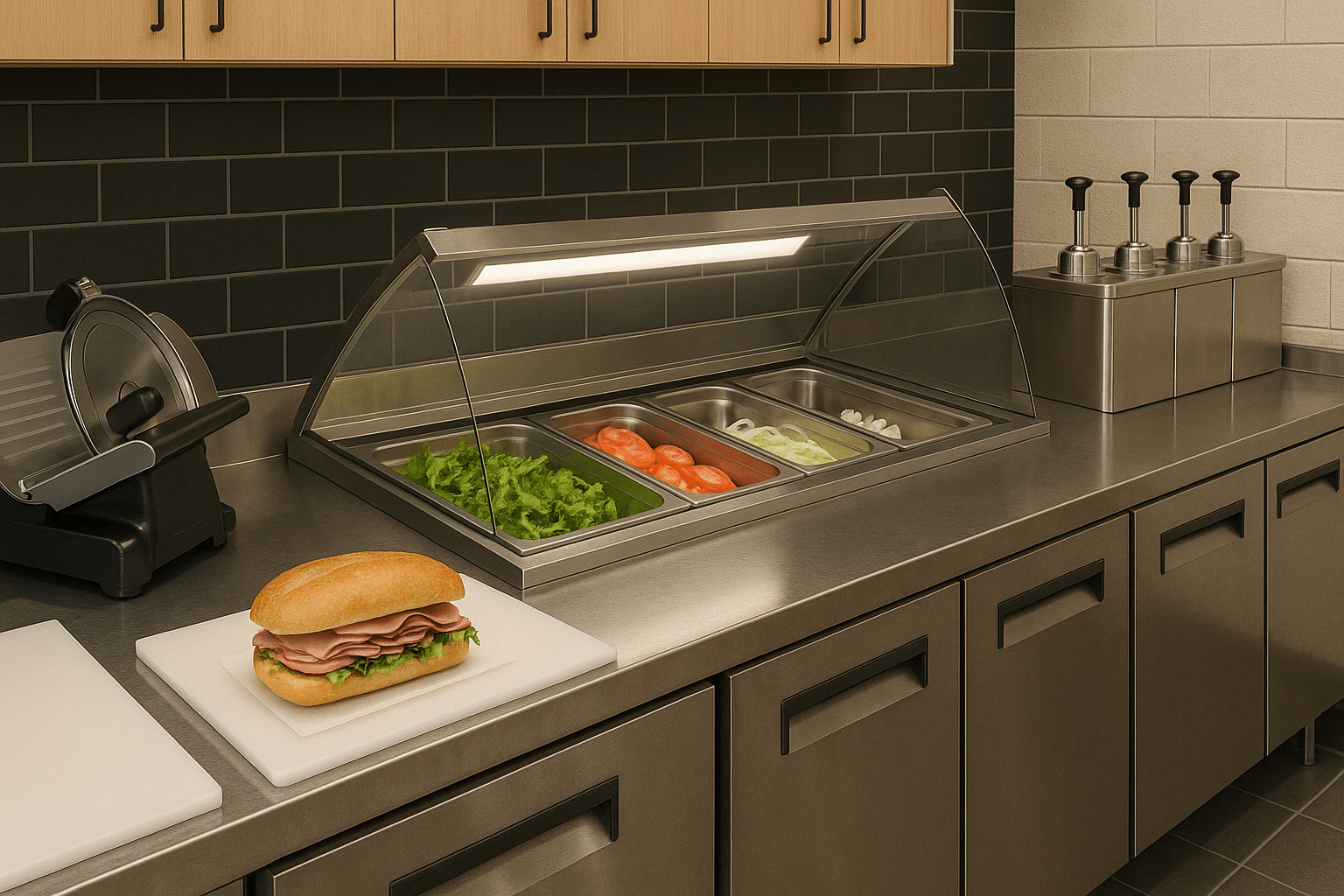
The sandwich assembly line functions as the production core of the shop. Its design must prioritize speed, hygiene, and visibility.
Optimizing the Sandwich Assembly Line
A well-organized assembly line follows a logical sequence of preparation steps.
A typical sandwich preparation flow includes:
- Bread slicing or selection
- Protein and cheese placement
- Vegetable toppings
- Condiments and sauces
- Wrapping or plating
Placing ingredients in this sequence minimizes staff movement and increases production speed.
Many sandwich shops also use refrigerated ingredient rails positioned directly within the assembly counter. This keeps perishable items fresh while maintaining accessibility.
Open assembly lines also create transparency, allowing customers to watch their food being prepared.
Incorporating Condiment and Beverage Stations
Self-serve condiment stations allow customers to customize sandwiches without slowing staff workflow.
These stations typically include:
- Sauce dispensers
- Pickles and toppings
- Napkins and utensils
Beverage stations—such as soda fountains or refrigerated drink displays—are often located near seating areas to encourage impulse purchases.
Separating beverage and condiment areas helps prevent crowding during peak periods.
Display Cases and Visual Appeal
Display cases positioned near the counter can significantly increase sales. These cases often showcase:
- Pre-made sandwiches
- Salads
- Desserts
- Bottled drinks
Strategic lighting and eye-level placement encourage impulse purchases while highlighting freshness.
Kitchen Layout and Prep Stations
Behind the counter, the kitchen and preparation areas must support speed and hygiene.
Designing Efficient Prep Stations
Prep stations should be assigned specific roles such as:
- Vegetable preparation
- Meat slicing
- Bread preparation
- Packaging
Separating these functions prevents cross-contamination and improves workflow efficiency.
Refrigeration Units and Storage Placement
Refrigeration placement strongly affects staff movement. Under-counter refrigerators near prep stations reduce walking time and improve speed.
Larger operations may include:
- Walk-in coolers
- Dry storage rooms
- Dedicated ingredient shelving
Proper storage organization improves inventory management and reduces waste.
Ventilation System and Safety Zones
Ventilation systems remove heat, smoke, and grease from kitchen environments. Exhaust hoods above grills, ovens, or heating equipment improve air quality and staff comfort.
Safety zones around slicers, hot surfaces, and sharp tools should be clearly marked to reduce accidents.
Support Spaces: Storage, Waste Disposal, and Employee Work Areas
Support areas often operate behind the scenes but are essential to efficient restaurant operations.
Strategic Waste Disposal Placement
Waste bins positioned near prep stations allow staff to discard packaging and food scraps quickly without disrupting workflow.
Separating waste collection areas from customer spaces keeps dining environments clean and odor-free.
Employee Workspaces and Break Areas
Staff require dedicated spaces for tasks such as order management, cleaning supply storage, and administrative work.
Break areas with lockers, seating, and basic amenities help employees rest during shifts, improving morale and productivity.
Storage Rooms for Supplies and Equipment
Properly organized storage rooms allow staff to access ingredients and supplies quickly.
Grouping items by category and labeling shelves reduces time spent searching for materials during busy hours.
Flow of Traffic, Accessibility, and Safety Zones
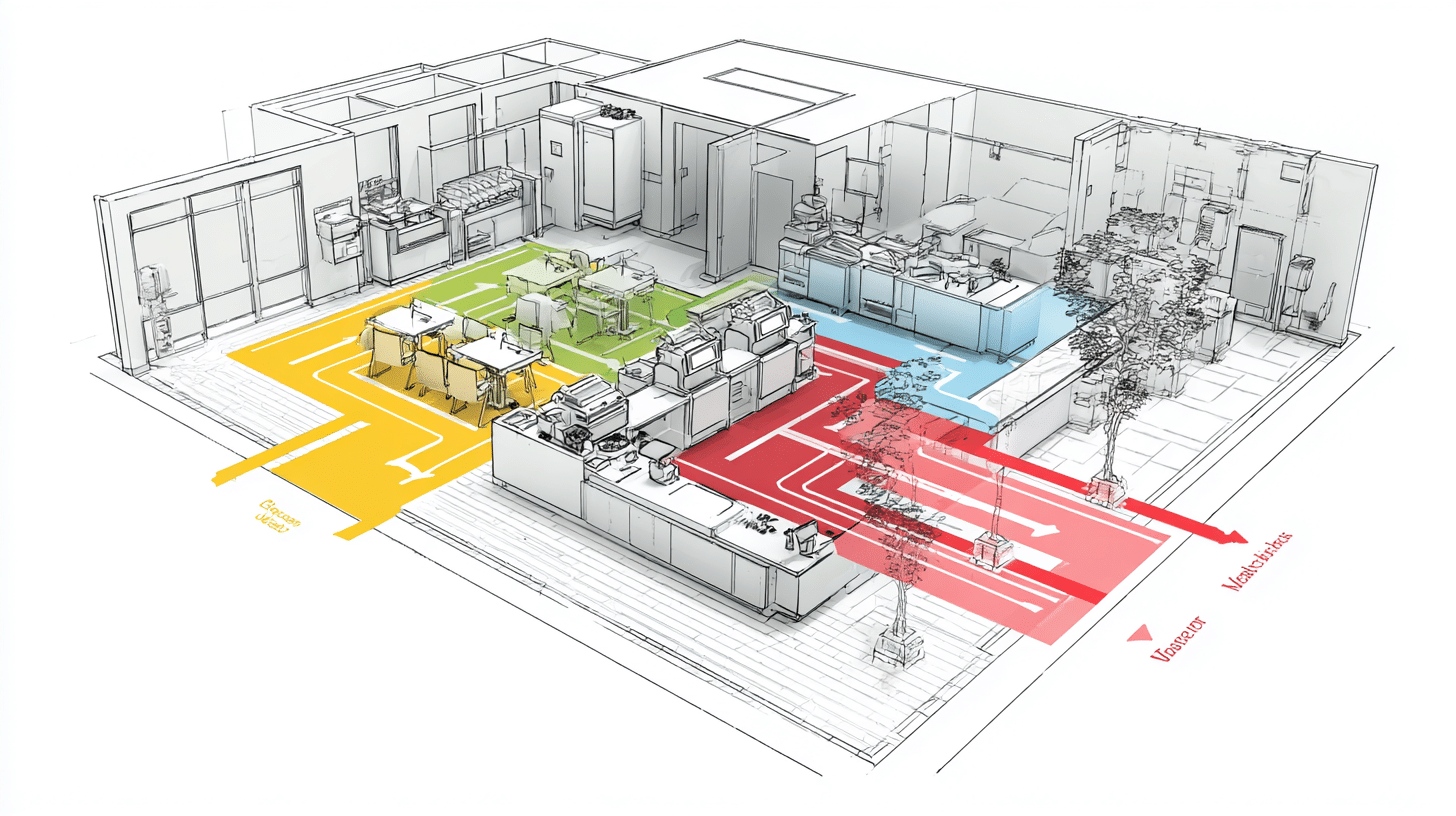
Traffic flow determines how easily customers and staff move throughout the shop.
Designing Efficient Flow of Traffic
Customer pathways should guide guests naturally from:
- Entrance
- Queue line
- Order counter
- Pickup area
- Seating area
Separating staff pathways from customer traffic improves efficiency and prevents collisions.
Ensuring Accessibility Features
Accessibility considerations ensure all guests can enjoy the restaurant comfortably.
Important accessibility features include:
- Wheelchair-accessible entrances
- Wide aisles and walkways
- Accessible seating
- Lower counter sections
These features support inclusivity while meeting legal requirements.
Establishing Safety Zones and Emergency Exits
Emergency exits should be clearly marked and unobstructed at all times. Fire extinguishers, first aid kits, and emergency lighting should also be placed in visible locations.
Non-slip flooring and proper lighting help prevent accidents in busy kitchen and service areas.
How Biyo POS Enhances Sandwich Shop Operations
Technology plays a critical role in modern quick-service restaurant operations. Integrating a POS system like Biyo POS helps streamline ordering, payments, and inventory management within your sandwich shop floor plan.
Biyo POS supports multi-terminal setups ideal for busy order counters, allowing staff to take orders quickly while reducing wait times. The system also integrates seamlessly with kitchen workflows and pickup stations, improving order accuracy and service speed.
Additionally, Biyo POS provides real-time reporting and analytics, enabling restaurant owners to monitor sales trends, customer traffic patterns, and inventory levels. These insights help managers make smarter decisions about staffing, purchasing, and layout optimization.
Frequently Asked Questions
What is the ideal size for a sandwich shop floor plan?
The ideal size depends on expected customer volume and menu complexity. Many small sandwich shops operate effectively within 800–1,200 square feet, though larger spaces allow for expanded seating and prep areas.
How can I improve traffic flow in my sandwich shop?
Clear pathways from entrance to order counter, pickup areas, and seating zones help maintain smooth customer movement. Separating staff routes from customer paths also improves efficiency.
What accessibility features are essential in a sandwich shop?
Accessible entrances, wide aisles, wheelchair-friendly seating, and lower counter sections ensure all customers can navigate the space comfortably.
How does the sandwich assembly line impact service speed?
An organized assembly line reduces unnecessary movement and speeds up preparation. Logical ingredient placement helps staff assemble orders quickly and accurately.
Why should sandwich shops use a POS system?
POS systems streamline order taking, payment processing, and reporting while improving service speed and reducing errors.
How does technology improve sandwich shop operations?
Modern restaurant technology provides real-time data on sales, inventory, and customer behavior, allowing operators to optimize staffing, menu design, and store layout.