A well-designed sandwich shop floor plan does far more than determine where tables and equipment are placed. It directly influences service speed, employee productivity, customer satisfaction, food safety, and long-term profitability. In quick-service environments where customers expect fresh food and fast service, even small layout inefficiencies can create bottlenecks that slow operations and negatively affect the guest experience.
Successful sandwich shops are built around workflow. Every area—from the entrance and ordering counter to the sandwich assembly line and seating area—should support a smooth, logical flow for both customers and staff. When guests can move easily through the ordering process and employees can prepare food efficiently, the entire operation becomes more productive.
Whether you’re opening a new sandwich shop, redesigning an existing deli, or planning a quick-service concept, understanding the key elements of floor plan design can help create a space that supports operational efficiency, customer comfort, and future growth.
This guide explores the essential components of an effective sandwich shop floor plan, including customer flow, assembly line design, kitchen organization, storage solutions, safety considerations, and technology integration.
Table of Contents
- Layout Overview: Balancing Customer Seating and Operational Zones
- Order Counter and Sandwich Assembly Line Design
- Kitchen Layout and Prep Stations
- Support Spaces: Storage, Waste, and Employee Work Areas
- Flow of Traffic, Accessibility, and Safety Zones
- How Biyo POS Enhances Sandwich Shop Operations
- Frequently Asked Questions
Layout Overview: Balancing Customer Seating and Operational Zones
Every successful sandwich shop floor plan begins with a careful balance between customer-facing spaces and operational work areas. Customers should be able to enter, place orders, collect food, and find seating without confusion, while employees need efficient workstations that support fast service and consistent food preparation.
The most effective layouts separate customer traffic from operational workflows while maintaining visibility and accessibility throughout the space. This creates a more organized environment that supports both productivity and customer satisfaction.
A typical sandwich shop floor plan includes an entrance and queue area, an order counter, a sandwich assembly line, a pickup station, customer seating, kitchen preparation areas, and support spaces such as storage and employee workstations. When these zones are positioned strategically, the restaurant can handle higher volumes of customers without creating congestion.
Customer Seating Arrangements for Comfort and Flow
Customer seating should maximize comfort while preserving adequate space for movement. Sandwich shops often serve a diverse mix of guests, including solo diners, office workers, families, and groups. As a result, flexible seating arrangements often perform better than a single seating style.
Many successful layouts combine booths, standard dining tables, bar seating, and communal tables. This variety allows operators to accommodate different customer preferences while making better use of available floor space.
Proper spacing between tables and walkways helps reduce congestion, improves accessibility, and creates a more comfortable dining experience. Natural lighting and clear sightlines can further enhance the atmosphere while making the space feel larger and more inviting.
Order Counter Location and Design
The ordering counter serves as the focal point of the customer journey. Guests should immediately understand where to place their orders upon entering the restaurant.
Positioning the counter along the primary customer path creates a natural flow that minimizes confusion and supports efficient service. Clearly visible menu boards, organized queue areas, and strategically placed POS terminals help streamline the ordering process.
Many sandwich shops use linear or assembly-style counters that allow customers to view ingredients while moving through the ordering process. This approach improves transparency and encourages customization without slowing service.
Defining the Waiting and Pickup Areas
Dedicated waiting and pickup areas help prevent congestion near the ordering counter. Customers waiting for completed orders should have sufficient space without interfering with guests who are still placing orders.
Clearly designated pickup stations improve organization while reducing unnecessary interactions between staff and customers. During busy periods, dedicated pickup shelves and digital order status displays can further improve efficiency.
Separating ordering and pickup functions creates a smoother experience for everyone while reducing operational bottlenecks.
Order Counter and Sandwich Assembly Line Design
The sandwich assembly line is the operational heart of most quick-service sandwich shops. Its design directly impacts service speed, consistency, labor efficiency, and food quality.
Optimizing the Sandwich Assembly Line
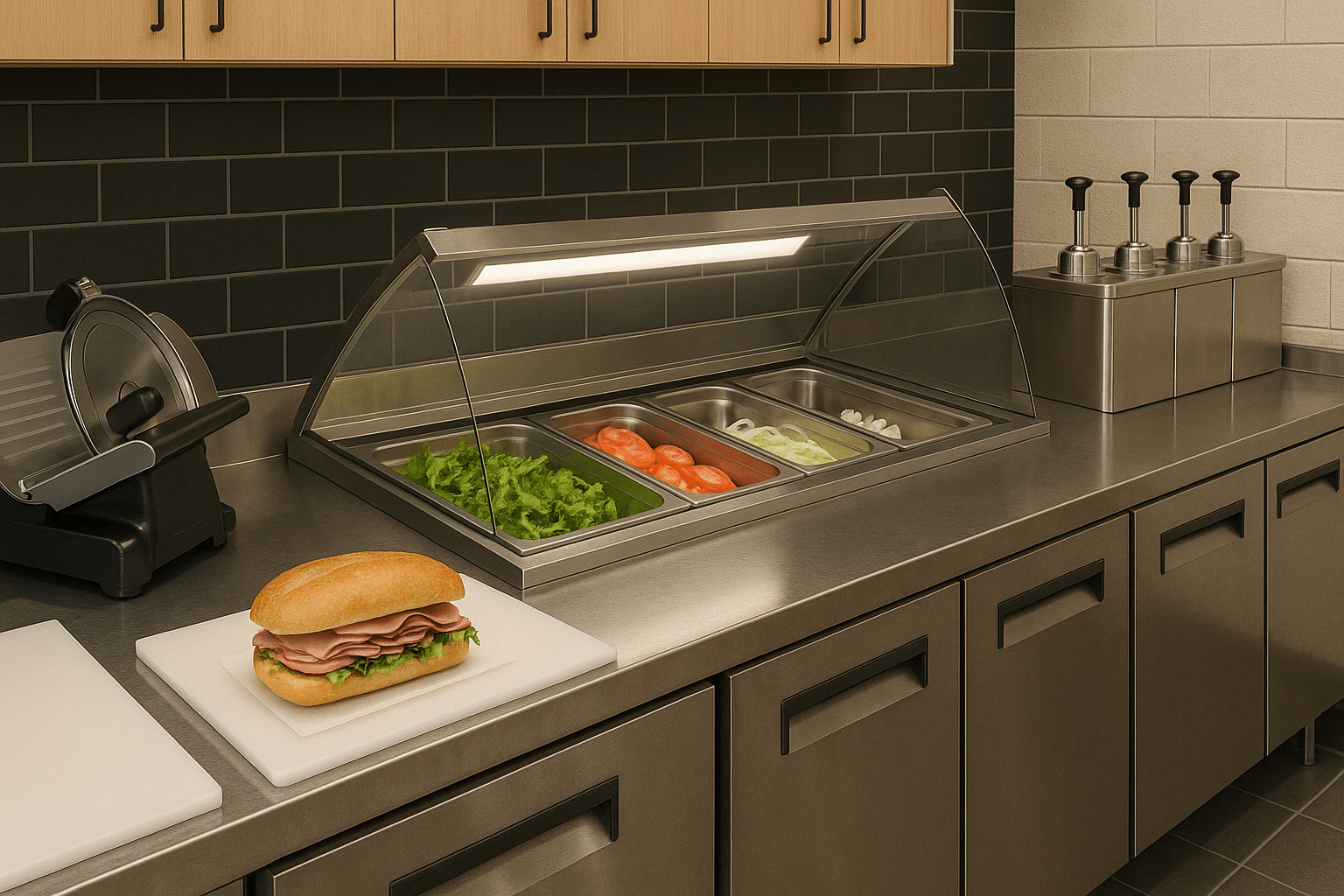
An effective assembly line follows the natural sequence of sandwich preparation. Ingredients should be arranged in the same order they are typically used, allowing employees to move through the preparation process quickly and consistently.
A common preparation sequence includes bread selection, protein placement, cheese additions, vegetable toppings, condiments, and final packaging. When ingredients follow this order, staff can complete orders with minimal movement.
Refrigerated ingredient rails integrated into the assembly counter help maintain freshness while keeping ingredients within easy reach. Open assembly lines also allow customers to observe preparation, reinforcing perceptions of freshness and quality.
Incorporating Condiment and Beverage Stations
Self-service condiment stations allow customers to personalize meals without slowing sandwich production. Locating these stations near seating areas helps reduce congestion around the ordering counter while maintaining efficient traffic flow.
Beverage stations are often positioned to encourage additional purchases while supporting customer convenience. Thoughtful placement helps distribute customer traffic more evenly throughout the restaurant.
Separating beverage and condiment stations from the primary ordering process helps maintain service speed during peak hours.
Display Cases and Visual Appeal
Display cases can significantly influence purchasing behavior. Featuring prepared sandwiches, desserts, salads, beverages, and grab-and-go items near the ordering area encourages impulse purchases and increases average transaction value.
Well-lit displays reinforce perceptions of freshness and quality while helping customers make faster purchasing decisions.
Effective merchandising contributes to both customer engagement and overall revenue growth.
Kitchen Layout and Prep Stations
Behind the customer-facing areas, the kitchen and preparation zones must support efficient food production while maintaining food safety standards.
Designing Efficient Prep Stations
Dedicated prep stations help organize workflows and reduce cross-contamination risks. Many sandwich shops separate stations based on tasks such as vegetable preparation, meat slicing, bread preparation, and packaging.
Specialized work areas allow employees to focus on specific responsibilities while maintaining consistency across all orders. This approach improves productivity and simplifies employee training.
Clearly defined prep areas also help restaurants maintain food safety and operational standards as order volume increases.
Refrigeration Units and Storage Placement
Proper refrigeration placement minimizes employee travel time while ensuring ingredients remain easily accessible. Under-counter refrigeration units are particularly effective because they place frequently used ingredients directly beside preparation stations.
Larger operations may utilize walk-in coolers and dedicated dry storage rooms to support inventory management and bulk purchasing.
Efficient storage systems improve speed, reduce waste, and help maintain inventory accuracy.
Ventilation System and Safety Zones
Ventilation systems help maintain comfortable working conditions while removing heat, smoke, and airborne contaminants generated during food preparation.
Safety zones should be established around slicers, ovens, grills, and other equipment that may present risks to employees. Proper equipment placement and clearly marked workspaces help reduce workplace accidents.
Strong safety planning supports regulatory compliance while creating a better environment for staff.
Support Spaces: Storage, Waste, and Employee Work Areas
Support spaces may operate behind the scenes, but they play a major role in maintaining operational efficiency throughout the restaurant.
Strategic Waste Disposal Placement
Waste disposal areas should be positioned conveniently for employees while remaining separate from customer-facing spaces. Efficient waste management helps maintain cleanliness, supports food safety efforts, and reduces unnecessary staff movement during preparation.
Well-placed disposal systems contribute to smoother operations and a cleaner customer experience.
Employee Workspaces and Break Areas
Dedicated employee spaces provide room for administrative tasks, scheduling activities, personal storage, and break periods. Comfortable staff areas contribute to employee satisfaction, morale, and productivity.
Providing employees with functional workspaces can improve retention and support stronger operational consistency.
Storage Rooms for Supplies and Equipment
Organized storage areas improve inventory accessibility and reduce time spent locating supplies. Shelving systems, labeling practices, and inventory organization strategies help maintain efficiency throughout the operation.
Accessible storage contributes to faster restocking, improved inventory control, and smoother daily workflows.
Flow of Traffic, Accessibility, and Safety Zones
Traffic flow design affects both customer experiences and operational performance. Clear pathways help people move efficiently throughout the restaurant while minimizing congestion.
Designing Efficient Flow of Traffic
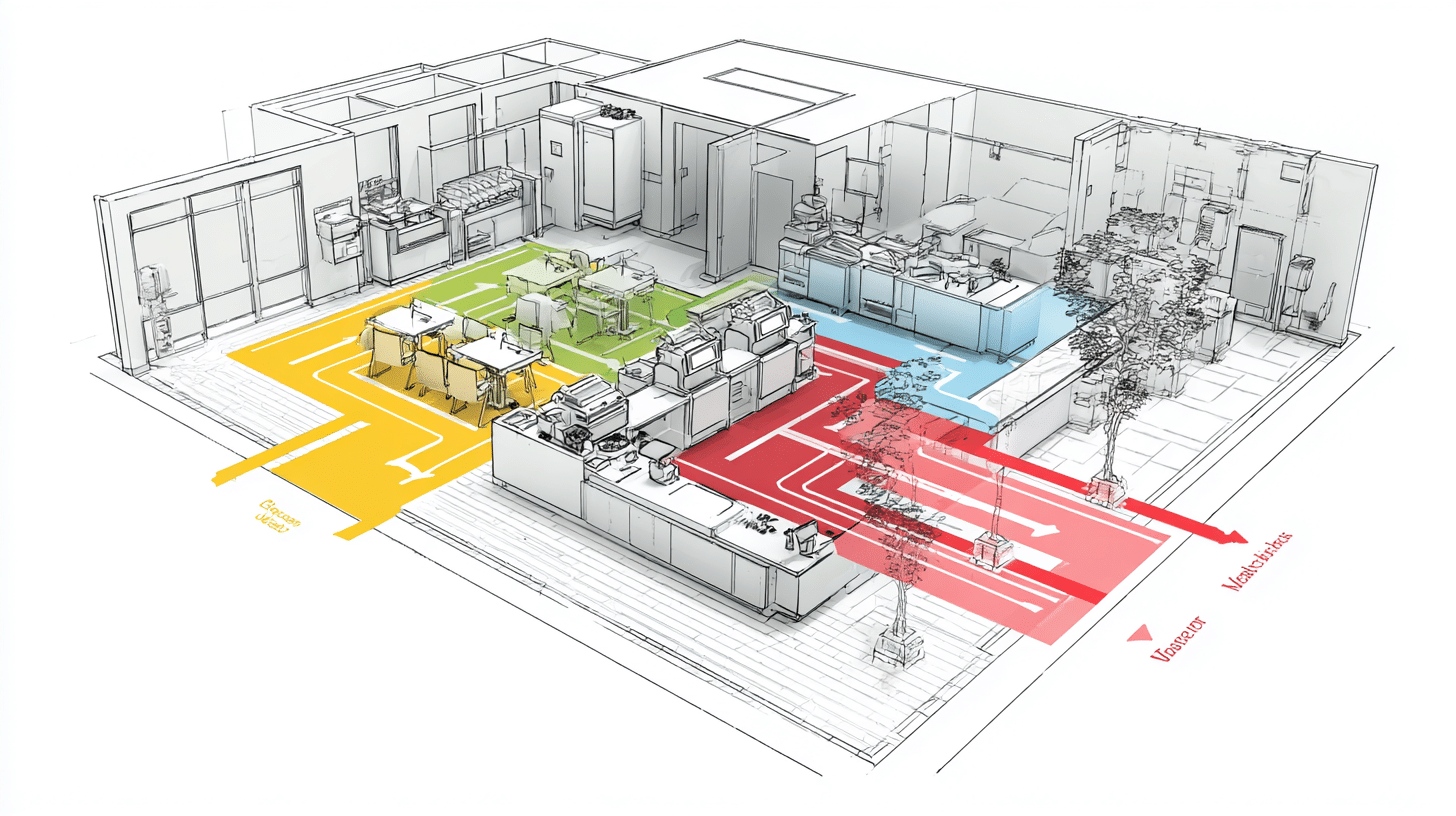
Customers should move naturally from the entrance to the queue, ordering counter, pickup area, and seating section without confusion. Well-designed pathways reduce bottlenecks and improve the overall customer experience.
Separating customer pathways from employee work routes helps maintain service speed while reducing workplace interruptions.
Effective traffic planning becomes particularly important during busy lunch and dinner periods.
Ensuring Accessibility Features
Accessibility should be incorporated into every stage of floor plan development. Wide aisles, accessible seating, wheelchair-friendly entrances, and lowered service counters help accommodate a wider range of customers.
Accessible design supports inclusivity while helping businesses comply with applicable regulations.
Creating welcoming environments benefits both customers and the overall brand experience.
Establishing Safety Zones and Emergency Exits
Emergency exits, fire safety equipment, first aid stations, and evacuation routes should remain clearly visible and unobstructed at all times.
Non-slip flooring, proper lighting, and clearly designated safety zones help reduce workplace accidents and improve overall safety.
Safety-focused design protects employees, customers, and business operations.
How Biyo POS Enhances Sandwich Shop Operations
A well-designed floor plan becomes even more effective when supported by the right technology. Biyo helps sandwich shops streamline ordering, payment processing, reporting, inventory management, and operational oversight through a unified platform.
With support for multiple order stations, real-time reporting, inventory visibility, and kitchen workflow integration, Biyo POS helps restaurants improve service speed while maintaining order accuracy.
Operators can monitor sales performance, identify peak traffic periods, manage inventory more effectively, and make informed staffing decisions using centralized business data.
If you’d like to see how Biyo can support your sandwich shop operations, you can schedule a consultation and explore how the platform helps streamline quick-service restaurant management.
Frequently Asked Questions
What is the ideal size for a sandwich shop floor plan?
The ideal size depends on customer volume, menu complexity, and operational requirements. Many independent sandwich shops operate effectively within 800 to 1,500 square feet, while larger concepts may require additional space.
How can I improve customer flow in a sandwich shop?
Clear pathways, visible ordering stations, dedicated pickup areas, organized queue management, and strategic seating arrangements all contribute to smoother customer flow.
Why is the sandwich assembly line important?
The assembly line directly impacts preparation speed, consistency, labor efficiency, and overall customer satisfaction. A well-organized assembly line helps reduce delays and improve operational performance.
What equipment should be located closest to prep stations?
Frequently used ingredients, refrigeration units, preparation tools, and packaging supplies should be located near prep stations to minimize employee movement and improve efficiency.
How does accessibility affect sandwich shop design?
Accessibility ensures all customers can comfortably navigate the restaurant. Features such as wide aisles, accessible seating, and wheelchair-friendly entrances improve inclusivity and customer experience.
Can technology improve sandwich shop efficiency?
Yes. Modern POS systems, kitchen display systems, inventory tools, and reporting platforms help streamline operations, improve order accuracy, and provide valuable business insights.
Why should sandwich shops use a POS system?
POS systems simplify order management, payment processing, reporting, inventory tracking, and customer service while helping improve overall operational efficiency.