Every business owner obsesses over sales. You watch traffic, conversion rates, and average ticket size. However, there is one number quietly stealing money from your register that most operators ignore. That number is your Payment Acceptance Rate. If customers try to pay and your system declines them, you don’t just lose a transaction. You lose revenue, trust, and often the customer forever.
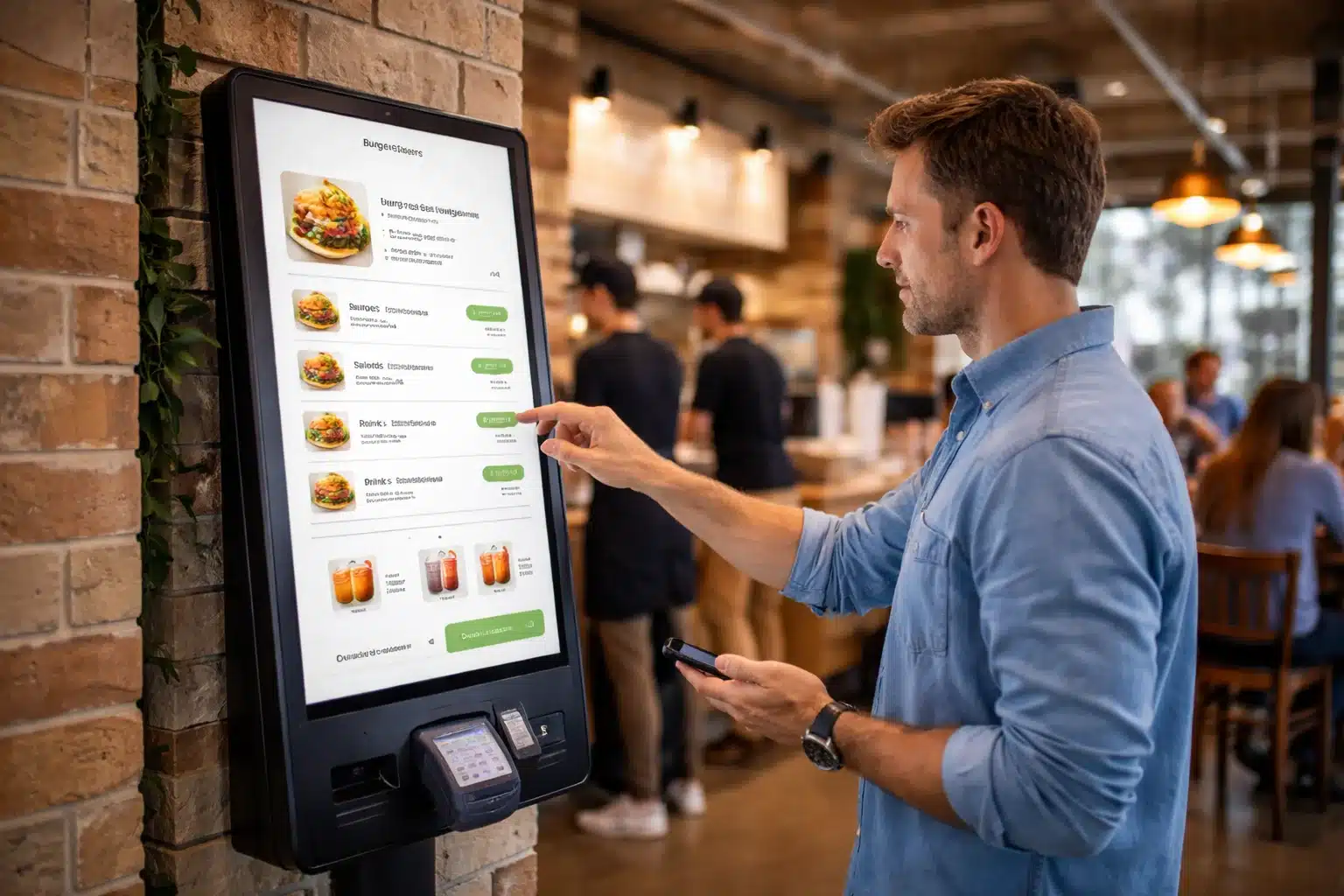
Think about it. A guest stands at your counter, card in hand, ready to buy. The POS beeps, then flashes “declined.” Now the line stalls. The customer feels embarrassed. Meanwhile, you scramble to fix it. As a result, many customers simply walk away. That single failed moment damages both sales and brand perception. This is exactly why understanding your Payment Acceptance Rate matters more than most reports you check daily.
In this guide, you’ll learn what the Payment Acceptance Rate actually means, why declines happen, and how smarter POS technology can recover thousands in lost sales. If you improve this one metric, your revenue can jump fast without adding a single new customer.
Table of Contents
- What Payment Acceptance Rate Really Means
- Common Causes of Declined Transactions
- How Low Acceptance Rates Drain Revenue
- Ways to Improve Your Payment Acceptance Rate
- How Modern POS Systems Boost Reliability
- How Biyo Helps You Protect Every Sale
- FAQ
What Payment Acceptance Rate Really Means for Your Business
Before fixing anything, you must understand the metric clearly. Your Payment Acceptance Rate is the percentage of payment attempts that successfully process through your POS. In simple terms, it measures how many customers who try to pay actually complete their transaction. If 100 people try to pay and 95 succeed, your acceptance rate is 95%.
At first glance, 95% sounds fine. However, that 5% failure rate could be painful. Imagine you process 1,000 transactions a day. That means 50 customers face declines. Even if only half leave without retrying, you still lose 25 sales daily. Over a year, those small failures turn into serious revenue leaks.
Therefore, your Payment Acceptance Rate is not just a technical stat. It is a direct measure of lost opportunities. High approval rates mean smooth checkout. Meanwhile, lower rates signal friction, frustration, and preventable losses.
Why Approval Rate Is a Profit Metric
Many operators treat payment approval as an IT issue. That mindset is a mistake. Your Payment Acceptance Rate directly affects profit. Every declined card equals a sale that might never happen. Therefore, it belongs in your financial dashboard, not buried in back-end settings.
For instance, if your average ticket is $20 and you lose 20 transactions per day, that’s $400 gone daily. Multiply that across months and the number gets ugly fast. You don’t need more marketing. You need fewer declines.
Because of this, smart businesses track acceptance rates just like sales or margins. Once you see it as a revenue lever, you start treating reliability as strategy, not just maintenance.
Now let’s look at what causes these declines in the first place.
The Difference Between Acceptance and Authorization
Some owners confuse terms like authorization rate and transaction success rate. While related, they serve slightly different purposes. Your Payment Acceptance Rate covers the entire checkout success. It includes gateway approval, processor reliability, and POS stability.
Authorization focuses only on bank approval. However, even approved transactions can fail if your connection drops or your terminal freezes. Therefore, focusing only on authorization hides other failures.
A complete view means monitoring the entire journey from tap to receipt. That full picture shows where money slips away.
With that clarity, we can explore what actually causes failures.
Why Most Owners Never Track This Number
Here’s the uncomfortable truth. Many businesses never check their Payment Acceptance Rate. They only notice problems when customers complain. Meanwhile, silent losses continue every day.
This happens because reports often focus on total sales, not failed attempts. However, missed transactions don’t show up in revenue reports. Therefore, they remain invisible.
Once you start measuring declines, the reality becomes clear. You discover how much money quietly disappears. Awareness alone can push immediate improvements.
 Common Causes of Declined Transactions
 Common Causes of Declined Transactions
Declines rarely happen for one reason. Instead, multiple small issues stack up. Some are technical. Others involve configuration or outdated hardware. When combined, they chip away at your Payment Acceptance Rate and create checkout friction.
Network and Connectivity Problems
Unstable internet is one of the biggest killers of transaction success. If your connection drops mid-authorization, the payment fails. Customers assume their card is the problem. However, the real issue sits with your network.
Busy restaurants and retail stores often rely on shared Wi-Fi. During peak hours, bandwidth gets crowded. Consequently, terminals slow down or time out. Those seconds feel endless when a line forms.
A wired or dedicated connection often solves this instantly. Reliable connectivity directly improves your Payment Acceptance Rate because fewer transactions fail mid-process.
Beyond connectivity, system configuration can also cause trouble.
Outdated Hardware and Software
Old terminals struggle with modern payment methods. Chips, contactless taps, and mobile wallets require updated firmware. If devices lag or freeze, transactions fail or restart.
In many stores, terminals remain untouched for years. Owners forget updates exist. Meanwhile, compatibility issues grow. Eventually, the checkout becomes unpredictable.
Upgrading hardware often increases your Payment Acceptance Rate overnight. Faster processing means fewer customer retries and fewer abandoned purchases.
Another hidden issue comes from the way payments are routed.
Processor and Gateway Misconfigurations
Payment gateways control how transactions reach banks. Poor routing or strict fraud filters can reject legitimate customers. That hurts your Payment Acceptance Rate without you even realizing it.
For example, travelers or international cards may trigger false declines. If this happens often, you lose high-value customers first. Those guests rarely try again.
Working with a smart processor and flexible settings improves approval reliability. Small tweaks here can recover significant revenue.
How Low Acceptance Rates Drain Revenue Faster Than You Think
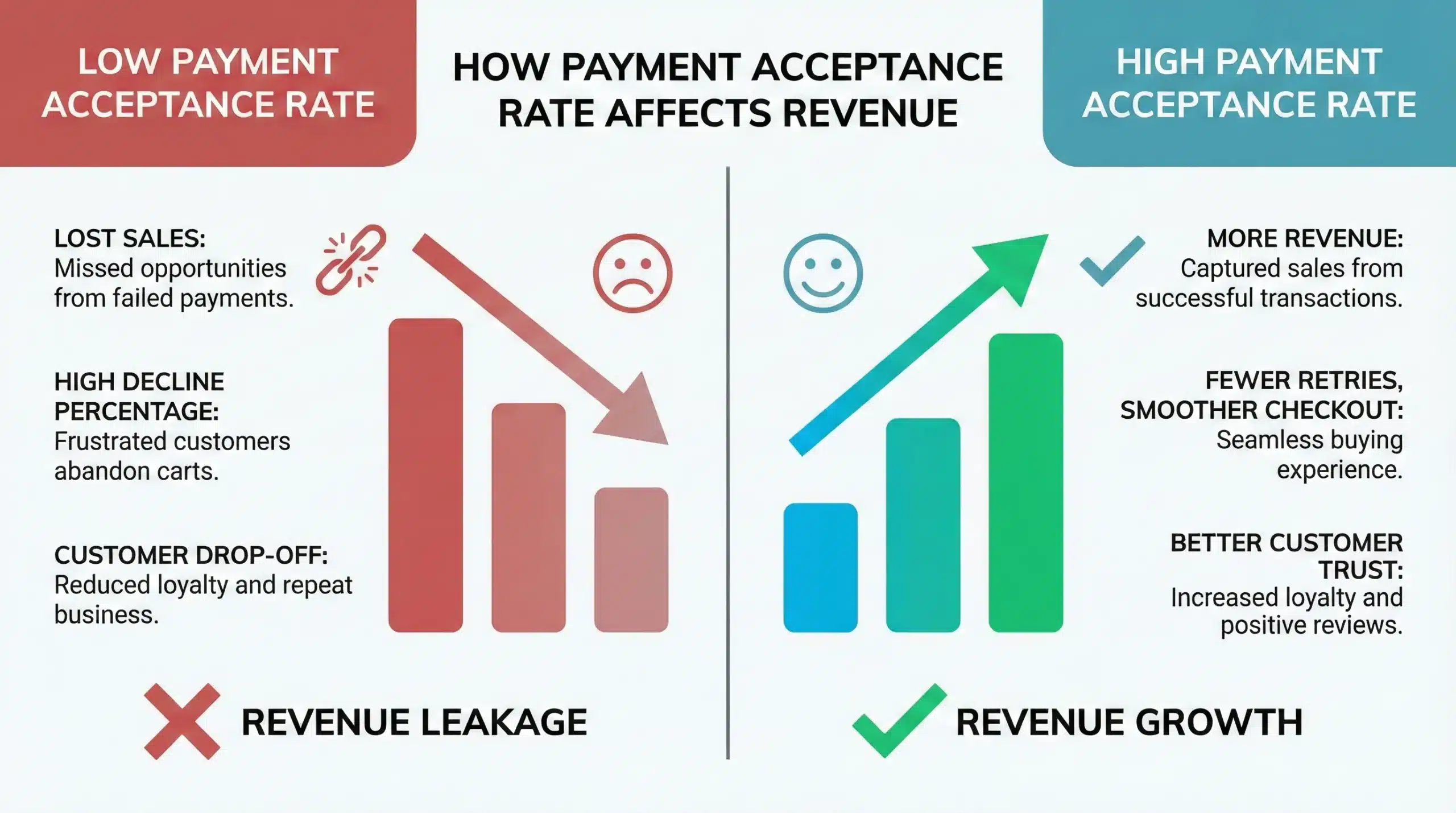
Declines don’t just reduce sales. They hurt customer experience, slow service, and increase staff stress. Therefore, the damage spreads across operations. A weak Payment Acceptance Rate becomes a chain reaction that affects the entire business.
Lost Sales at the Counter
When a card fails, some customers try again. Others walk away. In quick-service environments, many simply leave because they don’t want to hold the line. That means immediate lost revenue.
These missed transactions rarely appear in reports. So managers underestimate the damage. However, over time, they stack up into thousands of dollars.
By improving your Payment Acceptance Rate, you keep those ready-to-pay customers from slipping out the door.
However, the harm goes beyond single transactions.
Customer Trust and Brand Damage
Repeated declines make your store feel unreliable. Customers blame the business, not their bank. That perception sticks. Even one awkward checkout can change someone’s mind about returning.
Meanwhile, competitors with smoother systems feel more professional. Therefore, shoppers migrate toward easier experiences.
Protecting your Payment Acceptance Rate protects your reputation. Smooth checkout builds confidence and loyalty.
There’s also a hidden operational cost.
Longer Lines and Slower Service
Each failed payment adds time. Staff must retry or switch methods. Lines grow. Customers grow impatient. Consequently, throughput drops.
Slower service means fewer orders processed per hour. Even if approval eventually happens, the delay still costs money.
A strong Payment Acceptance Rate keeps checkout fast and predictable. Speed alone can increase daily revenue.
Ways to Improve Your Payment Acceptance Rate
Improvement doesn’t require complex changes. Most gains come from simple, practical upgrades. When you treat your Payment Acceptance Rate as a priority, you’ll find quick wins everywhere.
Upgrade Your Internet and Terminals
Start with the basics. Use stable internet and modern hardware. These two upgrades eliminate many failures immediately. Fast devices process taps and chips smoothly.
Dedicated connections reduce timeouts. As a result, transactions complete faster. Customers notice the difference instantly.
This foundation alone often raises your Payment Acceptance Rate several percentage points.
Next, look at monitoring.
Track Declines in Real Time
You cannot fix what you don’t measure. Monitor your Payment Acceptance Rate daily. Watch decline percentages during peak hours. Patterns reveal root causes.
For instance, if failures spike during lunch, bandwidth may be the issue. If certain cards fail often, processor rules may be too strict.
Real-time alerts allow you to respond quickly. Faster fixes mean fewer lost sales.
Finally, streamline your checkout options.
Offer Multiple Payment Methods
Some cards fail. However, customers may have alternatives. Accept contactless, mobile wallets, and QR payments. Variety increases the chance of success.
When one method fails, another saves the sale. Therefore, your Payment Acceptance Rate improves naturally.
Flexible options reduce friction and create a smoother buying experience overall.
How Modern POS Systems Boost Reliability
Technology matters. A modern POS connects hardware, processing, and analytics into one system. Instead of patching problems manually, you get built-in safeguards that protect your Payment Acceptance Rate automatically.
Integrated Processing
Integrated payments reduce communication errors. The POS talks directly to the processor without extra steps. Fewer handoffs mean fewer failures.
Because everything runs in one environment, transactions move faster. Consequently, approval rates improve.
This tight integration makes your Payment Acceptance Rate more consistent.
Better data also helps.
Smart Reporting and Insights
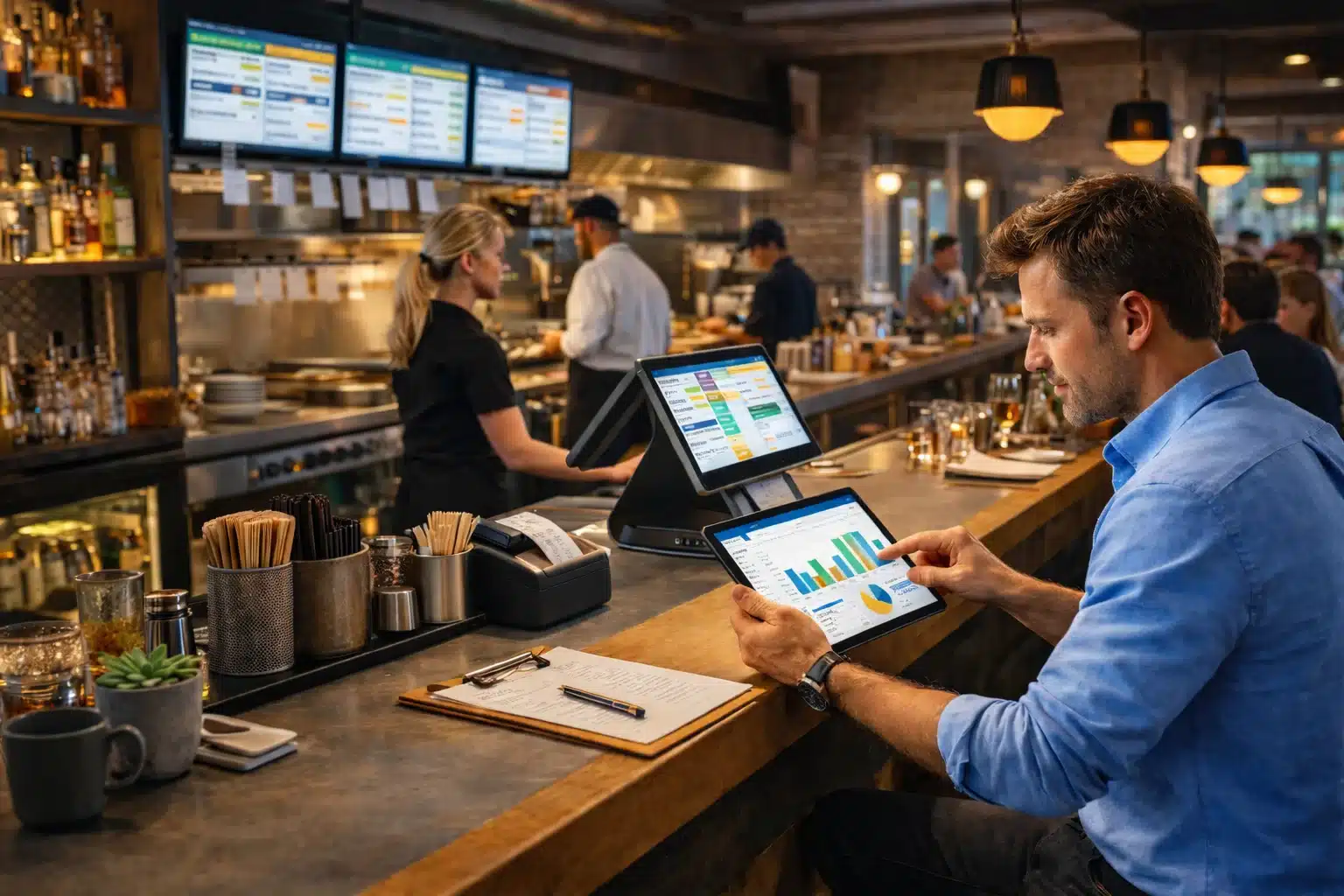
Modern dashboards show approval and decline trends clearly. You see what’s happening instantly. Therefore, decisions become data-driven rather than guesswork.
If declines increase, you react fast. Quick action prevents revenue loss.
Clear visibility keeps your Payment Acceptance Rate stable over time.
Security also plays a key role.
Fraud Protection Without Overblocking
Good systems balance security and approvals. Too strict rules reject good customers. Too loose rules invite chargebacks. Smart POS platforms find the middle ground.
Adaptive filters learn patterns. Consequently, legitimate transactions pass while risky ones stop.
This balance improves your Payment Acceptance Rate without increasing fraud exposure.
How Biyo Helps You Protect Every Sale
 How Biyo Helps You Protect Every Sale
If you want to improve your Payment Acceptance Rate without becoming a payment expert, the right POS matters. Biyo POS combines reliable hardware, integrated processing, and real-time reporting into one clean system. As a result, transactions complete faster and declines drop.
You get dashboards that show approval trends, alerts for issues, and smooth support for tap, chip, and mobile wallets. Therefore, your checkout stays fast even during rush hours. That reliability directly protects revenue.
If you’re serious about stopping silent losses, schedule a walkthrough here: https://biyopos.com/schedule-call/. When you’re ready to start, create your account here: https://signup.biyo.co/.
FAQ
What is a good Payment Acceptance Rate?
Most healthy businesses aim for 97–99% or higher. Anything lower means unnecessary lost sales.
Why do cards decline even with money available?
Network drops, processor rules, or outdated terminals often cause failures, not insufficient funds.
How often should I track my acceptance rate?
Daily monitoring is ideal. Weekly reviews help spot trends and fix problems early.
Can a better POS really improve approval rates?
Yes. Faster hardware, stable connections, and integrated processing reduce errors and increase successful payments.