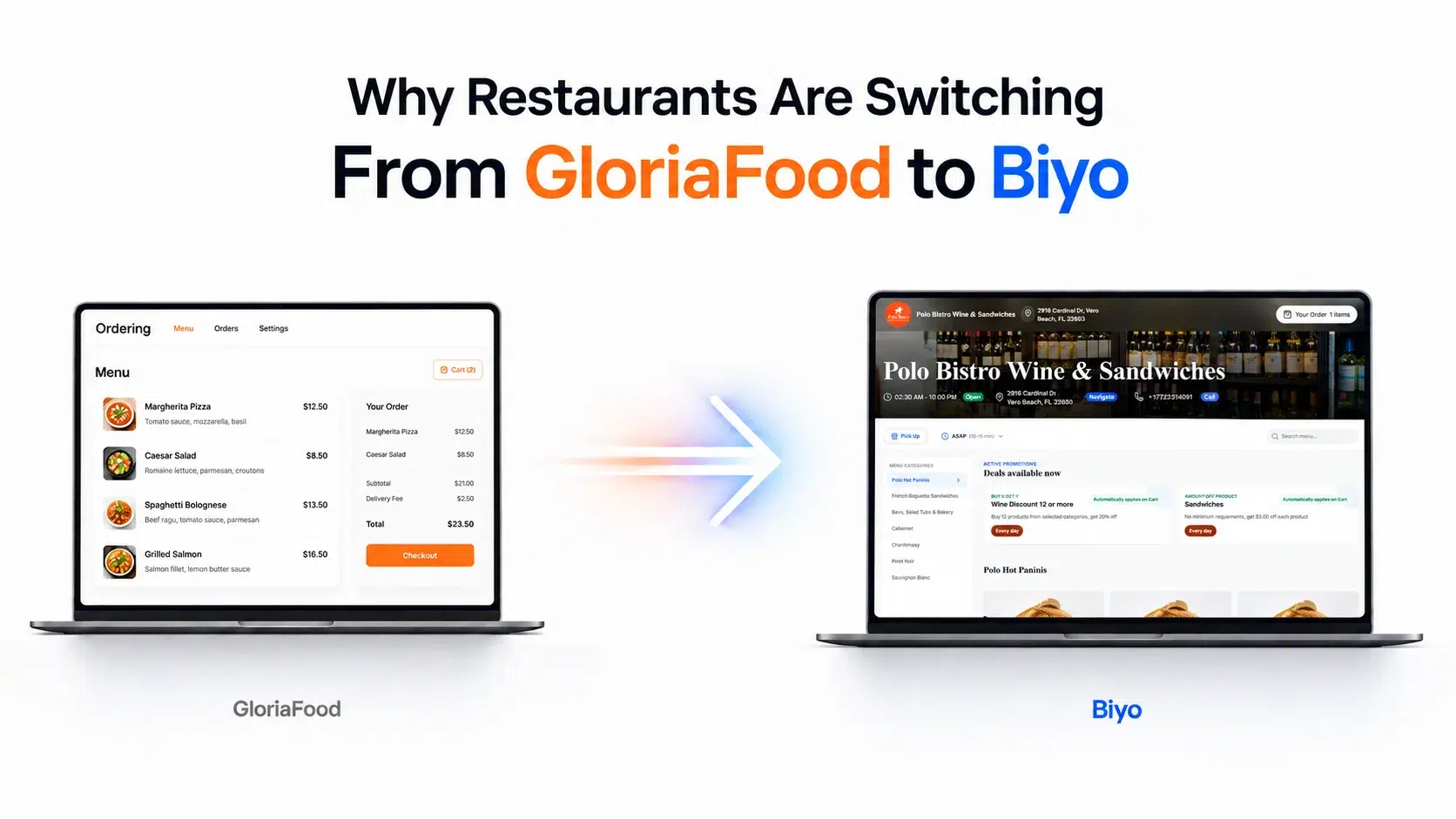

For many restaurants, online ordering has evolved from a convenience feature into one of the most important revenue channels in the business. Customers expect to browse menus online, customize their meals, schedule pickup times, and complete purchases in just a few clicks. When the ordering experience is smooth, restaurants benefit from increased customer satisfaction, larger order volumes, and stronger loyalty. When it falls short, customers often move on to a competitor without hesitation.
GloriaFood has been a popular online ordering solution for years, helping restaurants accept direct orders through their websites. However, the restaurant industry continues to evolve, and many operators are finding that they need more than a basic ordering platform. Today’s businesses want greater flexibility, better customer engagement tools, stronger reporting, seamless menu management, and systems that support long-term growth.
As a result, more restaurant owners are searching for a GloriaFood alternative that can help them improve online ordering while providing additional tools to manage and grow their business. Biyo Online Ordering has emerged as a compelling option because it combines customer-friendly ordering experiences with operational tools that support restaurants beyond the checkout page.
Whether you’re evaluating your current online ordering platform, looking for a GloriaFood replacement, or simply researching ways to improve your digital ordering experience, understanding why restaurants are making the switch can help you make a more informed decision.
-
- Why Restaurants Are Looking Beyond GloriaFood
- What Restaurants Need From a Modern Online Ordering Platform
- How Online Ordering Impacts Restaurant Growth
- Challenges Restaurants Face When Replacing GloriaFood
- GloriaFood vs Biyo Comparison
- How Biyo Helps Restaurants Simplify Online Ordering
- Frequently Asked Questions
Why Restaurants Are Looking Beyond GloriaFood
GloriaFood has helped thousands of restaurants establish an online ordering presence. However, restaurant technology requirements have changed significantly in recent years. Operators are no longer evaluating online ordering platforms solely based on whether they can accept orders. Instead, they are looking for systems that support customer engagement, operational visibility, and long-term scalability.
Changing Expectations Around Online Ordering
Consumer expectations continue to rise. Customers compare restaurant ordering experiences not only against other restaurants but also against major eCommerce platforms, grocery delivery services, and mobile apps they use every day. They expect intuitive navigation, mobile-friendly interfaces, simple customization options, and fast checkout processes.
Restaurants that rely on outdated ordering experiences risk losing potential sales before customers even reach the checkout page. Even small inconveniences such as confusing menus, limited customization options, or complicated ordering workflows can impact conversion rates. Modern online ordering platforms must help restaurants deliver a polished digital experience that encourages customers to complete their purchases.
This shift in customer behavior is one reason many restaurant owners are evaluating whether their current GloriaFood setup can continue meeting evolving expectations.
The Need for Greater Operational Visibility
Every online order generates valuable information. Restaurants can learn which menu items are most popular, identify peak ordering times, evaluate promotional performance, and understand customer purchasing patterns. This information can help operators make smarter decisions about pricing, inventory, staffing, and marketing.
Many restaurants now want their online ordering platform to do more than simply process orders. They want visibility into business performance and access to insights that can support growth. Reporting and analytics have become increasingly important when evaluating a GloriaFood alternative because operators want to understand not only what is happening but why it is happening.
Restaurants that can access meaningful data are often better positioned to improve profitability, optimize menus, and enhance customer experiences.
Why Direct Customer Relationships Matter
One of the biggest advantages of online ordering is the ability to build direct relationships with customers. Every direct order creates an opportunity to strengthen customer loyalty and encourage future purchases. Restaurants that maintain ownership of their customer relationships can create more personalized experiences and communicate more effectively with their guests.
As competition within the restaurant industry continues to grow, customer retention has become just as important as customer acquisition. Direct ordering channels help restaurants stay connected with their customers while reducing reliance on third-party platforms that can create distance between businesses and their guests.
This growing emphasis on customer ownership and retention is another factor driving interest in modern online ordering solutions.
What Restaurants Need From a Modern Online Ordering Platform
Online ordering is no longer a standalone feature. It has become a central component of restaurant operations and customer engagement. As restaurants evaluate GloriaFood alternatives, they are increasingly focusing on the broader capabilities that can support both customer satisfaction and operational efficiency.
Flexible Menu Management
Restaurant menus are constantly changing. Seasonal offerings, limited-time promotions, pricing updates, and inventory fluctuations require operators to maintain flexibility. A modern online ordering platform should make it easy to update products, manage categories, create modifiers, and customize menu items without creating unnecessary complexity.
Customization is particularly important because customers increasingly expect the ability to personalize their orders. Whether adding extra toppings, removing ingredients, or selecting meal options, customers want ordering experiences that accommodate their preferences. Restaurants need menu management tools that support these expectations while remaining easy to maintain.
Flexible menu management also helps restaurants respond quickly to changing business conditions without disrupting the customer experience.
Convenient Ordering Experiences
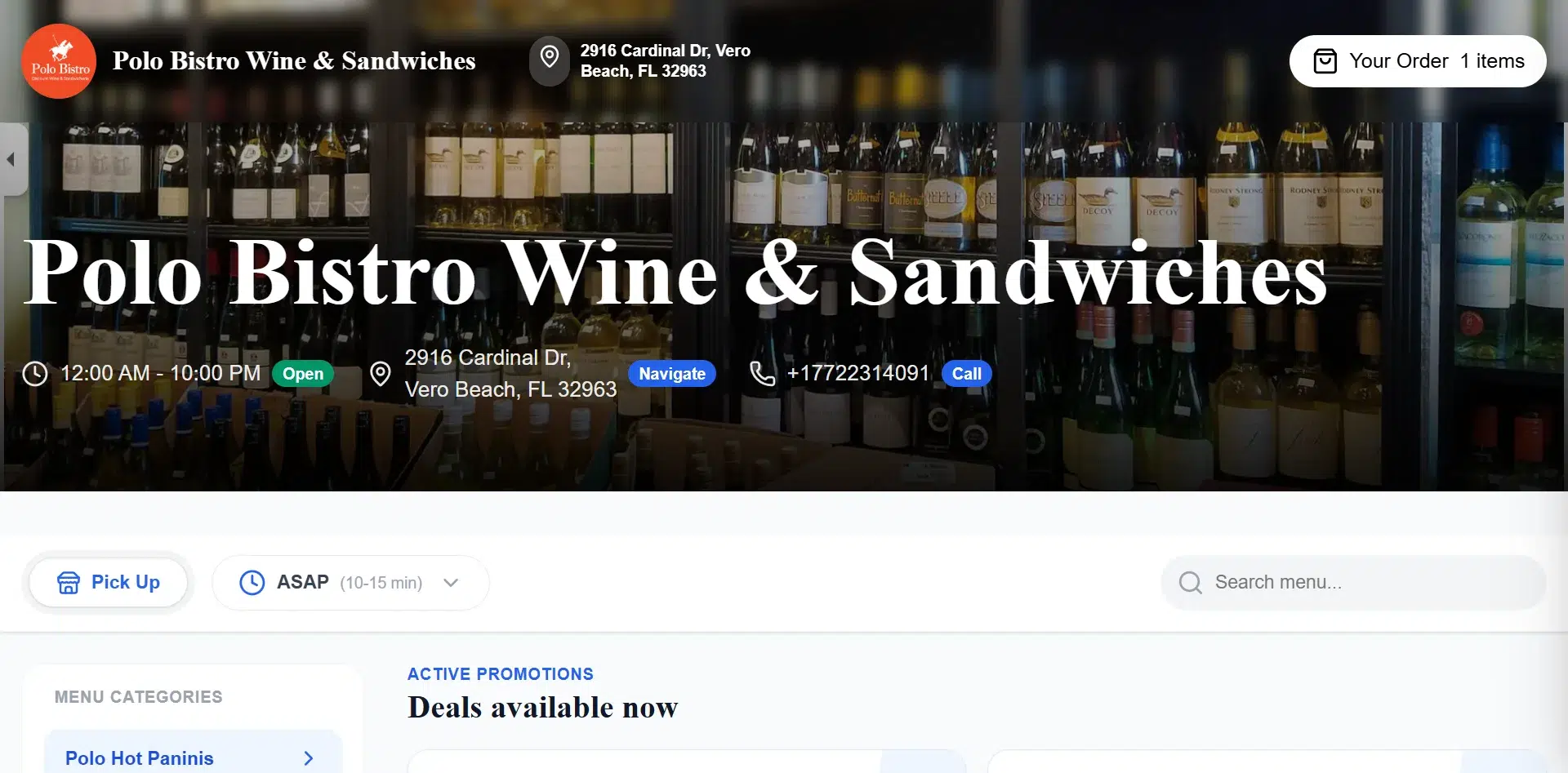
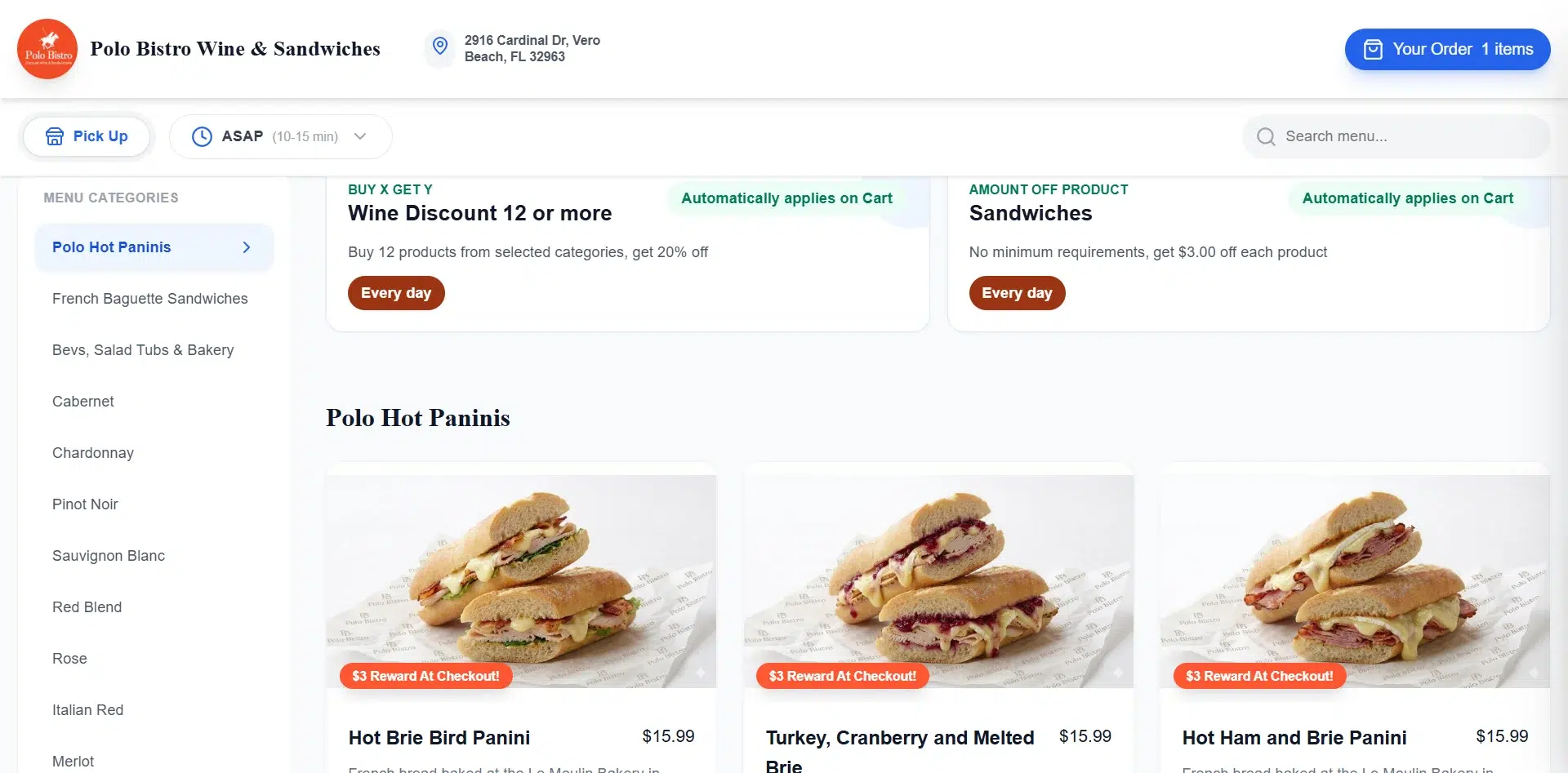
Convenience is one of the primary reasons customers choose online ordering. The easier it is to place an order, the more likely customers are to complete a purchase. Features such as scheduled ordering, pickup options, mobile optimization, saved customer information, and streamlined checkout processes can significantly improve conversion rates.
Today’s customers expect ordering experiences that fit their schedules. Some guests want immediate pickup, while others prefer to schedule orders in advance. Restaurants that provide flexibility often create a better customer experience and increase the likelihood of repeat business.
Convenient ordering experiences benefit both customers and restaurant staff by reducing friction and improving order accuracy.
Built-In Promotional Capabilities
Promotions remain one of the most effective ways to increase order volume and encourage repeat purchases. Discounts, limited-time offers, bundle deals, and loyalty incentives can help restaurants attract customers and increase average ticket sizes.
Modern online ordering platforms should support promotional campaigns without requiring restaurants to rely on multiple disconnected systems. Operators benefit from being able to create and manage promotions directly within their ordering ecosystem, making it easier to launch campaigns and measure results.
As restaurants continue looking for ways to stand out in competitive markets, promotional flexibility has become an increasingly important consideration when evaluating online ordering platforms.
How Online Ordering Impacts Restaurant Growth
Online ordering has become one of the most effective ways for restaurants to increase revenue while improving customer convenience. According to industry research, digital ordering continues to grow as more consumers prefer the convenience of ordering directly from their phones and computers. Restaurants that invest in a strong online ordering experience are often better positioned to capture repeat business, increase average order values, and improve operational efficiency.
Encouraging More Direct Orders
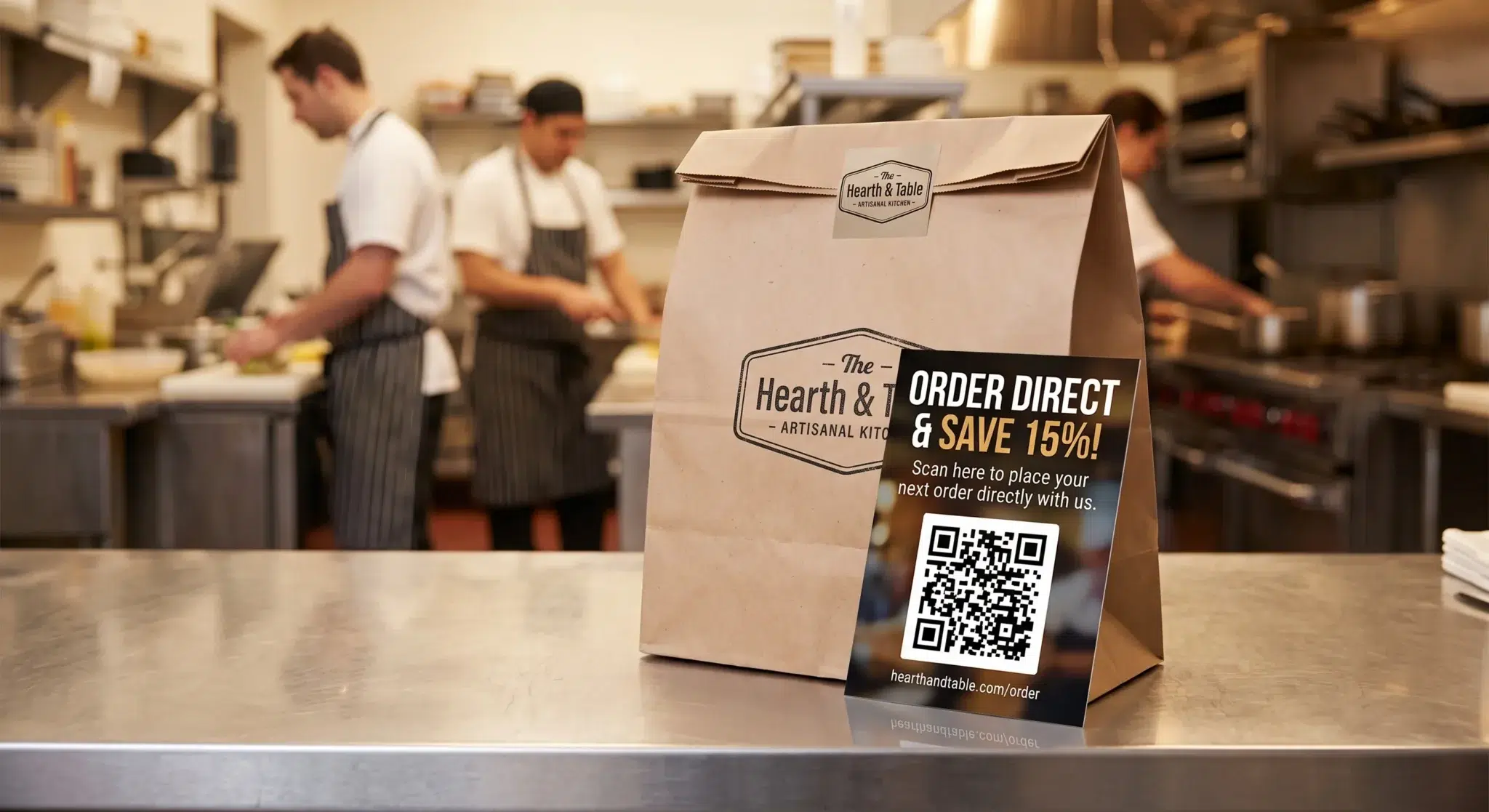
Direct online ordering allows restaurants to serve customers through their own branded channels rather than relying entirely on third-party marketplaces. When customers order directly, restaurants maintain greater control over the experience while strengthening their own brand presence.
Many restaurant operators are focusing on direct ordering because it helps create stronger customer relationships and provides greater ownership of customer interactions. Direct ordering also allows restaurants to promote their own specials, menu items, and marketing campaigns without competing against dozens of nearby businesses on a marketplace platform.
As restaurants seek to build sustainable long-term growth, direct online ordering continues to play a critical role in their digital strategy.
Increasing Customer Retention
Acquiring new customers is important, but retaining existing customers is often more profitable. Returning customers tend to spend more over time, require less marketing investment, and are more likely to recommend a restaurant to others.
A well-designed online ordering platform can help restaurants encourage repeat business through promotions, personalized experiences, and convenient ordering workflows. When customers have a positive experience placing orders online, they are more likely to return in the future.
Restaurants that focus on customer retention often achieve stronger long-term results because repeat customers provide a stable foundation for ongoing growth.
Supporting Operational Efficiency
Online ordering can streamline restaurant operations by reducing manual order-taking and minimizing communication errors. Orders placed digitally arrive with clear instructions, customer information, and item selections, helping staff process requests more efficiently.
Operational efficiency becomes increasingly important as order volumes grow. Restaurants need systems that can support higher demand without creating bottlenecks or increasing staff workload unnecessarily. Modern online ordering solutions help restaurants improve order accuracy, reduce friction, and create more consistent customer experiences.
By simplifying workflows and reducing manual processes, online ordering can help restaurants operate more effectively while serving more customers.
Challenges Restaurants Face When Replacing GloriaFood
Switching from one online ordering platform to another can feel intimidating. Restaurant owners often worry about disrupting operations, confusing customers, or losing valuable data during the transition. However, understanding the most common challenges can help operators prepare for a smoother migration process.
Maintaining Business Continuity
One of the biggest concerns restaurants have when evaluating a GloriaFood replacement is ensuring that online ordering remains available throughout the transition. Any interruption in service can impact customer satisfaction and revenue.
Successful migrations require careful planning and implementation. Restaurants should prioritize platforms that allow them to recreate menus, configure ordering settings, and prepare their new ordering environment before fully transitioning customers.
By approaching migration strategically, restaurants can minimize disruption and maintain a consistent experience for their customers.
Migrating Menus and Ordering Workflows
Restaurant menus often contain hundreds of products, modifiers, categories, and pricing configurations. Rebuilding these elements manually can seem overwhelming, especially for businesses with complex menus.
When evaluating alternatives to GloriaFood, restaurants should consider how efficiently they can recreate and manage their menu structure. Platforms that provide flexible product management, modifier groups, and category organization can significantly simplify the migration process.
The goal is not simply to replicate an existing menu but to create an ordering experience that supports future growth and operational efficiency.
Preserving the Customer Experience
Customers become familiar with ordering workflows over time. A sudden change in the ordering process can create confusion if it is not implemented thoughtfully.
Restaurants transitioning from GloriaFood should focus on maintaining a user-friendly experience while introducing improvements that benefit customers. Clear communication, intuitive navigation, and mobile-friendly ordering experiences can help ensure a successful transition.
Ultimately, the best migrations are those that customers barely notice because the new ordering experience feels natural, convenient, and easy to use.
GloriaFood vs Biyo Comparison
| Feature | GloriaFood | Biyo |
|---|---|---|
| Online Ordering | Yes | Yes |
| Restaurant-Branded Ordering Experience | Yes | Yes |
| Pickup Ordering | Yes | Yes |
| Scheduled Ordering | Limited | Yes |
| Menu Modifiers & Customization | Yes | Yes |
| Promotions & Discounts | Basic | Advanced Promotional Tools |
| Customer Management | Limited | Integrated |
| Reporting & Analytics | Basic | Comprehensive Reporting |
| Inventory Management | No | Integrated Inventory Tools |
| Product Performance Insights | Limited | Detailed Product Reporting |
| Gift Card Support | Limited | Integrated Gift Card Features |
| Business Growth Tools | Primarily Ordering Focused | Ordering + Operational Support |
Both GloriaFood and Biyo help restaurants accept online orders. However, many restaurants evaluating alternatives are looking beyond basic ordering functionality. They want solutions that support customer engagement, operational visibility, reporting, promotions, and long-term growth.
For operators seeking a platform that combines online ordering with broader restaurant management capabilities, Biyo offers a more comprehensive approach that extends beyond simply processing orders.
How Biyo Helps Restaurants Simplify Online Ordering
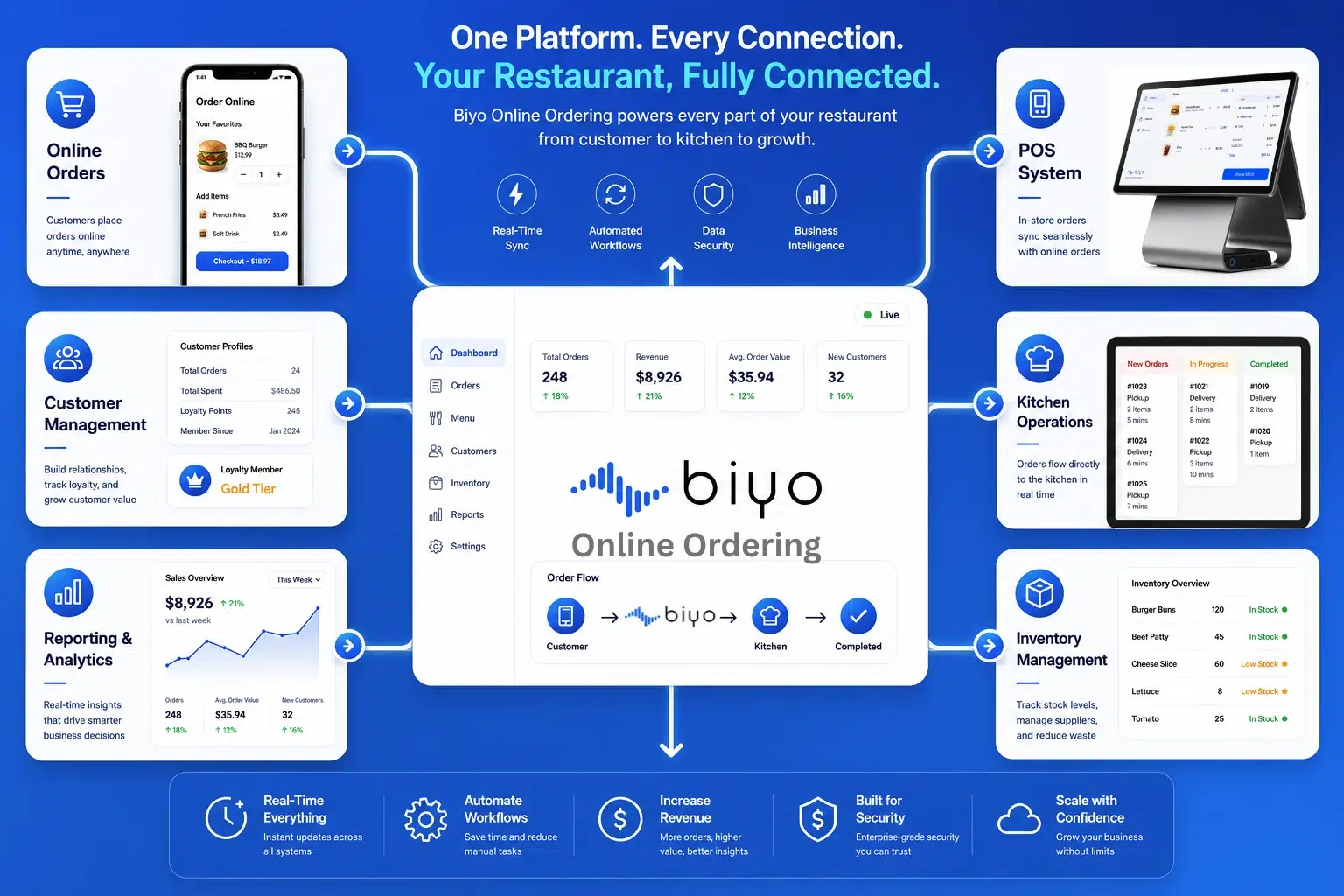
Restaurants looking for a GloriaFood alternative often discover that online ordering is only one piece of the puzzle. While attracting direct orders is important, managing menus, inventory, reporting, customer data, promotions, and order fulfillment through separate systems can quickly create operational challenges. Biyo brings these essential functions together in a single platform designed to help restaurants operate more efficiently while delivering a better customer experience.
With Biyo, restaurants can launch a fully branded online ordering experience that allows customers to place orders directly through the restaurant’s website without relying on third-party marketplaces. Orders flow seamlessly into the restaurant’s operations, helping teams reduce manual work, minimize mistakes, and improve service speed.
Beyond online ordering, Biyo provides integrated tools for inventory management, customer management, reporting, promotions, product management, and restaurant operations. Instead of connecting multiple vendors and paying for additional integrations, restaurants can manage critical business functions from one centralized platform.
Restaurants can also create custom promotions, offer loyalty incentives, manage menu updates, monitor sales performance, and gain valuable insights into customer behavior. This level of visibility helps operators make better business decisions while creating opportunities to increase repeat business and grow revenue.
For restaurants currently evaluating alternatives to GloriaFood, Biyo offers a scalable solution designed to support both current operational needs and future growth. Whether you operate a single location or multiple restaurants, the platform provides the flexibility to manage online ordering and restaurant operations from one connected system.
If you’re exploring a replacement for GloriaFood, you can learn more about Biyo’s online ordering capabilities and restaurant management tools by visiting Biyo POS. Restaurants interested in discussing their online ordering requirements can also schedule a consultation or get started by creating an account through the Biyo signup page.
Frequently Asked Questions
What is the best GloriaFood alternative for restaurants?
The best GloriaFood alternative depends on a restaurant’s needs and goals. Many operators look for solutions that provide online ordering, menu management, customer engagement tools, reporting, and operational visibility. Biyo is one option that combines online ordering with additional business management capabilities.
Why are restaurants looking for GloriaFood alternatives?
Restaurants often explore alternatives because they need additional flexibility, improved reporting, stronger promotional tools, or a more comprehensive approach to managing online orders and business operations.
Can Biyo support direct online ordering?
Yes. Biyo allows restaurants to accept direct online orders through a branded ordering experience, helping businesses maintain stronger customer relationships and provide a seamless ordering process.
Does Biyo support pickup and scheduled orders?
Biyo supports pickup ordering and scheduled ordering options, allowing customers to place orders according to their preferences and schedules.
Can restaurants customize their menus with Biyo?
Yes. Restaurants can manage products, categories, modifiers, pricing, and promotional offers to create a flexible and customer-friendly ordering experience.
Does Biyo provide reporting and analytics?
Biyo includes reporting capabilities that help restaurants track sales activity, evaluate product performance, and gain greater visibility into business operations.
Is online ordering important for restaurant growth?
Online ordering continues to play an increasingly important role in restaurant growth. It provides customers with convenience while helping restaurants increase direct orders, improve customer retention, and create additional revenue opportunities.