Your Playbook: Impact of Menu Pricing on Restaurant Profits

Your Playbook: Impact of Menu Pricing on Restaurant Profits

The restaurant industry thrives on a delicate balance between customer satisfaction and financial sustainability. At the heart of this balance lies menu pricing, which not only dictates immediate sales but also shapes long-term profitability. The impact of menu pricing on restaurant profits is profound, as it influences everything from cost management and customer perception to market positioning and competitive strategy. A well-structured pricing strategy ensures that restaurants cover their food costs, optimize their contribution margins, and maintain a sustainable revenue stream while keeping customers happy. In this article, we will dive deep into the various ways menu pricing decisions affect profitability, drawing connections to practical strategies that operators can apply in real-world settings.

Table of Contents

Menu engineering is the structured process of analyzing menu items based on profitability and popularity. It provides a framework for understanding how the impact of menu pricing on restaurant profits plays out in daily operations. Instead of viewing the menu as just a list of offerings, operators treat it as a strategic tool that can drive sales and improve margins. By categorizing items, optimizing presentation, and adjusting pricing, restaurants unlock hidden opportunities for profit growth.

Understanding Menu Engineering

Menu engineering starts with categorizing each dish into one of four quadrants: stars, plowhorses, puzzles, and dogs. Stars are the most profitable and popular items, and these deserve prominent placement and marketing support. Plowhorses are dishes that sell well but provide low margins, so portion control or pricing adjustments may be required. Puzzles are high-margin items with low sales, which usually need promotional attention or better menu placement. Finally, dogs are low-margin, low-popularity dishes that often need to be retired. This classification allows managers to see beyond surface-level sales numbers and focus on profitability optimization.

The role of data is critical in this process. By analyzing sales reports, contribution margins, and customer preferences, operators can decide which items should stay and which should go. For example, a restaurant might discover that its pasta dish sells well but contributes little to profits because of high ingredient costs. In that case, adjusting portion size or tweaking recipes could improve margins without losing popularity. Over time, this structured evaluation ensures the menu evolves with both customer demand and business goals.

Menu engineering also incorporates design psychology. The way items are placed, highlighted, or paired with visuals directly influences what customers choose. Subtle tactics such as using boxes, bold fonts, or menu anchors can shift customer decisions toward higher-margin items. When executed properly, this results in increased average check sizes and better overall revenue optimization without alienating guests with price hikes.

Role of Pricing Strategy in Menu Engineering

A pricing strategy is not just about setting numbers; it’s about aligning each item’s price with profitability goals, customer psychology, and market conditions. For example, lowering the price of a puzzle item might increase its popularity enough to transform it into a star, while adjusting portion sizes of plowhorses can reduce food costs and improve margins without raising prices. This interplay between pricing and categorization is what makes menu engineering such a powerful tool.

Strategic pricing also supports market positioning. If a restaurant operates in a competitive area, pricing decisions must reflect both customer expectations and perceived value. For instance, if a nearby competitor offers a burger for $12, pricing your premium burger at $15 only works if your offering includes superior quality, presentation, or customer experience. Without this balance, even well-designed menus can fail to drive profitability. The key is finding the sweet spot where pricing maintains competitiveness while protecting margins.

Real-world examples illustrate this concept well. A casual dining chain that raised prices by only 2% across select menu categories saw a 6% improvement in contribution margins within a year. The small adjustment, carefully integrated with upselling strategies, led to significant overall growth. Such cases highlight how precise pricing decisions under menu engineering principles create long-term profitability.

Influence of Menu Design on Customer Behavior

Menu design is more than an aesthetic choice; it’s a psychological driver of customer behavior that directly influences the impact of menu pricing on restaurant profits. By strategically organizing items and employing visual hierarchy, restaurants can guide customers toward high-margin dishes. For instance, placing profitable items in the “golden triangle” — the top right, top left, and center of the menu — increases their likelihood of being chosen. Customers often skim menus quickly, so capturing attention in these zones is essential for profitability.

Psychological tactics such as decoy pricing further enhance this effect. Introducing a high-priced dish on the menu makes mid-tier options appear more affordable, pushing customers toward those items. This approach increases average ticket size while maintaining customer satisfaction, as guests feel they are making a smart financial choice. For example, a steak priced at $45 makes a $28 salmon dish look like a bargain, even if the salmon has the highest margin on the menu.

Restaurants that consistently apply these design techniques see measurable improvements in sales mix. Highlighting specials, using professional food photography, or incorporating storytelling about ingredients also boosts perceived value. Over time, this alignment of pricing and design creates a self-reinforcing cycle: customers feel they’re receiving value, while restaurants see stronger margins and revenue growth.

Quadrant chart illustrating the impact of menu pricing on restaurant profits using menu engineering

Customer Perception and Value Positioning

The perception of value is one of the most influential factors in restaurant pricing success. Customers don’t just evaluate food based on taste; they consider presentation, portion size, ambiance, and overall experience. When restaurants fail to align menu pricing with perceived value, customer loyalty suffers. On the other hand, when guests feel that prices reflect quality, they are willing to pay more, boosting margins and repeat business.

Value Perception and Pricing Sensitivity

Value perception hinges on the relationship between price and experience. If a meal is priced at $25 but delivers an experience comparable to a $15 option, customers may feel overcharged. Conversely, if the same meal is presented in an upscale environment with exceptional service, the $25 price feels justified. This shows that the impact of menu pricing on restaurant profits is inseparable from the overall guest experience. Customers who perceive value are more likely to return, recommend the restaurant, and spend more on future visits.

Price sensitivity varies across demographics and customer segments. For example, younger diners may be more budget-conscious, while business professionals dining for client meetings may prioritize quality and ambiance over price. Restaurants that study their target audience and tailor menu pricing accordingly gain a competitive advantage. Demand forecasting plays an important role here by predicting how different groups will respond to price adjustments, ensuring that value perception stays consistent across customer segments.

Real-world success stories back this up. A mid-range steakhouse that rebranded its menu to emphasize locally sourced ingredients was able to raise average menu prices by 10% without customer pushback. The improved value perception came not from changing the food itself, but from reframing the story behind it. This highlights how customer perception, when properly managed, supports stronger profitability.

Psychological Pricing in Restaurants

Psychological pricing techniques play a vital role in shaping customer choices. Charm pricing, where an item is priced at $9.99 instead of $10, is a classic example. The difference may seem small, but studies show that customers perceive it as a significantly lower cost. This increases sales volume without sacrificing much in terms of margins. Similarly, tiered pricing, where items are offered in different portion sizes at ascending prices, gives customers a sense of choice and control, often leading them to pick the middle option, which usually has the best margin.

Anchoring is another common psychological tactic. By introducing a high-priced premium option, restaurants make other items seem more affordable in comparison. For example, listing a $60 lobster platter alongside a $35 salmon dish makes the salmon feel like a smart choice, even if the margin is strongest on the salmon. This strategy not only enhances profitability but also strengthens customer perception of value. Customers feel they are making savvy decisions, while the restaurant benefits from optimized sales mix.

These techniques are not manipulative but strategic tools to guide behavior. When combined with excellent service and quality food, they reinforce customer trust and loyalty. Restaurants that use psychological pricing in harmony with broader menu strategies often see higher average checks and stronger contribution margins, proving that psychology is a central pillar in pricing success.

Market Positioning and Competitive Pricing

Market positioning defines how a restaurant competes within its local and broader marketplace. Fine-dining restaurants can charge premium prices because they offer exclusivity, ambiance, and superior service. In contrast, quick-service restaurants must focus on efficiency and affordability, relying on volume sales to maintain profitability. This distinction underscores the importance of aligning menu pricing with market expectations and brand identity.

Competitive pricing requires operators to study their rivals. If competitors are offering similar dishes at lower prices, restaurants need to justify their pricing through value-adds like larger portions, unique flavors, or better service. For example, a pizza chain may charge slightly more than its competitor but include free dipping sauces or superior toppings, which customers perceive as worth the extra cost. This approach strengthens both revenue optimization and loyalty.

Long-term market positioning relies on continuous evaluation. Consumer trends, seasonal changes, and economic conditions all influence how competitive pricing strategies must adapt. Restaurants that fail to adjust risk losing customers, while those that balance competitiveness with strong margins achieve sustainable success. The ability to align market positioning with pricing strategy is therefore critical for profitability.

Food Cost Control and Profit Margins

Profit margins in restaurants are notoriously thin, often ranging between 3% and 5%. This makes controlling costs essential. Food cost percentage, portion management, and waste reduction all play significant roles in determining how effectively menu pricing translates into profits. Even the most appealing pricing strategy will fail if operational costs spiral out of control.

Portion Control and Food Waste Reduction

Portion control is one of the most practical methods for managing food costs. Over-portioning not only increases costs but also contributes to food waste, which has become a growing concern for customers who value sustainability. By standardizing portions, restaurants achieve consistency in quality and presentation while keeping ingredient costs predictable. Staff training and tools like portion scoops, scales, and pre-measured containers make this possible on a daily basis.

Food waste reduction extends beyond portion sizes. It involves tracking which dishes generate leftovers and adjusting recipes or menu offerings accordingly. For example, if a restaurant consistently discards salad garnishes, it might consider simplifying plating or offering garnishes as optional add-ons. These small changes significantly reduce waste, which improves margins and aligns with customer expectations of eco-friendly practices. As a result, food cost percentage decreases, while profitability increases.

Technology also plays a role here. Advanced POS systems track ingredient usage in real time, allowing managers to monitor cost of goods sold (COGS) and spot inefficiencies quickly. Restaurants that adopt these tools see measurable improvements in their profit margins, as data-driven decisions eliminate guesswork from cost management.

Food Cost Percentage and Profit Margins

Food cost percentage (FCP) is the ratio of ingredient costs to menu price, and it’s a vital metric in restaurant profitability analysis. Ideally, FCP should remain between 28% and 32% for most establishments. If it rises higher, margins shrink rapidly, even if sales volume remains steady. Restaurants that ignore FCP risk seeing their contribution margins erode to unsustainable levels, making profitability nearly impossible to maintain.

Monitoring FCP requires ongoing adjustments. Rising ingredient prices, seasonal availability, and supplier negotiations all affect costs. For instance, if avocado prices spike, a restaurant serving avocado-based dishes may need to either raise menu prices or re-engineer recipes to maintain margins. This flexibility ensures that the impact of menu pricing on restaurant profits remains positive despite external cost pressures.

Regular financial reporting supports this process. Weekly or monthly reports highlight trends and allow managers to intervene before costs spiral. By combining this data with pricing adjustments, restaurants protect their margins and sustain long-term profitability, even during economic challenges.

Upselling Opportunities and Sales Mix Optimization

Upselling is an underutilized but powerful way to improve profitability without changing base menu prices. Servers who are trained to recommend premium add-ons — such as wine pairings, dessert specials, or upgraded sides — can significantly increase average check sizes. Unlike price hikes, upselling adds perceived value for customers while improving contribution margins. For example, suggesting a $4 specialty coffee instead of a regular $2 coffee doubles revenue while only slightly increasing food cost percentage.

Sales mix optimization takes this further by analyzing which items contribute most to profits. If high-margin items are underperforming, restaurants can adjust menu design or server training to highlight them. Over time, these shifts increase the share of profitable items in total sales, raising overall margins. For instance, promoting a $15 pasta dish with a 70% contribution margin over a $12 burger with a 50% contribution margin can substantially change profitability.

Upselling and sales mix optimization also strengthen customer relationships. Guests often appreciate thoughtful recommendations that enhance their experience. This combination of customer satisfaction and revenue growth creates a sustainable cycle of profitability, showing that strategic menu pricing works best when paired with proactive sales tactics.

Dynamic Pricing and Competitive Strategy

Static pricing models are giving way to dynamic approaches that adjust based on demand, competition, and external factors. Airlines and hotels have long used these strategies, and now restaurants are beginning to adopt them to improve profitability. The impact of menu pricing on restaurant profits grows even stronger when operators embrace flexible models that account for real-time conditions.

Demand Forecasting in Restaurants

Demand forecasting predicts customer traffic and purchasing behavior by analyzing historical sales data, seasonal trends, and external factors like holidays or local events. This information allows restaurants to plan inventory, staffing, and pricing strategies more accurately. For example, a café that knows weekday mornings are slower may introduce discounted breakfast bundles to stimulate demand, while maintaining full prices during weekend rushes.

Forecasting also reduces waste by aligning supply with demand. A restaurant expecting lower foot traffic during rainy days may order fewer perishable items, reducing food waste and improving margins. At the same time, pricing promotions during off-peak times attract price-sensitive customers without eroding profitability during high-demand periods. This precision ensures that each pricing decision strengthens overall restaurant performance.

Modern POS systems enhance forecasting by integrating real-time sales data with predictive analytics. Restaurants using these systems can quickly identify patterns, experiment with promotions, and adapt menu pricing to maximize revenue. The result is a flexible pricing model that supports both customer satisfaction and profitability.

Competitive Pricing Adjustments

Competitive pricing is essential for survival in crowded markets. Restaurants that price too high risk losing customers to more affordable alternatives, while those that price too low sacrifice margins. Competitive adjustments involve benchmarking against rivals while emphasizing unique selling points to justify pricing. For example, if two coffee shops offer similar lattes, the one with superior ambiance and customer service can charge slightly more without losing customers.

Competitive monitoring should be ongoing. Seasonal promotions, new market entrants, and shifts in consumer demand all require restaurants to reassess their pricing strategies. For instance, when plant-based alternatives surged in popularity, many restaurants introduced premium vegan dishes at higher prices, justified by novelty and demand. These adjustments not only matched consumer trends but also enhanced contribution margins.

Ultimately, competitive pricing is not about matching competitors dollar for dollar but about aligning perceived value with market expectations. Restaurants that achieve this alignment can maintain loyalty while protecting profitability, even in highly competitive environments.

Adopting Flexible Pricing Models

Flexible pricing models adapt to customer behavior and maximize revenue opportunities. Happy hours, early-bird specials, and loyalty discounts are common examples. These promotions fill empty seats during slow periods while maintaining premium pricing during peak hours. By strategically segmenting demand, restaurants capture revenue that would otherwise be lost.

Another flexible approach is bundling. Offering combo meals or family packages at discounted rates increases perceived value while optimizing sales mix. Although individual items may have lower margins in bundles, the overall ticket size grows, improving total profitability. For instance, a pizza restaurant may sell more drinks and sides by bundling them with a main dish, boosting contribution margins overall.

Loyalty programs also serve as flexible pricing tools. By rewarding repeat visits with discounts or exclusive offers, restaurants encourage long-term engagement. This predictable demand supports revenue optimization and allows for better demand forecasting. Over time, flexibility transforms menu pricing into a dynamic asset rather than a static liability.

Profitability Analysis and Long-Term Growth

Short-term pricing adjustments are valuable, but sustainable success requires ongoing analysis and long-term planning. Profitability analysis ensures that the impact of menu pricing on restaurant profits remains positive over time. By evaluating contribution margins, financial reporting, and alignment with business goals, restaurants secure their future against market volatility.

Contribution Margin Analysis

Contribution margin measures how much each menu item contributes to covering fixed costs and generating profit. Unlike food cost percentage, which focuses solely on expenses, contribution margin highlights profitability per unit sold. For instance, a dish with a $5 food cost and a $15 sale price has a $10 contribution margin, making it a strong candidate for promotion. Understanding this metric allows restaurants to prioritize high-performing items and adjust or eliminate weak ones.

Contribution margin analysis also clarifies trade-offs between volume and profitability. A low-margin dish that sells in high quantities may contribute more to profits than a high-margin item with poor sales. By comparing both factors, operators make informed decisions about which items deserve menu space and marketing focus. This analysis directly shapes menu engineering and ensures that every pricing decision supports profitability goals.

Real-world examples demonstrate the power of contribution margin analysis. A quick-service chain that removed underperforming items freed up kitchen resources and improved margins across the board. Customers barely noticed the change, but the business saw measurable profit growth. This underscores the importance of aligning pricing and menu decisions with contribution data.

Financial Reporting and Performance Tracking

Financial reporting gives restaurant owners the visibility they need to track profitability in real time. Reports that detail COGS, sales mix, and revenue streams provide a comprehensive picture of performance. Without this data, pricing decisions become reactive and risk undermining profitability. By contrast, structured reporting empowers proactive adjustments that strengthen financial health.

Modern POS systems automate reporting and integrate with accounting platforms, saving operators valuable time. These systems provide clear insights into trends such as seasonal fluctuations, ingredient price spikes, or shifts in customer behavior. For instance, if reports show declining sales of high-margin items, managers can intervene with promotions or redesigns to bring performance back on track.

Regular reporting also enhances transparency and accountability. Owners, managers, and investors gain confidence in the restaurant’s ability to adapt and sustain growth. Ultimately, financial reporting makes menu pricing a dynamic process rather than a static decision, supporting long-term profitability.

Aligning Pricing Strategy with Long-Term Goals

Menu pricing should not be viewed solely through the lens of today’s profits. Long-term growth requires strategies that balance immediate revenue optimization with future goals such as expansion, branding, and customer retention. For instance, an upscale restaurant planning to expand into new markets may price slightly lower initially to build a loyal customer base, then gradually raise prices as brand recognition grows.

Alignment with long-term goals also helps restaurants withstand economic downturns. During inflationary periods, strategic adjustments to portion sizes, upselling, and promotions allow businesses to preserve loyalty while managing costs. These strategies not only protect margins but also safeguard brand reputation by avoiding sudden price hikes that alienate customers.

Restaurants that take a long-term view of pricing enjoy greater resilience and adaptability. They see menu pricing not as a one-time decision but as an evolving strategy that shapes customer relationships and financial outcomes. This forward-looking approach ensures the impact of menu pricing on restaurant profits remains positive for years to come.

Comparison table showing how food cost and margins affect the impact of menu pricing on restaurant profits

How Biyo POS Helps Optimize Pricing

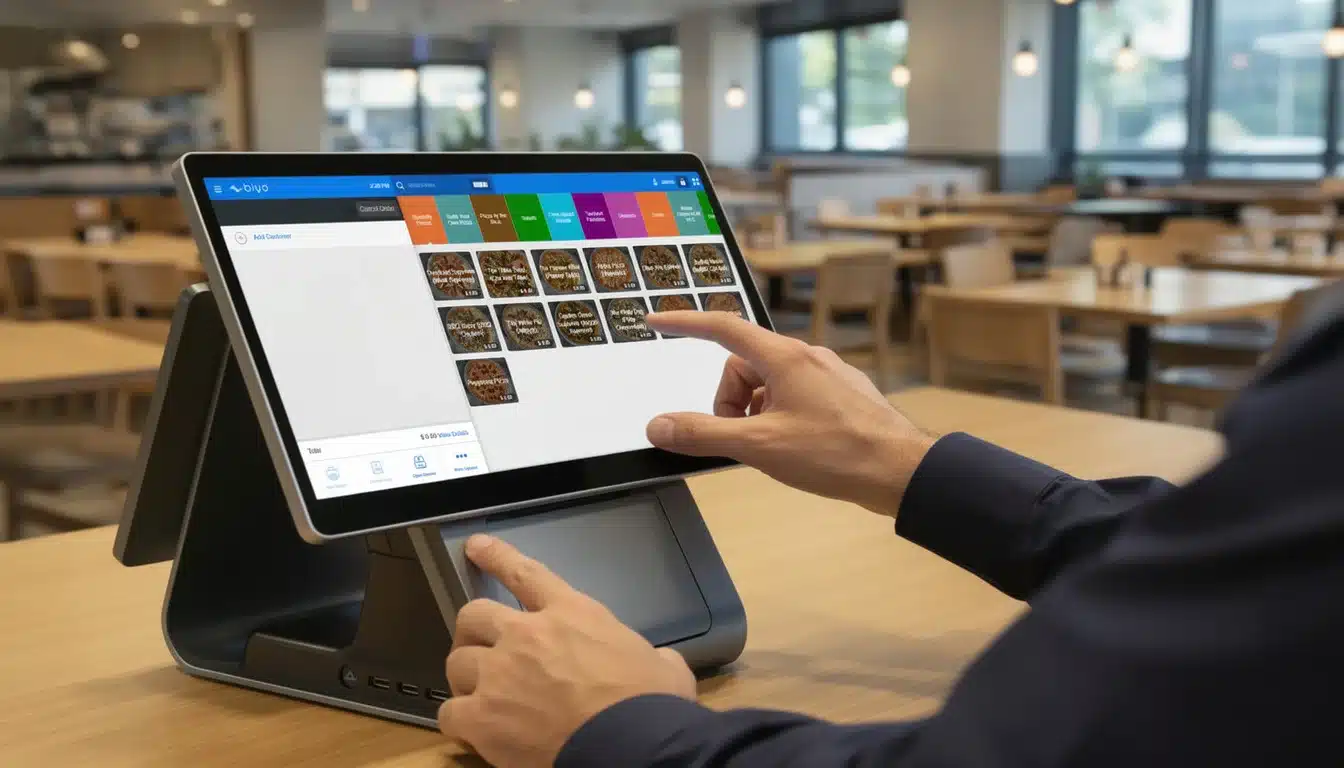
Biyo POS empowers restaurants to transform their pricing strategies into profitable realities. With features like real-time sales tracking, demand forecasting, and automated financial reporting, Biyo POS gives operators the insights needed to refine menu pricing. The platform integrates inventory control, upselling tools, and profitability analysis, helping restaurants achieve optimal performance while minimizing food cost percentage and waste.

By using Biyo POS, restaurants can identify their most profitable items, adjust portion sizes, and experiment with dynamic pricing models. Managers can schedule a call to see how the platform supports revenue optimization and sign up to start using the system. From cost tracking to contribution margin analysis, Biyo POS simplifies complex processes and ensures that menu pricing decisions consistently improve profitability.

FAQ

Why does menu pricing matter so much for restaurant profits?

Menu pricing directly affects profit margins, customer perception, and sales volume. Small adjustments can significantly change contribution margins and overall revenue optimization.

How can restaurants balance competitive pricing with profitability?

By analyzing competitor models while focusing on value perception, restaurants can maintain loyal customers. Portion control and upselling opportunities help preserve margins without heavy discounts.

What is the role of financial reporting in menu pricing?

Financial reporting tracks food costs, sales mix, and revenue performance. It provides the data needed for profitability analysis and helps owners make proactive pricing decisions.

Related Posts