Creating the perfect ice cream shop floor plan requires more than just picking a fun theme or tasty flavors. The layout influences everything—from customer flow and seating arrangements to equipment placement and overall ambiance. A well-thought-out plan optimizes retail space, boosts workflow efficiency, and enhances the customer experience. Whether you’re designing a small parlor or a bustling dessert shop, understanding how to balance functionality with aesthetic appeal will make your shop stand out and operate smoothly.
Table of Contents
- Planning the Ideal Ice Cream Shop Layout
- Equipment Placement and Workflow Efficiency
- Customer Flow and Seating Arrangements
- Shop Zoning and Storage Optimization
- Interior Design and Ambience
- Biyo POS for Ice Cream Shop Management
- FAQ
Planning the Ideal Ice Cream Shop Layout
Starting with a solid plan sets the foundation for a successful ice cream shop floor plan. This stage involves considering the overall space, customer needs, and operational goals. Retail floor planning isn’t just about fitting everything into a space; it requires thoughtful zoning that separates customer areas from food preparation zones, optimizing both service speed and comfort.
Understanding Retail Floor Planning Basics
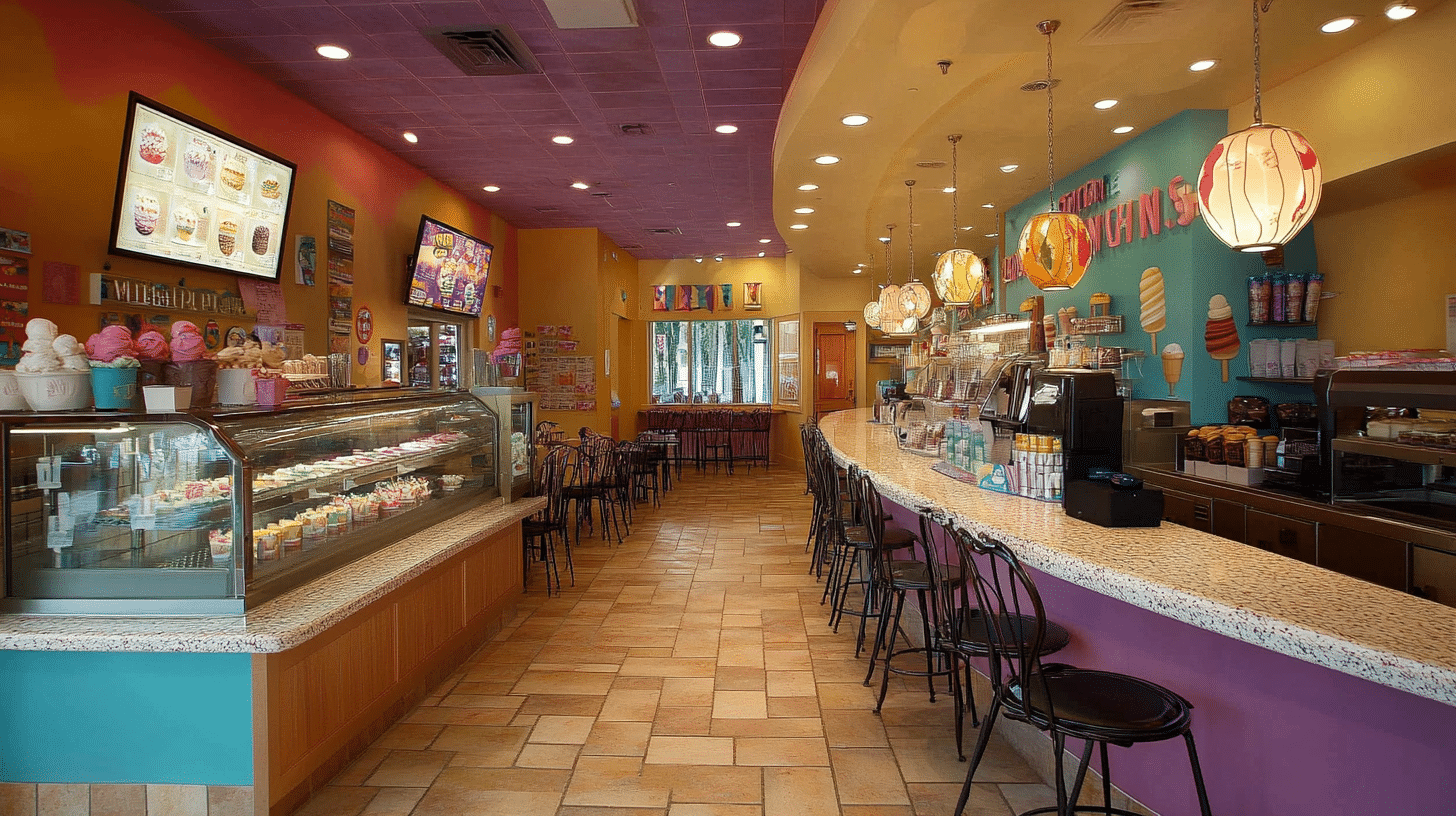
Retail floor planning focuses on maximizing the use of available space while ensuring an intuitive flow. In an ice cream shop, this means positioning counters, freezers, and seating so customers can easily see the offerings and move smoothly from entry to service and seating. For example, placing the display freezer near the entrance grabs attention and encourages impulse buys, but it shouldn’t block traffic paths.
Good retail planning also considers compliance with accessibility standards such as ADA requirements. This ensures all customers can comfortably navigate your shop, expanding your clientele and enhancing your brand’s reputation. A smart floor plan creates distinct zones for ordering, seating, and exit, minimizing bottlenecks.
Finally, integrating flexibility into your design helps adapt to seasonal demands or menu changes. Modular counters or movable seating can transform your space quickly. This adaptability aligns perfectly with trends in retail space optimization, ensuring your ice cream parlor stays relevant and functional.
Incorporating Shop Layout Templates and Design Software
Using professional shop layout templates or design software can make planning more accurate and efficient. These tools let you visualize the floor plan in 2D or 3D, helping you experiment with different equipment placements and customer flow designs without costly mistakes. Many design programs also offer features to calculate seating capacity or highlight potential workflow bottlenecks.
For small shop design, these tools are especially valuable, as every square foot matters. They allow you to maximize shop space utilization, balancing storage, seating, and service counter areas without feeling cramped. This precision helps you stay within budget and meet local regulations effortlessly.
When you leverage shop design software, you gain insight into shop workflow efficiency by simulating real-world operations. This way, you can adjust your plan before construction begins, saving time and money. The ability to share digital layouts also helps align teams from designers to contractors, ensuring your ice cream shop floor plan matches your vision perfectly.
Exploring Current Shop Design Trends
Ice cream shop floor plans reflect broader shop design trends that focus on customer experience and operational efficiency. For example, open-concept layouts that highlight the production process create transparency and build trust with customers. You might place your commercial kitchen layout partially visible to engage visitors while maintaining hygiene.
Another trend involves integrating branding through layout, using color schemes, lighting, and décor that reinforce your shop’s identity. This makes the space memorable and inviting, encouraging repeat visits. In addition, incorporating sustainable materials and energy-efficient equipment aligns with growing consumer preferences and reduces operating costs.
Shop design inspiration often comes from blending functionality with creativity. Minimalist layouts combined with striking ambient lighting plans and unique display case arrangements provide both comfort and style. Following these trends keeps your ice cream shop floor plan fresh and competitive in a crowded market.

Equipment Placement and Workflow Efficiency
Effective equipment placement is critical in crafting an ice cream shop floor plan that supports smooth operations. From display freezers to service counters and commercial kitchen setups, each element should enhance staff productivity and customer satisfaction. The goal is to reduce unnecessary movement and create a logical work triangle that connects key areas.
Optimizing Display Freezer Positioning
Display freezers are often the star attraction in an ice cream shop, showcasing colorful flavors that tempt customers. Positioning them where customers can easily see without blocking aisles is vital. Placing freezers parallel to the main customer path encourages browsing while maintaining clear traffic flow.
In addition to location, consider the visibility and lighting of the display freezer. Bright LED lighting and clear glass can highlight product quality and freshness, influencing purchase decisions. Meanwhile, easy access for staff helps speed up service and restocking, supporting workflow efficiency.
Lastly, energy-efficient models reduce operational costs and support sustainability goals. Careful planning of electrical outlets and ventilation in the freezer zone ensures safety and optimal performance, reflecting best practices in commercial kitchen planning.
Designing the Service Counter Workflow
The service counter acts as the hub of your ice cream shop. Its design must balance welcoming customers, providing clear menu visibility, and facilitating fast order processing. A well-laid-out counter keeps service staff comfortable and efficient, which directly impacts customer satisfaction.
Consider the order in which customers approach the counter, pay, and receive their ice cream. Incorporating separate areas for order taking, payment, and pickup reduces congestion. Using point-of-sale technology, like Biyo POS, enhances workflow by speeding transactions and managing inventory in real time.
The counter’s height and materials also influence ergonomics and branding. Durable surfaces simplify cleaning, while custom designs reflect your shop’s style. By paying attention to these details, your ice cream shop floor plan supports both function and form.
Implementing Work Triangle Design Principles
The work triangle connects three key points: preparation, service, and storage areas. In an ice cream shop, this typically involves the freezer, service counter, and back storage or kitchen. Creating a compact, efficient triangle minimizes staff movement and increases speed during busy hours.
When designing this triangle, avoid placing stations too close, which can cause crowding, or too far apart, which wastes time. For instance, placing the storage room near the service counter helps replenish stock quickly. At the same time, positioning the kitchen nearby reduces delays in preparing toppings or other desserts.
This principle improves shop workflow efficiency and staff satisfaction, which in turn leads to better customer service. Careful measurement and mockups during planning ensure the work triangle complements your shop zoning perfectly.
Customer Flow and Seating Arrangements
Designing the right customer flow and seating arrangements is essential in an ice cream shop floor plan. These elements influence how comfortable your visitors feel and how long they stay. A smooth flow encourages higher sales and repeat business by enhancing the overall experience.
Planning Shop Traffic Flow
Shop traffic flow dictates how customers move from entry through ordering to seating or exiting. An efficient flow avoids bottlenecks and confusion, especially during peak hours. For example, creating clear, wide aisles directs customers naturally toward ordering stations and seating.
Using visual cues like floor markings or signage can guide visitors without feeling intrusive. Meanwhile, separating incoming and outgoing traffic paths minimizes collisions and crowding. For small shop design, careful flow planning becomes even more crucial to prevent a cramped feeling.
By managing traffic well, your shop feels inviting and organized, enhancing customer satisfaction. It also boosts operational efficiency by preventing delays and allowing staff to serve more people effectively.
Designing Comfortable Seating Arrangements
Seating arrangements should maximize capacity without sacrificing comfort. Consider a mix of seating options such as booths, tables, and counters. This variety appeals to different customer groups, from families to solo visitors.
Spacing is key: leaving enough room between tables ensures privacy and ease of movement. Incorporating flexible seating options like stackable chairs or movable tables helps adapt to different group sizes and special events. Additionally, seating near windows or decorated walls can enhance the ambiance and customer experience.
Planning seating capacity with customer flow in mind ensures a balanced environment where people feel welcome, relaxed, and eager to return. The right layout turns your ice cream shop into a community hotspot rather than just a quick stop.
Incorporating ADA Compliance Layouts
Ensuring your ice cream shop meets ADA compliance is not only a legal obligation but also a way to welcome all customers. This involves providing wheelchair-accessible paths, tables, and counters. Entrances should be step-free and wide enough to accommodate mobility devices.
Restrooms, if included, must also meet accessibility standards, with grab bars and enough maneuvering space. Planning these elements early in your floor plan saves costly renovations later and projects an inclusive brand image.
Beyond regulations, ADA compliance enhances shop traffic flow by creating clear, uncluttered pathways for everyone. Thoughtful design ensures no customer feels excluded or uncomfortable while visiting your shop.
Shop Zoning and Storage Optimization
Proper shop zoning and storage are fundamental in creating an effective ice cream shop floor plan. Zoning separates different activities, while optimized storage maintains inventory control and cleanliness. Both contribute to a seamless operation behind the scenes.
Effective Shop Zoning Strategies
Shop zoning divides the floor plan into distinct areas such as service, seating, preparation, and storage. Clearly defined zones reduce confusion among staff and customers and improve safety by keeping hazardous areas separated. For instance, placing the commercial kitchen away from seating minimizes noise and odors.
When zoning, consider workflow connections between zones to maintain efficiency. For example, the dessert preparation zone should be adjacent to the service counter for quick delivery. Meanwhile, seating zones can be cozy and inviting, physically separated with partitions or plants to enhance comfort.
By thoughtfully zoning your shop, you create a space that works well for employees and delights customers, driving better business outcomes.
Maximizing Storage Space Utilization
Storage optimization prevents clutter and ensures ingredients and supplies are always at hand. Use vertical shelving to save floor space and clearly label all storage areas. Refrigerated storage should be near the preparation zone to maintain product freshness and reduce waste.
For small shop design, compact storage units with easy access help maintain order without crowding the workspace. Smart inventory management integrated with systems like Biyo POS allows real-time tracking, reducing overstock and shortages.
Good storage practices also contribute to shop workflow efficiency by minimizing time spent searching for tools or ingredients. Organized storage creates a professional atmosphere and supports health code compliance.
Integrating Commercial Kitchen Planning
Your commercial kitchen layout plays a major role in the overall floor plan. It must accommodate equipment, prep areas, and staff movement efficiently. Placing heavy equipment on sturdy floors and near necessary utilities improves safety and functionality.
Incorporate work surfaces at comfortable heights and ensure ample lighting to reduce fatigue. Ventilation systems should remove heat and odors effectively without interfering with customer areas. Efficient kitchen design supports quick service and high-quality products.
Linking kitchen workflow with service counter and storage zones reduces delays. Planning these connections during your ice cream shop floor plan phase avoids costly changes later and helps maintain a consistent customer experience.
Interior Design and Ambience
The interior design of your ice cream shop influences customer moods and perceptions. A well-crafted ambience, supported by thoughtful layout choices, invites customers to linger and share their experience. Lighting, décor, and branding through layout all play crucial roles.
Crafting an Ambient Lighting Plan
Lighting can transform your space from functional to magical. Use a combination of natural light, overhead fixtures, and accent lights to create a warm, welcoming environment. Adjustable lighting near display freezers enhances product visibility, while softer lights in seating areas encourage relaxation.
Energy-efficient LED bulbs reduce costs and support sustainability, a value many customers appreciate. Strategically placed lighting can also highlight branding elements or artwork, enhancing the shop’s personality. Planning the lighting early helps coordinate with electrical and ceiling layouts, ensuring a polished finish.
Proper lighting also improves safety by illuminating pathways and counters clearly. It sets the tone for the customer experience, making your shop feel inviting day and night.
Showcasing Shop Décor Ideas That Align with Layout
Décor is an extension of your shop’s personality and can be integrated seamlessly with the floor plan. Consider wall colors, furniture styles, and display arrangements that complement your brand message. For instance, retro-inspired décor can evoke nostalgia, while modern minimalism appeals to trend-conscious visitors.
Display case arrangement plays a part here, allowing you to highlight seasonal flavors or promotions with eye-catching setups. Use shelving and signage creatively to add visual interest without crowding the space. Personal touches like local artwork or themed decorations enhance the uniqueness of your ice cream parlor interior.
Combining décor with functional layout ensures that beauty and practicality coexist. This balance helps create a memorable space that customers want to revisit and share with friends.
Using Shop Branding Through Layout
Your ice cream shop floor plan can tell a story about your brand before customers even taste your product. Using color-coded zones, thematic furniture, and consistent signage helps reinforce your identity. For example, a bright, playful palette can communicate fun and family-friendliness, while sleek, muted tones suggest sophistication.
Branding through layout extends to the choice of materials and textures. Natural woods and eco-friendly finishes align with sustainability-minded brands. Custom counters and display freezers can feature your logo or tagline, creating cohesive visual branding throughout the space.
This intentional approach builds customer loyalty by creating a space that feels authentic and memorable. Your layout then becomes part of your marketing strategy, attracting your ideal clientele.
Biyo POS for Ice Cream Shop Management
To complement your well-designed ice cream shop floor plan, integrating a robust point-of-sale system like Biyo POS can revolutionize your operations. Biyo POS offers easy-to-use order management, inventory tracking, and sales analytics tailored for retail and food service businesses.
With Biyo POS, you can streamline the service counter workflow, speeding up transactions during busy periods. Its intuitive interface allows staff to manage complex orders quickly, including customizations and promotions. Meanwhile, real-time inventory updates help prevent shortages and reduce waste, essential for managing frozen goods and toppings.
Furthermore, Biyo POS supports customer experience design by enabling loyalty programs and personalized promotions based on purchase history. By integrating this technology with your shop layout and workflow, you ensure a seamless connection between physical design and digital efficiency, helping your ice cream shop thrive.
FAQ
What is the most important factor in designing an ice cream shop floor plan?
The most important factor is balancing customer flow with efficient workflow for staff. Ensuring clear zones for ordering, seating, and food preparation while maximizing space use creates a smooth, enjoyable experience for everyone.
How can I optimize seating in a small ice cream shop?
Use flexible seating like movable tables and stackable chairs. Incorporate a mix of seating types to accommodate different group sizes, and maximize vertical space with wall-mounted shelves or counters to keep the floor open.
Why is equipment placement critical in an ice cream shop?
Proper equipment placement reduces staff movement, speeds service, and maintains product quality. For instance, placing display freezers near the service counter improves access and visibility for both customers and employees.
How does ADA compliance affect shop layout?
ADA compliance requires accessible entrances, paths, and seating areas for all customers. Integrating these elements improves shop traffic flow and inclusivity, expanding your customer base.
What features of Biyo POS are beneficial for ice cream shops?
Biyo POS offers fast order processing, inventory management, and customer loyalty programs, all crucial for efficient service and enhanced customer experience in busy ice cream parlors.