You’ve poured your time, energy, and capital into building your restaurant. The interiors are ready, the kitchen is set, and your team is in place. But before opening your doors to the public, there is one critical step that determines whether your launch succeeds or struggles—the soft opening.
A soft opening is not just a pre-launch event. It is a controlled operational test that allows you to experience your restaurant exactly as customers will, but without the pressure of public scrutiny. This is where you identify flaws, refine systems, and make adjustments before your reputation is on the line.
Restaurants that skip this phase often end up fixing problems in front of paying customers. Those that execute it properly enter the market with confidence, consistency, and a far stronger first impression.
Table of Contents
- What Is a Soft Opening?
- Why a Soft Opening Is Critical
- Planning Your Soft Opening Strategy
- Executing the Soft Opening
- Turning Feedback Into Improvements
- How Biyo Helps You Execute Smoothly
- Common Questions About Soft Openings
What Is a Soft Opening?
A soft opening is a limited, invite-only preview of your restaurant before the official grand opening. It allows you to simulate real service conditions with a controlled audience, giving you the opportunity to evaluate how your kitchen, staff, and systems perform under pressure.
Unlike a grand opening, which is designed to attract attention and generate buzz, a soft opening is focused on testing and refinement. It is where mistakes are expected, feedback is encouraged, and improvements are made before scaling operations.
Think of it as a live rehearsal. Every element—from order taking to food delivery and payment processing—is tested in real time, allowing you to uncover issues that cannot be identified during planning alone.
Why a Soft Opening Is Critical
Launching a restaurant without a soft opening is a high-risk move. Operational issues that seem minor during preparation often become major problems during live service. Delays in the kitchen, miscommunication between staff, or inefficient layouts can quickly damage customer experience.
A soft opening reduces this risk by allowing you to identify and resolve these problems early. It provides a realistic environment where your team can practice, adapt, and improve before facing a full audience.
It also helps align your team. Service staff, kitchen crew, and management must operate as a single unit. A soft opening builds this coordination through real interaction, not theoretical training.
From a business perspective, this phase protects your reputation. First impressions matter, and negative early reviews can be difficult to recover from. Fixing issues privately ensures that your public launch reflects your best performance.
Planning Your Soft Opening Strategy
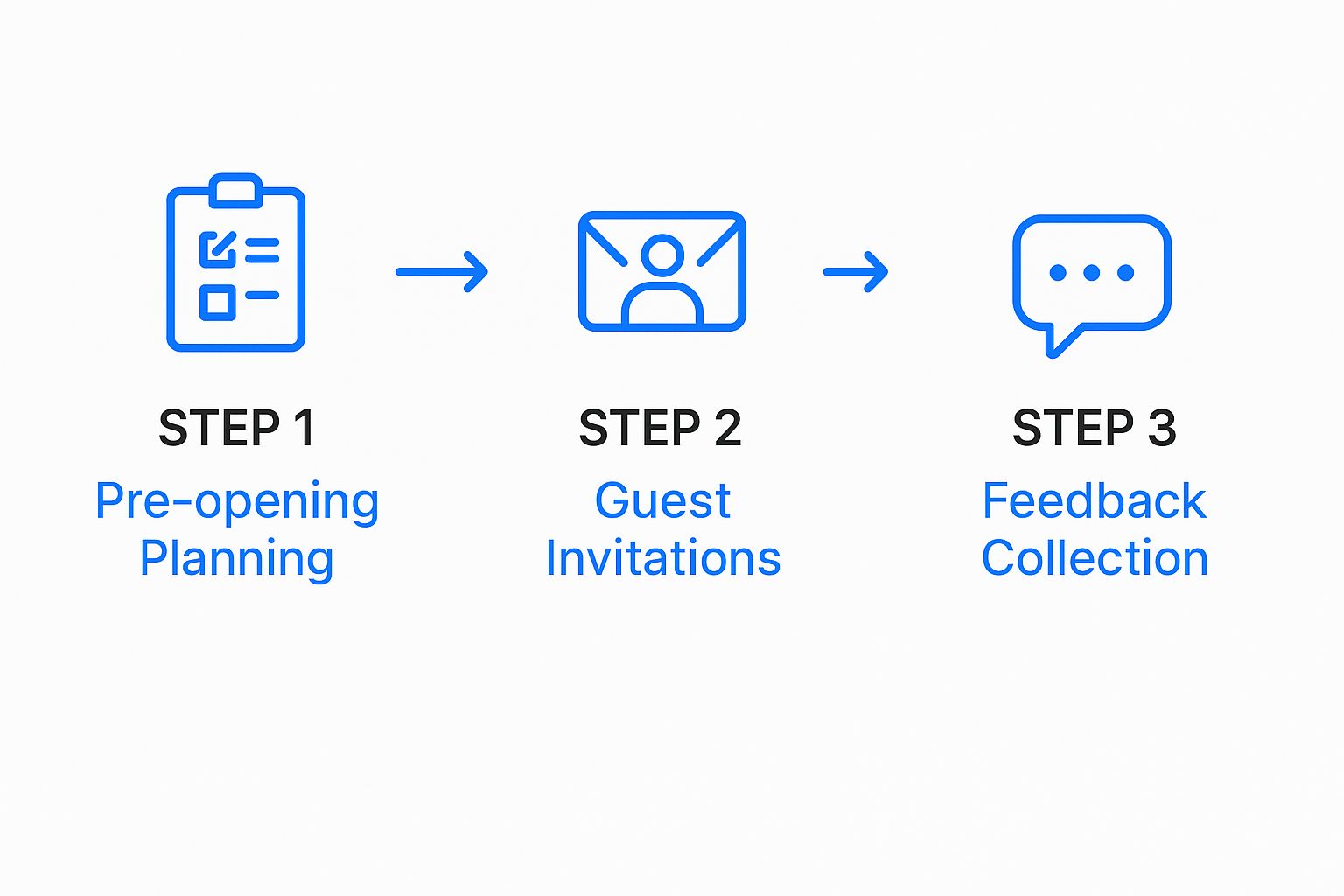
A successful soft opening begins with clear objectives. You need to define what you are testing and what outcomes you expect. Without this clarity, the event becomes unfocused and less valuable.
Your objectives might include evaluating kitchen efficiency, testing menu execution, or assessing service quality. Each goal should guide how you structure the event, from the number of guests to the menu selection.
Guest selection is equally important. Your invite list should include people who can provide honest and constructive feedback. This typically includes friends, family, local business owners, and a limited number of community influencers.
Communication is critical. Guests should understand that this is a trial run and that their feedback is valuable. Setting this expectation encourages more useful insights and reduces pressure on your team.
Planning should also include operational testing. Your ordering system, payment processing, and kitchen workflow must be fully active during the event. This ensures that you are testing real conditions rather than a simplified version of service.
Executing the Soft Opening
During the soft opening, your role shifts from operator to observer. Instead of managing every detail, focus on understanding how your systems perform in real conditions.
Pay attention to timing, communication, and workflow. Are orders being processed efficiently? Is the kitchen keeping up with demand? Are guests receiving consistent service?
It is important to resist the urge to fix every issue immediately. The goal is to observe patterns, not just isolated problems. Identifying recurring issues allows you to make meaningful improvements rather than temporary fixes.
Turning Feedback Into Improvements
Feedback collected during the soft opening is only valuable if it leads to action. This requires a structured approach to analysis and implementation.
Start by identifying patterns in the feedback. If multiple guests mention slow service or inconsistent dishes, these are priority issues that must be addressed.
Break down improvements into clear categories, such as menu adjustments, staff training, and operational changes. Assign responsibility for each task and set timelines for completion.
Team debriefing is essential. Gathering your staff immediately after each session allows you to capture insights while they are still fresh. This collaborative review helps ensure that no critical detail is overlooked.
By systematically applying these improvements, you transform your soft opening from a test event into a powerful optimization process that strengthens your entire operation.
 How Biyo Helps You Execute Smoothly
 How Biyo Helps You Execute Smoothly
One of the most critical elements of a successful soft opening is having a reliable system to manage orders, track performance, and process payments without friction. This is where Biyo plays a key role.
Biyo provides a unified platform that connects your front-of-house and back-of-house operations. During a soft opening, this allows you to monitor how orders flow through your system, identify delays, and ensure that transactions are handled efficiently.
Instead of dealing with disconnected tools or manual processes, you gain real-time visibility into your operations. This makes it easier to detect issues, measure performance, and implement improvements before your grand opening.
If you want to ensure your launch runs smoothly, you can schedule a call to explore how it fits your workflow or get started directly through the signup page.
Common Questions About Soft Openings
Should guests be charged during a soft opening?
Many restaurants offer discounted pricing rather than free service. This approach encourages more realistic feedback while still rewarding guests for participating.
How long should a soft opening last?
The duration can range from a single day to multiple weeks, depending on the complexity of your operations and the experience level of your staff.
Who should be invited?
A mix of supportive and objective guests works best, including friends, local business owners, and selected influencers who can provide valuable insights.
What is the main goal of a soft opening?
The primary goal is to identify and resolve operational issues before launching to the public, ensuring a smoother and more successful grand opening.