Every business generates valuable data throughout the day, whether owners realize it or not. Each completed transaction, inventory adjustment, customer purchase, refund, discount, and payment creates information that reveals how the business is actually performing behind the scenes.
For years, many companies collected this information without using it effectively. Sales reports were often reviewed at the end of the week, inventory problems were discovered too late, and marketing decisions were based more on assumptions than real customer behavior.
Modern point of sale systems have changed that completely.
Today, POS systems do far more than process payments. They function as centralized business management platforms capable of tracking operational activity in real time. Instead of acting like simple digital cash registers, modern POS platforms help businesses monitor customer trends, analyze product performance, improve inventory management, strengthen marketing campaigns, and make smarter long-term decisions using measurable data.
This is where the true value of POS data benefits becomes clear.
Businesses that understand how to use POS analytics effectively gain a major advantage because they stop relying on guesswork. Rather than assuming which products customers prefer or estimating which hours are busiest, managers can access real operational insights instantly.
That visibility affects nearly every area of business performance.
POS analytics help companies:
- Improve profitability
- Reduce operational waste
- Track inventory more accurately
- Understand customer behavior
- Create smarter marketing campaigns
- Improve employee efficiency
- Forecast future demand
As competition continues increasing across retail, restaurants, hospitality, and service industries, businesses that fail to understand their own operational data often struggle to react quickly enough to changing market conditions.
In this guide, we’ll explore the biggest POS data benefits and explain how businesses use point of sale analytics to improve sales performance, customer relationships, inventory control, operational efficiency, and long-term business growth.
Table of Contents
- Sales Tracking and Revenue Visibility
- Understanding Customer Behavior
- Inventory Management and Loss Prevention
- Improving Operational Efficiency
- Marketing Strategy and Demand Forecasting
- How POS Analytics Support Long-Term Business Growth
- How Biyo POS Helps Businesses Use POS Data More Effectively
- Frequently Asked Questions
Sales Tracking and Revenue Visibility
One of the most immediate advantages of POS analytics is the ability to monitor sales activity in real time. Before cloud-based POS systems became common, many businesses relied heavily on delayed reporting. Owners often waited until the end of the week or month to understand whether sales were improving or declining.
That delay made fast decision-making extremely difficult.
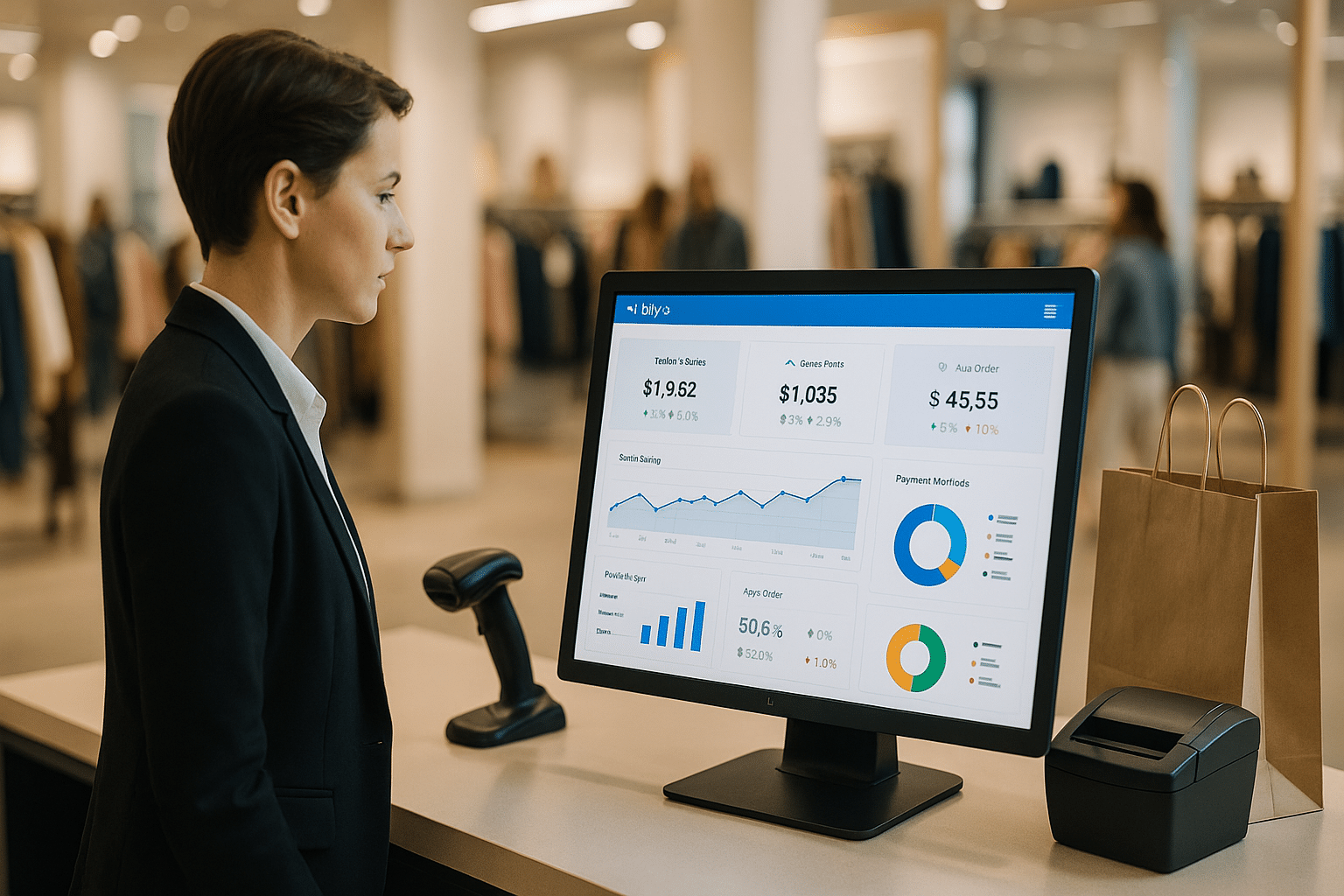
Modern POS systems provide continuous visibility into revenue trends throughout the day. Managers can instantly monitor transaction activity, identify peak sales periods, compare product performance, and track purchasing patterns as they happen.
This level of visibility helps businesses respond quickly when operational conditions change.
For example, a café experiencing unusually slow afternoon traffic can launch limited-time promotions immediately rather than discovering the problem days later through manual reporting. A retailer noticing sudden demand spikes for seasonal products can increase purchasing before inventory shortages begin affecting sales.
Real-time sales tracking also improves strategic planning.
Instead of making broad assumptions about which products perform best, businesses can analyze exact sales data involving:
- Revenue by product category
- Average transaction value
- Top-performing items
- Seasonal demand trends
- Location-specific sales patterns
This information helps businesses optimize pricing, improve product selection, and allocate resources more effectively.
Product profitability becomes easier to understand as well.
High sales volume does not always mean strong profit margins. Some products generate frequent purchases but produce weak profitability because of high supplier costs, inventory waste, or low markup. Others may sell less frequently while producing much stronger margins.
POS analytics help businesses identify these differences clearly.
When inventory systems integrate directly with sales reporting, companies gain even deeper insight into margin performance and operational costs. This allows owners to respond faster to supplier price increases, changing demand patterns, and declining profitability before small problems become larger financial issues.
Understanding Customer Behavior
One of the most powerful aspects of POS data is the ability to understand customer behavior more clearly over time. Every completed purchase contains valuable information about preferences, buying habits, shopping frequency, and product relationships.
When businesses analyze this information properly, they can create far more personalized customer experiences.
Purchase trends often reveal patterns that would otherwise remain hidden. A coffee shop may discover that customers who purchase iced drinks regularly add pastries to their orders during morning hours. A clothing retailer may notice that specific accessories are frequently purchased alongside seasonal fashion collections.
These patterns help businesses improve product placement, cross-selling strategies, promotional campaigns, and inventory planning.
Customer purchase history also allows companies to move beyond generic marketing.
Rather than sending the same promotion to every customer, businesses can create targeted campaigns based on actual buying behavior. Someone who frequently purchases vegan products is far more likely to respond positively to plant-based product promotions than unrelated discounts.
This level of personalization improves customer engagement because marketing feels more relevant and useful.
Loyalty programs become more effective when supported by POS analytics as well. Businesses can identify their highest-value customers by analyzing:
- Purchase frequency
- Lifetime spending
- Shopping consistency
- Promotion responsiveness
- Average transaction size
These insights help companies reward loyal customers more strategically while improving long-term retention.
Customer retention matters enormously because attracting new customers is often far more expensive than keeping existing ones. Businesses that understand customer behavior through POS data are usually better positioned to build stronger relationships and encourage repeat business over time.
Inventory Management and Loss Prevention
Inventory management is one of the most financially sensitive parts of running a business. Poor inventory visibility often leads to overstocking, shortages, waste, spoilage, and missed sales opportunities.
Modern POS systems help solve these problems by connecting inventory tracking directly to transaction activity in real time.
As products are sold, stock levels update automatically. This gives businesses much clearer visibility into product movement and purchasing behavior without relying entirely on manual inventory counts.
Restaurants can monitor ingredient usage more accurately and reduce unnecessary food waste. Retail businesses can identify fast-selling products before inventory shortages begin affecting customer demand.
Historical sales data also improves forecasting.
By analyzing previous sales patterns, businesses can predict future inventory demand more accurately during holidays, seasonal changes, promotional campaigns, and high-traffic events.
This helps companies avoid both excessive overstocking and costly stock shortages.
Multi-location businesses benefit heavily from this visibility as well.
Inventory can be transferred between stores based on real demand data instead of assumptions, helping businesses reduce excess stock while improving availability across locations.
Loss prevention is another major advantage of POS analytics.
When inventory movement does not match recorded sales activity, businesses can investigate discrepancies much faster. These inconsistencies may reveal:
- Theft
- Fraud
- Receiving mistakes
- Inventory shrinkage
- Operational errors
Instead of discovering losses weeks later during manual audits, businesses gain faster operational visibility that improves accountability and reduces preventable financial damage.
Improving Operational Efficiency
Operational efficiency directly affects customer experience, labor costs, and overall profitability. Small inefficiencies repeated every day often create major financial consequences over time.
POS analytics help businesses identify operational bottlenecks that may otherwise go unnoticed.
Restaurants can analyze ticket completion times to determine whether kitchen delays occur during specific periods. Retail stores can evaluate checkout speed and customer wait times during busy shopping hours.
Detailed reporting also provides insight into employee productivity.
Managers can monitor:
- Sales performance
- Transaction speed
- Upselling success
- Labor efficiency
- Customer service activity
This information helps businesses improve training programs while recognizing employees who consistently contribute strongly to revenue growth and customer satisfaction.
Staff scheduling becomes significantly easier when businesses understand actual customer traffic patterns.
Rather than guessing how many employees are needed during specific hours, managers can schedule labor based on measurable demand data. This reduces unnecessary payroll expenses while improving customer service during peak periods.
Operational reporting also supports continuous improvement.
When workflow changes are implemented, businesses can track whether those adjustments actually improve efficiency, reduce waste, or increase profitability over time. Small improvements repeated consistently often create substantial long-term operational gains.
Marketing Strategy and Demand Forecasting
Marketing becomes far more effective when businesses use real purchasing data instead of broad assumptions about customer interests.
POS systems provide detailed insight into customer behavior, allowing businesses to create more targeted and relevant campaigns.
For example, a sporting goods retailer may identify customers who regularly purchase running equipment and send promotions related specifically to marathon training products or new athletic footwear releases.
Targeted campaigns generally produce stronger results because customers receive promotions aligned with their actual interests rather than generic advertising.
Better targeting often leads to:
- Higher engagement rates
- Improved conversion rates
- Stronger customer loyalty
- More efficient marketing spending
Demand forecasting is another major strategic advantage.
Historical sales trends help businesses predict future purchasing behavior more accurately. This supports smarter planning involving inventory, staffing, supplier orders, seasonal promotions, and operational scheduling.
Retailers preparing for holiday shopping seasons can identify which products historically experience demand spikes. Restaurants can predict seasonal menu popularity and adjust ingredient purchasing before customer demand increases.
Long-term forecasting also supports larger business decisions involving:
- Store expansion
- Product launches
- Inventory investment
- Marketing budgets
- Operational growth strategies
Businesses that use forecasting effectively are usually better prepared to adapt to changing customer behavior and evolving market conditions.

How POS Analytics Support Long-Term Business Growth
Long-term business growth depends heavily on operational visibility and decision-making quality. Companies that understand their own performance data are generally better positioned to scale efficiently while adapting to market changes more quickly.
POS analytics support growth by helping businesses identify:
- Emerging product trends
- Profitable customer segments
- Operational inefficiencies
- Expansion opportunities
- Changing purchasing behavior
Instead of reacting slowly to industry shifts, businesses can make proactive decisions supported by measurable operational data.
This becomes especially important as companies expand into multiple locations, larger inventories, and more complex customer bases. Centralized reporting allows owners and managers to maintain operational visibility even as the business grows.
Data-driven decision-making also reduces uncertainty.
Rather than relying entirely on intuition, businesses can validate strategic decisions using real sales trends, customer insights, and operational reporting.
Over time, this creates stronger financial stability and more sustainable long-term growth.
How Biyo POS Helps Businesses Use POS Data More Effectively
Biyo POS helps businesses transform operational data into actionable insights through integrated cloud-based POS technology.
The platform supports real-time sales analytics, customer behavior tracking, inventory management, forecasting tools, operational reporting, and multi-location visibility designed to improve business decision-making.
Biyo POS helps businesses strengthen operational control while simplifying inventory tracking, reporting, customer management, and long-term performance analysis.
Whether operating a retail store, restaurant, café, or multi-location business, companies can use POS analytics to improve efficiency, reduce waste, strengthen customer relationships, and support long-term growth.
If you want to explore how modern POS analytics can help your business operate more efficiently, you can schedule a call with Biyo POS or create an account directly through the signup page.
Frequently Asked Questions
What are POS data benefits?
POS data benefits include improved sales tracking, customer insights, inventory management, operational efficiency, forecasting, and marketing optimization through point of sale analytics.
How does POS data improve business profitability?
POS data helps businesses identify profitable products, optimize pricing, improve inventory management, strengthen customer retention, and reduce operational waste.
Can small businesses benefit from POS analytics?
Yes. Small businesses can use POS data to improve inventory visibility, personalize marketing campaigns, monitor operational performance, and make more informed business decisions.
How does POS data help inventory management?
POS systems track inventory movement in real time, helping businesses reduce shortages, avoid overstocking, improve forecasting, and minimize waste.
Why is customer behavior analysis important?
Understanding customer behavior helps businesses improve personalization, strengthen loyalty programs, optimize product selection, and increase repeat purchases.
How does Biyo POS help businesses use analytics?
Biyo POS provides real-time reporting, inventory tracking, forecasting tools, customer insights, and operational analytics that help businesses make data-driven decisions.