Boba shops have grown far beyond trend-based beverage businesses. In many cities, bubble tea stores now operate as social spaces where students study, friends gather, and customers seek customizable drinks alongside memorable experiences. As demand for bubble tea continues rising, competition has intensified as well.
New shops enter the market every year offering similar flavors, similar pricing structures, and nearly identical menus. In this environment, simply having good drinks is no longer enough to guarantee long-term success.
That is why well-structured boba shop promotions have become essential for growth, customer retention, and brand positioning.
Effective promotions do more than create temporary spikes in sales. When designed strategically, they shape customer habits, improve purchase frequency, increase average order value, strengthen customer lifetime value, and create emotional attachment to the brand.
The difference between successful promotions and damaging discount strategies comes down to structure and intention.
Poorly planned promotions train customers to wait for discounts. Strong promotions create urgency, encourage repeat visits, increase engagement, and improve long-term profitability without weakening brand perception.
Modern bubble tea businesses must balance traffic generation with operational sustainability. Shops that rely entirely on constant discounting often damage margins and struggle to maintain customer loyalty once promotions end. On the other hand, businesses that use promotions strategically build stronger communities and more predictable revenue over time.
This guide explores the most effective boba shop promotions, including grand opening campaigns, loyalty programs, student discounts, social media strategies, seasonal promotions, referral systems, and customer appreciation events that help bubble tea businesses grow sustainably.
Table of Contents
- Grand Opening and Seasonal Promotions
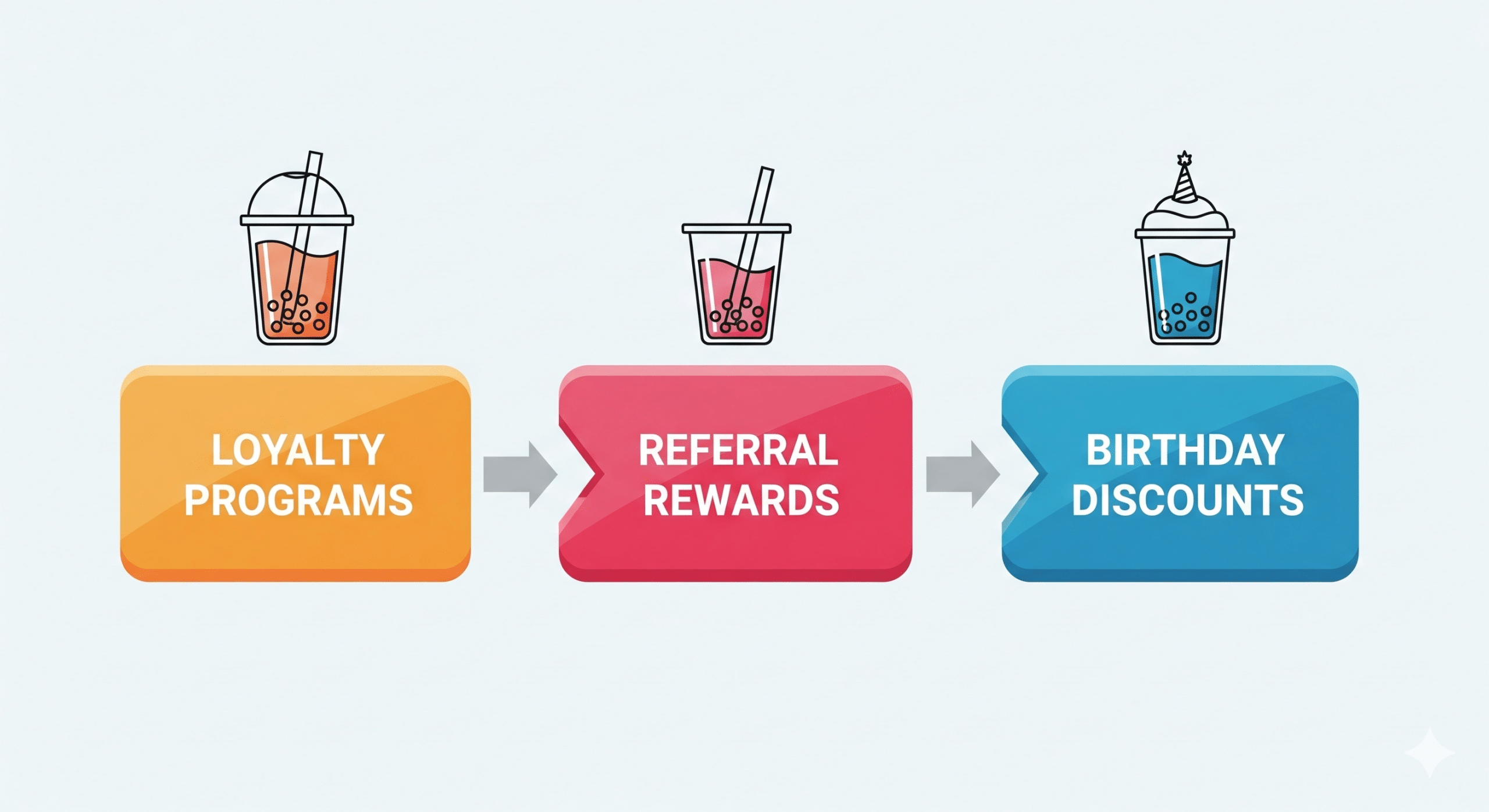
- Loyalty Programs and Customer Retention
- Student Discounts, Group Deals, and Happy Hours
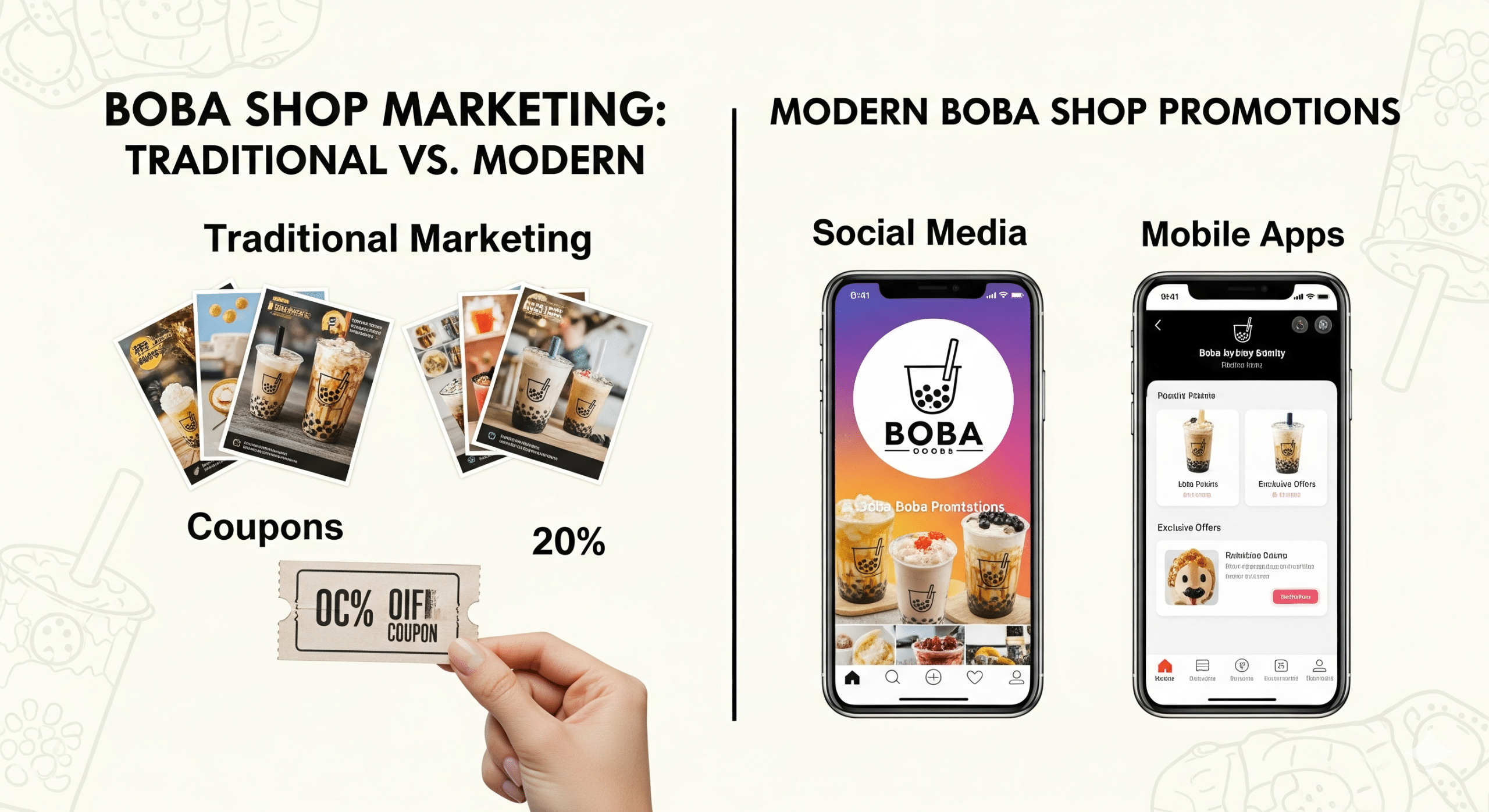
- Social Media Marketing and Influencer Collaborations
- Holiday Campaigns and Customer Appreciation Events
- Building Profitable Promotional Strategies
- How Biyo POS Helps Boba Shops Manage Promotions
- Frequently Asked Questions
Grand Opening and Seasonal Promotions
The launch phase of a boba shop often determines how quickly the business builds momentum within the local market. Many owners mistakenly approach grand openings as simple discount events focused entirely on attracting large crowds for one weekend.
That approach usually creates temporary traffic without building long-term customer retention.
A successful grand opening should accomplish several goals simultaneously. It should introduce the brand identity, encourage social sharing, create memorable experiences, collect customer data, and establish early purchasing habits that continue long after the opening period ends.
Grand Opening Promotions That Create Momentum
Buy-one-get-one-free offers remain popular because they maximize customer trial volume quickly. The objective during launch is not immediate profitability. The real goal is exposure.
The more people who try the drinks during the opening phase, the faster word-of-mouth marketing spreads throughout the community.
However, profitable businesses attach structure to these promotions instead of offering unlimited discounts with no long-term strategy.
For example, many successful shops require:
- Email signups
- App downloads
- Social media follows
- Loyalty account registration
- Time-limited redemption windows
This transforms promotional traffic into long-term marketing assets.
Interactive experiences also improve memorability significantly. Shops that include live drink-making demonstrations, spin-to-win prizes, free topping stations, or social media photo contests create stronger emotional engagement than businesses relying only on pricing discounts.
Cross-promotions with nearby businesses can accelerate visibility as well. Partnerships with bookstores, cafés, gyms, or dessert shops help tap into existing customer traffic and introduce the brand to new audiences more efficiently.
Seasonal Promotions and Limited-Time Drinks
Seasonal campaigns keep menus exciting while encouraging repeat visits.
Limited-time flavors naturally create urgency because customers know the products will not remain available permanently. Seasonal drinks also encourage experimentation because exclusivity increases curiosity.
Popular examples include:
- Pumpkin spice milk tea
- Watermelon fruit tea
- Peppermint winter drinks
- Cherry blossom spring specials
- Lunar New Year-inspired beverages
From a business perspective, seasonal promotions also function as low-risk product testing opportunities. Shops can measure customer interest in new flavors before deciding whether permanent menu expansion makes sense.
Strong seasonal visuals matter too.
Themed packaging, coordinated store décor, and social media announcements help customers associate the brand with fresh experiences rather than static menus.
Using Scarcity and Urgency Correctly
Scarcity-based marketing works because customers respond emotionally to limited opportunities.
Promotions framed around urgency — such as “This Weekend Only” or “Available While Supplies Last” — encourage customers to make faster purchasing decisions.
Flash promotions during slower business hours can also help stabilize traffic distribution throughout the day.
For example, offering selected discounts between 2 PM and 4 PM may increase afternoon traffic without reducing demand during busy evening periods.
However, businesses must avoid overusing urgency-based promotions. If every campaign feels permanent, customers stop reacting with urgency and begin waiting for discounts routinely.
Loyalty Programs and Customer Retention
Customer retention is one of the most profitable growth strategies available to bubble tea businesses.
Acquiring new customers through advertising costs significantly more than encouraging existing customers to return more frequently.
Loyalty systems help transform occasional visitors into habitual buyers.
Digital Loyalty Programs
Modern customers expect convenience. Digital loyalty systems integrated directly with POS platforms eliminate physical punch cards while creating more personalized reward experiences.
Popular loyalty structures include:
- Free toppings after multiple visits
- Free drinks after milestone purchases
- Double points during slow periods
- Birthday rewards
- VIP loyalty tiers
Digital systems also provide valuable customer behavior insights.
Businesses can track:
- Purchase frequency
- Favorite drinks
- Popular add-ons
- Visit timing
- Average spending patterns
This data helps businesses create smarter future promotions based on actual customer behavior instead of assumptions.
Referral Systems and Organic Growth
Referral marketing turns existing customers into acquisition channels.
Instead of relying entirely on paid advertising, businesses reward customers for bringing in friends and family members.
Effective referral systems create incentives for both sides.
For example:
- Existing customer earns points
- New customer receives a discount
- Referral milestones unlock larger rewards
Tiered rewards maintain engagement longer than one-time incentives because customers continue participating after the first referral.
When combined with social media sharing, referral systems can dramatically reduce advertising dependency while increasing local visibility.
Customer Appreciation Promotions
Customer appreciation campaigns strengthen emotional connection with the brand.
Exclusive loyalty-member events, double-point days, free tasting sessions, and early access to seasonal drinks help customers feel recognized instead of treated like anonymous transactions.
Customers who feel emotionally connected to a business often become less price-sensitive over time because perceived brand value increases.
Student Discounts, Group Deals, and Happy Hours
Bubble tea purchasing behavior is highly social and demographic-driven.
Shops located near schools, universities, or office districts benefit from promotional structures tailored to those audiences.
Student Discounts
Students represent one of the largest customer groups for many boba shops. Although students typically have limited budgets, they often generate high visit frequency and strong social media exposure.
Structured student discounts help create habitual traffic without severely damaging margins.
Many businesses use:
- 10–15% weekday discounts
- Study-hour specials
- Campus partnership promotions
- Student combo bundles
Verification systems such as student IDs or digital promo codes help keep discounts targeted while preventing abuse.
Group Promotions and Social Buying Behavior
Boba consumption is frequently social. Customers often order in groups, making bundle promotions highly effective for increasing average ticket size.
Popular examples include:
- Buy 4 drinks, get 1 free
- Discounted group combos
- Drink-and-snack bundles
- Large-order rewards
Bundling products also helps protect margins because add-ons increase overall transaction value.
Happy Hour Promotions
Happy hour promotions help fill slower periods during the day.
Strategic discounting during off-peak hours improves revenue consistency without reducing demand during naturally busy periods.
To maintain profitability, businesses often:
- Limit discounts to selected items
- Prevent stacking with other promotions
- Encourage topping add-ons
- Use narrow time windows
The objective is not simply lowering prices. The real goal is redistributing customer traffic more evenly across the day.
Social Media Marketing and Influencer Collaborations
Social media visibility plays a major role in bubble tea industry growth.
Boba drinks naturally perform well on visual platforms because colorful beverages, creative toppings, and aesthetic branding encourage sharing.
Interactive Social Campaigns
Interactive campaigns create stronger engagement than passive advertising.
Effective strategies include:
- Hashtag contests
- Flavor voting polls
- Photo competitions
- Behind-the-scenes videos
- Customer-generated content campaigns
These campaigns encourage participation instead of simply asking customers to consume advertisements.
Influencer Partnerships
Micro-influencers often deliver stronger local results than larger creators because their audiences tend to be more geographically targeted and community-focused.
Strong influencer campaigns feel authentic rather than scripted.
Businesses should track influencer performance using:
- Unique promo codes
- Referral links
- Campaign-specific offers
- Traffic analytics
Long-term influencer partnerships usually outperform one-time sponsored posts because repeated exposure builds trust more effectively.
Holiday Campaigns and Customer Appreciation Events
Holiday periods naturally encourage emotional spending behavior.
Seasonal promotions allow boba shops to align products with cultural celebrations and create memorable customer experiences.
Themed Holiday Drinks
Holiday-themed beverages generate excitement because they combine novelty with seasonal relevance.
Examples include:
- Valentine’s strawberry milk tea
- Christmas peppermint drinks
- Halloween-themed toppings
- Lunar New Year specials
These products often perform especially well online because customers enjoy sharing visually unique seasonal items.
Customer Events and In-Store Experiences
Customer appreciation events help strengthen community identity around the brand.
Popular ideas include:
- Live music nights
- Free sample events
- Double-point weekends
- Exclusive loyalty previews
Experiential events create emotional connection that extends beyond product pricing alone.
Gift Cards and Mobile Rewards
Gift cards generate immediate cash flow while introducing new customers to the business.
Digital reward systems simplify redemption while helping businesses track customer behavior more accurately.
Holiday gift bundles combining drinks, merchandise, or gift cards often increase seasonal sales significantly.
Building Profitable Promotional Strategies
The strongest boba shop promotions are designed around long-term customer behavior instead of short-term panic discounting.
Businesses should evaluate promotions based on:
- Customer retention improvement
- Purchase frequency growth
- Average order value increases
- Traffic stabilization
- Customer lifetime value
Promotions should strengthen the brand rather than weaken perceived value.
Businesses that discount constantly often train customers to avoid full-price purchases entirely. Strategic promotions, however, increase loyalty, urgency, engagement, and long-term profitability simultaneously.
Data analysis remains critical throughout this process.
Shops that measure promotional performance consistently make far smarter operational decisions than businesses relying purely on intuition.
How Biyo POS Helps Boba Shops Manage Promotions
Biyo POS helps bubble tea businesses streamline promotions, customer loyalty programs, and operational management through integrated cloud-based tools designed for modern food and beverage businesses.
Instead of manually tracking discounts or managing disconnected loyalty systems, businesses can automate promotional workflows and monitor campaign performance from one centralized platform.
Biyo POS supports:
- Digital loyalty programs
- Automated discount management
- Customer purchase tracking
- Sales reporting analytics
- Promotional performance insights
- Customer retention systems
- Mobile and in-store payment processing
- Multi-location management
These tools help businesses identify which campaigns generate the highest retention, which drinks perform best during promotions, and which time periods require traffic support.
Data-driven visibility allows shop owners to optimize promotions strategically rather than relying on guesswork.
Biyo POS also improves checkout efficiency, simplifies reward redemption, and enhances customer experience during high-traffic periods.
Whether operating a single bubble tea store or expanding across multiple locations, businesses can use Biyo POS to strengthen customer loyalty while improving operational efficiency.
If you want to streamline your promotions and customer retention strategy, you can schedule a demo or create an account to explore how Biyo POS supports modern boba shop operations.
Frequently Asked Questions
What are the best promotions for boba shops?
Loyalty programs, seasonal drinks, referral rewards, student discounts, happy hour campaigns, and social media contests are among the most effective long-term promotional strategies.
Do discounts hurt profitability?
Excessive discounting can damage margins, but structured promotions focused on retention and customer frequency often improve long-term profitability.
Why are loyalty programs important for bubble tea shops?
Loyalty programs encourage repeat visits, improve customer retention, and provide valuable purchasing data that helps businesses optimize marketing strategies.
How can boba shops use social media effectively?
Boba shops can use social media through visual campaigns, influencer collaborations, contests, behind-the-scenes content, and customer-generated promotions.
What is the purpose of happy hour promotions?
Happy hour campaigns help increase traffic during slower periods while improving overall daily revenue distribution.
How does Biyo POS help manage promotions?
Biyo POS helps businesses automate promotions, track loyalty engagement, analyze customer behavior, and monitor promotional performance through integrated cloud-based management tools.