

Customer satisfaction is not simply a measure of whether a transaction was completed successfully. It reflects how customers feel about every interaction they have with your business, from the first impression to post-purchase support. In today’s highly competitive environment, businesses that consistently deliver positive experiences are more likely to earn repeat customers, stronger loyalty, and valuable word-of-mouth referrals.
Modern consumers expect more than good products and services. They want convenience, personalization, responsiveness, and meaningful interactions. Businesses that focus on creating customer-centric experiences often achieve higher retention rates and stronger long-term growth because satisfied customers are more likely to continue doing business with brands they trust.
Improving customer satisfaction requires a combination of operational efficiency, personalized service, empowered employees, and a commitment to listening to customer feedback. When these elements work together, businesses can move beyond simply meeting expectations and begin creating lasting customer relationships.
What Customer Satisfaction Really Means Today
In today’s marketplace, customer satisfaction goes far beyond completing a purchase without problems. It represents the overall perception customers have of your business based on every interaction they experience throughout their journey.
Customers evaluate businesses based on factors such as convenience, service quality, responsiveness, communication, and emotional connection. As customer expectations continue to rise, businesses must focus on delivering experiences that build trust and encourage long-term loyalty.
Organizations that prioritize customer satisfaction often benefit from higher customer retention, stronger brand reputation, and increased lifetime customer value.
Moving Beyond Satisfaction to Loyalty
While satisfaction is important, it does not always guarantee loyalty. Many customers report being satisfied with a business yet still choose competitors when better offers or experiences become available.
Research from Qualtrics indicates that although satisfaction scores may remain relatively stable, trust and customer loyalty indicators have declined in many industries. This highlights the importance of focusing on relationship-building rather than simply delivering acceptable service.
The most successful businesses create experiences that encourage customers to become advocates who willingly recommend the brand to others.
The goal is not simply to create satisfied customers but to build trusted relationships that encourage repeat business and long-term loyalty.
The Foundations of a Customer-Centric Business
Creating exceptional customer experiences requires a strategic approach that aligns technology, employee training, operational efficiency, and customer insights. Businesses that consistently improve customer satisfaction often focus on four core areas: reducing friction throughout the customer journey, personalizing interactions, empowering employees to solve problems quickly, and continuously listening to customer feedback.
| Pillar | Core Principle | Business Impact |
|---|---|---|
| Effortless Experiences | Reduce friction at every customer touchpoint. | Improves conversion rates and reduces abandonment. |
| Personal Connection | Use customer data to personalize interactions. | Increases loyalty and lifetime value. |
| Empowered Teams | Give employees tools and authority to solve problems. | Faster issue resolution and happier customers. |
| Active Listening | Continuously gather and analyze feedback. | Supports ongoing service improvements. |
Streamline Service for Effortless Experiences
Customers increasingly expect fast, convenient, and accurate service. Delays, confusion, and unnecessary complexity can quickly damage satisfaction levels, even when products and services meet expectations.
Businesses should regularly evaluate customer journeys to identify bottlenecks and friction points that create frustration. Improving service efficiency often has a direct impact on customer satisfaction because customers value businesses that respect their time.
Order accuracy, efficient checkout processes, responsive support, and streamlined workflows all contribute to a more positive customer experience. For businesses seeking to improve transaction quality, our guide on how to improve order accuracy provides additional strategies.
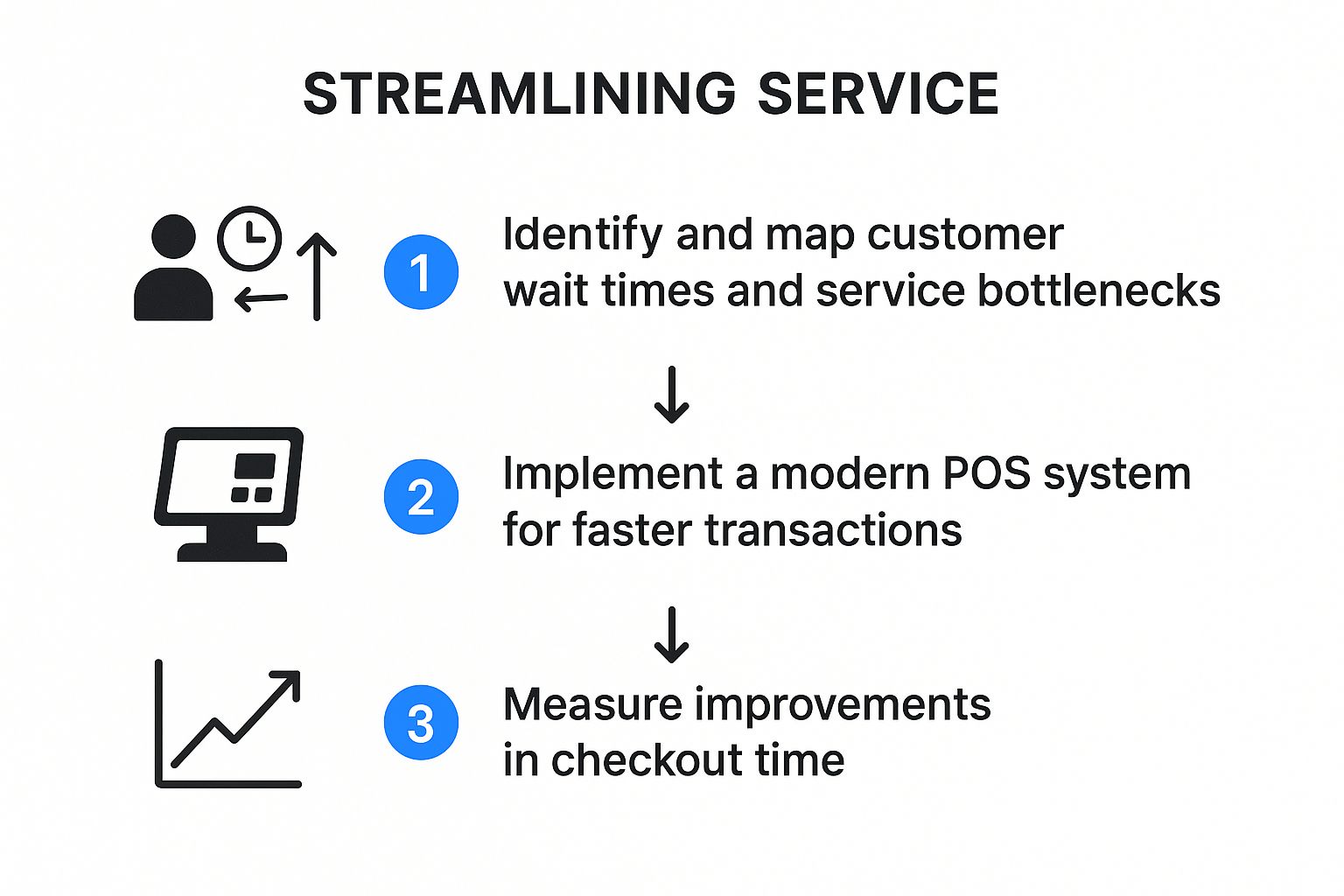
Research consistently shows that convenience plays a major role in customer retention. Many consumers expect immediate assistance when issues arise and are more likely to spend more with businesses that resolve problems quickly and efficiently.
Fast and efficient service is no longer a competitive advantage. For many customers, it has become a fundamental expectation.
Deliver the Seamless Omnichannel Journey Customers Expect

Modern customers interact with businesses through multiple channels, including websites, mobile apps, social media platforms, marketplaces, and physical locations. They expect these experiences to feel connected regardless of where interactions occur.
Sync Digital and Physical Operations
Maintaining consistency across channels is essential for customer satisfaction. Accurate inventory information, synchronized pricing, and real-time order visibility help eliminate confusion and create a smoother customer experience.
A unified POS platform plays a key role in connecting online and offline operations. Businesses interested in creating seamless experiences can learn more in our guide to omnichannel retail.
Make Buying and Returning Easy
Convenient purchasing options such as buy-online-pickup-in-store (BOPIS), curbside pickup, flexible delivery options, and simplified return processes can significantly improve satisfaction.
Customers increasingly expect convenience throughout the entire purchasing journey. Reducing friction during both purchases and returns helps build trust while encouraging future transactions.
Businesses that simplify these experiences often enjoy stronger customer loyalty and higher repeat purchase rates.
Use Data to Personalize the Customer Journey

Personalization has become one of the most effective ways to improve customer satisfaction. Customers appreciate businesses that understand their preferences and provide relevant recommendations rather than generic experiences.
Leverage Purchase History for Smarter Service
Customer purchase histories can help businesses provide more relevant recommendations, targeted promotions, and personalized service. These insights allow employees to better understand customer needs and create more meaningful interactions.
Integrating CRM functionality with POS systems can further enhance personalization efforts. Businesses interested in strengthening customer relationships can explore additional strategies in our guide on restaurant CRM strategies.
Create Meaningful Loyalty Programs
Modern loyalty programs extend beyond simple discounts. The most effective programs reward customers based on behavior, preferences, and engagement patterns.
Personalized rewards often feel more valuable because they align with individual interests. These programs help strengthen emotional connections while encouraging repeat purchases and long-term retention.
When customers feel recognized and appreciated, they are more likely to remain loyal to the business.
Turn Your Team into Customer Service Superstars

Employees play a central role in shaping customer experiences. Even the most advanced technology cannot replace the value of knowledgeable, confident, and empowered staff members.
Businesses should invest in training programs that improve communication skills, product knowledge, problem-solving abilities, and customer empathy. Employees who understand how to handle customer concerns effectively are more likely to create positive outcomes during challenging situations.
Empowering employees with the authority and tools needed to resolve issues quickly can significantly improve satisfaction while reducing frustration for both customers and staff.
When employees feel supported and trusted, they are often more engaged, more productive, and better equipped to deliver exceptional service.
Turn Customer Feedback Into Actionable Improvements
Customer satisfaction is not a one-time achievement. It requires continuous evaluation, adaptation, and improvement.
Businesses should actively collect feedback through surveys, reviews, social media interactions, support conversations, and direct customer outreach. This feedback provides valuable insight into customer perceptions and highlights opportunities for improvement.
Monitoring online reviews and business listings can help identify recurring concerns before they become larger problems. Patterns in customer feedback often reveal operational issues that may not be visible through internal reporting alone.
Closing the Feedback Loop
Collecting feedback is only the first step. Customers want to know their opinions matter.
When businesses implement improvements based on customer suggestions, communicating those changes helps strengthen trust and encourages future engagement. Customers are more likely to continue sharing feedback when they see that their input leads to meaningful action.
Closing the feedback loop demonstrates responsiveness and reinforces a customer-centric culture.
How Biyo Helps Businesses Improve Customer Satisfaction
Technology plays an increasingly important role in creating efficient, personalized, and consistent customer experiences. Biyo POS helps businesses streamline transactions, improve service speed, manage customer information, and gain valuable operational insights.
With integrated reporting, customer management tools, real-time analytics, and centralized operational visibility, Biyo POS helps businesses identify opportunities to improve customer experiences while increasing operational efficiency.
By connecting customer data, transaction history, and business performance metrics in one platform, Biyo enables businesses to create smoother customer journeys that support both satisfaction and long-term loyalty.
If you’d like to explore how Biyo can help improve customer experiences and streamline operations, you can schedule a personalized consultation and see how the platform supports customer-focused growth.
Frequently Asked Questions
What is the most important customer service skill?
Empathy is often considered the most important customer service skill because it helps employees understand customer concerns and respond in a way that builds trust and positive relationships.
How can businesses measure customer satisfaction?
Common metrics include Customer Satisfaction Score (CSAT), Net Promoter Score (NPS), Customer Effort Score (CES), retention rates, review ratings, and customer feedback surveys.
How quickly should businesses respond to customer issues?
Response expectations vary by channel, but businesses generally benefit from responding as quickly as possible. Many organizations aim to respond to social media inquiries within one hour and customer support requests within the same business day.
Why is personalization important for customer satisfaction?
Personalization helps customers feel recognized and valued. Relevant recommendations, customized offers, and tailored communication often improve engagement and loyalty.
How does employee empowerment improve customer satisfaction?
Empowered employees can resolve issues faster, make informed decisions, and provide more confident service, leading to better customer experiences and stronger relationships.
What role does technology play in customer satisfaction?
Technology helps businesses streamline operations, improve service speed, personalize interactions, collect feedback, and provide customers with more convenient and consistent experiences.