To really move the needle on sales, you need to stop thinking of your menu as a simple list of dishes and start treating it as your most valuable sales tool. It's not just about what you offer; it's about how you offer it. A strategically designed menu can guide customer choices, spotlight your high-profit items, and ultimately increase your average check size.
Your Menu Is Your Best Salesperson
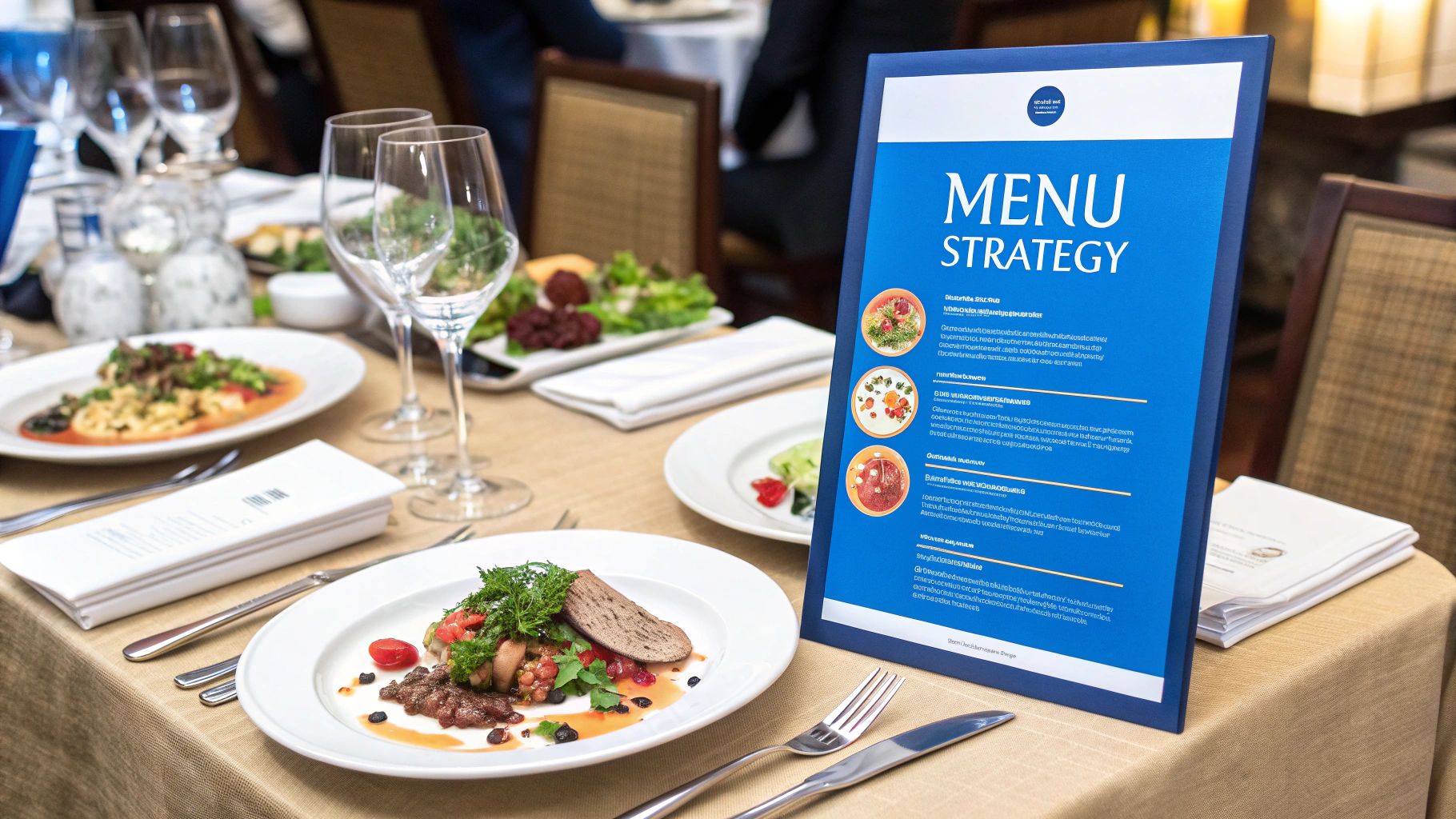
It’s easy to see your menu as just a functional list of what the kitchen can make. Many owners make this mistake, and it's a massive missed opportunity. Your menu is often the first and most direct piece of marketing a customer interacts with once they're seated, and it quietly influences every single thing they decide to order.
When you start thinking of your menu as your silent salesperson, the whole game changes. A great menu doesn't just present options—it tells a story, sparks cravings, and subtly steers guests toward your most profitable dishes. This is where the real magic of menu engineering happens.
Using Psychology to Guide Choices
Menu engineering isn't about smoke and mirrors; it’s a smart blend of psychology and hard data. It means strategically placing items, crafting mouth-watering descriptions, and even pricing things in a way that makes certain dishes impossible to resist. It’s all about making informed decisions based on how people actually read and react to a menu.
For instance, most restaurateurs who are serious about this stuff know about the "golden triangle." It's the area on your menu—top-center, top-right, and top-left—where a diner's eyes naturally go first. If you place your highest-margin items, your "stars," in this prime real estate, you'll see them ordered far more often.
Another classic technique is the "decoy dish." You place a very expensive item on the menu, not because you expect to sell many, but to make other high-profit items look more reasonable by comparison. All of a sudden, that $35 steak seems like a fantastic deal next to the $58 surf and turf special.
A well-engineered menu can boost a restaurant's profits by 10-15% on average. This isn't about tricking people; it's about showcasing your best work in the most compelling way.
Digging Into Your Sales Data
If you want to know what's actually working, you have to get familiar with your sales data. This means analyzing every single item on your menu and classifying it into one of four categories. Understanding how to categorize your dishes is a core part of building a strategic approach to maximizing profitability.
- Stars: These are the fan favorites that also make you the most money. Feature them prominently. Make them look amazing. Train your staff to rave about them.
- Puzzles: These are high-profit but low-popularity items. They need a little love. Try moving them to a better spot on the menu, rewriting the description to sound irresistible, or making them a server's special recommendation.
- Plowhorses: Everyone loves these, but their profit margins are thin. You don't want to get rid of them, but maybe you can bump the price a little or find ways to trim food costs without compromising on quality.
- Dogs: These dishes aren't popular, and they don't make you much money. It’s often best to just cut them from the menu. This frees up space and kitchen resources for dishes that will actually make you money.
Once you classify your menu, you can stop guessing and start making decisions that directly impact your bottom line. Your menu stops being a static piece of paper and becomes a dynamic tool that actively works to grow your business.
Turn Your Staff Into Sales Champions
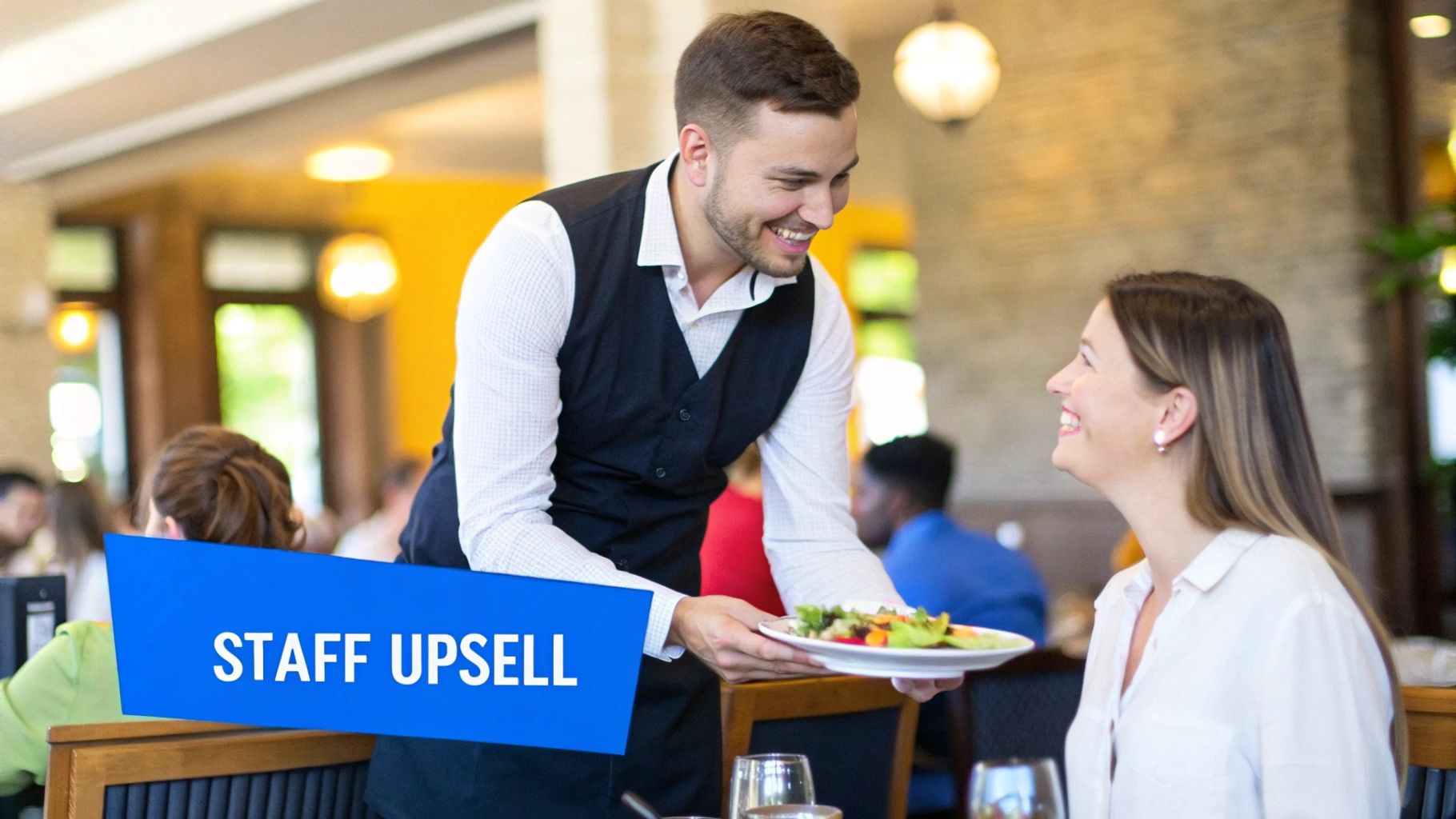
While your menu sets the stage, your servers are the ones who bring the show to life. They're your front-line ambassadors and, when you give them the right tools, your most powerful sales force. Transforming your team into sales champions isn't about pushing items people don't want. It’s about shifting them from simple order-takers to knowledgeable guides who make the guest's dining experience genuinely better.
Effective upselling is an art rooted in hospitality, not high-pressure sales. It's the difference between a flat, "Do you want an appetizer?" and a thoughtful, personalized recommendation that makes a guest's eyes light up. This small shift is one of the biggest secrets to boosting restaurant sales without making anyone feel pressured.
Train for Confident Recommendations
The real magic happens when your staff has deep product knowledge and the confidence to share it. When a server genuinely understands the menu—how a dish is made, which ingredients are local, what flavors go together—their suggestions come across as expert advice, not a sales pitch.
They stop listing specials and start painting a picture. A server might say, "The chef's new burrata is fantastic tonight; it's incredibly creamy and pairs beautifully with that crisp chardonnay you're enjoying." This kind of advice is helpful, makes the meal more memorable, and naturally increases the check size. To build this skill, you need to treat training for restaurant excellence as an ongoing part of your culture.
Key Takeaway: Good upselling should feel like a valuable service. Guests are often happy to spend more when they receive personal recommendations that make their dining experience feel special.
Use Scenarios and Role-Playing
Handing your staff a manual and hoping for the best just doesn't work. You need to get practical. Use some time in your pre-shift meetings to role-play common scenarios. This practice builds muscle memory, making it second nature for your team to offer natural suggestions at just the right moment.
Here are a few scenarios to practice:
- Appetizer Pairings: Coach them on suggesting a specific appetizer based on a table's drink order. Think calamari with a crisp white wine or charcuterie with a bold red.
- Side Dish Cross-Sells: Train them to spot when an entrée could be even better with a side, like suggesting creamy polenta with the short ribs.
- Dessert and After-Dinner Drinks: Instead of asking if they want dessert, teach your staff to ask which dessert they'll be having, then follow up with a great coffee or digestif pairing.
By mastering these small interactions, your staff can significantly increase revenue per table. It all comes down to spotting those little opportunities to add value, making every guest feel looked after, and ultimately, driving sales through exceptional service.
Use Technology to Get in Front of More Diners
In this day and age, your restaurant's four walls don't define your reach. A solid digital presence isn't just a bonus; it’s one of the most critical parts of boosting your sales. Think about it: your next customer is probably pulling out their phone right now to decide where to eat. If they can't find you online, you're essentially invisible to them.
This is about creating a digital storefront that works for you 24/7. It should be pulling in reservations, driving online orders, and building your brand even when you're closed for the night. You have to meet customers where they are—whether that's scrolling a delivery app, browsing social media, or Googling "best tacos near me."
Making Third-Party Delivery Apps Work for You
Let's be real, platforms for food delivery can put your menu in front of thousands of eyeballs that would have never seen it otherwise. They handle the whole delivery side of things, which can be a massive headache lifted off your shoulders.
But that convenience has a price. Those commission fees, often anywhere from 15% to 30% per order, can carve out a huge chunk of your profit. You also lose a direct line to your customers and the valuable data they generate. A good approach is to use these apps for what they are: discovery tools. See them as a way to get new people to try your food, then have a game plan to bring them into your own ecosystem.
Expert Insight: Think of third-party apps as billboards. They're fantastic for getting noticed, but the end goal is always to get that traffic to pull into your own driveway—your direct ordering system.
One of the smartest moves you can make is taking full control of your online sales. Setting up your own online ordering system is a total game-changer. You capture 100% of the revenue from those orders, cutting out the middleman entirely. There are a ton of online ordering benefits for restaurants that go way beyond just saving on fees.
Building Your Own Commission-Free Sales Channel
Having your own system isn't just about better margins. It’s about owning the entire guest experience, from the moment they land on your page to the final bite. You control the branding, the menu layout, and, most importantly, the customer data.
That data is pure gold. It allows you to build email lists, send out targeted promotions, and create real relationships that keep people coming back.
Recent industry research from KPMG shows that restaurants are leaning heavily into their digital operations to drive revenue and make things easier for customers. They're expanding direct ordering while also using third-party services to capture more volume, especially during slower dine-in periods. This hybrid approach seems to be the winning strategy—balancing the wide net of delivery apps with the high-profit, direct relationship you can build yourself. You can read the full breakdown on how restaurants are using digital tools to adapt.
Turning Social Media Into a Sales Engine
Your social media profiles are more than just a place to post pretty food pictures; they're powerful sales tools. You need to create content that gets people to act, whether that's ordering online or walking through your door.
Here are a few things that work:
- Run Geo-Targeted Ads: Use Facebook and Instagram ads to target people within a few miles of your restaurant. You can hit them with a lunch special or a limited-time offer to create a sense of urgency and drive immediate traffic.
- Add "Order Now" Buttons Everywhere: Don't make people hunt for the link. Put your online ordering link in your bio, use the "Order Food" button on your profiles, and drop it directly in your posts and stories. Make it ridiculously easy to buy from you.
- Show Off Your Personality: People connect with people. Introduce your chef, film a quick video of a popular dish being made, or share the story behind your partnership with a local farm. This kind of content builds a community, not just a customer base.
Create Promotions That Actually Drive Profit
Everyone loves a good deal, but as any seasoned owner knows, a poorly planned promotion can be a fast track to losing money. The goal isn't just to give stuff away; it's to create offers that bring people in, get them to spend more, and keep them coming back—all without cheapening your brand.
It’s less about slashing prices and more about understanding what makes people tick. Think about the power of a limited-time offer (LTO). That sense of urgency gets people off the couch and into your restaurant. A killer happy hour can do the same thing, turning that dead zone between lunch and dinner into one of your most profitable times of the day.
Designing High-Value Offers
The smartest promotions almost always involve bundling. Instead of just knocking 10% off an entree, create a compelling combo meal. A "Date Night Special" with two entrees, a shared appetizer, and a dessert feels like a fantastic deal to the customer, but you’ve just increased the average check size significantly while protecting your margins.
The numbers back this up. According to Yelp's State of the Restaurant Industry Report, people are actively hunting for value. Searches for 'cheap eats' are up 21%, and 'meal deals' have skyrocketed by a massive 117%. Diners are telling us exactly what they want, and restaurants that deliver with smart combos and value-focused meals (searches up 22%) are the ones winning their business.
To help you get started, here are a few proven promotional ideas that balance customer appeal with profitability.
High-Impact Promotional Strategies
| Promotion Type | Target Audience | Primary Sales Goal | Example |
|---|---|---|---|
| Combo Meals/Bundles | Value-conscious diners, families | Increase average check size | "Family Feast": One large pizza, garlic bread, and a 2-liter soda for a set price. |
| Happy Hour | After-work professionals, social groups | Drive traffic during slow periods | Half-price appetizers and drink specials from 4-6 PM on weekdays. |
| Limited-Time Offers (LTOs) | New and existing customers, foodies | Create urgency and boost short-term sales | "Seasonal Pumpkin Spice Martini" available only in October. |
| Loyalty Program Bonus | Repeat customers | Encourage frequency and reward loyalty | "Double Points Tuesday": Earn twice the loyalty points on all purchases. |
| Event-Based Specials | Local community, sports fans | Capitalize on local events and peak interest | "Game Day Wings Platter" available only on Sundays during football season. |
Each of these strategies serves a different purpose, so it's important to align your choice of promotion with your specific business goals—whether that's filling seats on a slow Tuesday or moving more of a high-margin menu item.
Test and Measure for Maximum Impact
Never just throw a promotion out there and hope for the best. You have to know if it's actually making you money. Before you commit to a big launch, try a small test run. Float the offer to your email subscribers or a segment of your social media followers and see how they respond.
Key Takeaway: A promotion without data is just a guess. Track everything from how many people redeem the offer to what their average check size is. This is the only way you'll know what’s working.
To really get a handle on your return on investment (ROI), you need to be watching these numbers closely:
- Customer Count: Did more people walk through the door?
- Average Check Value: Did the promotion encourage guests to spend more than they usually would?
- Profit Margin: After the discount, was each transaction still profitable?
- Item Movement: Did the deal help you sell a specific high-margin dish or clear out extra inventory?
By paying attention to this data, you can stop wasting money on promotions that don't perform and put more energy into the ones that consistently grow your bottom line.
Build a Loyalty Program People Love to Use
Repeat business is the secret sauce for any successful restaurant. While it's always great to see new faces, getting your regulars to come back time and again is where the real profit is. A loyalty program, when done right, is your single best tool for making that happen. It’s about building a real relationship that keeps them choosing you over the competition.
It's time to ditch those flimsy paper punch cards that get lost or forgotten. Today’s loyalty programs live on your customers’ phones, making them incredibly easy to use. More importantly, these modern systems give you a goldmine of data on who your best customers are and what they love to order.
Design Rewards That Actually Feel Rewarding
The best loyalty programs don't just feel like a discount coupon; they make your members feel like VIPs. A simple percentage off is fine, but experiential rewards create a much stronger connection and often feel way more valuable than their actual cost.
Think about what you can offer that money can't buy. It’s all about creating that "insider" feeling.
Here are a few ideas that have a real impact:
- Exclusive Access: Let your members be the first to try a new seasonal dish before anyone else.
- Personalized Treats: A free dessert on a guest's birthday is a small gesture that makes a huge impression.
- Chef's Table Invitation: For your absolute top spenders, an invite to a special tasting event with the chef is an experience they’ll talk about for years.
These kinds of personal touches don’t just encourage another visit; they build a genuine community around your restaurant.
Key Insight: Don't underestimate the power of personalization. A recent study revealed that 79% of consumers are more likely to join a loyalty program if it offers rewards tailored to them. A generic discount is forgettable; a unique experience isn't.
Use Your Data to Keep Them Coming Back
This is where a modern loyalty program really shines. Every time a member swipes their app or gives their phone number, you're learning. You can see who your true regulars are, what their go-to orders are, and when they tend to visit.
This isn't just trivia—it's actionable intelligence. Instead of blasting everyone with the same generic email, you can send highly targeted offers that actually work.
Imagine noticing one of your regulars hasn't stopped by in a month. You can send them a quick, automated "We miss you!" offer for a free side of their favorite appetizer. That's how you build relationships that last, turning casual customers into the loyal regulars who truly anchor your business.
Keep Your Menu in Line with Modern Food Trends
Let's be honest, staying relevant in the restaurant business means paying attention to what people are actually eating. Tastes change. What was a hot trend last year might be old news today. Keeping your menu aligned with what's current is a killer way to pull in new faces and give your regulars a reason to get excited.
This doesn't mean you have to tear up your entire menu and start from scratch every few months. Think of it more like a strategic refresh. It’s about finding simple, low-risk ways to weave in popular flavors or dishes that still feel like you, giving your sales a nice little bump in the process.
Spotting the Next Big Thing
To make smart moves, you need to know where the market is headed. Industry data can be a goldmine here. For instance, even if overall restaurant growth seems to be tapping the brakes, some niches are absolutely taking off.
Recent forecasts show chicken-centric concepts are set to jump by 6.9%, Mexican food by 6.2%, and coffee and beverage spots by 4.4%. Those numbers are telling a story about what people want right now, and that’s a huge opportunity. You can dig into more of these restaurant industry sales forecasts to see the full picture.
Here's the play: You don't have to suddenly become a taqueria. The real goal is to borrow from these trends. Think about it—a killer Nashville hot chicken sandwich as a weekend special or a new line of house-made cold brews could capture that exact demand without messing with your core identity.
Test the Waters Before You Dive In
Putting a new item on the menu is always a bit of a gamble, so it’s smart to test things out first. This is where limited-time offers (LTOs) become your secret weapon. They create a bit of buzz and let you see what customers think without the pressure of a permanent menu change.
Before you even fire up the stove, do a little homework on the ground:
- Listen on Social Media: What are local food bloggers and your own customers raving about online?
- Scope Out the Competition: What are the most popular spots in your neighborhood adding to their menus?
- Just Ask: Talk to your regulars. Run a quick poll on your Instagram story. You’d be surprised what you can learn by simply asking what people want to see.
This approach takes the guesswork out of menu development. It minimizes the financial risk and makes sure that when you finally add that new dish, it’s a decision backed by real data, not just a gut feeling. By thoughtfully adapting to food trends, you keep your restaurant fresh, relevant, and ready to grow.
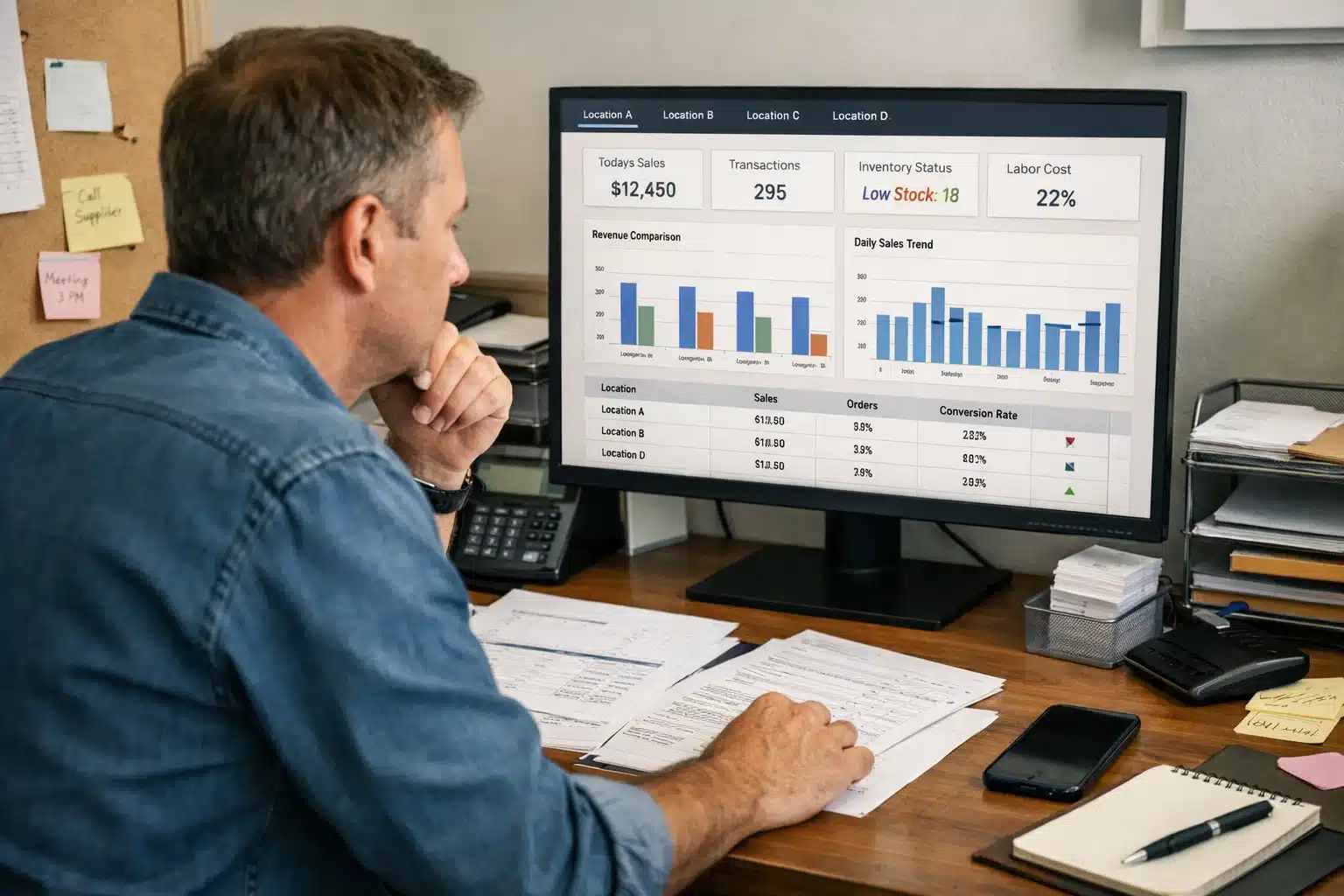
Ready to get the data you need to make smarter menu decisions? Biyo POS provides advanced analytics that show you what’s selling, who your best customers are, and where your biggest opportunities lie. Start your free 14-day trial today!