
The way customers place orders is changing faster than ever. Touchscreens, mobile apps, and kiosks already reshaped ordering, and now voice technology is stepping in. This shift is why many operators are exploring Voice Ordering and POS Integration as a way to reduce friction, speed up service, and modernize operations.
Voice ordering is no longer a novelty. With AI voice assistants becoming common in daily life, customers feel comfortable speaking commands instead of tapping screens. When voice systems connect directly with a POS, orders move from spoken words to the kitchen without manual entry.
This article explains Voice Ordering and POS Integration in detail. You will learn how voice activated ordering works, how POS voice integration improves accuracy, and why AI ordering systems are becoming a key part of restaurant automation.
Table of Contents
- Understanding Voice Ordering in Restaurants
- How Voice Ordering Integrates With POS Systems
- Operational Benefits of Voice Ordering
- Customer Experience and Adoption
- The Role of Voice in Restaurant Automation
- How Biyo Supports Voice-Ready POS Systems
- Frequently Asked Questions
Understanding Voice Ordering in Restaurants
Voice ordering allows customers or staff to place orders using spoken commands instead of manual input. This technology relies on AI voice assistants and natural language processing.
What Voice Activated Ordering Really Is
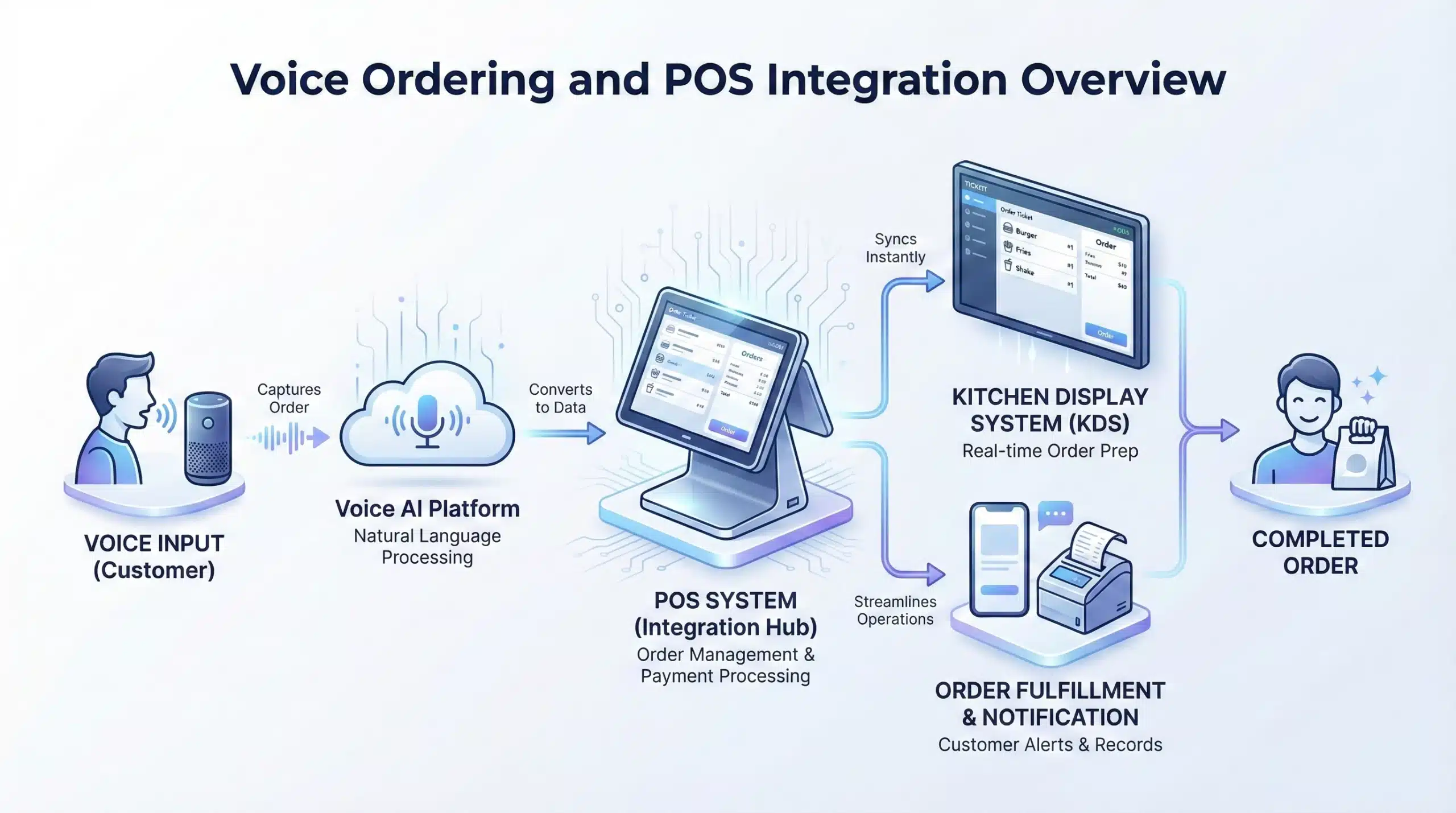
Voice activated ordering uses speech recognition to capture spoken requests. The system interprets phrases like menu items, modifiers, and quantities.
Once interpreted, the system converts speech into structured order data. That data flows into the POS automatically.
In the context of Voice Ordering and POS Integration, the goal is eliminating manual order entry entirely.
This creates a hands-free ordering environment.
Where Voice Ordering Is Being Used Today
Restaurants use voice ordering in drive-thrus, kiosks, and even behind the counter. Quick-service environments see early adoption.
Hands-free ordering also supports accessibility. Customers with mobility challenges benefit from voice interfaces.
As AI improves, adoption continues to grow.
Use cases expand quickly.
How AI Voice Assistants Power Ordering
AI voice assistants analyze tone, context, and intent. They learn from repeated interactions.
Over time, accuracy improves as the system adapts to menu language.
AI ordering systems reduce misunderstandings common in noisy environments.
Learning models drive consistency.
 How Voice Ordering Integrates With POS Systems
 How Voice Ordering Integrates With POS Systems
Voice ordering alone is not enough. True efficiency comes from seamless POS voice integration.
Connecting Voice Systems to the POS
POS voice integration links AI ordering software directly to the POS database. Menu items, prices, and modifiers stay synchronized.
When a customer speaks an order, the POS receives it in real time.
Voice Ordering and POS Integration ensures orders reach the kitchen instantly.
No re-entry is required.
Menu Mapping and Order Accuracy
Voice systems rely on accurate menu mapping. Each spoken phrase must match a POS item.
Clear menu structures improve recognition. Standardized naming helps.
Accurate mapping reduces errors and remakes.
Precision matters.
Real-Time Updates and Modifiers
POS integrations allow real-time updates to menus. Sold-out items disappear instantly.
Modifiers like size or toppings work through voice prompts.
This flexibility supports complex orders.
Dynamic menus improve reliability.
Operational Benefits of Voice Ordering
Voice technology impacts operations beyond convenience. It changes workflow efficiency.
Faster Order Processing
Voice ordering reduces time spent on manual entry. Orders move directly into production.
Staff handle more orders during peak times. Lines move faster.
Voice Ordering and POS Integration directly supports higher throughput.
Speed increases revenue potential.
Reducing Staff Workload
Hands-free ordering allows staff to focus on preparation and service.
Fewer interruptions reduce stress during rush periods.
Operational flow improves naturally.
Efficiency boosts morale.
Improved Order Accuracy
AI systems follow predefined rules. They do not forget modifiers.
Clear voice prompts reduce miscommunication.
Accuracy reduces waste and refunds.
Consistency improves trust.
Customer Experience and Adoption
Customer acceptance determines success. Voice ordering must feel intuitive.
Why Customers Embrace Voice Ordering
Many customers already use voice assistants daily. Speaking feels natural.
Voice ordering reduces touchpoints. This appeals to hygiene-conscious users.
Convenience drives adoption.
Familiarity builds comfort.
Speed and Convenience at Checkout
Voice ordering shortens wait times. Orders process quickly.
Customers receive immediate confirmation.
This creates a smooth experience.
Efficiency shapes perception.
Addressing Common Customer Concerns
Some customers worry about accuracy or privacy. Clear communication helps.
Visible confirmations build confidence.
Transparency supports trust.
Adoption grows with clarity.
The Role of Voice in Restaurant Automation
Voice ordering represents a larger shift toward automation.
Hands-Free Ordering and Smart Kitchens
Voice commands can trigger kitchen actions. Staff request status updates verbally.
Smart POS technology connects systems.
Automation reduces friction.
Connected tools streamline operations.
Voice Data and Business Insights
Voice interactions generate data. Patterns reveal demand trends.
Analyzing voice orders improves menu decisions.
Insights support growth planning.
Data drives strategy.
Preparing for Voice-First Ordering
Restaurants that prepare early gain advantage. Infrastructure matters.
Flexible POS systems support new interfaces.
Voice Ordering and POS Integration positions businesses for future shifts.
Readiness protects competitiveness.
How Biyo Supports Voice-Ready POS Systems
 How Biyo Supports Voice-Ready POS Systems
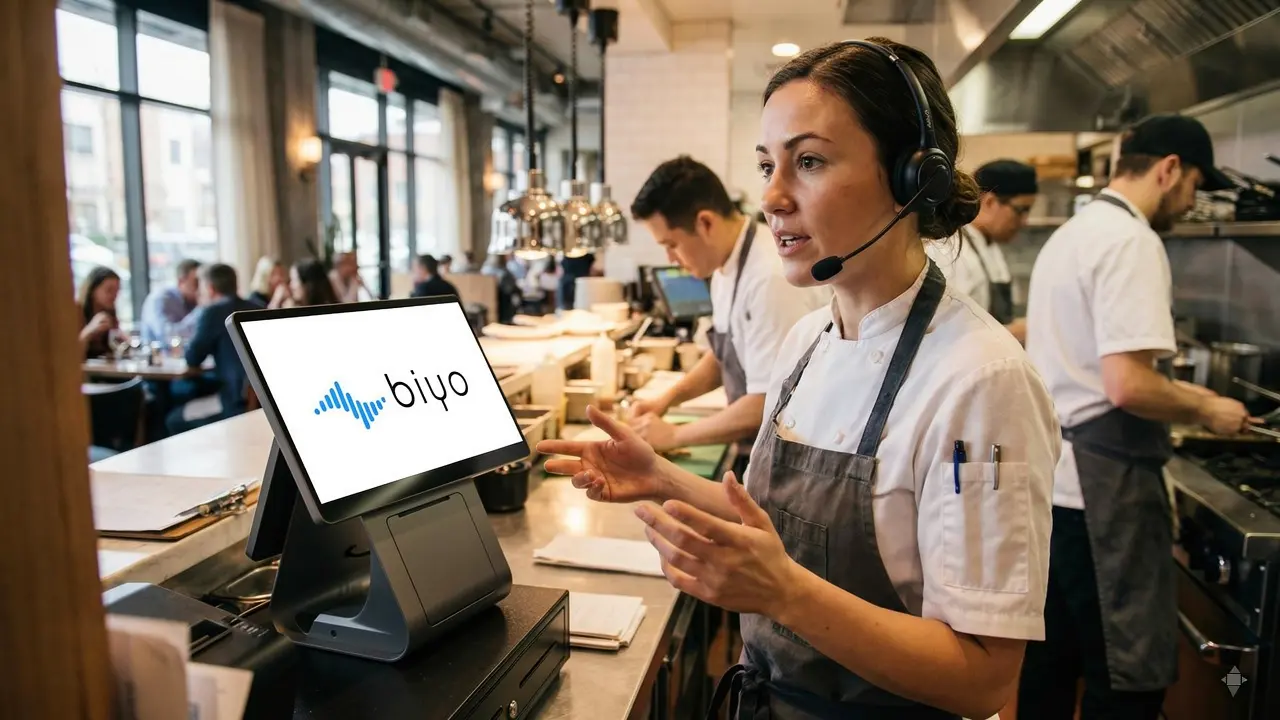
Biyo POS is built with flexibility in mind, making it easier to support emerging technologies like voice ordering. With open integrations and modern architecture, Biyo helps restaurants prepare for Voice Ordering and POS Integration without replacing core systems.
Real-time menu updates, fast order processing, and reliable data flow ensure voice-driven orders move smoothly from customer to kitchen. Businesses gain speed without losing control.
To see how Biyo can support modern and future-ready POS strategies, you can schedule a call for a personalized walkthrough or sign up to explore the platform.
Frequently Asked Questions
What is voice ordering in restaurants?
Voice ordering allows customers or staff to place orders using spoken commands powered by AI.
How does voice ordering integrate with POS systems?
Voice systems connect directly to the POS, sending structured orders without manual entry.
Is voice ordering accurate in noisy environments?
Modern AI voice assistants are trained to handle background noise and context.
Does voice ordering replace staff?
No. It supports staff by reducing manual tasks and improving efficiency.
Can Biyo POS support voice ordering integration?
Yes. Biyo POS offers flexible integration capabilities suitable for voice-enabled ordering systems.