
Every restaurant depends on consistent product flow, reliable vendors, and smart purchasing decisions. However, when supply systems break down, costs rise and service suffers. That is why strong Restaurant Supply Chain Management Strategies matter more than ever.
Modern restaurant supply chain management requires structure, forecasting, and clear accountability. From vendor negotiations to inventory optimization, every step affects margins. In this guide, you will learn practical methods that improve supply chain efficiency without overwhelming your team.
Table of Contents
- Building a Strong Supply Chain Foundation
- Strengthening Supplier Relationships
- Inventory Optimization and Demand Forecasting
- Cost Control Strategies That Protect Margins
- Using Technology to Improve Efficiency
- Frequently Asked Questions
Building a Strong Supply Chain Foundation
A dependable system starts with structure. Without clear policies, purchasing becomes reactive and inconsistent. Therefore, successful operators create organized frameworks that guide sourcing decisions.
Establishing Clear Procurement Policies
Procurement policies define how and when your team orders products. They clarify approval levels and preferred vendors. As a result, spending becomes predictable.
When chefs follow structured ordering schedules, shortages decrease. Meanwhile, emergency purchases drop significantly. Therefore, operations run smoothly.
Well-defined purchasing rules create consistency across departments. Clear expectations also improve accountability.
Once internal rules are clear, vendor standards must align with them.
Standardizing Vendor Selection Criteria
Restaurants should evaluate suppliers using consistent benchmarks. These include pricing stability, product quality, and delivery reliability. As a result, performance becomes measurable.
Structured evaluation strengthens supplier management restaurants rely on daily. Meanwhile, underperforming vendors are easier to identify. Therefore, risk declines.
Clear criteria also simplify restaurant inventory sourcing decisions. Over time, strong partnerships develop naturally.
Diversification strengthens resilience even further.
Diversifying Supply Sources
Relying on one supplier increases vulnerability. If disruptions occur, operations suffer immediately. Therefore, backup vendors protect continuity.
Secondary sources ensure availability during seasonal shortages. For instance, produce supply may fluctuate due to weather. As a result, alternative channels prevent menu disruptions.
Balanced sourcing strengthens overall supply chain efficiency. Diversification also improves negotiation leverage.
 Strengthening Supplier Relationships
 Strengthening Supplier Relationships
Relationships shape long-term stability. Pricing and quality improve when communication stays open. Therefore, restaurants must manage suppliers strategically.
Improving Vendor Negotiations
Vendor negotiations directly influence margins. Clear volume commitments increase bargaining power. As a result, restaurants secure better pricing.
Long-term agreements can stabilize fluctuating markets. Meanwhile, transparent discussions build trust. Therefore, collaboration grows stronger.
Negotiations should remain ongoing rather than reactive. Continuous dialogue improves flexibility.
However, negotiation alone does not guarantee performance.
Monitoring Supplier Performance
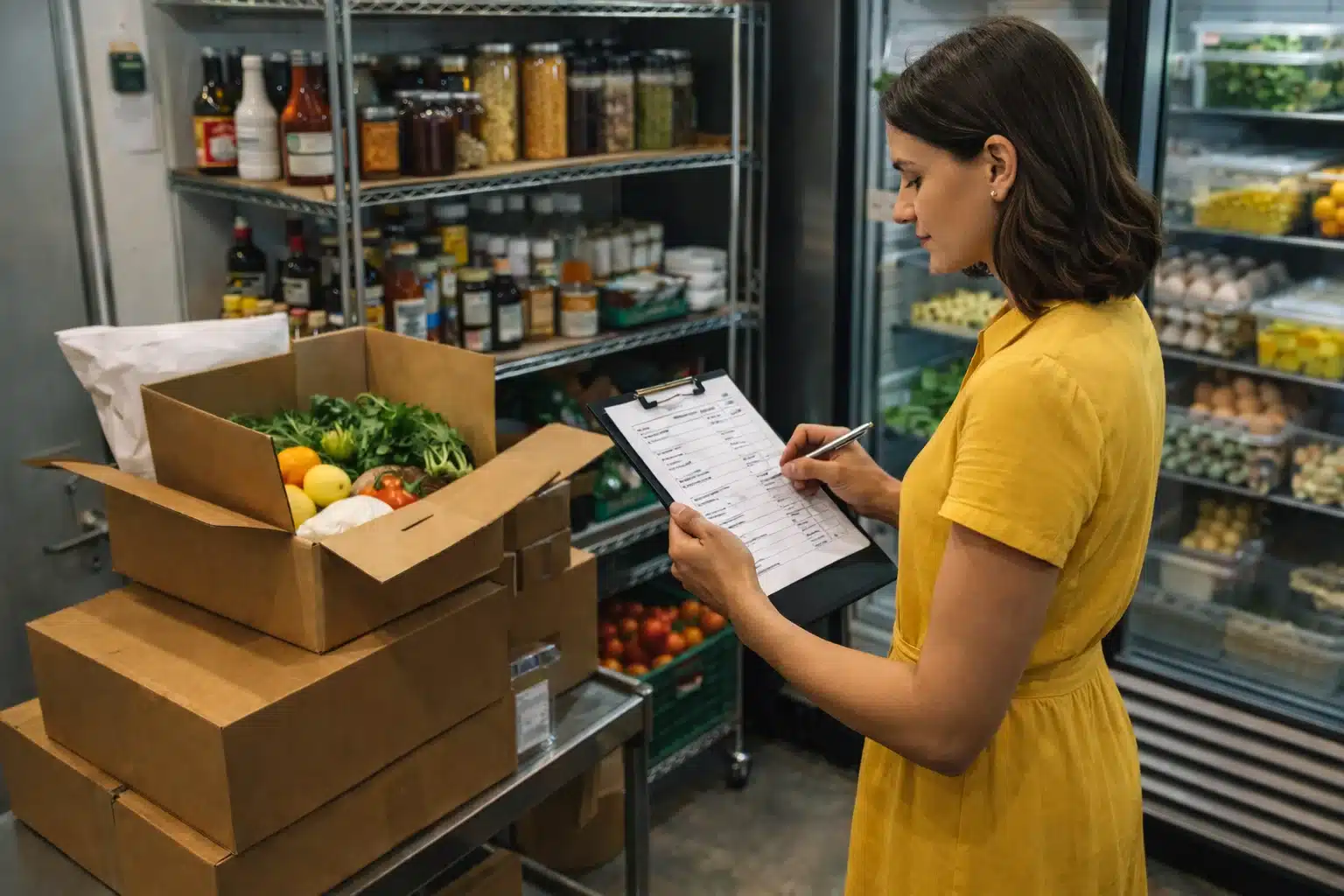
Tracking delivery accuracy protects kitchen operations. Late or incorrect shipments disrupt prep schedules. Therefore, measurement matters.
Scorecards provide objective feedback. Meanwhile, regular review meetings encourage accountability. As a result, consistency improves.
Structured monitoring supports better supplier management restaurants depend on. Reliable vendors strengthen operational confidence.
Partnership development adds another layer of value.
Building Collaborative Partnerships
Collaborative vendors share market insights and pricing forecasts. Early warnings help restaurants adjust purchasing plans. Therefore, proactive action becomes possible.
Joint demand forecasting discussions improve ordering accuracy. Meanwhile, mutual trust can lead to flexible payment terms. As a result, financial pressure decreases.
Strong partnerships improve food supply chain strategies over time. Collaboration transforms vendors into strategic allies.
Inventory Optimization and Demand Forecasting
Inventory represents tied-up capital. Too much stock increases waste, while too little limits revenue. Therefore, balanced planning remains critical.
Using Demand Forecasting Tools
Demand forecasting predicts sales using historical data. Seasonal patterns, promotions, and local events influence projections. As a result, ordering becomes smarter.
Weather changes may affect customer traffic. Meanwhile, holidays create predictable spikes. Therefore, reviewing past trends improves planning accuracy.
Accurate forecasts reduce emergency purchases. They also strengthen overall restaurant supply chain management.
Forecasts only work when inventory levels align with them.
Optimizing Inventory Levels
Inventory optimization ensures stock matches projected demand. Par levels define minimum and maximum thresholds. As a result, waste declines.
Cycle counts verify accuracy regularly. Meanwhile, digital tracking improves visibility. Therefore, managers react faster to discrepancies.
Balanced inventory supports cost control strategies. Efficient systems reduce spoilage and shrinkage.
Waste reduction adds further savings.
Reducing Waste Through Monitoring
Tracking spoilage highlights operational gaps. For example, over-prepping perishable items increases loss. Therefore, monitoring matters.
Regular audits reveal inconsistencies quickly. Meanwhile, staff training improves handling practices. As a result, losses decrease.
Waste reduction strengthens supply chain efficiency and protects margins.
Cost Control Strategies That Protect Margins
Price volatility challenges restaurants constantly. Without structured oversight, profits disappear quickly. Therefore, disciplined cost management remains essential.
Tracking Purchase Price Variance
Purchase price variance compares expected and actual costs. Sudden increases signal supplier or market issues. As a result, early action becomes possible.
Regular review prevents long-term budget damage. Meanwhile, renegotiation opportunities become visible. Therefore, financial control improves.
Consistent analysis supports effective restaurant supply chain management strategies without excessive spending.
Menu alignment plays a critical role as well.
Aligning Menu Engineering with Supply Costs
Menu engineering evaluates profitability by dish. High-cost ingredients may require price adjustments. Therefore, strategic updates protect margins.
Highlighting high-margin items improves revenue efficiency. Meanwhile, ingredient substitutions reduce exposure to volatile markets. As a result, food supply chain strategies stay flexible.
Linking sourcing decisions to menu planning strengthens overall restaurant financial performance.
Budget flexibility completes the cost control framework.
Creating Adaptive Supply Budgets
Static budgets fail during price swings. Flexible budgets adjust with market changes. Therefore, planning remains realistic.
Scenario forecasting prepares restaurants for supply shocks. Meanwhile, conservative projections protect cash flow. As a result, stability increases.
Adaptive budgeting reinforces long-term sustainability and disciplined cost control strategies.
Using Technology to Improve Efficiency
Technology increases visibility and reduces manual errors. Integrated systems provide real-time data. Therefore, decision-making becomes faster.
Integrating POS and Inventory Systems
Modern POS platforms sync sales with inventory automatically. As a result, stock levels update in real time.
Accurate data improves demand forecasting. Meanwhile, managers avoid over-ordering. Therefore, inventory optimization strengthens.
Integration enhances restaurant supply chain management by connecting front and back of house data.
Analytics tools offer deeper insights.
Leveraging Data Analytics
Analytics platforms identify trends quickly. Weekly reports reveal purchasing patterns. As a result, planning becomes proactive.
Predictive insights support vendor negotiations. Meanwhile, dashboards improve transparency. Therefore, supply chain efficiency improves steadily.
Data-driven oversight transforms reactive systems into strategic operations.
Centralization supports expansion.
Centralized Oversight for Multi-Location Growth
Multi-unit operators require unified reporting. Central dashboards consolidate purchasing data. As a result, leadership gains clarity.
Standardized processes strengthen supplier management restaurants use across locations. Meanwhile, benchmarking highlights best practices. Therefore, scaling becomes manageable.
Centralized oversight ensures consistent execution across every unit.
How Biyo POS Supports Stronger Supply Chain Control
 How Biyo POS Supports Stronger Supply Chain Control
Biyo POS connects sales, inventory, and reporting into one system. As a result, demand forecasting and inventory optimization become easier to manage. The platform improves supply chain efficiency through real-time dashboards and automated tracking.
If you want better control over restaurant inventory sourcing and cost control strategies, Biyo POS provides powerful tools. You can schedule a call here to explore features. You may also sign up directly at this signup page.
Frequently Asked Questions
Why are supply chain strategies important for restaurants?
They protect margins and ensure consistent product availability. Strong systems reduce disruptions and improve profitability.
How does demand forecasting improve efficiency?
It predicts purchasing needs accurately. As a result, restaurants avoid shortages and overstocking.
What role do vendor negotiations play?
Vendor negotiations help secure stable pricing and better contract terms. Therefore, cost volatility decreases.
How can technology improve restaurant supply chain management?
Integrated systems automate tracking and reporting. As a result, visibility improves and errors decrease.
What is the biggest mistake operators make?
Ignoring structured planning leads to waste and inconsistent sourcing. Clear strategies prevent these problems.