
Walk into a neighborhood wine shop, a craft beer retailer, or a local liquor store, and the checkout process feels simple enough. A customer picks a bottle, pays with a card, and heads home. Behind that quick transaction, however, payment processors use a standardized system to identify the type of business accepting the payment.
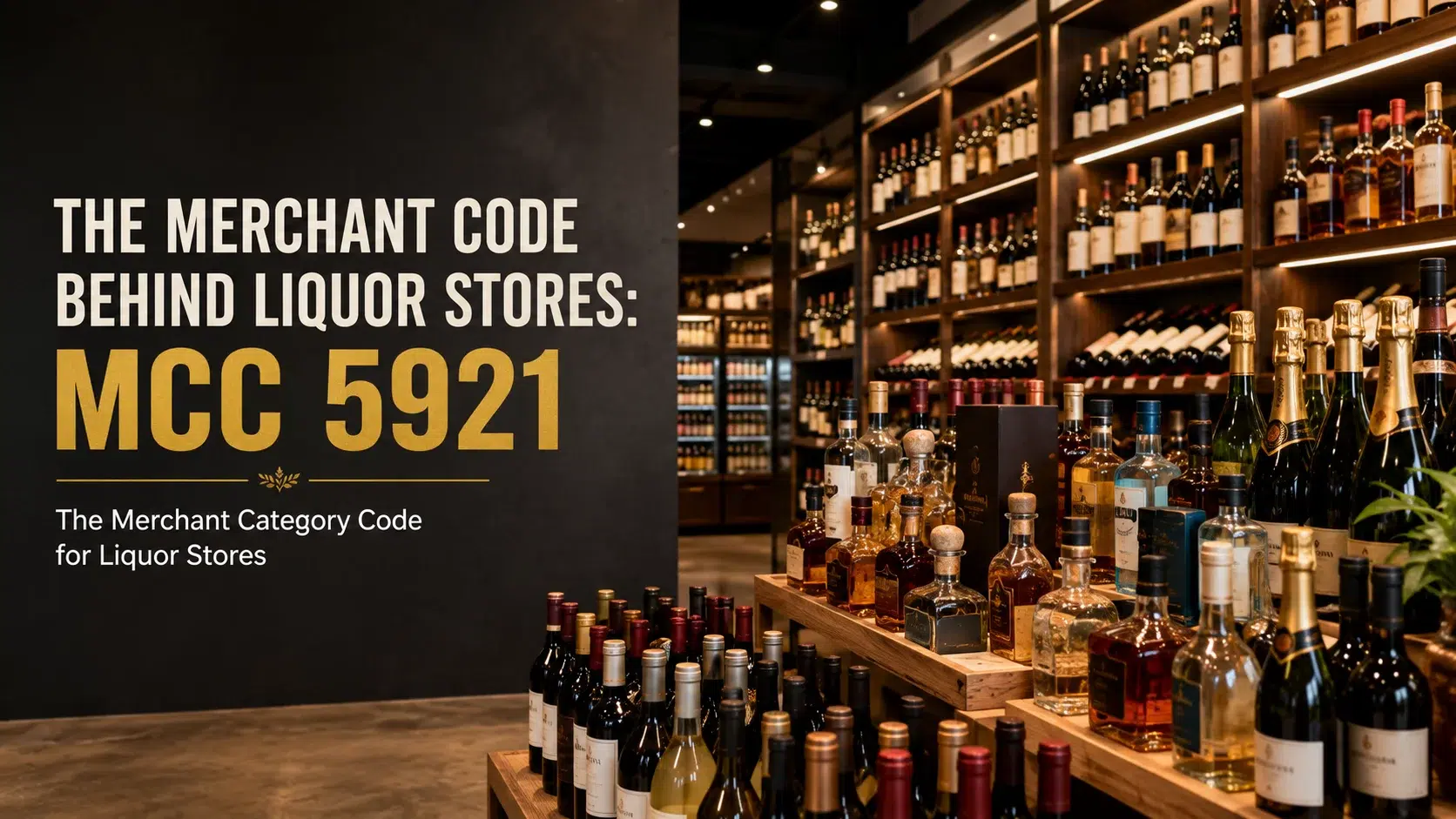
For many liquor stores, that identifier is MCC 5921. This Merchant Category Code tells banks, card networks, and payment processors that the business primarily sells alcoholic beverages for off-premise consumption. While store owners rarely need to think about this classification, it plays an important role in payment processing, merchant reporting, and transaction management.
Whether you operate an independent bottle shop, a large liquor retailer, or a specialty wine store, understanding MCC 5921 can help you better understand how your business is classified and why that classification matters.
At a Glance: MCC 5921
| Category | Details |
|---|---|
| Merchant Category Code | 5921 |
| Category Name | Package Stores, Beer, Wine & Liquor |
| Industry | Retail |
| Typical Businesses | Liquor stores, wine shops, bottle shops, beer retailers, and specialty alcohol stores. |
| Assigned By | Payment processors and acquiring banks |
| Purpose | Classifies businesses that primarily sell alcoholic beverages for retail purchase. |
Table of Contents
- What Is MCC 5921?
- Which Businesses Qualify for MCC 5921?
- Businesses That Usually Don’t Qualify
- Why Merchant Category Codes Matter
- How Payment Processors Use MCC 5921
- Benefits and Challenges of MCC 5921
- How to Verify Your Merchant Category Code
- MCC 5921 Compared to Similar Merchant Categories
- How Biyo Helps Liquor Stores
- Frequently Asked Questions
What Is MCC 5921?
Understanding MCC 5921
MCC 5921 is the Merchant Category Code assigned to retail businesses that primarily sell alcoholic beverages such as beer, wine, and spirits. These businesses typically sell products for customers to take home rather than consume on-site, making them different from bars, taverns, and restaurants.
You’ll often find this classification assigned to independent liquor stores, specialty wine retailers, bottle shops, and larger alcohol retailers. Although each business may specialize in different products, they all share the same core activity: selling packaged alcoholic beverages directly to consumers.
How Merchant Category Codes Are Assigned
When a business applies for a merchant account, its payment processor or acquiring bank reviews its primary operations before assigning a Merchant Category Code. The goal is to classify the merchant according to how it earns most of its revenue, not simply by the products displayed on its shelves.
For example, a retailer specializing in imported wines and another focused on craft beer may carry completely different inventories. If retail alcohol sales represent the primary business activity for both, they’re likely to receive MCC 5921.
Why Liquor Stores Have Their Own Classification
Liquor stores operate differently from grocery stores, restaurants, and bars. Customers visit to purchase packaged alcoholic beverages for off-premise consumption, not to enjoy drinks on-site or purchase a full range of groceries.
Because this retail model is unique, payment providers classify liquor stores separately. Doing so creates more accurate merchant records while helping financial institutions organize businesses consistently across the retail industry.
 Which Businesses Qualify for MCC 5921?
 Which Businesses Qualify for MCC 5921?
Businesses Commonly Assigned MCC 5921
MCC 5921 generally applies to retailers whose primary source of revenue comes from selling packaged alcoholic beverages. Some businesses may also stock mixers, glassware, snacks, or gift items, but alcohol sales remain the main focus.
- Liquor stores
- Wine shops
- Bottle shops
- Beer retailers
- Craft beer stores
- Specialty whiskey stores
- Spirit retailers
- Independent alcohol retailers
- Fine wine merchants
- Retail beverage stores
A Real-World Example
Imagine a neighborhood bottle shop known for its collection of local craft beers, imported wines, and premium spirits. Customers browse the shelves, receive recommendations from staff, and purchase sealed bottles to enjoy at home. The business doesn’t serve drinks on-site or operate like a bar.
Since retail alcohol sales define the business, MCC 5921 would typically be the appropriate Merchant Category Code.
How Payment Providers Determine Eligibility
Payment processors evaluate the overall business model before assigning a Merchant Category Code. They consider where revenue comes from, what customers primarily purchase, and how the business operates on a daily basis.
A grocery store may have an impressive wine selection, but if groceries account for most of its sales, it will generally remain classified as a grocery retailer rather than a liquor store. Likewise, a restaurant with an extensive wine list won’t usually qualify for MCC 5921 because dining—not retail alcohol sales—is its primary activity.
Businesses That Usually Don’t Qualify
Businesses with Different Merchant Category Codes
Many businesses sell alcoholic beverages, but not all of them fall under MCC 5921. Payment processors use separate Merchant Category Codes for businesses whose primary operations differ from liquor stores.
- Bars and taverns
- Nightclubs
- Restaurants
- Grocery stores
- Convenience stores
- Specialty food retailers
- Breweries focused on on-site service
Understanding the Difference
A sports bar may sell hundreds of beverages every night, but customers consume those drinks on the premises. A liquor store sells many of the same products, yet customers purchase sealed bottles to take elsewhere. That distinction is one of the biggest reasons these businesses receive different Merchant Category Codes.
The same principle applies to supermarkets that stock wine and beer. Even though alcohol is available, those products usually represent only one department within a much larger grocery operation.
Primary Business Activity Comes First
Merchant Category Codes focus on the merchant’s primary business rather than every product available for sale. Two stores may carry the same bottle of wine, but if one operates as a grocery store and the other as a specialty liquor retailer, their Merchant Category Codes will typically be different.
This approach creates a more accurate classification system and helps payment providers organize merchants based on how they actually do business.
Why Merchant Category Codes Matter
Creating Consistency Across the Payment Industry
Every electronic payment passes through multiple financial institutions before it’s approved. Merchant Category Codes give those organizations a standardized way to identify businesses, ensuring transactions are processed consistently across different payment networks.
Without Merchant Category Codes, organizing merchant accounts and transaction data across thousands of industries would be far more difficult.
Supporting Reporting and Rewards Programs
Merchant Category Codes help banks and payment processors organize merchant data, produce industry-specific reports, and support many credit card rewards programs. Some card issuers use these classifications when determining whether purchases qualify for cashback or bonus rewards.
While every rewards program has its own rules, Merchant Category Codes provide the foundation that makes those classifications possible.
Helping Monitor Payment Activity
Merchant Category Codes also support fraud monitoring by giving payment providers additional context about the business processing each transaction. Combined with purchasing behavior and transaction history, this information helps identify payment activity that may require further review.
Although MCC 5921 isn’t designed as a fraud prevention tool, it contributes to the broader systems that help keep electronic payments secure.
How Payment Processors Use MCC 5921
Identifying Liquor Store Transactions
When a liquor store is approved for a merchant account, MCC 5921 becomes part of its payment profile. Each eligible card transaction carries this classification, allowing payment processors to identify the business as a retailer specializing in packaged alcoholic beverages.
This standardized system creates consistency across the payments industry. Whether a customer purchases a bottle of wine from a neighborhood wine shop or a case of craft beer from a specialty retailer, the transaction is processed under the same Merchant Category Code.
Supporting Merchant Account Management
Merchant Category Codes give payment providers a better understanding of the businesses they support. While MCC 5921 doesn’t determine payment processing fees on its own, it helps acquiring banks evaluate merchant accounts by identifying the merchant’s primary business activity.
Other factors—such as transaction volume, average purchase amount, business history, and chargeback activity—also influence account reviews. The Merchant Category Code simply provides additional context during that process.
Improving Reporting and Transaction Monitoring
Grouping merchants by industry makes reporting much more valuable. Payment processors can analyze trends within the retail alcohol industry, while merchants receive organized transaction records that simplify accounting and business reporting.
MCC 5921 also supports fraud monitoring by helping payment providers understand what normal transaction behavior looks like for liquor stores. When combined with spending patterns and account history, this information helps identify unusual activity that may require additional review.
Benefits and Challenges of MCC 5921
Benefits of Accurate Classification
Having the correct Merchant Category Code ensures your liquor store is classified alongside businesses with similar operations. This improves consistency throughout the payment ecosystem while making merchant reporting more meaningful.
Accurate classification also helps eliminate confusion when discussing payment processing with acquiring banks or payment providers because everyone is working from the same understanding of your business.
Potential Challenges
The most common issue isn’t MCC 5921 itself but receiving an incorrect classification. If a liquor store is mistakenly categorized as another type of retailer, it can create unnecessary confusion when reviewing merchant account information or discussing payment services.
Business models can also evolve over time. For example, a retailer that expands into a full-service restaurant or transforms into a specialty grocery store may eventually require a different Merchant Category Code.
Best Practices for Liquor Store Owners
Review your merchant account information from time to time to make sure it still reflects how your business operates. If your primary business activity has changed, contact your payment processor to discuss whether your Merchant Category Code should be reviewed.
Keeping your merchant profile accurate helps ensure your payment provider understands your business correctly while reducing the risk of classification issues in the future.
How to Verify Your Merchant Category Code
Review Your Merchant Account Details
If you aren’t sure whether your business has been assigned MCC 5921, your merchant account documents are the best place to begin. Many payment processors display the Merchant Category Code in onboarding paperwork, merchant statements, or online account dashboards.
If you can’t locate the information yourself, your payment provider’s support team can usually confirm your classification quickly.
Request a Merchant Category Code Review
If you believe your liquor store has been assigned the wrong Merchant Category Code, contact your payment processor and request a review. You may be asked to provide information about your products, business operations, website, or primary revenue source before a final decision is made.
The review focuses on your overall business model rather than a single product category, ensuring the assigned Merchant Category Code accurately reflects your primary activity.
Know When Your MCC May Change
Merchant Category Codes aren’t permanent. If your business changes significantly over time, your payment processor may update the assigned classification to better match your current operations.
For example, if a liquor retailer later expands into a business where alcohol sales are no longer the primary source of revenue, another Merchant Category Code may become more appropriate.
MCC 5921 Compared to Similar Merchant Categories
 MCC 5921 Compared to Similar Merchant Categories
MCC 5921 vs. Bars and Restaurants
The biggest difference between MCC 5921 and restaurant-related Merchant Category Codes is where customers consume their purchases. Liquor stores sell packaged beverages for customers to take home, while bars and restaurants serve drinks for on-premise consumption as part of the dining or entertainment experience.
MCC 5921 vs. Grocery and Specialty Food Stores
Grocery stores and specialty food retailers may stock beer, wine, or spirits, but alcohol usually represents only part of their overall inventory. Liquor stores, by contrast, focus primarily on alcoholic beverages, making MCC 5921 the better fit for their business model.
Comparison Table
| Merchant Category Code | Business Type | Primary Business Activity |
|---|---|---|
| 5921 | Liquor Stores | Retail sale of packaged beer, wine, and spirits for off-premise consumption. |
| 5813 | Bars, Taverns & Nightclubs | Serving alcoholic beverages for on-site consumption. |
| 5411 | Grocery Stores & Supermarkets | Retail sale of groceries and household food products. |
| 5499 | Specialty Food Stores | Retail sale of specialty and niche food products. |
| 5462 | Retail Bakeries | Selling bread, cakes, pastries, and other baked goods. |
How Biyo Helps Liquor Stores
Managing a liquor store means keeping inventory accurate, monitoring stock levels, processing transactions quickly, and understanding which products sell best. Biyo POS brings these everyday tasks together in one platform, helping retailers streamline operations while gaining better visibility into inventory and sales performance.
Whether you run a neighborhood bottle shop or manage multiple retail locations, Biyo provides the tools to simplify daily operations and support business growth. Schedule a demo to see Biyo in action or create your account to explore the platform.
Frequently Asked Questions
What is MCC 5921?
MCC 5921 is the Merchant Category Code assigned to retail businesses that primarily sell packaged beer, wine, spirits, and other alcoholic beverages for off-premise consumption.
Who assigns MCC 5921?
Merchant Category Codes are assigned by payment processors or acquiring banks when a business opens a merchant account. The assigned code reflects the merchant’s primary business activity.
Can a grocery store have MCC 5921?
Generally, no. Grocery stores usually receive a grocery-related Merchant Category Code because food and household products represent their primary business activity, even if they sell alcoholic beverages.
Does MCC 5921 affect credit card rewards?
Some credit card issuers use Merchant Category Codes to determine whether purchases qualify for cashback or rewards. Eligibility depends on the individual card issuer and the terms of the rewards program.
How do I verify my Merchant Category Code?
You can verify your Merchant Category Code by reviewing your merchant account documents, checking your payment processor’s dashboard, or contacting your payment provider.
Can my Merchant Category Code change?
Yes. If your business changes significantly over time, your payment processor may review your account and assign a different Merchant Category Code that better reflects your current business operations.