
Fresh bread in the morning, custom cakes for celebrations, and pastries displayed behind a glass counter—retail bakeries have become an essential part of communities around the world. While customers focus on the products they purchase, every card payment made at the register is processed behind the scenes using a standardized system that helps financial institutions identify the business accepting the transaction.
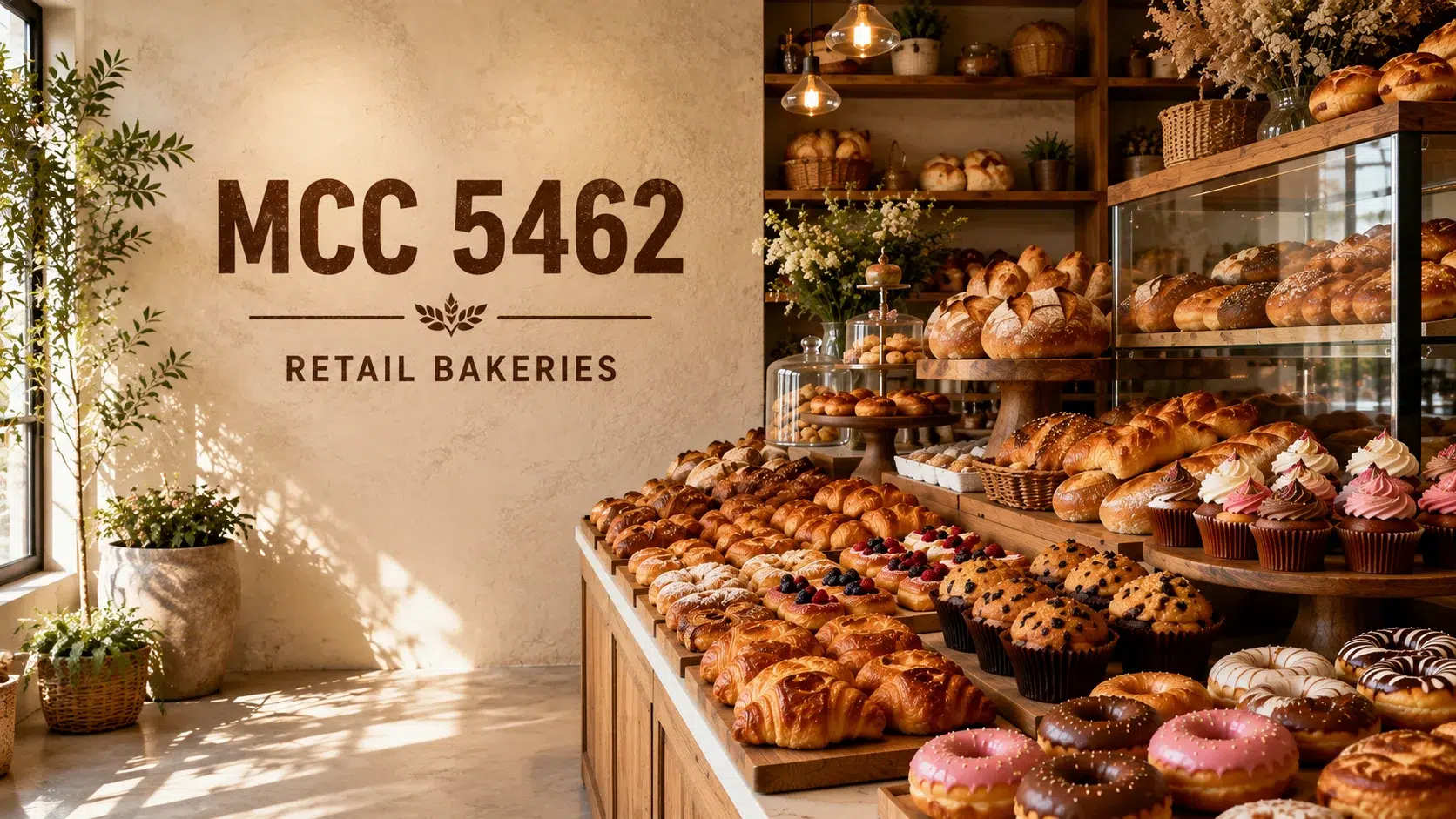
For many bakeries, that classification is MCC 5462. This four-digit Merchant Category Code tells payment processors, banks, and card networks that the business primarily operates as a retail bakery. Although most bakery owners never need to reference it directly, the code plays an important role in payment processing, merchant reporting, and transaction management.
If you’ve ever reviewed your merchant account or wondered how payment providers classify bakeries, understanding MCC 5462 is a great place to begin. This guide explains what the code means, which businesses usually qualify, and how it differs from other food-related Merchant Category Codes.
At a Glance: MCC 5462
| Category | Details |
|---|---|
| Merchant Category Code | 5462 |
| Category Name | Retail Bakeries |
| Industry | Food Retail |
| Typical Businesses | Retail bakeries, cake shops, pastry shops, donut shops, cupcake stores, and artisan bakeries. |
| Assigned By | Payment processors and acquiring banks |
| Purpose | Classifies bakery businesses for payment processing, reporting, and merchant management. |
Table of Contents
- What Is MCC 5462?
- Which Businesses Qualify for MCC 5462?
- Businesses That Usually Don’t Qualify
- Why Merchant Category Codes Matter
- How Payment Processors Use MCC 5462
- Benefits and Challenges of MCC 5462
- How to Verify Your Merchant Category Code
- MCC 5462 Compared to Similar Merchant Categories
- How Biyo Helps Retail Bakeries
- Frequently Asked Questions
What Is MCC 5462?
What Does MCC 5462 Represent?
MCC 5462 is the Merchant Category Code assigned to businesses that primarily sell baked goods directly to consumers. These businesses specialize in products such as bread, cakes, pastries, cookies, muffins, donuts, and other freshly baked items that are prepared for retail sale.
Unlike grocery stores or restaurants, retail bakeries focus on baked products as their core offering. Some bakeries also serve coffee or light refreshments, but fresh baked goods remain the primary reason customers walk through the door.
How Merchant Category Codes Are Assigned
When a bakery opens a merchant account, the payment processor or acquiring bank reviews the business before assigning an appropriate Merchant Category Code. The decision is based on the bakery’s primary business activity rather than the products that occasionally appear on its menu.
For example, an artisan bakery specializing in sourdough bread and a neighborhood donut shop may offer completely different products, but both can receive MCC 5462 because baked goods generate most of their revenue.
Why Retail Bakeries Have Their Own MCC
Retail bakeries occupy a unique position within the food industry. They don’t operate like grocery stores that stock thousands of products, nor do they function like full-service restaurants where customers order complete meals. Their business revolves around producing and selling baked goods, often made fresh throughout the day.
Because of this specialized business model, payment providers classify bakeries separately to create more accurate merchant records and improve consistency across payment networks.
 Which Businesses Qualify for MCC 5462?
 Which Businesses Qualify for MCC 5462?
Businesses Commonly Assigned MCC 5462
MCC 5462 generally applies to businesses whose primary revenue comes from selling baked goods directly to customers. While every bakery has its own specialty, they all share the same focus on retail bakery products.
- Retail bakeries
- Artisan bakeries
- Cake shops
- Pastry shops
- Donut shops
- Cupcake stores
- Cookie shops
- Pie shops
- Bagel bakeries
- Bread bakeries
A Bakery You’d Recognize
Picture a neighborhood bakery that opens before sunrise each morning. Customers stop by for freshly baked bread, croissants, muffins, birthday cakes, and pastries while enjoying the aroma of products coming straight from the oven. Even if the bakery also sells coffee or bottled drinks, baked goods remain its primary business.
That’s the type of merchant MCC 5462 is designed to classify.
How Payment Providers Determine Eligibility
Payment processors don’t simply look at a storefront sign before assigning a Merchant Category Code. They evaluate how the business earns most of its revenue, what products customers primarily purchase, and the overall nature of its operations.
A bakery that occasionally offers sandwiches or beverages will usually remain under MCC 5462 if baked goods continue to define the business. The classification reflects the merchant’s primary activity rather than every individual item it sells.
Businesses That Usually Don’t Qualify
Food Businesses with Different Merchant Category Codes
Although bakeries sell food, not every food business belongs under MCC 5462. Payment processors use different Merchant Category Codes for merchants whose primary operations fall into another category.
- Grocery stores
- Full-service restaurants
- Fast food restaurants
- Coffee shops primarily serving beverages
- Specialty food retailers
- Catering companies
- Convenience stores
Why Similar Businesses Receive Different MCCs
Consider a café that bakes pastries in-house. Customers mainly visit for coffee, while baked goods are offered as a complement to beverage sales. Even though pastries are available, the business may receive a different Merchant Category Code because beverages drive the majority of its revenue.
On the other hand, a bakery that serves coffee alongside its baked goods is still likely to remain classified under MCC 5462 because customers primarily visit to purchase bakery products.
The Importance of Primary Business Activity
Merchant Category Codes aren’t assigned based on a single product. Instead, payment providers evaluate the merchant’s overall business model. That’s why two businesses selling identical croissants can receive different Merchant Category Codes if one operates as a bakery and the other as a coffee shop.
Understanding this principle makes Merchant Category Codes much easier to interpret when reviewing your merchant account.
Why Merchant Category Codes Matter
Keeping Payment Processing Organized
Every card payment processed at a bakery becomes part of a much larger payment network involving banks, card issuers, processors, and acquiring institutions. Merchant Category Codes provide a common language that allows all of these organizations to identify businesses consistently.
Without standardized classifications like MCC 5462, organizing millions of daily transactions across thousands of industries would be far more complex.
Supporting Reporting and Rewards Programs
Merchant Category Codes help financial institutions organize transaction data and analyze merchant activity across different industries. They also support many credit card rewards programs, where purchases from certain merchant categories may qualify for cashback or bonus points.
Although every card issuer has its own eligibility rules, Merchant Category Codes provide the foundation for those reward classifications.
Helping Monitor Transaction Activity
Merchant Category Codes also contribute to fraud detection by providing additional context about the business processing each payment. When combined with transaction history and spending behavior, this information helps payment providers identify unusual activity more effectively.
While MCC 5462 isn’t a fraud prevention tool on its own, it plays an important role within the systems that help keep electronic payments secure.
How Payment Processors Use MCC 5462
Recognizing Bakery Businesses
Once a retail bakery begins accepting card payments, MCC 5462 becomes part of its merchant profile. Every eligible transaction processed by the business carries this classification, allowing payment processors to immediately recognize the merchant as a retail bakery.
This standardized approach keeps payment processing consistent across different banks, acquiring institutions, and card networks. Whether a customer buys a loaf of artisan bread from a neighborhood bakery or orders a custom cake from a specialty shop, the transaction is categorized using the same Merchant Category Code.
Supporting Merchant Account Management
Merchant Category Codes help payment providers better understand the businesses they serve. While MCC 5462 doesn’t determine processing fees by itself, it gives financial institutions valuable context when reviewing merchant accounts and managing payment services.
Other factors—including monthly sales volume, average transaction value, chargeback history, and overall business performance—are also considered when evaluating a merchant account. The Merchant Category Code is simply one piece of that assessment.
Improving Reporting and Transaction Monitoring
Accurate classifications make merchant reporting much more useful. Payment providers can analyze trends across bakery businesses, while merchants benefit from organized transaction data that supports accounting, financial reporting, and business planning.
MCC 5462 also contributes to transaction monitoring by helping payment providers understand what normal purchasing activity looks like for a retail bakery. Combined with other risk indicators, this information supports more effective fraud detection.
Benefits and Challenges of MCC 5462
Benefits of Accurate Classification
An accurate Merchant Category Code ensures your bakery is grouped with businesses that operate in a similar way. This improves consistency across the payment industry and helps create more meaningful merchant reporting.
It also makes communication with payment providers easier because everyone involved understands the nature of your business from the beginning.
Potential Challenges
The biggest challenge isn’t MCC 5462 itself but receiving an incorrect classification. If a bakery is categorized as another type of food business, it can create confusion when reviewing merchant account information or discussing payment processing services.
Business models can also evolve over time. A bakery that expands into a full-service café or restaurant may eventually require a different Merchant Category Code if its primary source of revenue changes.
Best Practices for Bakery Owners
Take time to review your merchant account information occasionally to ensure your Merchant Category Code still reflects your business. If your operations have changed significantly, discuss your classification with your payment processor.
Keeping your merchant profile accurate helps prevent misunderstandings and ensures your business continues to be represented correctly as it grows.
How to Verify Your Merchant Category Code
Review Your Merchant Documents
If you aren’t sure whether your bakery has been assigned MCC 5462, begin by reviewing your merchant account documentation. Many payment processors include the Merchant Category Code in onboarding paperwork, monthly statements, or online merchant dashboards.
If you can’t find the information, your payment provider’s support team can usually confirm your classification within a few minutes.
Request a Classification Review
If you believe your bakery has been assigned the wrong Merchant Category Code, contact your payment processor and request a review. They may ask questions about your products, services, website, or primary revenue source before determining whether another classification is more appropriate.
The review focuses on how your business operates rather than individual menu items or seasonal offerings.
Know When Your MCC Can Change
Merchant Category Codes aren’t permanent. As businesses expand or change direction, payment providers may review the assigned classification to ensure it still reflects the merchant’s primary business activity.
For example, a bakery that later develops into a full-service restaurant may qualify for a different Merchant Category Code because its business model has changed significantly.
MCC 5462 Compared to Similar Merchant Categories
 MCC 5462 Compared to Similar Merchant Categories
MCC 5462 vs. Grocery Stores and Restaurants
The biggest difference between MCC 5462 and other food-related Merchant Category Codes comes down to what the business primarily sells. Retail bakeries focus on baked goods, grocery stores offer a much wider selection of food products, and restaurants prepare complete meals for immediate consumption.
MCC 5462 vs. Other Specialty Food Businesses
Retail bakeries aren’t the only businesses specializing in food products. Candy stores, specialty food retailers, and coffee shops all have distinct business models, which is why payment processors classify them under separate Merchant Category Codes rather than placing them into one broad category.
Comparison Table
| Merchant Category Code | Business Type | Primary Business Activity |
|---|---|---|
| 5462 | Retail Bakeries | Selling freshly baked bread, cakes, pastries, and other bakery products. |
| 5411 | Grocery Stores & Supermarkets | Retail sale of groceries and household food products. |
| 5499 | Specialty Food Stores | Selling niche or specialty food products. |
| 5812 | Eating Places & Restaurants | Preparing and serving meals for immediate consumption. |
| 5441 | Candy, Nut & Confectionery Stores | Retail sale of confectionery products and specialty sweets. |
How Biyo Helps Retail Bakeries
Running a bakery means balancing fresh production, inventory, customer orders, and daily sales. Biyo POS helps simplify these tasks by combining inventory management, payment processing, and real-time reporting in one easy-to-use platform, giving bakery owners better visibility into their business.
Whether you operate a neighborhood bakery or manage multiple locations, Biyo provides the tools to streamline daily operations and support future growth. Schedule a demo to see Biyo in action or create your account to explore the platform.
Frequently Asked Questions
What is MCC 5462?
MCC 5462 is the Merchant Category Code assigned to retail bakeries that primarily sell baked goods such as bread, cakes, pastries, cookies, and similar products.
Who assigns MCC 5462?
Merchant Category Codes are assigned by payment processors or acquiring banks when a business opens a merchant account. The assigned code reflects the merchant’s primary business activity.
Can a bakery have a different Merchant Category Code?
Yes. If a business primarily operates as a café, restaurant, grocery store, or another type of food retailer, it may receive a different Merchant Category Code even if it sells baked goods.
Does MCC 5462 affect credit card rewards?
Some credit card issuers use Merchant Category Codes when determining whether purchases qualify for cashback or rewards. Eligibility depends on the card issuer and the specific rewards program.
How do I verify my Merchant Category Code?
You can verify your Merchant Category Code by reviewing your merchant account documents, checking your payment processor’s online dashboard, or contacting your payment provider directly.
Can my Merchant Category Code change?
Yes. If your bakery changes its primary business model over time, your payment processor may review your account and assign a Merchant Category Code that better reflects your current operations.