
Not every apparel retailer fits neatly into a traditional clothing category. While many merchants specialize in men’s fashion, women’s apparel, children’s clothing, or footwear, others focus on niche fashion segments, specialty apparel, or unique accessories that serve specific customer needs. These businesses often carry distinctive merchandise that reflects personal style, professional requirements, cultural traditions, hobbies, or specialized lifestyles, making them an important part of the retail fashion industry.
Businesses operating in this category are commonly classified under Merchant Category Code (MCC) 5699. Payment processors, acquiring banks, and major card networks use this Merchant Category Code to identify merchants whose primary business involves selling miscellaneous apparel and fashion accessories that are not more accurately classified under another apparel-related MCC. Although customers rarely notice these classifications, they play an important role in payment processing, merchant reporting, transaction categorization, fraud monitoring, and certain credit card rewards programs.
This guide explains what MCC 5699 covers, the types of businesses that typically qualify, the products commonly sold, why proper merchant classification matters, and how specialty apparel retailers use modern retail technology to improve inventory management and customer service.
Table of Contents
Understanding MCC 5699
What Is Merchant Category Code 5699?
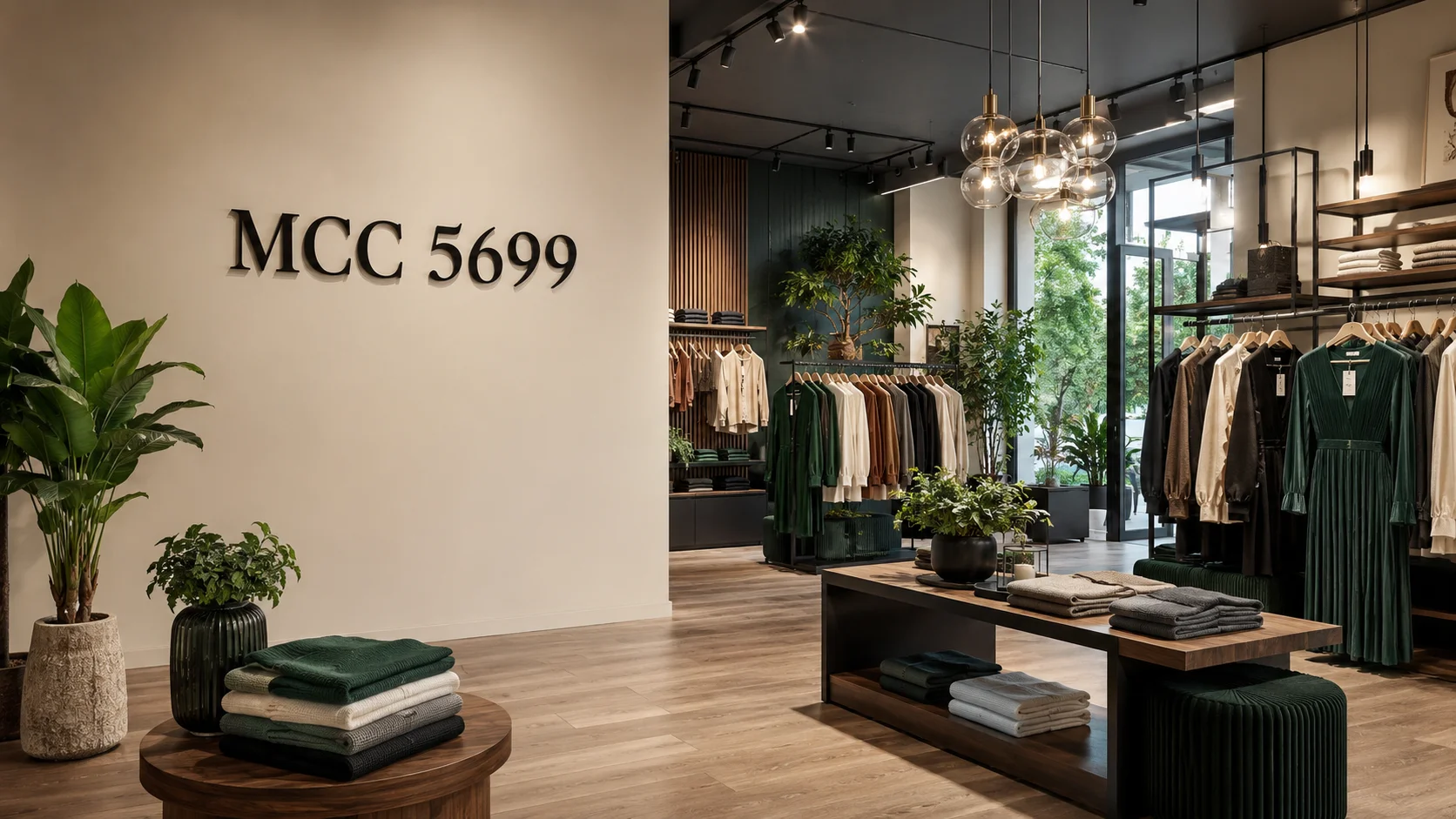
MCC 5699 is the Merchant Category Code assigned to miscellaneous apparel and accessory shops that primarily sell clothing, fashion accessories, or specialty wearable products that do not fall under a more specific apparel classification. Rather than representing one particular type of retailer, this category brings together businesses that offer specialized merchandise for niche markets or unique customer needs.
This classification helps distinguish specialty apparel merchants from stores dedicated exclusively to men’s clothing, women’s ready-to-wear, children’s apparel, footwear, luggage, or department store merchandise.
How Payment Networks Use MCC 5699
Whenever a customer pays with a credit or debit card, the transaction includes a Merchant Category Code that identifies the merchant’s primary business activity. Payment processors, banks, and card networks use MCC 5699 to categorize miscellaneous apparel retailers for payment routing, merchant reporting, transaction analysis, fraud monitoring, and rewards program administration.
Although shoppers rarely notice the classification, it supports standardized payment processing across the retail industry.
Why Correct Merchant Classification Matters
Accurate Merchant Category Codes ensure businesses are properly identified within payment systems. Specialty apparel retailers that do not clearly fit another apparel-related MCC generally qualify under MCC 5699. Correct classification supports consistent reporting, reduces confusion during merchant onboarding, and helps payment providers maintain reliable transaction records.
 Businesses Classified Under MCC 5699
 Businesses Classified Under MCC 5699
Specialty Apparel Retailers
Many businesses under MCC 5699 specialize in apparel designed for niche customer groups or unique occasions. These retailers may focus on products that serve particular professions, lifestyles, hobbies, or cultural traditions rather than offering general fashion collections.
Fashion Accessory Shops
Some merchants primarily sell fashion accessories that complement clothing collections. Their merchandise may include scarves, gloves, ties, suspenders, fashion belts, specialty headwear, and other wearable accessories that help customers complete an outfit while remaining outside more specialized retail classifications.
Niche Clothing Boutiques
Independent boutiques that offer carefully curated apparel unavailable through traditional clothing stores may also fall within MCC 5699. These retailers often emphasize limited collections, unique brands, handcrafted products, or exclusive merchandise designed to appeal to customers seeking something distinctive.
Products Commonly Sold
Specialty Clothing
Retailers classified under MCC 5699 often carry specialty apparel designed for specific purposes, events, occupations, or lifestyles. Their inventory may include unique garments that are not commonly stocked by traditional apparel retailers.
Fashion Accessories
Many businesses offer a broad selection of wearable accessories such as belts, scarves, ties, gloves, hats, suspenders, shawls, and other fashion items that enhance complete outfits while allowing customers to express their personal style.
Seasonal and Limited Collections
Because many specialty apparel shops serve niche markets, they frequently introduce limited-edition merchandise, seasonal collections, locally produced products, or exclusive designs that differentiate them from larger fashion retailers and encourage repeat customer visits.
Why MCC 5699 Matters
Provides Accurate Merchant Classification
MCC 5699 ensures specialty apparel businesses that do not align with more specific clothing categories are properly classified within payment networks. This improves consistency across merchant records and payment processing systems.
Supports Business Reporting
Accurate merchant classification contributes to organized transaction reporting, financial analysis, accounting processes, and payment data management. Reliable categorization benefits both merchants and financial institutions by improving reporting accuracy.
May Affect Cardholder Rewards
Some credit card issuers use Merchant Category Codes when determining cashback categories or bonus reward eligibility. Depending on the card issuer’s program, purchases made at merchants classified under MCC 5699 may qualify differently than purchases made under other apparel-related Merchant Category Codes.
MCC 5699 Comparison Table
| Category | MCC 5699 Miscellaneous Apparel and Accessory Shops |
|---|---|
| Primary Business | Specialty apparel and fashion accessory retail |
| Typical Customers | Fashion shoppers seeking niche apparel and unique accessories |
| Common Products | Specialty clothing, scarves, belts, hats, gloves, ties, and fashion accessories |
| Sales Channels | Boutiques, specialty retail stores, online shops, and independent retailers |
| Inventory Characteristics | Curated collections, seasonal merchandise, and limited-edition products |
| Peak Seasons | Holiday shopping, seasonal fashion launches, and promotional events |
| Operational Priorities | Inventory accuracy, merchandising, supplier relationships, and customer experience |
Industry Operations
Curating a Distinctive Product Selection
Unlike traditional apparel retailers that stock broad clothing collections, businesses classified under MCC 5699 often succeed by offering carefully curated merchandise that appeals to a specific audience. Whether the focus is specialty fashion, unique accessories, or niche apparel, retailers continuously evaluate customer preferences and emerging trends to build collections that stand out in a competitive market.
Strong supplier relationships and thoughtful merchandising allow these businesses to offer products that customers may not find in large department stores or national retail chains.
Delivering a Personalized Shopping Experience
Customers visiting specialty apparel and accessory shops often value expert advice and individualized service as much as the products themselves. Store associates help shoppers choose styles, coordinate accessories, recommend gift ideas, and discover items that reflect their personality or specific needs. This personalized approach encourages repeat visits and helps independent retailers build long-term customer loyalty.
Balancing In-Store and Online Sales
Many specialty retailers complement their physical stores with eCommerce websites and social media storefronts to reach customers beyond their local market. Maintaining synchronized inventory across every sales channel helps prevent overselling, simplifies order fulfillment, and provides customers with a consistent shopping experience whether they purchase online or in person.
Inventory and Operational Challenges
Managing Small-Batch Inventory
Many specialty apparel retailers purchase merchandise in limited quantities to maintain exclusivity and reduce inventory risk. While this creates a unique shopping experience, it also requires careful inventory planning to ensure popular products remain available without tying up excessive capital in slow-moving stock.
Responding to Changing Fashion Trends
Consumer preferences in specialty fashion can change quickly as new styles, influencers, and seasonal trends emerge. Retailers must monitor customer demand, introduce fresh collections regularly, and identify products that no longer match market preferences before excess inventory begins to accumulate.
Working with Multiple Independent Suppliers
Unlike large chain retailers that often purchase from a limited number of manufacturers, many businesses operating under MCC 5699 source products from numerous independent brands, local artisans, and specialty wholesalers. Coordinating deliveries, maintaining consistent product quality, and managing supplier relationships require strong organization and reliable inventory processes.
Industry Trends
Demand for Unique Products Continues to Grow
Consumers are increasingly seeking apparel and accessories that reflect their individual style rather than mass-produced fashion. Limited collections, handcrafted products, and exclusive designs continue to attract shoppers looking for distinctive merchandise unavailable through larger retailers.
Independent Brands Are Gaining Popularity
Many shoppers actively support independent designers, local businesses, and emerging fashion labels. Specialty retailers are expanding their product offerings by partnering with smaller brands that provide originality, craftsmanship, and products that appeal to niche audiences.
Retail Technology Supports Smarter Operations
Cloud-based POS systems, barcode scanning, real-time inventory management, integrated eCommerce, customer loyalty programs, and detailed sales reporting help specialty apparel retailers improve operational efficiency. These tools provide better visibility into inventory performance, simplify purchasing decisions, and allow businesses to focus on delivering exceptional customer experiences while adapting to changing market trends.
How Biyo Helps Miscellaneous Apparel and Accessory Shops
 How Biyo Helps Miscellaneous Apparel and Accessory Shops
Specialty apparel retailers need accurate inventory management to keep track of unique products, limited collections, and fast-changing merchandise. Biyo POS helps simplify daily operations with real-time inventory tracking, barcode scanning, and faster checkout, allowing businesses to spend more time serving customers.
Whether you sell in-store, online, or at multiple locations, Biyo keeps inventory synchronized across every sales channel while providing reports that highlight bestselling products, inventory movement, and sales trends. You can sign up for Biyo POS or schedule a personalized demo to see how it can support your specialty retail business.
Frequently Asked Questions
What is MCC 5699?
MCC 5699 is the Merchant Category Code for miscellaneous apparel and accessory shops. It applies to specialty apparel retailers and fashion accessory businesses that do not fall under a more specific apparel-related Merchant Category Code.
Which businesses qualify for MCC 5699?
Businesses such as specialty apparel boutiques, niche clothing retailers, fashion accessory shops, and merchants selling unique wearable products generally qualify under MCC 5699 when these items represent their primary business activity.
What products are commonly sold under MCC 5699?
Common products include specialty clothing, scarves, belts, hats, gloves, ties, shawls, suspenders, and other fashion accessories, along with limited-edition or niche apparel collections.
Does MCC 5699 affect credit card rewards?
It can. Some credit card issuers use Merchant Category Codes to determine cashback categories or bonus rewards. Eligibility depends on the individual card issuer and its rewards program.
Why is Merchant Category Code 5699 important?
MCC 5699 helps payment processors, banks, and card networks accurately classify specialty apparel merchants for payment processing, merchant reporting, fraud monitoring, and transaction analytics.
How can specialty apparel retailers improve inventory management?
Using a modern POS system with real-time inventory tracking, barcode scanning, integrated eCommerce, and detailed reporting helps retailers maintain accurate stock levels, manage limited collections, and make better purchasing decisions.