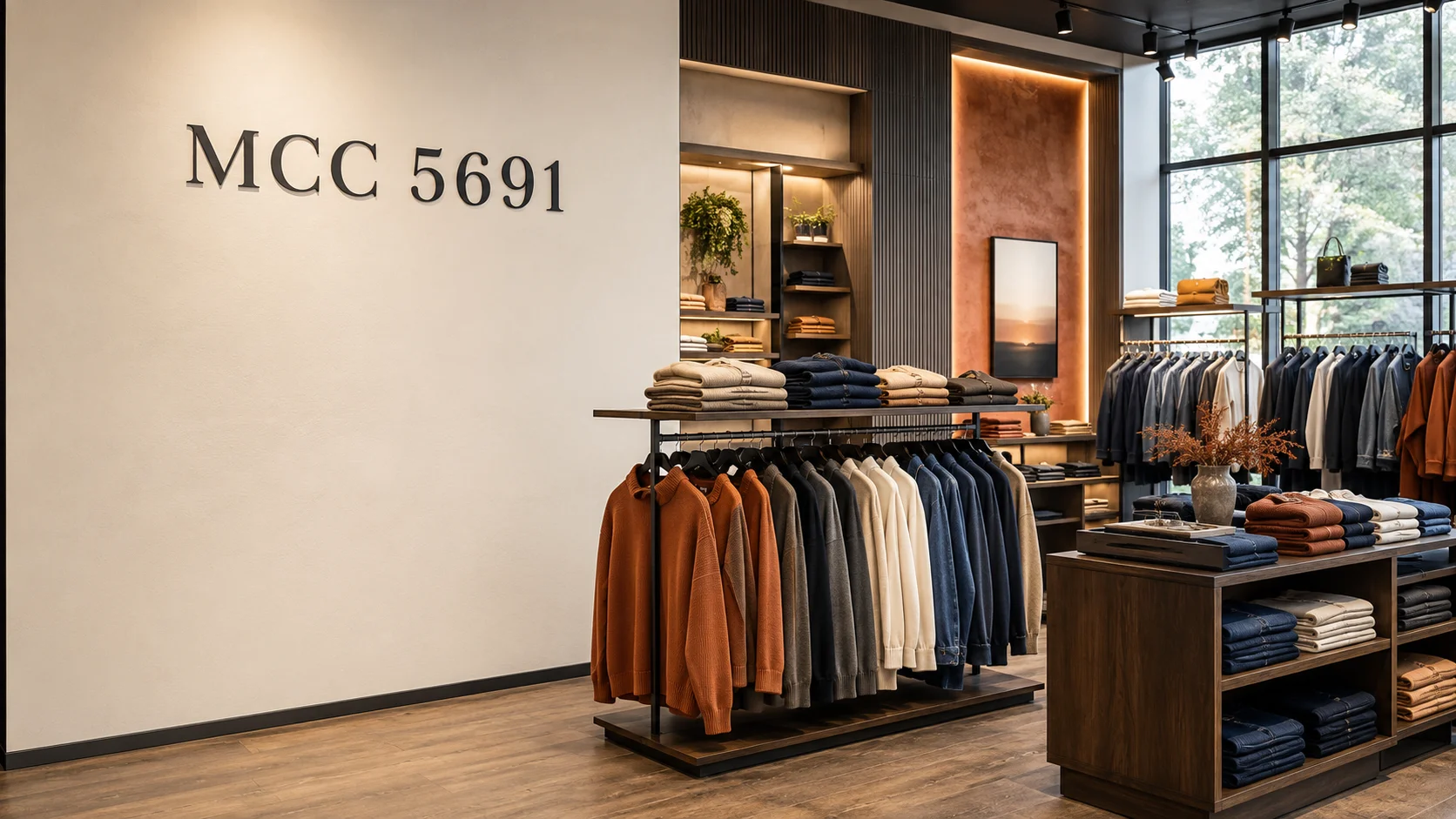

Clothing retailers that serve both men and women occupy a unique position in the apparel industry. Instead of specializing in a single demographic, these stores provide complete fashion solutions for individuals, couples, and families looking for quality apparel in one convenient location. From casual everyday essentials to business attire and seasonal collections, men’s and women’s clothing stores help shoppers build wardrobes that suit their lifestyle, budget, and personal style.
Businesses specializing in this type of apparel are commonly classified under Merchant Category Code (MCC) 5691. Payment processors, acquiring banks, and major card networks use this Merchant Category Code to identify merchants whose primary business involves selling clothing for both men and women. While shoppers rarely notice these classifications, they play an important role in payment processing, merchant reporting, transaction categorization, and certain credit card rewards programs.
This guide explains what MCC 5691 covers, the businesses that typically qualify, the products commonly sold, why proper merchant classification matters, and how modern retail technology helps apparel retailers manage inventory, improve customer service, and grow their business.
Table of Contents
Understanding MCC 5691
What Is Merchant Category Code 5691?
MCC 5691 is the Merchant Category Code assigned to businesses whose primary activity is selling apparel for both men and women. Unlike retailers that specialize in a single gender or age group, these stores offer a broad clothing assortment that serves diverse customer needs, making them a convenient shopping destination for everyday wear, work attire, seasonal fashion, and special occasions.
This Merchant Category Code distinguishes general apparel retailers from merchants that focus exclusively on men’s clothing, women’s ready-to-wear, children’s apparel, footwear, or fashion accessories.
How Payment Networks Use MCC 5691
Whenever a customer pays with a credit or debit card, the transaction includes a Merchant Category Code that identifies the merchant’s primary business activity. Card networks, acquiring banks, and payment processors use MCC 5691 to classify men’s and women’s clothing retailers for transaction processing, merchant reporting, fraud monitoring, payment analytics, and certain credit card reward programs.
Although customers rarely see this classification, it helps maintain consistency across electronic payment systems while supporting accurate financial reporting.
Why Correct Merchant Classification Matters
Assigning the appropriate Merchant Category Code ensures businesses are accurately categorized within payment networks. Retailers whose primary business is selling apparel for both men and women generally qualify under MCC 5691, while businesses specializing in children’s clothing, accessories, footwear, or department store merchandise typically fall under different Merchant Category Codes. Accurate classification supports reliable reporting and consistent payment processing.
 Businesses Classified Under MCC 5691
 Businesses Classified Under MCC 5691
General Apparel Stores
Many independent apparel retailers operate under MCC 5691 because they offer clothing collections for both men and women within a single store. Their inventory often includes casual wear, business attire, denim, outerwear, knitwear, and seasonal fashion designed to appeal to a broad customer base.
Lifestyle Fashion Retailers
Lifestyle clothing stores that emphasize coordinated collections for adults commonly qualify under MCC 5691. These retailers frequently combine modern fashion trends with timeless wardrobe essentials, allowing customers to shop for complete outfits in one location.
Contemporary Clothing Boutiques
Some boutiques specialize in carefully curated apparel for both men and women while maintaining a unique brand identity. Their product assortment may include premium basics, designer collections, sustainable fashion, locally produced garments, and limited-edition seasonal releases that differentiate them from larger chain retailers.
Products Commonly Sold
Everyday Apparel
Retailers classified under MCC 5691 typically sell T-shirts, jeans, shirts, blouses, trousers, skirts, sweaters, jackets, dresses, hoodies, and other everyday clothing designed for work, leisure, and casual occasions. These core products form the foundation of most apparel collections throughout the year.
Seasonal Fashion Collections
To reflect changing weather and consumer preferences, clothing stores regularly introduce seasonal merchandise such as lightweight summer apparel, winter coats, knitwear, rain jackets, holiday collections, and transitional clothing. These rotating collections encourage repeat visits and help retailers stay aligned with current fashion trends.
Wardrobe Essentials and Complementary Apparel
Many businesses also stock activewear, sleepwear, loungewear, formalwear, basics, and coordinated separates that allow customers to build complete wardrobes. Some retailers supplement their clothing collections with a limited selection of accessories, although apparel remains their primary business focus under MCC 5691.
Why MCC 5691 Matters
Supports Accurate Payment Processing
Merchant Category Codes help payment processors consistently identify the type of merchant accepting each transaction. Using MCC 5691 ensures men’s and women’s clothing retailers are accurately categorized within payment networks while supporting reliable payment processing and standardized merchant reporting.
Improves Financial Reporting
Correct merchant classification contributes to organized accounting records, transaction reporting, payment analytics, and business intelligence. Consistent merchant categorization benefits both retailers and payment providers by improving reporting accuracy across multiple financial systems.
May Influence Credit Card Rewards
Some credit card issuers use Merchant Category Codes to determine cashback categories or bonus reward eligibility. Depending on the issuer’s program, purchases made at merchants classified under MCC 5691 may qualify differently than purchases made at businesses operating under other retail categories.
MCC 5691 Comparison Table
| Category | MCC 5691 Men’s and Women’s Clothing Stores |
|---|---|
| Primary Business | Retail sale of apparel for both men and women |
| Typical Customers | Adults, professionals, couples, families, and fashion-conscious shoppers |
| Common Products | Casual wear, business attire, outerwear, denim, dresses, shirts, knitwear, and seasonal apparel |
| Sales Channels | Apparel stores, shopping malls, boutiques, and online clothing retailers |
| Inventory Characteristics | Multiple categories, seasonal collections, broad size ranges, and fast inventory turnover |
| Peak Seasons | Spring and fall collections, back-to-school, holidays, and end-of-season sales |
| Operational Priorities | Inventory planning, merchandising, trend forecasting, and customer experience |
Industry Operations
Managing Broad Apparel Collections
Men’s and women’s clothing stores manage a significantly wider product assortment than retailers focused on a single customer segment. Inventory often spans casual wear, business attire, denim, outerwear, formal clothing, activewear, and seasonal collections for both men and women. Each category requires multiple sizes, colors, styles, and fits, making assortment planning an essential part of daily operations.
Retailers regularly analyze sales data to determine which products deserve additional floor space, which collections require replenishment, and which items should be discounted to make room for new arrivals. Maintaining the right product mix helps maximize sales while reducing excess inventory.
Delivering a Personalized Shopping Experience
Apparel shopping is often driven by personal style rather than necessity alone. Customers expect knowledgeable staff who can recommend outfit combinations, explain sizing differences, suggest coordinating pieces, and help them find clothing suitable for work, travel, special occasions, or everyday wear. Well-organized store layouts and visually appealing displays also make shopping easier while encouraging customers to explore multiple departments.
Many retailers enhance the experience further by offering fitting rooms, loyalty programs, seasonal promotions, and personalized recommendations that strengthen long-term customer relationships.
Connecting Physical and Online Retail
Modern clothing retailers rarely depend on in-store sales alone. Many combine physical locations with eCommerce websites, mobile shopping, social commerce, and buy-online-pickup-in-store services. Keeping inventory synchronized across every sales channel allows businesses to fulfill orders accurately, avoid overselling, and provide customers with a seamless shopping experience regardless of where purchases begin.
Inventory and Operational Challenges
Managing Sizes, Colors, and Styles
Every clothing collection typically includes multiple size ranges, color options, and style variations. A single garment may exist in dozens of SKU combinations, creating inventory complexity that grows rapidly as new collections arrive. Accurate inventory management helps ensure customers can find the sizes and styles they expect while reducing stock discrepancies.
Keeping Pace with Fashion Trends
Consumer preferences evolve quickly as seasonal collections, social media trends, and changing lifestyles influence purchasing behavior. Retailers must balance timeless wardrobe essentials with trend-driven merchandise, carefully planning purchases to satisfy current demand without accumulating excess inventory that may lose popularity within a few months.
Maintaining Healthy Inventory Turnover
Unsold apparel ties up valuable retail space and working capital. Successful clothing stores closely monitor inventory turnover, identify slow-moving merchandise early, and use promotions, markdowns, or merchandising adjustments to maintain a healthy product lifecycle. Effective inventory planning helps improve profitability while ensuring fresh collections remain available throughout the year.
Industry Trends
Omnichannel Shopping Has Become the Standard
Today’s shoppers expect the flexibility to browse products online, check local inventory, purchase through mobile devices, and pick up orders in-store. Retailers that integrate digital and physical shopping experiences provide greater convenience while building stronger customer loyalty.
Demand for Sustainable Fashion Continues to Grow
Consumers are increasingly interested in clothing produced using sustainable materials, ethical manufacturing practices, and environmentally responsible supply chains. Many apparel retailers now offer eco-friendly collections and provide greater transparency about product sourcing to meet changing customer expectations.
Technology Is Transforming Apparel Retail
Cloud-based POS systems, real-time inventory management, barcode scanning, integrated eCommerce platforms, customer loyalty programs, and advanced sales analytics are helping clothing retailers operate more efficiently. These technologies improve inventory accuracy, support faster replenishment decisions, personalize customer engagement, and provide valuable business insights that drive long-term growth.
How Biyo Helps Men’s and Women’s Clothing Stores
 How Biyo Helps Men’s and Women’s Clothing Stores
Managing a clothing store that serves both men and women requires balancing diverse product categories, broad size ranges, seasonal collections, and constantly changing fashion trends. From casual basics and business attire to outerwear and special occasion apparel, retailers need reliable technology that keeps inventory accurate while delivering a seamless shopping experience. Biyo POS provides an all-in-one retail management solution designed to simplify these everyday operations.
With real-time inventory tracking, every sale immediately updates stock levels across all product categories, giving employees accurate visibility into available sizes, colors, and styles. Barcode scanning speeds up receiving shipments, inventory counts, and checkout while reducing manual entry errors. This allows retailers to replenish bestselling items quickly, maintain accurate stock records, and minimize missed sales caused by unavailable inventory.
Biyo also supports omnichannel retail by synchronizing inventory across physical stores and online sales channels. Whether customers shop in-store, purchase online, or choose local pickup, inventory remains consistent across every platform. Businesses operating multiple locations can monitor stock, transfer merchandise between stores, compare sales performance, and manage operations from a centralized cloud dashboard.
Comprehensive reporting gives retailers valuable insights into bestselling collections, seasonal demand, inventory turnover, customer purchasing behavior, and overall sales performance. These analytics help businesses make smarter buying decisions, optimize merchandising strategies, reduce excess inventory, and keep popular products available throughout the year.
Whether you operate an independent apparel boutique or a multi-location clothing retailer, Biyo provides the tools needed to improve efficiency and support long-term growth. You can sign up for Biyo POS or schedule a personalized demo to see how the platform can help modernize your retail business.
Frequently Asked Questions
What is MCC 5691?
MCC 5691 is the Merchant Category Code assigned to businesses that primarily sell clothing for both men and women. Payment processors use this code to classify merchants for payment processing, transaction reporting, and financial analytics.
Which businesses qualify for MCC 5691?
General apparel retailers, lifestyle clothing stores, fashion boutiques, and retailers offering clothing collections for both men and women generally qualify under MCC 5691 when apparel is their primary business activity.
What products are commonly sold under MCC 5691?
Businesses classified under MCC 5691 typically sell casual wear, business attire, dresses, shirts, jeans, outerwear, activewear, formal clothing, knitwear, seasonal collections, and other apparel for adult men and women.
Does MCC 5691 affect credit card rewards?
It may. Some credit card issuers use Merchant Category Codes to determine cashback categories or bonus reward eligibility. Whether purchases qualify depends on the specific card issuer and its rewards program.
Why is Merchant Category Code 5691 important?
MCC 5691 helps banks, payment processors, and card networks accurately classify clothing retailers that serve both men and women. It supports payment processing, merchant reporting, fraud monitoring, transaction categorization, and business analytics.
How can men’s and women’s clothing stores improve inventory management?
Modern POS systems with real-time inventory tracking, barcode scanning, cloud reporting, integrated eCommerce, and advanced sales analytics help apparel retailers manage size variations, optimize seasonal purchasing, improve inventory accuracy, and deliver a better customer shopping experience.