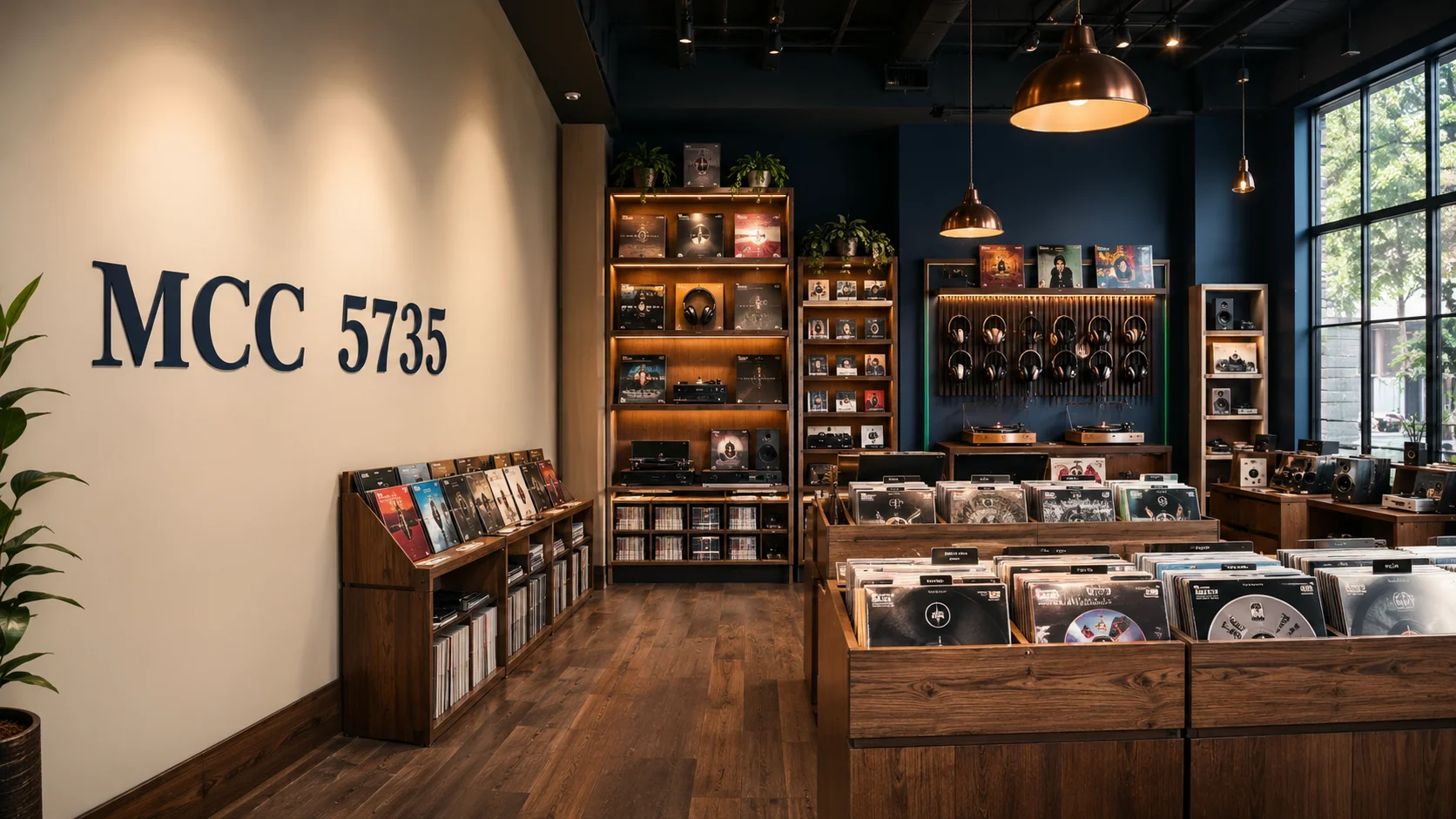

Despite the rise of digital streaming, physical music continues to hold a special place for collectors, audiophiles, musicians, and passionate fans. Vinyl records have experienced a remarkable resurgence, while CDs, limited-edition releases, box sets, and rare albums remain popular among customers who value sound quality, artwork, and the tangible experience of owning music. Record stores have evolved into cultural destinations where people discover new artists, hunt for collectibles, and connect with local music communities.
Businesses specializing in these products are commonly classified under Merchant Category Code (MCC) 5735. Payment processors, acquiring banks, and major card networks use this Merchant Category Code to identify merchants whose primary business involves selling recorded music, including vinyl records, compact discs, audio recordings, and related music merchandise. Although customers rarely notice this classification during checkout, it plays an important role in payment processing, merchant reporting, transaction categorization, fraud monitoring, and certain credit card rewards programs.
This guide explains what MCC 5735 covers, the businesses that typically qualify, the music products commonly sold, why proper merchant classification matters, and how modern retail technology helps record stores manage inventory, collectibles, customer demand, and both in-store and online music sales.
Table of Contents
Understanding MCC 5735
What Is Merchant Category Code 5735?
MCC 5735 is the Merchant Category Code assigned to businesses that primarily sell recorded music and related products. These merchants typically offer vinyl records, CDs, audio albums, boxed collections, music collectibles, and artist merchandise. Many stores also carry new releases alongside rare and vintage recordings, serving everyone from casual listeners to dedicated collectors.
Unlike electronics retailers or digital music platforms, businesses classified under MCC 5735 focus on physical music media and the culture surrounding music collecting, making them an important part of the entertainment retail industry.
How Payment Networks Use MCC 5735
Every card transaction includes a Merchant Category Code that identifies the merchant’s primary business activity. Payment processors, banks, and card networks use MCC 5735 to classify record stores for transaction processing, merchant reporting, fraud prevention, payment analytics, and certain rewards program classifications.
Using standardized Merchant Category Codes helps financial institutions maintain consistent merchant records while supporting secure and efficient electronic payment processing.
Why Correct Merchant Classification Matters
Proper Merchant Category Code assignment ensures businesses are accurately categorized within payment systems. Retailers primarily selling physical music recordings and related merchandise generally qualify under MCC 5735, while businesses focused on electronics, musical instruments, or streaming subscriptions are assigned different Merchant Category Codes.
 Businesses Classified Under MCC 5735
 Businesses Classified Under MCC 5735
Independent Record Stores
Independent record shops represent the core of MCC 5735. These retailers often specialize in vinyl records, CDs, limited-edition releases, and rare collectibles while creating unique shopping experiences through knowledgeable staff, curated selections, and community engagement. Many stores organize album launch events, artist appearances, and listening sessions that strengthen relationships with local music enthusiasts.
Music Collectible Retailers
Some businesses focus primarily on collectible music products, including first pressings, signed albums, limited releases, promotional records, imported editions, and vintage recordings. These retailers often serve collectors who value rarity, historical significance, and audio quality as much as the music itself.
Specialty Music Retailers
Businesses that combine physical music sales with artist merchandise, turntable accessories, storage products, and music memorabilia may also qualify under MCC 5735 when recorded music remains their primary business activity. These stores frequently cater to specific genres such as jazz, classical, rock, hip-hop, country, or independent music.
Products Commonly Sold
Vinyl Records and Compact Discs
Record stores commonly stock new vinyl albums, reissued classics, collectible pressings, compact discs, deluxe editions, live recordings, greatest hits collections, and box sets spanning virtually every music genre. Many retailers also purchase and resell used records, offering customers access to discontinued and hard-to-find titles.
Music Collectibles and Memorabilia
Many businesses classified under MCC 5735 supplement music sales with artist posters, concert memorabilia, autographed albums, collector editions, limited-release artwork, promotional items, and exclusive merchandise available only through specialty retailers.
Turntable Accessories and Storage Solutions
To support vinyl enthusiasts, many record stores sell record cleaning kits, replacement styluses, inner sleeves, protective outer sleeves, storage crates, display frames, record brushes, and other accessories that help preserve music collections while improving playback quality.
Why MCC 5735 Matters
Supports Accurate Payment Processing
Merchant Category Codes help payment processors consistently classify businesses based on their primary commercial activity. Using MCC 5735 ensures record stores are properly identified for payment authorization, transaction settlement, and merchant reporting.
Improves Business Reporting
Accurate merchant classification contributes to organized accounting, transaction categorization, sales reporting, and payment analytics. Consistent Merchant Category Codes also improve financial reporting for retailers, acquiring banks, and payment providers.
May Influence Credit Card Rewards
Some credit card issuers use Merchant Category Codes to determine cashback categories, spending reports, or promotional rewards. Depending on the issuer’s policies, purchases made at businesses classified under MCC 5735 may qualify differently than purchases from general entertainment or electronics retailers.
MCC 5735 Comparison Table
| Category | MCC 5735 Record Stores |
|---|---|
| Primary Business | Retail sale of recorded music, vinyl records, CDs, and music collectibles |
| Typical Customers | Music enthusiasts, collectors, audiophiles, DJs, musicians, and gift shoppers |
| Common Products | Vinyl records, CDs, boxed sets, limited editions, music memorabilia, and record accessories |
| Sales Channels | Independent record stores, specialty retailers, online music shops, and collectible marketplaces |
| Inventory Characteristics | New releases, vintage recordings, limited editions, collectible inventory, and used music media |
| Revenue Sources | Music sales, collectible products, artist merchandise, accessories, and special event promotions |
| Operational Priorities | Inventory curation, collectible authentication, supplier relationships, and customer engagement |
Industry Operations
Balancing New Releases with Collectible Inventory
Record stores operate differently from most entertainment retailers because they typically manage both current releases and highly collectible inventory. New albums arrive weekly from record labels and distributors, while used vinyl, vintage pressings, and limited-edition releases often come from customer trade-ins, estate sales, auctions, and private collections. Retailers must carefully evaluate condition, authenticity, and market demand before pricing each item, particularly when dealing with rare records that may have significant collector value.
This combination of standardized inventory and one-of-a-kind collectibles requires accurate cataloging and detailed inventory management to ensure every item is properly tracked and priced.
Creating an Experience Beyond Shopping
Successful record stores often function as community gathering places rather than traditional retail outlets. Many host album release events, live performances, artist meet-and-greets, DJ sessions, listening parties, and Record Store Day promotions that encourage customers to visit regularly. These experiences help independent retailers compete with online marketplaces by offering something digital platforms cannot replicate—a personal connection to music culture.
Knowledgeable staff also play an important role by recommending albums, discussing artists, and helping collectors discover recordings that match their musical interests.
Serving Both Casual Listeners and Serious Collectors
The customer base for record stores ranges from first-time vinyl buyers to experienced collectors searching for rare pressings worth hundreds or even thousands of dollars. Retailers often organize inventory by genre, artist, release year, label, and condition while providing detailed information about first pressings, remastered editions, colored vinyl releases, and international imports. This level of expertise builds trust and encourages repeat business among dedicated music enthusiasts.
Inventory and Operational Challenges
Managing One-of-a-Kind Inventory
Unlike products with standardized stock levels, many collectible records exist as unique inventory items. Used albums vary in condition, rarity, pressing history, and market value, making automated pricing difficult. Retailers must maintain accurate inventory records while documenting grading details that directly influence resale prices.
Keeping Up with Changing Music Trends
Consumer demand within the music industry changes rapidly as artists release new albums, anniversaries spark renewed interest in classic recordings, and social media influences collecting trends. Record stores continually adjust purchasing strategies to ensure inventory reflects both current demand and long-term collector interest without overstocking slow-moving titles.
Protecting Valuable Collectibles
Many record stores carry rare vinyl pressings, signed albums, and limited-edition releases that require careful handling and secure storage. Proper environmental conditions, protective packaging, theft prevention measures, and condition monitoring help preserve product value while ensuring customers receive collectibles in excellent condition.
Industry Trends
Vinyl Continues Its Global Resurgence
Vinyl records have experienced sustained growth as collectors and younger consumers increasingly appreciate analog sound quality, album artwork, and the tactile experience of physical music ownership. This resurgence has encouraged record stores to expand their vinyl selections while major artists continue releasing new albums in multiple vinyl editions.
Exclusive Releases Drive Store Traffic
Limited-edition pressings, colored vinyl variants, anniversary reissues, and exclusive releases have become powerful drivers of customer engagement. Events such as Record Store Day generate significant interest by offering products available only through participating independent retailers, encouraging collectors to visit physical stores instead of purchasing music exclusively online.
Online Sales Expand Local Music Businesses
While the in-store experience remains central to many record shops, retailers increasingly combine physical storefronts with e-commerce platforms to reach collectors worldwide. Cloud-based inventory systems, online catalogs, and integrated payment solutions allow businesses to sell rare records beyond their local communities while maintaining accurate inventory across multiple sales channels.
How Biyo Helps Record Stores
 How Biyo Helps Record Stores
Record stores manage a unique mix of new releases, collectible vinyl, used albums, artist merchandise, and music accessories. Biyo POS helps simplify daily operations with real-time inventory tracking, barcode scanning, centralized reporting, and accurate stock management, making it easier to organize diverse product collections and monitor sales performance.
Whether operating a single independent record shop or selling through multiple retail and online channels, Biyo keeps inventory synchronized while providing valuable insights into bestselling artists, product trends, and inventory movement. You can sign up for Biyo POS or schedule a personalized demo to discover how it can support your music retail business.
Frequently Asked Questions
What is MCC 5735?
MCC 5735 is the Merchant Category Code assigned to businesses that primarily sell recorded music, including vinyl records, CDs, audio recordings, and related music merchandise.
Which businesses qualify for MCC 5735?
Independent record stores, specialty music retailers, vinyl shops, collectible music stores, and businesses primarily selling physical music media generally qualify under MCC 5735.
What products are commonly sold under MCC 5735?
Businesses operating under MCC 5735 commonly sell vinyl records, compact discs, boxed sets, music collectibles, artist merchandise, record cleaning supplies, protective sleeves, and other record accessories.
Does MCC 5735 affect credit card rewards?
It may. Some credit card issuers use Merchant Category Codes to determine cashback categories or promotional rewards. Eligibility depends on the issuer’s specific rewards program.
Why is Merchant Category Code 5735 important?
MCC 5735 helps payment processors, banks, and card networks accurately classify record stores for payment processing, merchant reporting, fraud monitoring, transaction categorization, and financial analytics.
How can record stores improve inventory management?
Using a cloud-based POS system with real-time inventory tracking, barcode scanning, sales reporting, and multi-location management helps record stores organize new releases, track collectible inventory, manage used records, and improve overall operational efficiency.