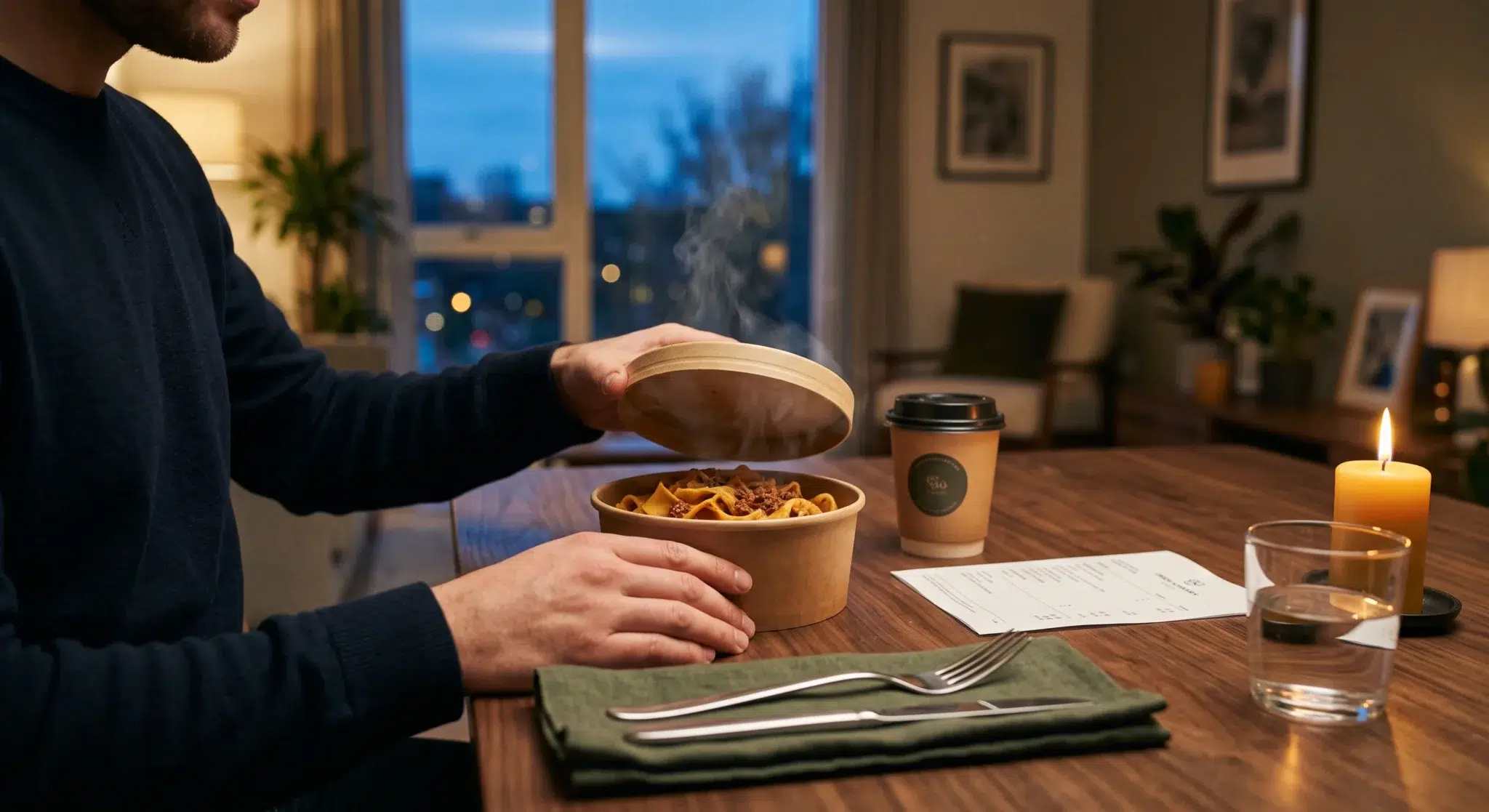

Operating a modern commercial kitchen requires strict financial discipline, but establishing a profitable restaurant delivery menu pricing strategy has become essential for survival. Over the past several years, third-party delivery marketplaces like DoorDash, Uber Eats, and Grubhub have captured a massive share of the food service market. However, these platforms charge hefty merchant commissions ranging between fifteen and thirty-five percent on every order. When restaurant operators list their items at standard in-store prices, delivery sales quickly erode overall profitability.
Unfortunately, many independent restaurateurs fear that raising off-premise prices will alienate loyal diners or damage brand trust. Consequently, operators continue absorbing marketplace commission fees, premium takeout packaging expenses, and front-of-house bagging labor out of their own pockets. In a business where standard net profit margins hover between five and twelve percent, surrendering thirty percent of gross revenue turns busy delivery nights into net financial losses. In fact, selling high volumes of food at unadjusted prices simply accelerates cash burn.
However, restaurant operators do not have to choose between digital sales volume and healthy operating margins. By implementing dynamic restaurant delivery menu pricing, businesses can establish structured price tiers that cover platform fees and packaging overhead while keeping in-store dining accessible. Modern cloud point of sale systems allow operators to manage multiple price levels across dine-in, direct takeout, and third-party delivery channels from a single master catalog. This comprehensive guide breaks down the true mathematics of delivery commissions, provides an exact markup formula, and explains how multi-tier POS pricing protects your restaurant profits.
Table of Contents
- The Flawed Economics of Flat-Rate Menu Pricing
- The Delivery Markup Formula: Margin vs. Markup Mathematics
- Factoring Packaging, Labor, and Courier Overhead into Delivery Cost
- Protecting Dine-In Brand Trust and Managing Customer Perception
- Multi-Tier Menu Pricing Architecture: In-Store, Web, and Delivery
- Strategic Menu Engineering: Bundling, Modifiers, and Delivery Exclusives
- Centralized Master Menu Control: Eliminating Manual Price Overrides
- Side-by-Side Comparison
- How Biyo POS Powers Automated Multi-Tier Delivery Pricing
- Frequently Asked Questions
The Flawed Economics of Flat-Rate Menu Pricing
Many restaurant operators launch online delivery assuming that additional order volume will naturally cover fixed overhead costs. In reality, applying flat in-store prices to third-party delivery orders creates severe financial strain. When an off-premise ticket arrives with identical in-store pricing, third-party marketplace commissions consume your entire profit margin.
As a result, your kitchen staff works harder, ingredient costs rise, and utility expenses increase, but your net bank balance decreases. Understanding the economics of off-premise fulfillment helps operators build a more sustainable business model.
The Myth of “Making It Up on Volume”
A common misconception in the restaurant industry is that high delivery volume offsets narrow unit margins. However, volume only benefits a business when the marginal contribution profit of each transaction is positive.
If an in-store entree costs twelve dollars to produce and sells for fifteen dollars, you earn three dollars in gross profit. When a third-party platform takes a thirty percent commission on that fifteen-dollar dish, the platform collects four dollars and fifty cents. Consequently, the restaurant receives ten dollars and fifty cents on a meal that cost twelve dollars to make, losing one dollar and fifty cents on every plate. Doubling your order volume under these conditions simply doubles your losses.
The Compounding Pressure on Prime Costs
A healthy restaurant balances prime costs—the combined total of Cost of Goods Sold (COGS) and direct labor—at roughly fifty-five to sixty percent of gross revenue. When third-party platforms extract twenty to thirty percent off the top, your available budget for food and labor shrinks dramatically.
To remain profitable without adjusting prices, an operator would have to cut ingredient quality or reduce kitchen staffing. Because neither option is viable for a quality-focused restaurant, adopting a strategic restaurant delivery menu pricing model is the only logical way to preserve operational standards.
 The Delivery Markup Formula: Margin vs. Markup Mathematics
 The Delivery Markup Formula: Margin vs. Markup Mathematics
The biggest financial mistake operators make when adjusting delivery menus is confusing markup percentage with commission margin percentage. Adding thirty percent to your in-store menu price does not offset a thirty percent marketplace commission.
Understanding the difference between markup and margin is critical for calculating accurate off-premise menu prices.
Why Simple Percentage Addition Leaves You Short
Suppose your in-store price for a gourmet burger is fifteen dollars, and your delivery partner charges a thirty percent commission:
- The Incorrect Calculation (Adding 30%): You add 30% ($4.50) to the $15.00 price, setting the delivery price at $19.50.
- The Marketplace Deduction: The delivery platform takes 30% of the new $19.50 retail price, which equals $5.85.
- The Resulting Payout: Your restaurant nets $19.50 minus $5.85, leaving you with $13.65.
In this common scenario, your restaurant receives one dollar and thirty-five cents less than your standard in-store price, despite increasing the menu price. This happens because the platform commission applies to the higher, marked-up total rather than the original base price.
The True Delivery Margin Formula
To recover your exact in-store revenue on every off-premise ticket, you must calculate the reciprocal price point using this proven formula:
Target Delivery Price = (Base In-Store Price + Direct Packaging Cost) / (1 – Platform Commission Rate)
Applying this mathematical formula to the same fifteen-dollar burger (assuming one dollar in premium takeout packaging and a thirty percent commission) yields an accurate result:
- Combine the base price and packaging cost: $15.00 + $1.00 = $16.00
- Subtract the commission rate from one: 1 – 0.30 = 0.70
- Divide the adjusted base by the remainder: $16.00 / 0.70 = $22.86
When the platform takes thirty percent of $22.86 ($6.86), your restaurant receives exactly sixteen dollars. This payout covers the original fifteen-dollar menu price and the one-dollar packaging cost.
Factoring Packaging, Labor, and Courier Overhead into Delivery Cost
Menu prices must account for the physical and operational differences between dine-in and off-premise dining. Serving a customer in your dining room requires reusable plates, glassware, and flatware. In contrast, off-premise delivery demands specialized single-use supplies and dedicated staging labor.
Accounting for these hidden operational expenses ensures that your delivery pricing reflects true fulfillment costs.
The Rising Expense of Specialized Takeout Packaging
High-quality delivery packaging is expensive. Serving hot, crisp food that travels well requires premium containers designed for heat retention and moisture control:
- Vented Fry Boxes and Crisp Containers: Specialized micro-fluted or vented containers prevent fried items from turning soggy during thirty-minute delivery transits ($0.35–$0.60 per box).
- Leak-Proof Soup and Sauce Bowls: Heavy-duty, microwave-safe polypropylene containers with locking lids prevent messy spills ($0.40–$0.75 each).
- Tamper-Evident Safety Seals: Branded adhesive security labels prove to the customer that their food remained untouched during transit ($0.10–$0.20 per bag).
- Heavyweight Insulated Paper Bags: Sturdy flat-bottom kraft bags keep stacked items upright and organized ($0.45–$0.85 per bag).
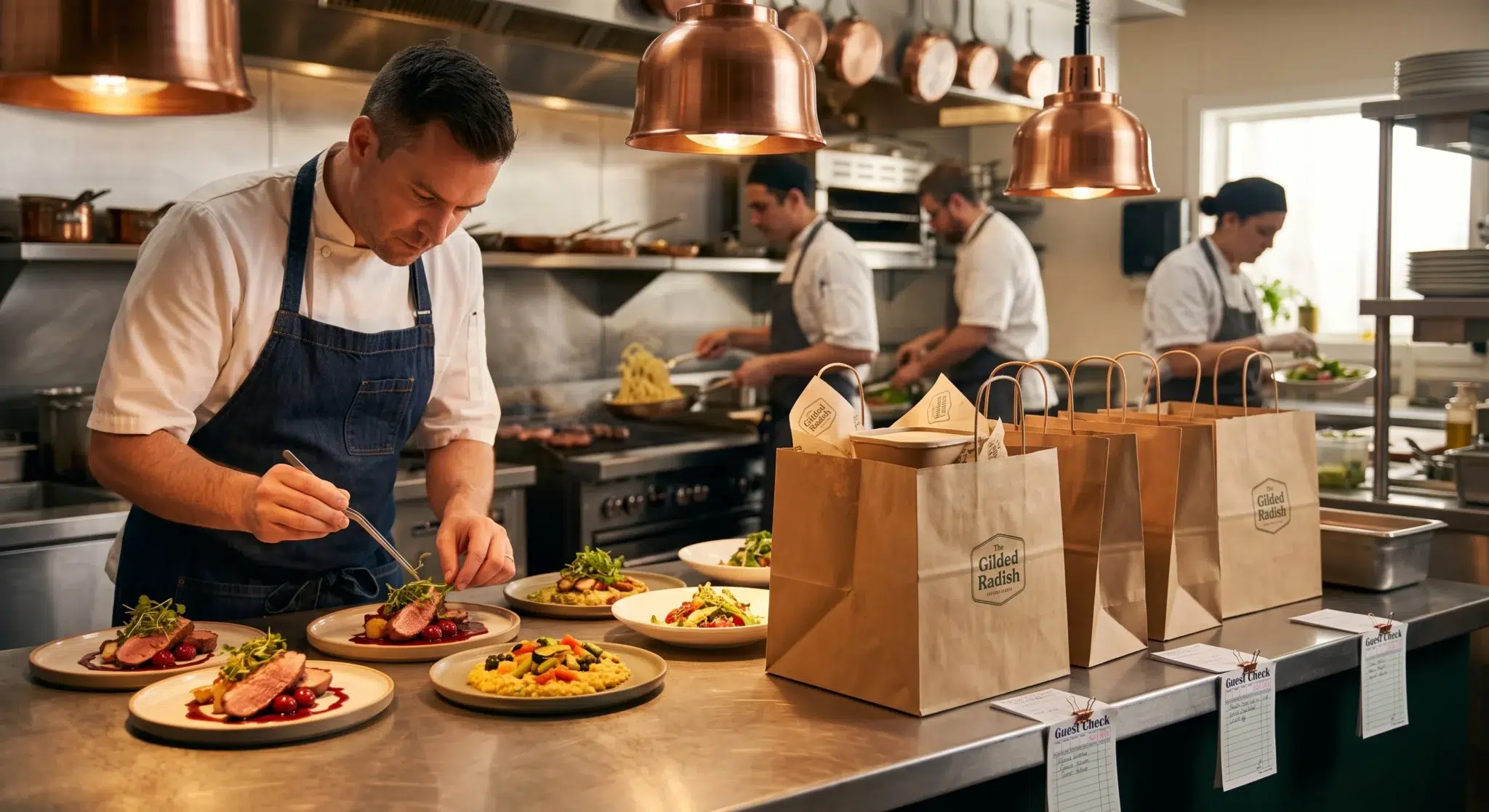
When an average delivery order contains multiple entrees, sides, and sauces, total packaging expenses routinely reach two to three dollars per bag. If your menu pricing does not capture this overhead, packaging costs quickly erode your margins.
Front-of-House Assembly and Expediting Labor
Packaging delivery orders requires dedicated front-of-house labor. Staff members must double-check modifier tags, package dressings, seal bags, attach receipt slips, and hand orders to delivery drivers.
During busy dinner rushes, managing dozens of off-premise orders pulls employees away from dining room guests. Factoring a modest labor buffer into your delivery pricing ensures that off-premise fulfillment supports staff payroll rather than straining it.
Protecting Dine-In Brand Trust and Managing Customer Perception
A primary concern for restaurant operators is whether customers will react negatively to higher delivery prices. However, consumer research shows that digital delivery diners understand and accept price differences when ordering through third-party apps.
Understanding consumer psychology allows you to adjust delivery pricing while maintaining strong brand loyalty across all channels.
The Convenience Premium Mindset
When customers open DoorDash or Uber Eats, they are not simply buying food; they are purchasing convenience, time savings, and doorstep service. Consumers recognize that third-party delivery is a luxury service involving personal couriers, mobile GPS tracking, and instant ordering.
Studies show that delivery app users are far less price-sensitive than dine-in guests. Diners willingly pay a premium to avoid cooking, driving in traffic, or finding parking. Therefore, matching in-store prices on third-party apps provides an unnecessary subsidy for a convenience-focused demographic.
Maintaining Price Integrity Across Channels
To protect customer trust, maintain clear consistency within each respective channel:
- In-Store and Direct Pickup: Keep printed dining room menus, phone pickup orders, and counter checkout prices at your standard, lowest base rate.
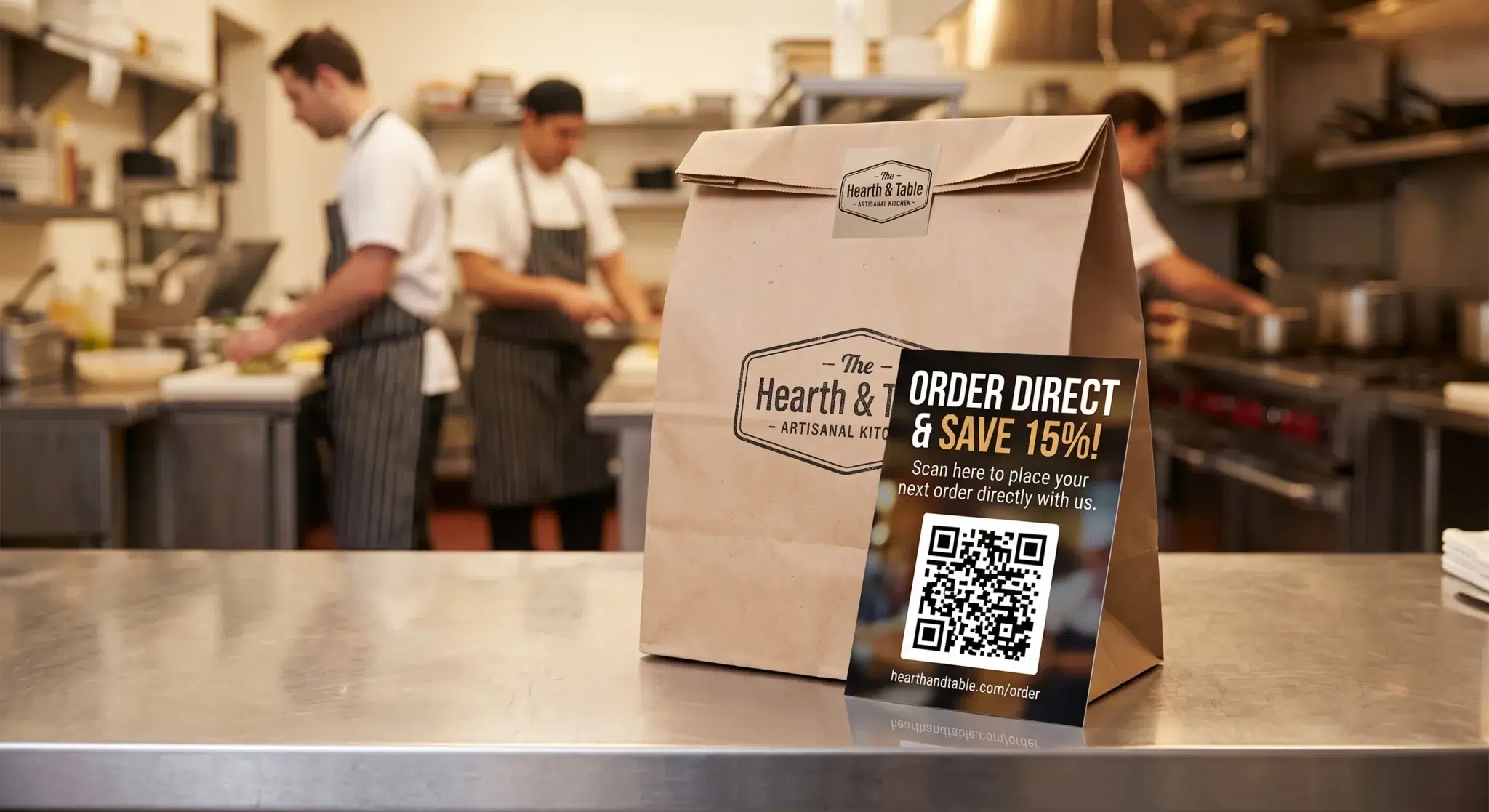
- First-Party Direct Web Ordering: Match in-store prices on your direct website, offering guests a clear financial incentive to order directly from your kitchen.
- Third-Party Aggregators: Apply calculated price adjustments exclusively to third-party marketplaces where external commissions apply.
Highlighting your lowest prices on your direct ordering portal positions your restaurant as fair and transparent, encouraging customers to transition away from expensive marketplace apps.
Multi-Tier Menu Pricing Architecture: In-Store, Web, and Delivery
Managing an omnichannel restaurant requires establishing distinct price tiers across different ordering touchpoints. Modern point of sale software allows operators to structure a 3-tier pricing model that updates automatically.
Implementing a structured multi-tier system eliminates manual calculations and ensures pricing consistency across all platforms.
Tier 1: Dine-In and Counter Service (Base Price)
Tier 1 represents your baseline menu pricing. These prices reflect your standard food cost, in-house labor, and local operating overhead. Dine-in prices are printed on physical table menus and displayed on your primary checkout screens.
Tier 2: Direct First-Party Web Ordering (Base Price + Packaging Subsidy)
Tier 2 applies to orders placed directly through your commission-free online store. Because your business avoids third-party marketplace commissions, you can keep prices close to baseline rates. Adding a modest packaging fee ($0.50 to $1.00) covers single-use containers while giving diners the best digital value available.
Tier 3: Third-Party Marketplaces (Fully Adjusted Margin Price)
Tier 3 applies to DoorDash, Uber Eats, and Grubhub menus. Prices in this tier incorporate the full delivery markup formula, factoring in platform commissions, premium packaging, and off-premise overhead. Tier 3 pricing protects your profitability on every marketplace transaction without requiring manual adjustments.
Strategic Menu Engineering: Bundling, Modifiers, and Delivery Exclusives
Dynamic pricing is not limited to across-the-board percentage increases. Strategic menu engineering allows you to protect profitability by reshaping how items are presented and customized on delivery platforms.
Deploying smart bundling and modifier adjustments helps maximize off-premise margins while delivering great value to online diners.
High-Margin Family Combos and Bundled Meals
Direct price comparisons between in-store menus and delivery apps are most obvious on standalone signature items. If an in-store burger costs fifteen dollars and the delivery app lists it at twenty dollars, observant diners may notice the difference.
To minimize direct comparisons, create delivery-exclusive bundle packages:
- Family Feast Bundles: Combine two signature entrees, two children’s meals, a shareable appetizer, and drinks into a single package price.
- Date Night Combos: Bundle two premium pasta dishes, a shared salad, garlic bread, and dessert.
- Lunch Box Combos: Package a sandwich, side salad, chips, and a beverage into an all-inclusive combo.
Bundling makes price comparisons difficult while increasing average order value (AOV) and improving kitchen prep efficiency.
Modifier-Level Pricing Adjustments
Modern delivery customers customize their meals extensively. Applying strategic markups to optional modifiers and add-ons helps absorb variable marketplace fees:
- Premium Protein Add-Ons: Adjust the price of extra bacon, avocado, grilled chicken, or shrimp by fifty to seventy-five cents on delivery apps.
- Specialty Sauce and Dressing Upgrades: Charge a modest fee for extra dipping sauces, specialty dressings, or gluten-free substitutions.
- Side Dish Swaps: Set accurate upgrade prices for swapping standard fries for sweet potato fries, onion rings, or side salads.
Centralized Master Menu Control: Eliminating Manual Price Overrides
 Centralized Master Menu Control: Eliminating Manual Price Overrides
In a traditional restaurant setup, managing multiple price tiers requires logging into several disconnected merchant portals. Managers must manually update item prices across separate DoorDash, Uber Eats, and Grubhub accounts whenever food costs change.
Centralized master menu management inside your cloud POS simplifies this workflow, keeping all channels synchronized from a single dashboard.
Single-Click Master Menu Updates
With an integrated cloud POS, your point of sale functions as the single source of truth for your entire culinary catalog. You define your base prices once, set channel markup rules, and publish updates across all platforms simultaneously.
When wholesale beef prices rise, you simply adjust the base burger price in your POS. The system recalculates Tier 1, Tier 2, and Tier 3 prices automatically, pushing the updated rates to your dining room registers, web store, and third-party delivery apps in real time.
Dynamic Dayparting and Surge Pricing Rules
Modern POS platforms allow operators to automate price changes based on specific operational windows:
- Late-Night Pricing: Automatically apply modest price adjustments for late-night delivery shifts (e.g., after 10:00 PM) to cover premium late-night labor.
- Catering Menu Tiers: Maintain dedicated volume pricing for large-format catering packages ordered online.
- Automated Stock Controls: When an item runs low, marking it out of stock (86-ed) on your POS updates all delivery channels instantly, preventing out-of-stock orders.
Side-by-Side Comparison
| Operational Factor | Uniform Flat Pricing | Blanket Manual Markups | Dynamic Multi-Tier Pricing (Biyo POS) |
|---|---|---|---|
| Profit Retention on Delivery | Severe margin losses (Absorbs 30% fee) | Partial recovery (Often miscalculated) | 100% margin protection on every ticket |
| Packaging Cost Coverage | Eats into restaurant food margin | Inconsistently applied | Factored directly into Tier 3 calculations |
| Menu Management Effort | Low effort, high financial loss | High effort (Manual edits on 4+ portals) | Automated 1-click sync from master catalog |
| Direct Web Store Incentive | No price advantage for ordering direct | Confusing, inconsistent pricing | Clear best-price guarantee on direct portal |
| Modifier & Bundle Control | Standard modifiers across all apps | Basic catalog duplication | Granular modifier pricing & delivery bundles |
| Price Calculation Accuracy | Zero calculation (Fails to cover costs) | Flawed markup math leaves revenue behind | Precise reciprocal formula automation |
| Brand Trust & Transparency | Dine-in subsidized by delivery losses | Random price spikes damage credibility | Clean separation of in-store vs. delivery tiers |
| Kitchen Workflow Integration | Separate tablets create order clutter | Manual re-keying causes ticket delays | Direct two-way cloud injection into POS & KDS |
How Biyo POS Powers Automated Multi-Tier Delivery Pricing
Biyo POS delivers a comprehensive cloud hospitality platform engineered to protect restaurant profit margins across every sales channel. Operating smoothly inside the Google Chrome web browser on any PC, Mac, iPad, or Android tablet, Biyo provides restaurant operators with complete multi-tier menu control without expensive proprietary hardware.
With Biyo’s advanced catalog engine, establishing a profitable restaurant delivery menu pricing structure takes only minutes. Configure distinct pricing rules for in-store dining, commission-free online pickup, and third-party delivery marketplaces from a single dashboard. Through seamless integration with Kitchen Hub, Biyo pushes your tiered prices, photos, and modifier rules directly to DoorDash, Uber Eats, and Grubhub automatically. When wholesale ingredient costs change, updating your master menu updates all connected platforms instantly.
Furthermore, Biyo connects your multi-channel ordering ecosystem with advanced kitchen automation. Route incoming delivery tickets directly to prep lines using the Biyo Kitchen Display (KDS) app available on Google Play, eliminating counter tablet clutter and manual re-keying errors. In addition, operators can manage retail merchandise using the Biyo Inventory Scanner app on the Apple App Store, build automated customer loyalty programs, and maintain continuous checkout operations during network outages with Biyo’s true offline mode.
To discover how easily your restaurant can eliminate delivery margin losses and automate multi-tier menu pricing, you can schedule a live demo with an onboarding specialist or create your account today on the Biyo signup page.
Frequently Asked Questions
What is dynamic restaurant delivery menu pricing?
Dynamic restaurant delivery menu pricing is a strategy where restaurants set different price tiers for in-store dining, direct online ordering, and third-party delivery apps to cover marketplace commissions and packaging overhead.
Is it legal to charge higher prices on DoorDash and Uber Eats?
Yes. Major third-party delivery platforms allow restaurants to set independent menu prices for delivery orders to account for platform commissions, packaging supplies, and off-premise operational costs.
How much should a restaurant mark up delivery menu items?
To offset a standard thirty percent marketplace commission and single-use packaging costs, restaurants should mark up delivery items by twenty-five to thirty-five percent using the reciprocal delivery margin formula.
Will higher delivery prices drive customers away?
Research indicates that consumers using third-party delivery apps prioritize convenience and speed over base menu prices. Maintaining standard prices on your direct website gives price-conscious diners a clear incentive to order directly from your kitchen.
How does Biyo POS manage multi-tier menu pricing?
Biyo POS allows operators to create multiple price rules for in-store, direct online, and third-party delivery channels within a single master catalog, synchronizing updates across all platforms automatically via Kitchen Hub.
Can I offer delivery-exclusive menu bundles in Biyo POS?
Yes. Biyo POS allows you to create unique combo packages, family meals, and specialized modifier trees that publish exclusively to third-party delivery channels while keeping in-store menus clean and focused.