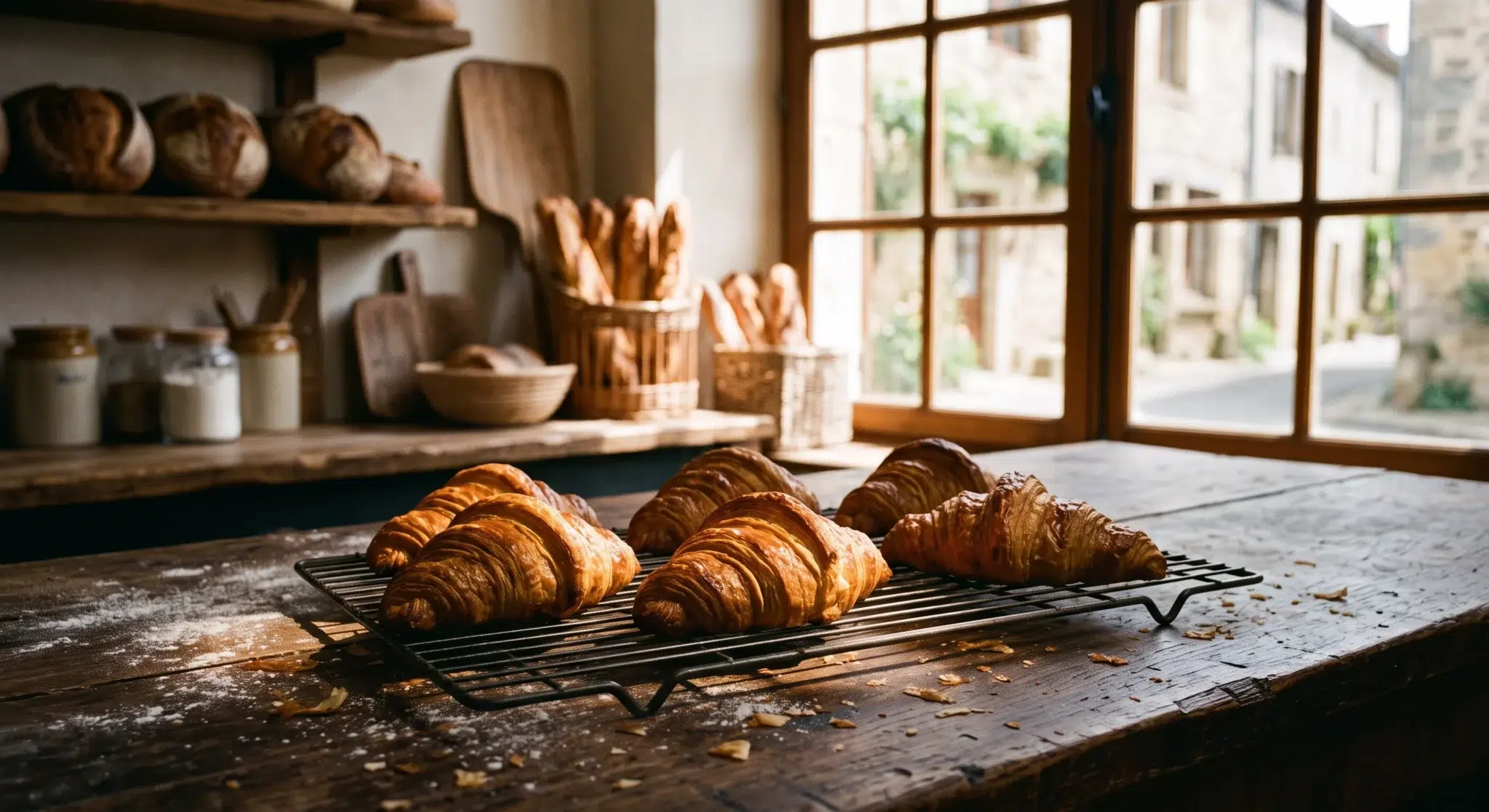

Running a profitable artisan pastry shop requires precise culinary execution, but mastering bakery production planning is what protects your daily profit margins. Every morning at 3:30 AM, production bakers across the country fire up commercial deck ovens. They mix, shape, proof, and bake one hundred percent of their daily showcase inventory before unlocking the front doors. By 7:00 AM, pastry displays look abundant, fragrant, and visually striking for the early morning commute.
However, relying entirely on a single massive morning bake is a costly operational mistake. Customer foot traffic fluctuates unpredictably throughout the day due to weather changes, transit delays, and seasonal shifts. Consequently, bakery display cases face one of two costly outcomes by 3:00 PM. Either the showcases sit completely empty, causing lost sales from afternoon commuters, or shelves remain packed with unsold croissants destined for the trash bin.
Fortunately, modern retail analytics allow bakery owners to break this feast-or-famine cycle. By analyzing hourly sell-through curves and scheduling secondary par-bake runs, you can reduce end-of-day pastry discard rates by forty percent. In addition, staging fresh afternoon bakes fills your shop with irresistible aromas that drive high-margin impulse sales. This comprehensive guide outlines the mathematical frameworks, kitchen workflows, and point-of-sale data required to modernize your daily bakery production planning.
Table of Contents
- The Financial Drain of Over-Baking and End-of-Day Discard
- Analyzing Hourly Sell-Through Curves for Bakery Production Planning
- Implementing Staggered Par-Bake and Secondary Afternoon Runs
- Building Dynamic Production Prep Sheets from Product Mix Data
- Standardizing Waste Logging and End-of-Day Yield Reconciliations
- Side-by-Side Comparison
- How Biyo POS Optimizes Bakery Production Planning and Cuts Waste
- Frequently Asked Questions
The Financial Drain of Over-Baking and End-of-Day Discard
Many independent pastry shop owners view full garbage bags at closing time as an inevitable cost of doing business. They believe that maintaining overflowing display cases until the final minute of service is necessary to project abundance. In reality, unchecked pastry waste represents a direct, compounding drain on your net operating margins.
Consequently, failing to control production yields inflates your prime costs and distorts inventory purchasing. Understanding the true economics of pastry discard is the first step toward building a sustainable bakery business.
The True Cost of Food Waste on Artisan Margins
When calculating the cost of an unsold almond croissant, owners often account only for raw flour, butter, sugar, and nuts. However, raw ingredient expenditures account for barely thirty percent of total pastry production costs. The remaining seventy percent consists of intensive, skilled artisan labor spent mixing dough, laminating butter sheets, proofing, and baking.
For instance, discarding twenty gourmet pastries priced at five dollars each eliminates one hundred dollars in potential retail revenue. In addition, it destroys thirty-five dollars in direct labor and raw ingredients. If your bakery operates on an eight percent net margin, you must sell over four hundred dollars in fresh goods just to recover that single day of waste. Therefore, effective bakery production planning directly defends your bottom line.
Why Static Morning Prep Sheets Guarantee Inventory Leakage
Traditional bakeries rely on static production sheets that tell kitchen staff to bake identical quantities every single day. A head baker might instruct the morning crew to produce sixty plain croissants, forty pain au chocolat, and thirty savory scones regardless of daily demand.
As a result, static prep sheets fail to accommodate weather shifts, office foot-traffic trends, or local school holidays. On rainy Tuesdays, half the display remains unsold by closing time. Conversely, on sunny Fridays, the counter sells out by 10:00 AM, turning away paying customers for the rest of the day. Dynamic scheduling replaces guesswork with operational certainty.
Analyzing Hourly Sell-Through Curves for Bakery Production Planning
Modern point of sale software captures exact timestamp data for every item sold across the counter. Rather than evaluating total daily sales in bulk, bakery operators must analyze sales velocity hour by hour. Graphing this hourly sell-through data reveals distinct purchasing patterns that govern customer behavior throughout the day.
Consequently, tracking item velocity allows you to align baking schedules with actual customer arrival times. Implementing data-driven bakery production planning eliminates the guesswork that leads to afternoon food waste.
Deconstructing the Morning Rush vs. Afternoon Commuter Peaks
When examining hourly sales curves in a typical retail bakery, transaction velocity displays a distinct bimodal distribution:
- The Morning Coffee Rush (7:00 AM – 10:00 AM): Generates roughly sixty-five percent of daily pastry volume, driven by hurried commuters purchasing breakfast with coffee.
- The Midday Transition Lull (11:30 AM – 1:30 PM): Foot traffic shifts toward lunch items, cold drinks, and sandwiches, causing sweet pastry sales to slow significantly.
- The Afternoon Commuter Surge (2:30 PM – 5:00 PM): Office workers and returning commuters seek mid-afternoon pick-me-ups, fresh bread loaves, and take-home desserts for dinner.
Single-wave morning baking leaves afternoon commuter customers with dried-out, seven-hour-old pastries sitting in depleted display trays. In contrast, splitting production between these two peaks guarantees peak freshness during high-volume periods.
Identifying Velocity Drop-Off Points Across Core Pastry Categories
Different bakery categories follow completely different hourly consumption curves throughout the operating day. Savory items such as quiches, breakfast sandwiches, and ham-and-cheese croissants experience an immediate sales cliff after 1:00 PM. Baking extra savory items in the late afternoon almost guarantees waste.
Conversely, sweet cookies, laminated viennoiserie, brownies, and sourdough loaves experience robust sales demand throughout the late afternoon. Therefore, your production schedule must adjust category ratios based on time of day rather than scaling all menu items uniformly.
 Implementing Staggered Par-Bake and Secondary Afternoon Runs
 Implementing Staggered Par-Bake and Secondary Afternoon Runs
Transitioning from a single massive morning bake to a two-wave production schedule is the most effective operational strategy to cut bakery waste. Instead of loading every sheet pan into the ovens before dawn, your kitchen team holds a portion of prepared dough in temperature-controlled retarders.
Then, bakers execute a quick secondary par-bake run right before the afternoon rush begins. This workflow guarantees that afternoon commuters receive warm, freshly baked pastries without requiring bakers to mix new dough from scratch.
The Mechanics of Proof-and-Freeze and Retarder Staging
Modern laminated pastry production relies heavily on controlled temperature staging to regulate yeast fermentation. Kitchen teams prepare large dough batches, laminate butter blocks, and shape pastries during dedicated prep shifts:
- Retarder-Proofer Staging: Bakers place shaped croissants onto sheet pans inside a commercial retarder-proofer set to 38°F (3°C) to halt yeast activity until needed.
- Par-Baking at 80% Doneness: For certain rustic bread loaves and baguettes, bakers bake dough to eighty percent completion in the morning, freeze or rack the loaves, and finish the final crust crystallization in a six-minute flash bake later in the day.
- Flash-Bake Staging for Cookies: Cookie dough is pre-portioned into frozen pucks, allowing front-of-house staff to bake small trays on demand in compact countertop convection ovens.
Scheduling the 1:30 PM Secondary Bake for Commuter Foot Traffic
To capture afternoon revenue efficiently, schedule your secondary bake window between 1:00 PM and 1:45 PM:
- At 1:00 PM, the front-of-house lead checks current display inventory on the POS and enters on-hand stock counts.
- The kitchen team reviews remaining par requirements and loads staged sheet pans from the retarder into pre-heated ovens.
- By 2:15 PM, fresh trays of croissants, pain au chocolat, and cookies finish cooling and transfer directly to the front showcase.
- The retail counter enters the afternoon commuter rush fully stocked with warm, aromatic products that look freshly made.
Building Dynamic Production Prep Sheets from Product Mix Data
Transforming point-of-sale data into actionable kitchen workflows requires dynamic production prep sheets. Static paper clipboards fail because they cannot adapt to historical trends. A dynamic prep sheet calculates exact batch requirements by cross-referencing day-of-week historical sales curves with live on-hand counts.
Consequently, your kitchen team bakes only what the front counter can realistically sell. Structured bakery production planning eliminates emotional over-baking while protecting product availability.
Calculating Hourly Par Levels and Safety Buffers by Day of Week
To construct an accurate dynamic production model, establish baseline par levels for both morning and afternoon bake windows:
- Morning Par Level (Wave 1): Target seventy percent of your average morning sales volume (7:00 AM – 1:00 PM) for that specific day of the week.
- Afternoon Safety Buffer (Wave 2): Review historical afternoon sales (2:00 PM – Close) and add a five percent safety buffer to prevent stockouts on high-margin signature items.
- The Dynamic Equation: Wave 2 Bake Quantity = (Afternoon Par Target + Safety Buffer) – Current 1:00 PM Showcase On-Hand Inventory.
If your historical Friday afternoon sales for chocolate croissants average thirty units and your display contains eight units at 1:00 PM, your Wave 2 bake requirement is exactly twenty-four units. This formula prevents over-baking while maintaining full visual displays.
Adjusting Dough Batches for Weather, Seasonality, and Local Foot Traffic
External factors significantly impact foot traffic and customer food cravings in retail bakeries. Rainy or snowy mornings frequently reduce foot traffic by fifteen to twenty-five percent, leaving morning-heavy bakeries with massive unsold inventory.
In contrast, inclement weather often increases delivery orders and afternoon carry-out traffic as commuters head home early. Cloud-based POS platforms allow managers to tag historical sales reports with weather metadata. Kitchen leads can then select a “Rainy Day Schedule” button on their production tablet, instantly scaling batch requirements downward to prevent waste.
Standardizing Waste Logging and End-of-Day Yield Reconciliations
You cannot manage what you do not measure. Many bakeries fail to reduce food waste because they simply dump unsold pastries into trash cans without recording itemized quantities. Establishing structured waste auditing transforms end-of-day losses into valuable operational intelligence.
Furthermore, separating physical waste into distinct operational streams unlocks opportunities for culinary repurposing and tax deductions. Disciplined tracking turns discard management into a predictable business process.
Separating Composted Pastries, Stale Repurposing, and Day-Old Donation Logs
At closing time, staff must sort unsold bakery products into three distinct operational categories:
- Culinary Repurposing Stream: Stale plain croissants are soaked in simple syrup and filled with frangipane cream to create high-margin almond croissants for tomorrow morning. Leftover sourdough loaves are sliced for garlic croutons or bread pudding.
- Charitable Donation Stream: Intact, day-old artisan breads and packaged baked goods are logged for local food rescue partners, generating valuable charitable tax deduction records.
- True Discard and Compost Stream: Expired cream-filled pastries, damaged items, and unrecoverable scraps are weighed and logged into the POS waste module before disposal.
Calculating Daily Pastry Loss Percentages and Variance Trends
To monitor the financial health of your bakery, calculate your Pastry Waste Percentage at the conclusion of every business day:
Daily Waste Percentage (%) = (Total Retail Value of Discarded Goods / Total Gross Sales Potential) * 100
Unmanaged bakeries routinely suffer from discard rates between fifteen and twenty-two percent. In contrast, bakeries utilizing structured par-baking schedules and hourly forecasting consistently maintain waste rates below four percent. Reviewing weekly variance trends highlights specific menu items that require recipe reformulations, price adjustments, or batch-size reductions.
Side-by-Side Comparison
| Operational Dimension | Traditional Single Morning Bake | Dynamic Hourly Par-Bake Schedule (Biyo POS) |
|---|---|---|
| Baking Schedule | 100% of inventory baked at 3:30 AM | 70% baked morning / 30% par-baked at 1:30 PM |
| Afternoon Showcase Quality | Dry, 8-hour-old pastries in picked-over cases | Warm, freshly baked pastries with active oven aroma |
| Average End-of-Day Waste Rate | 15% – 22% of total daily production | Under 4% with dynamic POS par adjustments |
| Afternoon Stockout Risk | High; popular items sell out before lunch | Low; secondary bakes replenish high-velocity items |
| Data Foundation | Intuition and static paper clipboards | Hourly item velocity and product mix reports |
| Weather Adaptability | Zero flexibility; dough already baked | Rapid batch scaling before afternoon ovens fire |
| Waste Accounting | Unrecorded trash bin dumping | Granular digital waste logging by employee ID |
| Impulse Buying Triggers | Visual display only (stale presentation) | Fresh baking smells stimulate afternoon foot traffic |
How Biyo POS Optimizes Bakery Production Planning and Cuts Waste
 How Biyo POS Optimizes Bakery Production Planning and Cuts Waste
Biyo POS delivers a specialized cloud retail and hospitality management platform engineered to solve the complex operational challenges of high-volume bakeries, pastry shops, and artisan cafes. Running natively inside the Google Chrome browser on any PC, Mac, iPad, or Android tablet, Biyo provides comprehensive production visibility without forcing business owners into expensive proprietary hardware contracts.
With Biyo’s advanced product mix reporting, mastering bakery production planning becomes simple and intuitive. The platform automatically tracks hourly sales velocity across every individual SKU, modifier, and pastry variant in your catalog. Managers can instantly generate visual sell-through heat maps that highlight peak morning sales windows, identify afternoon demand surges, and calculate exact par levels for secondary bake runs. Instead of relying on guesswork, your kitchen staff receives data-backed production guidance that eliminates over-baking.
Furthermore, Biyo connects your front-of-house register counters directly with back-of-house kitchen workflows. Route live order updates to kitchen stations using the Biyo Kitchen Display (KDS) app on Google Play, conduct fast ingredient stock audits using the Biyo Inventory Scanner app on the Apple App Store, and record end-of-day waste quantities seamlessly across all terminals. With Biyo’s true offline transaction mode, your checkout registers continue ringing up customer sales, printing receipts, and tracking sales timestamps even during complete internet outages.
To see how easily your bakery can slash end-of-day food waste and boost afternoon pastry sales, you can schedule a live demo with a bakery technology specialist or create your account today on the Biyo signup page.
Frequently Asked Questions
What is bakery production planning?
Bakery production planning is the operational process of forecasting daily customer demand and scheduling baking shifts, ingredient prep, and par-bake runs based on historical hourly sales data to maximize product freshness while minimizing end-of-day food waste.
How does hourly sell-through data reduce bakery waste?
Hourly sell-through data reveals exactly when specific pastry categories sell throughout the day, allowing bakery operators to split production into morning and afternoon baking runs rather than over-baking large batches in the early morning.
What is a secondary par-bake run in a bakery?
A secondary par-bake run is a scheduled afternoon baking window where kitchen staff bake partially proofed or frozen dough between 1:00 PM and 2:00 PM, providing fresh inventory for afternoon commuters without over-producing morning stock.
How do bakeries repurpose unsold day-old croissants?
Bakeries repurpose unsold day-old croissants by soaking them in sugar syrup, filling them with almond frangipane cream, topping them with sliced almonds, and baking them again to create premium almond croissants for the next morning service.
What is an acceptable food waste percentage for an artisan bakery?
While unmanaged bakeries often lose fifteen to twenty percent of their production to waste, bakeries using dynamic par-baking schedules and hourly forecasting maintain an acceptable food waste rate below four to five percent.
How does Biyo POS track bakery product mix and hourly sales peaks?
Biyo POS logs every transaction with exact timestamps, generating real-time product mix reports that show item-by-item sales velocity, hourly revenue spikes, and categorical demand curves accessible from any device via Google Chrome.