Running a successful butcher shop means more than just offering quality cuts of meat. Managing finances effectively is crucial for growth and profitability. A butcher shop budgeting tool helps you keep your costs in check, track expenses, and optimize pricing strategies, making it easier to maximize your profit margins. Whether you’re a small family-run shop or a large wholesale meat supplier, having the right budgeting system can transform your business operations.
Table of Contents
- Why Butchers Need Budgeting Tools
- Key Features of a Butcher Shop Budgeting Tool
- How Budgeting Tools Improve Profitability
- Integrating POS and Accounting Software for Butcher Shops
- Best Practices for Using Butcher Shop Budgeting Tools
- About Biyo POS
- FAQ
Why Butchers Need Budgeting Tools
Butcher shops face unique financial challenges due to fluctuating meat prices, perishability of stock, and the complexity of pricing wholesale versus retail cuts. A dedicated butcher shop budgeting tool helps owners gain clear visibility over their finances. This visibility is key to controlling costs and ensuring consistent profitability in an industry where margins can be thin.
Without proper budgeting, butchers risk overspending on supply costs or mispricing their products. It’s easy to underestimate the impact of waste or spoilage on overall expenses. By adopting budgeting tools tailored to the meat business, owners can better plan purchases, adjust prices in real-time, and avoid cash flow problems that could jeopardize operations.
Additionally, budgeting tools improve decision-making by providing data-driven insights. Shop owners can evaluate the true cost of goods sold, track daily sales logging, and manage inventory more effectively. As a result, they reduce guesswork and increase confidence when it comes to financial planning and growth strategies.
The Financial Complexity of Butcher Shops
Running a butcher shop involves juggling many financial variables that affect the bottom line. For example, wholesale meat prices can fluctuate significantly due to seasonal availability, market demand, and supply chain disruptions. A budgeting tool allows shop owners to track these fluctuations precisely, so they know when to buy and how much to pay for their inventory. Without this insight, a butcher may purchase expensive stock just before prices drop or fail to anticipate rising costs, which hurts profits.
Furthermore, the perishability of meat means that managing inventory isn’t just about volume but also about timing. A budgeting tool can help owners calculate the expected yield — the actual amount of usable meat after trimming and processing. This is crucial because a carcass might weigh 100 pounds, but the sellable portion may only be 60 pounds due to bones, fat, and other waste. Knowing this allows butchers to price products correctly and avoid losses.
Cash flow management also becomes a critical aspect of the butcher’s financial landscape. Paying suppliers on time, managing payroll, and covering daily operational costs all require clear forecasting and budgeting. A butcher shop budgeting tool consolidates these financial factors into an accessible format, helping owners avoid shortfalls and plan for growth confidently.
Challenges in Manual Budgeting and Accounting
Many smaller butcher shops still rely on spreadsheets or paper records to manage their finances. While this may seem cost-effective, manual systems are prone to errors such as miscalculations or missed entries. For example, a butcher might forget to record small daily expenses like packaging or utility bills, which add up over time and skew profit estimates. These inaccuracies can lead to underestimating costs and setting prices that do not cover all expenses.
Manual budgeting also lacks the flexibility needed to respond quickly to market changes. For instance, if wholesale meat prices suddenly increase due to supply shortages, a manual system will delay price updates or inventory adjustments, potentially causing the shop to operate at a loss until the problem is noticed. Moreover, calculating meat yield or profit margins manually can be time-consuming and error-prone, especially when dealing with multiple product lines and variable cutting processes.
In contrast, budgeting tools designed for butcher shops automate many of these complex calculations, reduce human error, and provide real-time financial data. This not only saves time but also provides greater accuracy and insight, enabling butchers to make proactive decisions rather than reactive ones.
Benefits of Digital Financial Planning for Butcher Shops
Transitioning to a digital budgeting tool offers butcher shops numerous benefits that enhance financial clarity and operational efficiency. These tools often come equipped with meat cost calculators, expense planners, and inventory management features that tailor to the specific needs of meat businesses. By automating calculations such as supply cost estimations and meat yield percentages, they enable more accurate cost tracking and pricing.
Digital budgeting software also supports integration with point-of-sale (POS) systems, allowing daily sales to be logged automatically and expense data to update in real time. This integration helps shop owners maintain a comprehensive overview of their financial health without spending hours reconciling figures manually. The result is a more streamlined accounting process and improved cash flow management.
Additionally, many budgeting tools offer forecasting features that analyze historical data to predict future sales trends and expenses. This empowers butchers to plan for seasonal demand changes, adjust inventory accordingly, and allocate budgets effectively. By leveraging digital financial planning, butcher shops can reduce waste, increase profitability, and ensure long-term sustainability.

Key Features of a Butcher Shop Budgeting Tool
Selecting the right budgeting tool for your butcher shop means understanding which features address the unique financial challenges of the meat business. Several functionalities stand out as essential for helping you manage costs, control inventory, and maximize profits effectively.
Meat Cost Calculator and Yield Estimation
The meat cost calculator is a vital feature that helps butchers accurately determine the cost per pound of sellable meat. This tool takes into account the wholesale price of the whole carcass, trimming losses, and other waste factors to calculate the actual cost of each cut. For example, if a beef carcass is purchased at $2,000 and the yield after trimming is 65%, the calculator will determine the cost of the usable meat and provide a precise figure that forms the basis for pricing decisions.
Yield estimation further enhances this calculation by predicting the quantity of meat that will be available after processing. This is particularly important for inventory management because it informs purchasing decisions and stock levels. A butcher shop budgeting tool with integrated yield estimation helps reduce spoilage and waste by aligning inventory orders with actual demand and usable product volume.
These features combined enable butchers to set prices that reflect true costs while maintaining competitive retail meat markup. Without this detailed costing, shops risk underpricing products, which erodes profit margins and threatens business viability.
Expense Tracking and Supply Cost Estimator
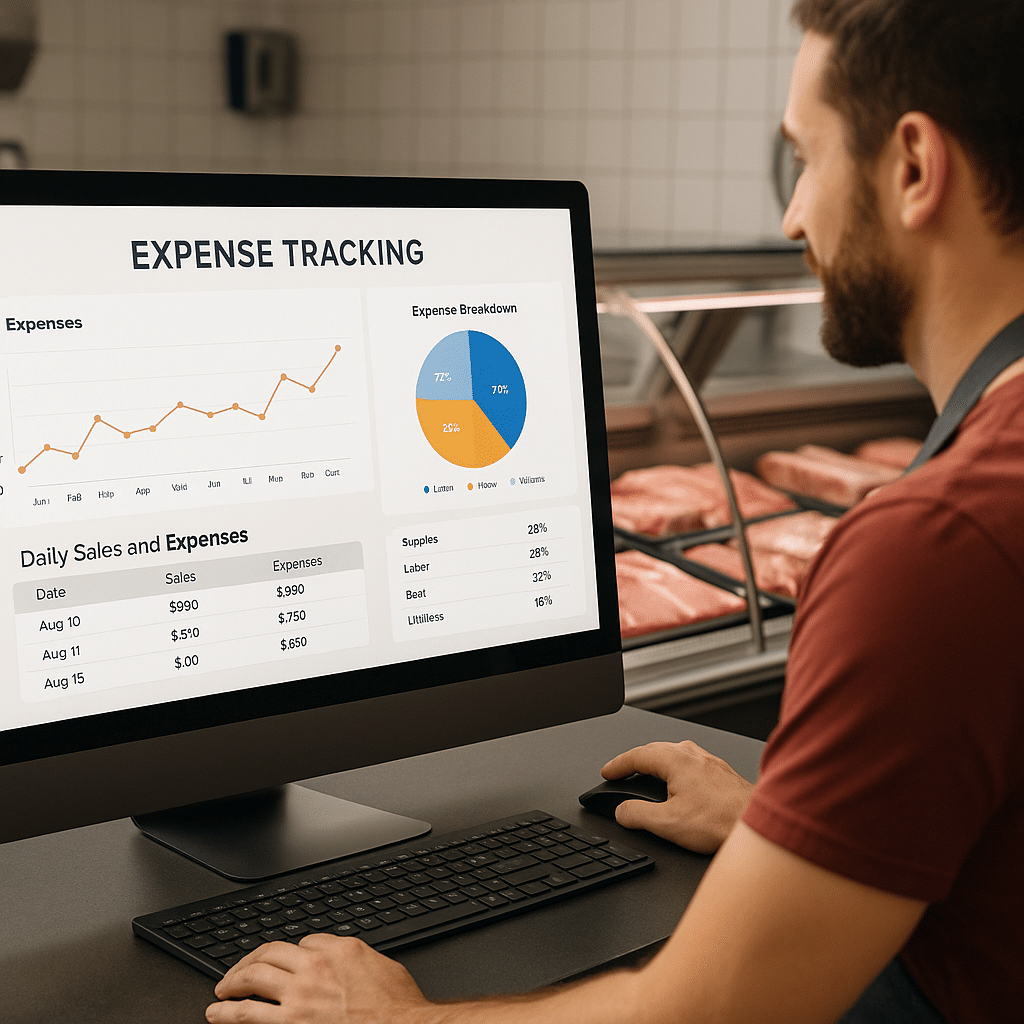
In addition to meat costs, butcher shops face various overhead expenses such as utilities, labor, packaging, and equipment maintenance. An effective budgeting tool includes robust expense tracking capabilities that allow owners to record and categorize all expenditures comprehensively. This transparency helps identify areas where costs can be optimized.
The supply cost estimator is particularly useful for forecasting upcoming expenses based on historical purchase data and market trends. For example, if wholesale pork prices are predicted to rise in the next quarter, the estimator can alert shop owners to adjust their budgets accordingly or negotiate better supplier contracts. This foresight prevents budget overruns and supports sustainable cash flow management.
By managing expenses methodically, butchers can make informed decisions about cost-cutting measures, such as switching to more cost-effective packaging or adjusting labor schedules during slow periods. Overall, expense tracking and forecasting ensure that all costs are accounted for and controlled.
Profit Margin and Pricing Strategy Tools
Profit margin tools within budgeting software help butcher shops analyze the profitability of each product by comparing sales revenue against costs. These tools calculate gross margin percentages and help owners understand which cuts or product lines contribute most to overall profits. For example, premium cuts like ribeye steaks may have higher margins than bulk ground beef, informing promotional focus and inventory priorities.
Pricing strategy features allow butchers to experiment with retail meat markup based on cost inputs and market conditions. Some tools offer “what-if” analysis, showing how adjusting prices impacts total revenue and profit. This enables shop owners to fine-tune prices to balance competitiveness with profitability, taking into account factors such as customer demand, seasonality, and competitor pricing.
Having reliable data-driven pricing strategies helps butcher shops avoid common pitfalls like underpricing or inconsistent pricing across product ranges. This ensures a more stable revenue stream and enhances customer trust.
How Budgeting Tools Improve Profitability
Implementing a butcher shop budgeting tool offers concrete advantages that translate directly into higher profitability. These tools bring clarity and automation to financial management, allowing shop owners to focus on growth and customer satisfaction.
Reducing Waste and Optimizing Inventory
Waste management is a critical factor in butcher shop profitability, as unsold or spoiled meat directly impacts the bottom line. Budgeting tools that include inventory control and meat yield calculators enable butchers to track stock levels precisely and understand product turnover rates. For example, if daily sales logging reveals that a specific sausage variety rarely sells out, the butcher can reduce orders to minimize leftover inventory.
Optimizing inventory through data-driven insights reduces both financial losses and environmental waste. Additionally, accurate yield calculations inform purchase volumes and help schedule meat processing activities to align with demand, preventing overstocking of perishable items. This precision in stock management not only preserves capital but also improves customer satisfaction by ensuring fresh products are always available.
Reducing waste through better inventory control therefore plays a crucial role in boosting profit margins and operational efficiency in butcher shops.
Streamlining Expense Management
Expense tracking automation saves time and eliminates errors compared to manual bookkeeping. With a budgeting tool, all costs from meat supply to utilities are logged systematically and categorized for easy review. For instance, by analyzing packaging expenses over several months, a butcher may discover opportunities to switch to bulk purchasing or alternative materials to reduce costs.
By reviewing expense data regularly, shop owners can identify trends such as rising energy costs or fluctuating labor expenses and take proactive measures. This might include investing in energy-efficient refrigeration or optimizing staff schedules during slower periods. The shop expense organizer functionality within budgeting software ensures that no cost goes unnoticed, supporting tighter financial control.
Efficient expense management lowers overhead and contributes significantly to improving the overall profitability of the butcher shop.
Enhancing Pricing Decisions with Data
In the competitive meat market, pricing products correctly can make or break a business. Budgeting tools provide detailed cost breakdowns, allowing butchers to base prices on accurate supply and operational data rather than guesswork. For example, by factoring in trimming waste and overhead, shop owners can calculate the minimum price required to achieve a target profit margin.
Data-driven pricing strategies also help adapt to market conditions such as seasonal demand changes or competitor promotions. A budgeting tool with built-in profit margin calculators can simulate different pricing scenarios, enabling butchers to set prices that attract customers while ensuring sustainability. For instance, raising the price slightly on high-demand cuts during holidays while offering promotions on less popular items can optimize overall revenue.
By leveraging precise data, butcher shops maintain competitive yet profitable pricing structures that support long-term success.
Integrating POS and Accounting Software for Butcher Shops
Modern butcher shops benefit from integrating budgeting tools with POS and accounting systems. This seamless data exchange enhances accuracy, saves time, and provides comprehensive insights to support strategic decisions.
Seamless Data Flow Between Sales and Budgeting
A POS system built for butcher shops records every sale at the item level, capturing details such as cut type, weight, and price. When integrated with a budgeting tool, this sales data flows automatically into financial reports and inventory systems. For example, as each sale occurs, inventory levels adjust in real time, and revenue figures update in the budgeting dashboard.
This automation eliminates manual data entry, reducing errors and delays. It also allows butchers to monitor daily sales logging with accuracy, helping them respond quickly to sales trends. If a particular product starts selling faster, inventory can be reordered promptly. Conversely, slow-moving items can be flagged for discounting or promotional efforts.
The integration between POS and budgeting software thus creates a connected ecosystem that enhances operational efficiency and financial control.
Streamlined Accounting and Financial Reporting
Connecting budgeting tools with accounting software simplifies complex bookkeeping tasks. All sales, expenses, payroll, and supplier payments synchronize across platforms, giving a complete financial picture without duplication or omissions. For example, monthly profit and loss statements can be generated automatically, showing the butcher’s exact financial position at any time.
This streamlined reporting supports tax compliance and helps identify opportunities for cost savings or revenue growth. It also reduces the time spent on manual reconciliation, freeing up owners and staff to focus on customer service and business development. Transparent, up-to-date financial reporting builds confidence in decision-making and supports strategic planning.
Ultimately, this integration reduces administrative burdens and enhances financial accuracy for butcher shops.
Improved Cash Flow Management and Forecasting
Maintaining positive cash flow is critical for butcher shops, which often operate on tight margins and must pay suppliers promptly. Integrating budgeting tools with POS and accounting software provides clear visibility into cash inflows and outflows, helping owners avoid liquidity issues.
Forecasting features analyze historical sales and expense data to predict future financial needs. For example, the system might indicate that cash flow will tighten in the winter months due to lower sales volumes, allowing the butcher to prepare by adjusting budgets or seeking short-term financing. Similarly, forecasting seasonal demand spikes lets shops increase inventory or staffing proactively.
By managing cash flow proactively through integrated systems, butcher shops can maintain financial stability, invest in growth, and handle unexpected challenges more effectively.
Best Practices for Using Butcher Shop Budgeting Tools
To get the most from your butcher shop budgeting tool, adopting certain best practices will enhance accuracy, efficiency, and profitability. These habits ensure your budgeting reflects the real-time realities of your business.
Regularly Update Costs and Inventory Data
Wholesale meat prices and supply costs fluctuate frequently due to market dynamics, supplier changes, and seasonal variations. To maintain accurate budgets, shop owners must update these figures consistently in their budgeting tool. Setting a routine — such as weekly updates of wholesale prices and daily inventory counts — ensures that pricing and cost estimates stay current and relevant.
For example, if beef prices rise suddenly, updating the wholesale cost allows the budgeting tool to recalculate product costs and recommend pricing adjustments quickly. Similarly, maintaining accurate inventory data prevents ordering excess stock that could spoil or fall short during peak demand. This discipline reduces financial risk and supports timely, data-driven decisions.
Ignoring these updates risks basing budgets on outdated information, which can lead to losses or missed revenue opportunities.
Use Detailed Expense Categories
Breaking down expenses into detailed categories enables deeper financial insight. Instead of lumping all costs together, separate expenses into areas such as packaging, utilities, labor, maintenance, and marketing. This granular tracking helps identify exactly where money is spent and highlights opportunities for cost optimization.
For instance, by tracking packaging costs monthly, a butcher might discover that switching to a bulk supplier reduces expenses by 15%. Or detailed utility tracking could reveal inefficient equipment causing high energy bills, prompting investment in upgrades. Detailed categories also support budgeting accuracy, making it easier to allocate funds appropriately.
Budgeting tools that allow customizable expense categories make this practice straightforward and empower butchers to manage finances proactively.
Leverage Reporting and Analytics Features
Budgeting tools often include reporting dashboards and analytics that visualize financial data in charts, graphs, and summaries. Regularly reviewing these reports helps butchers understand sales patterns, expense trends, and profit margins with clarity. For example, a monthly sales report can reveal which cuts perform best and during which seasons, guiding inventory and promotional planning.
Analytics can also highlight unexpected expenses or profit dips, prompting timely interventions. By engaging deeply with these features, shop owners move beyond simple record-keeping to strategic financial management. This approach drives smarter purchasing, pricing, and marketing decisions that support sustained profitability.
Ignoring these insights means missing opportunities for improvement and growth that competitive butcher shops actively pursue.
About Biyo POS
Biyo POS offers a comprehensive point-of-sale and budgeting platform specifically designed for butcher shops and meat businesses. Its integrated meat cost calculators, supply cost estimators, and real-time daily sales logging provide shop owners with an accurate financial overview that simplifies decision-making. With user-friendly inventory control and pricing strategy tools, Biyo POS enables butchers to optimize wholesale and retail meat pricing efficiently.
Designed to address the unique challenges of the meat industry, Biyo POS seamlessly integrates budgeting with accounting and POS functions, streamlining operations and improving cash flow management. Whether you operate a small neighborhood butcher or a large wholesale meat supplier, Biyo POS equips your business with the essential budgeting tools needed to stay competitive and profitable in a dynamic market.
FAQ
What exactly is a butcher shop budgeting tool?
A butcher shop budgeting tool is specialized software designed to help meat businesses track expenses, manage inventory, calculate meat costs, and plan pricing strategies. It simplifies financial management by integrating budgeting, sales data, and supply costs tailored to the unique needs of butcher shops, ensuring accuracy and timely insights.
How does a meat cost calculator help my butcher shop?
A meat cost calculator estimates the true cost of sellable meat by factoring in wholesale prices, trimming losses, and yield percentages. This helps you set accurate prices, maintain profit margins, and reduce losses caused by spoilage or waste. It also supports smarter inventory planning by reflecting actual product costs rather than raw purchase prices.
Can budgeting tools integrate with POS systems?
Yes, many budgeting tools integrate seamlessly with POS systems designed for butcher shops. This integration automates data flow between sales and financial management, improving accuracy, reducing manual entry, and saving time on bookkeeping while providing real-time financial insights.
What are the benefits of tracking expenses daily?
Daily expense tracking keeps you informed about your financial status and prevents surprises at the end of the month. It enables timely adjustments to spending, helps maintain healthy cash flow, and supports better budgeting decisions by providing accurate, up-to-date financial data that reflects actual business operations.
Is Biyo POS suitable for small butcher shops?
Absolutely. Biyo POS is designed to cater to butcher shops of all sizes, offering easy-to-use budgeting and inventory tools that help small shops manage finances efficiently, streamline operations, and compete effectively in their local markets.