Calculating Food Cost Percentage to Boost Profit

Calculating Food Cost Percentage to Boost Profit

At its core, calculating your food cost percentage is straightforward: divide your total food cost by your total food sales. But don't let the simple math fool you. This single number is one of the most powerful indicators of your restaurant's financial health, telling you exactly how much of every pound earned goes right back out the door for ingredients. If you want to run a sustainable business, getting this calculation right isn't optional—it's essential.

Why Food Cost Percentage Is a Critical Health Metric
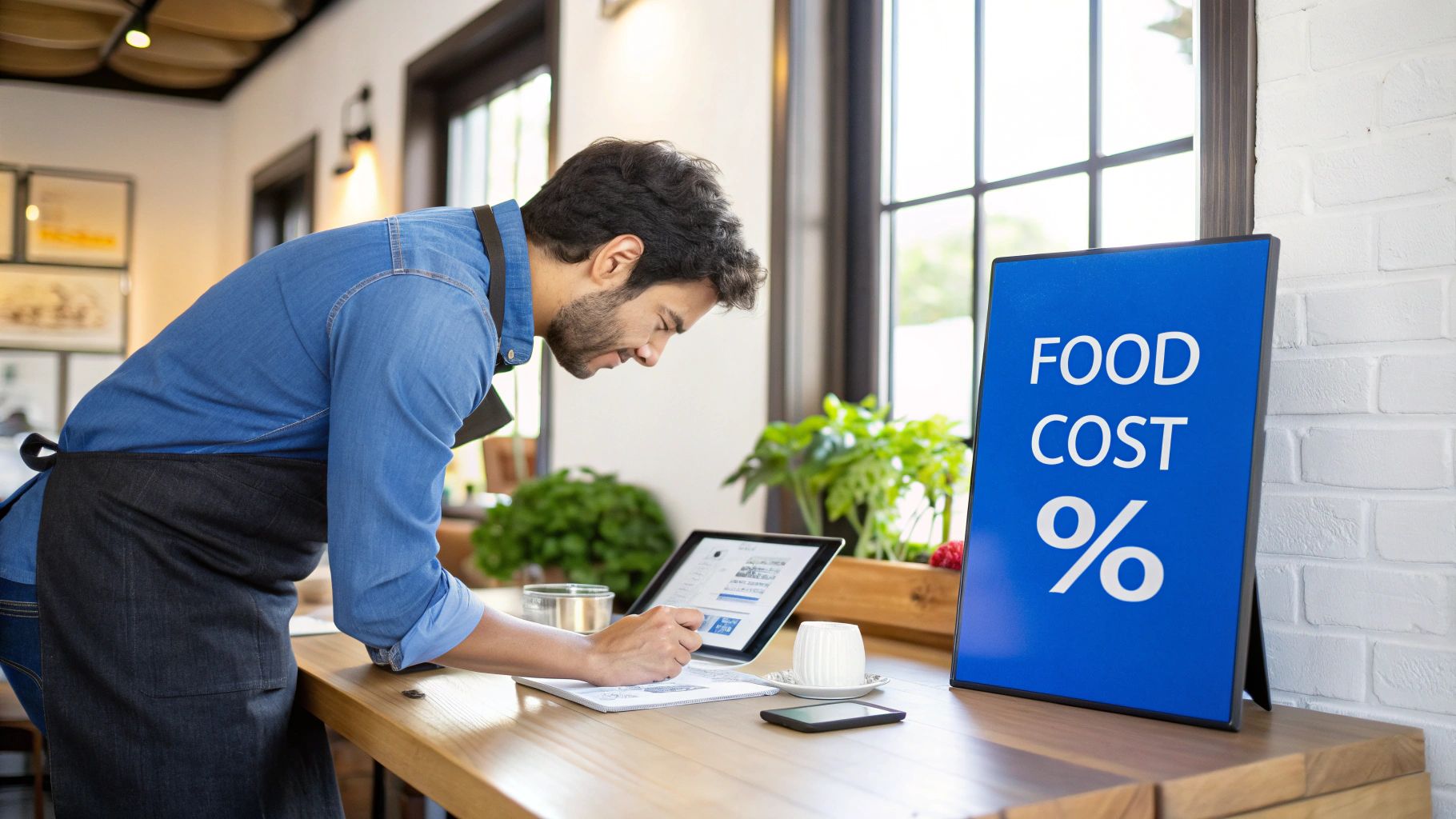
A male cafe owner analyzes business expenses on a tablet, near a blue 'FOOD COST %' sign.

Think of your food cost percentage as a financial pulse check for your cafe or restaurant. It's not just another figure on a spreadsheet; it’s a direct reflection of your kitchen's efficiency and how well your pricing strategy is working. A low percentage points to healthy profit margins, while a high one is a major red flag that ingredient costs are chewing up your profits.

Without a solid handle on this metric, you’re flying blind. You could have a full house every night, but if your costs are out of line, you might still be losing money on every plate that leaves the kitchen. Regularly calculating and tracking this number allows you to make smart, data-driven decisions instead of just guessing.

The Foundation of Profitability

This metric is the bedrock of a profitable menu. It directly informs how you price every single item, ensuring each sale actually contributes to your bottom line. Building a successful menu isn't just about delicious food; knowing how to build a profitable coffee menu depends entirely on understanding these costs.

Getting a grip on your food cost percentage helps you answer some of the most important questions about your business:

  • Are my menu prices high enough to cover ingredients and still make a decent profit?
  • Which dishes are my cash cows, and which ones are barely breaking even?
  • Am I getting the best deals from my suppliers, or is it time to renegotiate?
  • Do we have a problem with food waste, inconsistent portion sizes, or even staff theft?

By consistently tracking this number, you shift from constantly putting out fires to proactively managing your business. It turns the chaos of kitchen operations into clear, actionable data that protects your margins.

To really nail this down, it's helpful to get familiar with the specific terms involved. This table breaks down the key components you'll be working with.

Key Terms for Calculating Food Cost Percentage

Term Definition Why It Matters
Beginning Inventory The total value of all food and beverage stock you have on hand at the start of an accounting period (e.g., the first day of the month). This is your starting point. Without an accurate count here, all subsequent calculations for the period will be skewed.
Purchases The total cost of all new food and beverage inventory bought during that same accounting period. This represents all the new costs you've added. It's crucial for understanding how much you're spending to restock.
Ending Inventory The total value of all food and beverage stock remaining at the end of the accounting period. This tells you what you didn't use. It's subtracted from your total available inventory to determine what was actually consumed.
Cost of Goods Sold (COGS) The total cost of the inventory that was actually used or sold during the period. Calculated as: (Beginning Inventory + Purchases) – Ending Inventory. This is the "food cost" part of the equation. It's the real cost of the ingredients that went into the dishes you sold.
Total Food Sales The total revenue generated from selling food items during the period. This is the "sales" part of the equation. It's the money you brought in, which you'll compare your costs against.

Having a clear understanding of these terms makes the entire process much less intimidating and ensures your calculations are accurate from the get-go.

Industry Benchmarks and Your Bottom Line

While every operation is different, the industry generally aims for a food cost percentage between 28% and 35%. Historically, in markets like the UK and the US, a successful restaurant would often try to keep this number right around 30%. This means that for every £1 in sales, about 30p was spent on the ingredients themselves.

Of course, recent inflation and supply chain issues have pushed these numbers around, but knowing this benchmark gives you a solid target to aim for and a baseline for measuring your own performance.

Getting to Grips with the Food Cost Formulas

Alright, let's get down to the brass tacks. Calculating your food cost percentage isn't some abstract business school exercise—it's about digging into the numbers that make or break your restaurant. We're going to talk about two key calculations that every operator needs to have down cold: the cost of a single dish and your total food cost over a set period.

One gives you a crystal-clear look at how profitable each menu item is. The other gives you a bird's-eye view of your kitchen's overall financial health. You absolutely need both to make smart decisions. Let's break down how to do them with some real-world examples you can use in your own kitchen.

Nailing the Food Cost for a Single Dish

This is where it all starts. This number tells you exactly what it costs you in raw ingredients to make one plate of food. If you don't know this, you're just guessing at menu prices, and guessing is a fast track to losing money.

To do this right, you need to dissect your recipe. I mean everything—from the expensive protein right down to the pinch of salt you use to finish the dish.

Here's the most practical way to tackle it:

  • List every single ingredient. Don't forget anything.
  • Figure out your cost per unit. What did that 10kg bag of flour cost? Divide that price by 10,000 to get your cost per gram.
  • Calculate the cost for the portion. Now, multiply that cost per gram by how many grams you use in one serving.
  • Add it all up. The sum of all those ingredient costs is your total plate cost.

Let’s say we're costing out your signature "Spaghetti Aglio e Olio." It's a simple dish, which makes it a great example.

Example Recipe Cost Breakdown

Ingredient Bulk Purchase Cost Amount Per Dish Cost Per Dish
Spaghetti £5.00 for 1kg (1000g) 120g £0.60
Garlic £2.50 for 250g 15g £0.15
Olive Oil £12.00 for 1L (1000ml) 30ml £0.36
Chili Flakes £3.00 for 50g 2g £0.12
Parsley £1.50 for 30g bunch 5g £0.25
Finishing Salt £4.00 for 250g 1g £0.02
Total Plate Cost £1.50

Once you have that total, the rest is easy.

Formula: (Total Plate Cost / Menu Price) x 100 = Food Cost Percentage

If you’re selling this pasta dish for £10.00, the math looks like this:
(£1.50 / £10.00) x 100 = 15%

A 15% food cost is fantastic. That tells you immediately that this dish is a serious money-maker.

Calculating Your Overall Food Cost Percentage

Knowing individual plate costs is crucial for menu planning, but you also need to see the bigger picture. Your overall food cost percentage shows you how your total spending on ingredients compares to your total food sales over a week, a month, or a quarter.

This calculation is all about finding your Cost of Goods Sold (COGS). Essentially, COGS is the direct cost of all the inventory you actually used up during that period. If you want to get really deep into this, you can master the Cost of Goods Sold and boost your profit margins with our detailed guide.

To figure out your COGS, you need three numbers:

  1. Beginning Inventory: The value of all the food you had on your shelves at the start of the period.
  2. Purchases: What you spent on all new food deliveries during that period.
  3. Ending Inventory: The value of whatever food is left over at the very end of the period.

The formula itself is pretty simple:
Beginning Inventory + Purchases – Ending Inventory = COGS

Let's walk through an example for a cafe's busy week:

  • Beginning Inventory (Monday Morning): You start with £5,000 worth of stock.
  • Purchases (During the Week): Your suppliers deliver £3,000 worth of ingredients.
  • Ending Inventory (Sunday Night): You do a stock take and find you have £4,500 of ingredients left.

Let's plug those numbers in:
£5,000 (Beginning) + £3,000 (Purchases) – £4,500 (Ending) = £3,500 (COGS)

So, the food you actually sold that week cost you £3,500. The final step is to compare that to what you made. Let's say your POS reports £11,000 in food sales for the week. Now you have everything you need.

Formula: (Total COGS / Total Food Sales) x 100 = Overall Food Cost Percentage

Using our cafe's numbers:
(£3,500 / £11,000) x 100 = 31.8%

That 31.8% is a solid number, falling right in the healthy industry benchmark of 28-35%. It's a strong sign that the cafe is keeping a good handle on its purchasing and inventory. Running both of these calculations regularly is what gives you the financial clarity to build a truly resilient and profitable restaurant.

Getting Your Food Costing Dialed In: Moving from Theory to Reality

The basic formulas are a great starting point, but let’s be honest—a busy kitchen is a lot messier than a spreadsheet. To get to your true food cost, you have to dig deeper than the simple math. This is where you move past a rough estimate and get a real-world number that actually reflects what's happening on the floor and in your walk-in.

It’s all about sweating the small stuff that often gets ignored during a slammed dinner service. I'm talking about things like how much of that beautiful fish you actually use after it's filleted, the food that inevitably goes in the bin, and the slight variations in portioning that can bleed you dry over time. Nailing these details is what separates the pros from the amateurs.

This is how you build a rock-solid financial picture of your business.

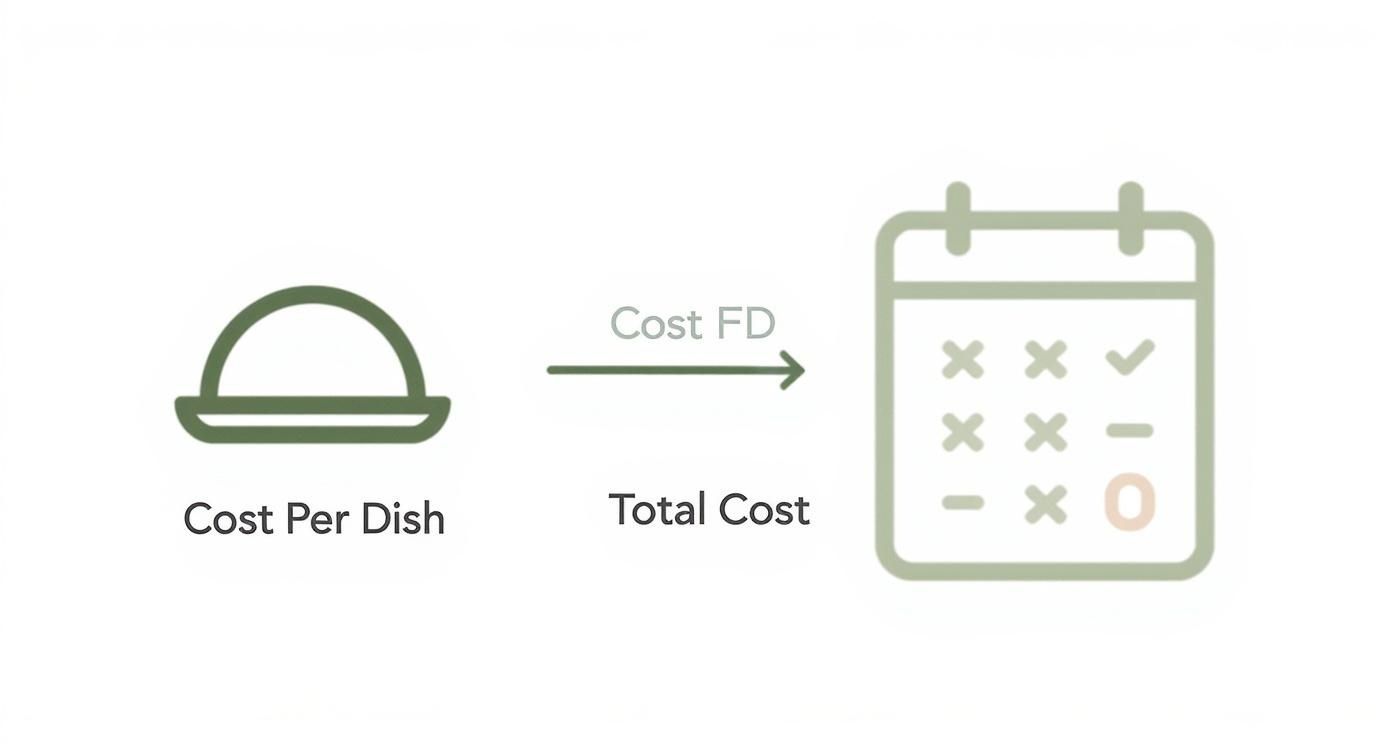
Diagram illustrating food cost calculation, from cost per dish to total cost, represented with icons.

As you can see, you need both the close-up view of each dish and the big-picture view of your total costs to truly understand your restaurant’s financial health.

Don't Forget About Ingredient Yield

One of the most common mistakes I see is operators assuming every gram they buy makes it onto a customer's plate. It just doesn't work that way. This is where ingredient yield becomes a critical number. Yield is simply the usable amount of an ingredient you have left after all the prep work is done.

Take a whole beef tenderloin, for example. You pay your supplier for the entire cut, but after you trim off the fat and sinew, the weight of the steaks you can actually sell is much lower. If you calculate your recipe cost based on the purchase weight (the "As Purchased" or AP weight) instead of the final, usable weight (the "Edible Portion" or EP weight), your numbers will be way off.

Here's how to get it right:

  • Run Some Yield Tests: For your big-ticket items, get out the scale. Weigh the ingredient before and after you prep it. Weigh that tenderloin before you touch it with a knife, and then weigh the finished steaks you get from it.
  • Calculate Your Yield Percentage: The formula is simple: (Edible Portion Weight / As Purchased Weight) x 100.
  • Find Your Real Ingredient Cost: Now, use this formula to see what you're really paying: (As Purchased Cost / Yield Percentage).

Let’s run the numbers. A 5kg beef tenderloin costs you £100. After trimming, you end up with 3.5kg of sellable steak. Your yield is 70% (3.5kg / 5kg). This means your true cost per kilo isn't £20; it's actually £28.57 (£100 / 0.70). That £8.57 difference per kilo will absolutely crush your margin on that steak dish if you don't account for it.

The Real Cost of Waste and Spoilage

Trimming isn't the only way you lose product. Every kitchen has waste, and every single bit of it has a cost attached. Spoiled produce, a dropped pan of sauce, a burnt order that has to be re-fired—it all adds to your food cost.

Now, some waste is just part of the game, but tracking it is non-negotiable. A simple waste sheet taped to the wall where staff can log anything they throw out is a goldmine of information. When you review it, you start to see patterns. Maybe you have a quality issue with a certain supplier, a line cook who needs a bit more training, or a menu item that keeps getting sent back by customers.

Tracking waste isn't about pointing fingers. It's about finding operational blind spots. If you're constantly tossing spoiled herbs, it could mean you're over-ordering or your first-in, first-out (FIFO) rotation needs a tune-up.

Remember, it’s not just the cost of the food itself. Every item in the bin is a direct hit to your bank account because it was a product you paid for that generated zero revenue.

The Sneaky Drain of Inconsistent Portions

Portion control is everything. It's one of the most powerful tools you have for managing costs, but it’s often the first thing to go out the window when the kitchen gets busy. Even tiny inconsistencies add up to massive losses over a month or a year.

Think about a side of fries. Let's say your standard portion is 150g, but during the rush, your team starts heaping on 180g. That's a 20% overage on every single order. If you sell 100 portions of fries a day, you're giving away 3kg of product for free. Every. Single. Day. Over a year, that small habit could easily cost you thousands of pounds.

You need systems to fight this:

  • Use the Right Tools: Put portion scoops, specific ladles, and digital scales on the line and make them mandatory.
  • Create Clear Recipe Cards: Your recipes should have photos showing exactly what a finished plate looks like, with precise portion sizes listed.
  • Train, Train, and Train Again: Make portion control a regular topic in your staff meetings and training sessions. Keep it top of mind.

By getting serious about yield, waste, and portioning, you stop guessing. You move from a theoretical food cost to your actual food cost, and that's the number that matters. It gives you the power to price your menu intelligently, protect your margins, and make much smarter purchasing decisions.

Setting Benchmarks and Interpreting Your Results

https://www.youtube.com/embed/_vTZI1s2SFs

So, you've crunched the numbers and have your food cost percentage. That's a great start, but getting the number is only half the battle. The real magic happens when you use that figure to make smart, strategic decisions that actually protect and grow your restaurant's profits.

A percentage on its own doesn't tell you much. Is your 38% food cost a red flag, or is it perfectly fine for your high-end steakhouse? The only way to know is to compare it against industry benchmarks and, more importantly, set the right goals for your specific restaurant.

What Is a Good Food Cost Percentage?

If you ask around, you'll hear that the industry standard for food cost percentage is somewhere between 28% and 35%. For many restaurants, that's a solid target and represents a healthy balance between what you spend on ingredients and what you earn from sales.

But take that with a grain of salt. Treating this range as a hard-and-fast rule is a classic mistake. The "ideal" food cost is never a one-size-fits-all number; it really depends on what you're serving and who you're serving it to.

  • Fine Dining: These places often run much higher food costs, sometimes pushing 40% or even more. When you're working with premium ingredients like truffles or A5 wagyu, your costs will naturally be higher. The expectation is that the menu prices will reflect that quality.
  • Quick-Service Restaurants (QSR): On the flip side, a fast-food joint lives and dies by volume. They need a much lower food cost, typically aiming for the 20-25% range, by using more economical ingredients.
  • Pizzerias & Pasta Restaurants: These concepts are often the envy of the industry, sometimes boasting food costs below 20%. Their core ingredients—flour, tomatoes, cheese—are relatively cheap, which makes those dishes incredibly profitable.

The only target food cost that matters is the one that works for you. It's the number that lets you pay for everything else—your team, your rent, your utilities—and still hit the profit margin you need to succeed.

Turning Your Numbers into Actionable Insights

Once you have your benchmark, you can start digging into what your numbers are really telling you. If your food cost is creeping up higher than your target, it's time to play detective. Is one specific menu item throwing off your average? Have your supplier costs gone up without you noticing?

You also have to look at the bigger picture. The restaurant industry has been hit hard by inflation recently. Since 2019, overall expenses have shot up by 16% to 32%, forcing many operators to raise menu prices by as much as 27.2% just to stay afloat. Knowing these trends helps you figure out if your higher costs are an internal problem or just a sign of the times.

To see how your food cost impacts your bottom line, it's incredibly helpful to look at a comprehensive restaurant profit and loss statement example. That's where you'll see how food costs, labor, and other overhead all fit together.

Tracking this metric consistently gives you the power to make informed, proactive decisions. It can shine a light on opportunities to:

  • Adjust Menu Prices: If a best-selling dish has a sky-high food cost, a small price bump could be all it takes to make it profitable again.
  • Renegotiate with Suppliers: Are you tracking your invoice prices? If you see the cost of a key ingredient has jumped, it's time to have a conversation with your vendor.
  • Engineer Your Menu: Figure out which dishes are your high-profit stars and which are your low-margin duds. You can then train staff to push the winners and rethink or re-cost the underperformers.
  • Tighten Up Kitchen Operations: If your overall food cost is consistently high, it might point to a problem on the line. Are there issues with waste, spoilage, or inconsistent portioning? This number will tell you.

Fixing Common Food Cost Calculation Mistakes

Even the sharpest operators can fall into common traps when calculating food cost percentage. Small, seemingly harmless oversights can compound over time, leading to inflated costs and thinner margins. Think of this as your diagnostic toolkit—a guide to identifying and plugging the most common profit leaks in your operation.

Getting these details right is the difference between a rough estimate and a number you can actually trust to make critical business decisions. Let's break down the most frequent errors I see and, more importantly, how to fix them for good.

Forgetting to Update Ingredient Prices

This is probably the most widespread mistake. You meticulously cost out a new menu item, get its food cost to a perfect 28%, and then… you never touch it again. Six months later, your supplier's prices for key ingredients have crept up by 10-15%, but your menu price is still the same. Suddenly, that profitable dish is barely breaking even.

The fix is simple: you need a system. This doesn't have to be a daily grind, but a monthly or quarterly check-in is essential for keeping your numbers honest.

  • Review Your Invoices: When supplier invoices come in, have someone spot-check prices against your recipe costing sheets.
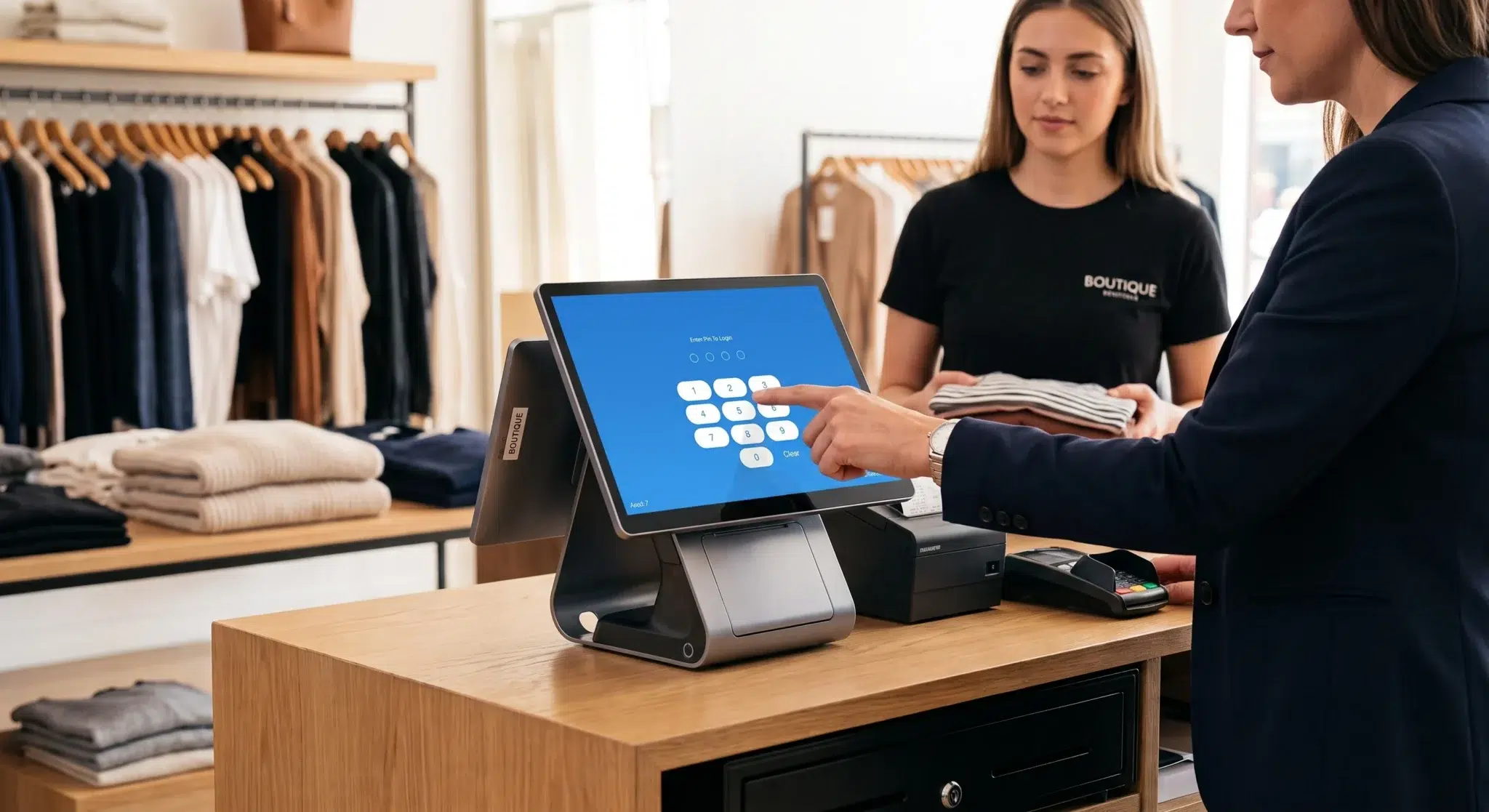
  • Use Your POS: A modern POS can handle the heavy lifting, flagging price increases on received inventory and updating recipe costs automatically.

Overlooking the "Invisible" Ingredients

It’s easy to remember the cost of the steak or the salmon fillet. But what about the teaspoon of olive oil used to sear it? Or the pinch of specialty salt for finishing? These small-ticket items, sometimes called "Q-factor" ingredients, seem insignificant on their own but add up in a big way across hundreds of plates.

Don't let minor ingredients become a major blind spot in your calculations. Spices, oils, garnishes, and condiments must be accounted for in your plate costs. Ignoring them can easily skew your food cost percentage by several points.

To solve this, add a small, calculated buffer to each dish's cost. A common approach is to add a flat percentage, say 1-3%, to the cost of each recipe to cover these miscellaneous items.

The Inconsistent Portioning Problem

You've designed a recipe with a precise 150g portion of protein. During a busy service, however, one line cook consistently plates 170g. That extra 20g might not seem like much, but it’s a 13% overage on your most expensive ingredient. Across dozens of orders a night, this hidden cost becomes a serious financial drain.

Standardization is your best defense against this profit leak.

  1. Implement Standardized Tools: Equip your line with portion scales, measured scoops, and specific ladles. Make their use non-negotiable.
  2. Create Visual Recipe Cards: Use photos on your recipe cards that clearly show what a finished, correctly portioned dish looks like.
  3. Conduct Regular Checks: Periodically spot-check plates as they leave the kitchen to ensure they match your standards.

Failing to Account for Waste

Waste is a silent killer of profitability. Spoiled produce, burnt orders, and customer returns are all ingredients you paid for that generated zero revenue. If this waste isn't tracked, your calculated food cost will always be artificially low compared to the reality of your P&L statement.

For actionable strategies on this front, understanding the methods for reducing food waste in restaurants is an essential next step. Tracking waste isn't just about accounting; it’s about identifying operational weaknesses and opportunities for improvement.


When your food cost percentage is higher than expected, it feels like a mystery. The numbers on your P&L don't match your recipe costs, and you're left scrambling to figure out why. This table is designed to be your first stop for diagnostics, helping you connect the dots between the symptom you're seeing and the root cause.

Troubleshooting High Food Cost Percentage

Symptom Potential Cause Actionable Solution
Inventory Shrinks Unexpectedly Employee theft, unrecorded spillage, or staff meals not being tracked. Install security cameras, implement a clear waste/spoilage tracking sheet, and create a policy for recording all staff meals.
Dish Costs Creep Up Over Time Supplier price increases have not been updated in your recipe costing software. Schedule a monthly or quarterly review of all recipe costs against recent supplier invoices. Update your POS or spreadsheets accordingly.
Higher-than-Normal Spoilage Over-ordering, improper stock rotation (no FIFO), or inadequate storage. Conduct a weekly inventory audit to identify slow-moving items. Train staff on "First-In, First-Out" (FIFO) and check cooler/storage temperatures daily.
Sales of Low-Margin Items are High Your menu design or server suggestions are pushing customers toward less profitable dishes. Redesign your menu to highlight high-margin items. Run a server incentive program focused on selling specific profitable dishes.
Food Cost is High Despite Strong Sales Inconsistent portioning by kitchen staff is leading to more ingredient usage per dish. Reinforce the use of portion scales and standardized utensils. Use visual recipe cards with photos to ensure consistency across shifts.

Remember, a high food cost percentage is rarely the result of a single issue. It's usually a combination of small leaks. By systematically working through these potential problems, you can regain control and get your margins back on track.

Using Technology to Automate and Track Food Costs
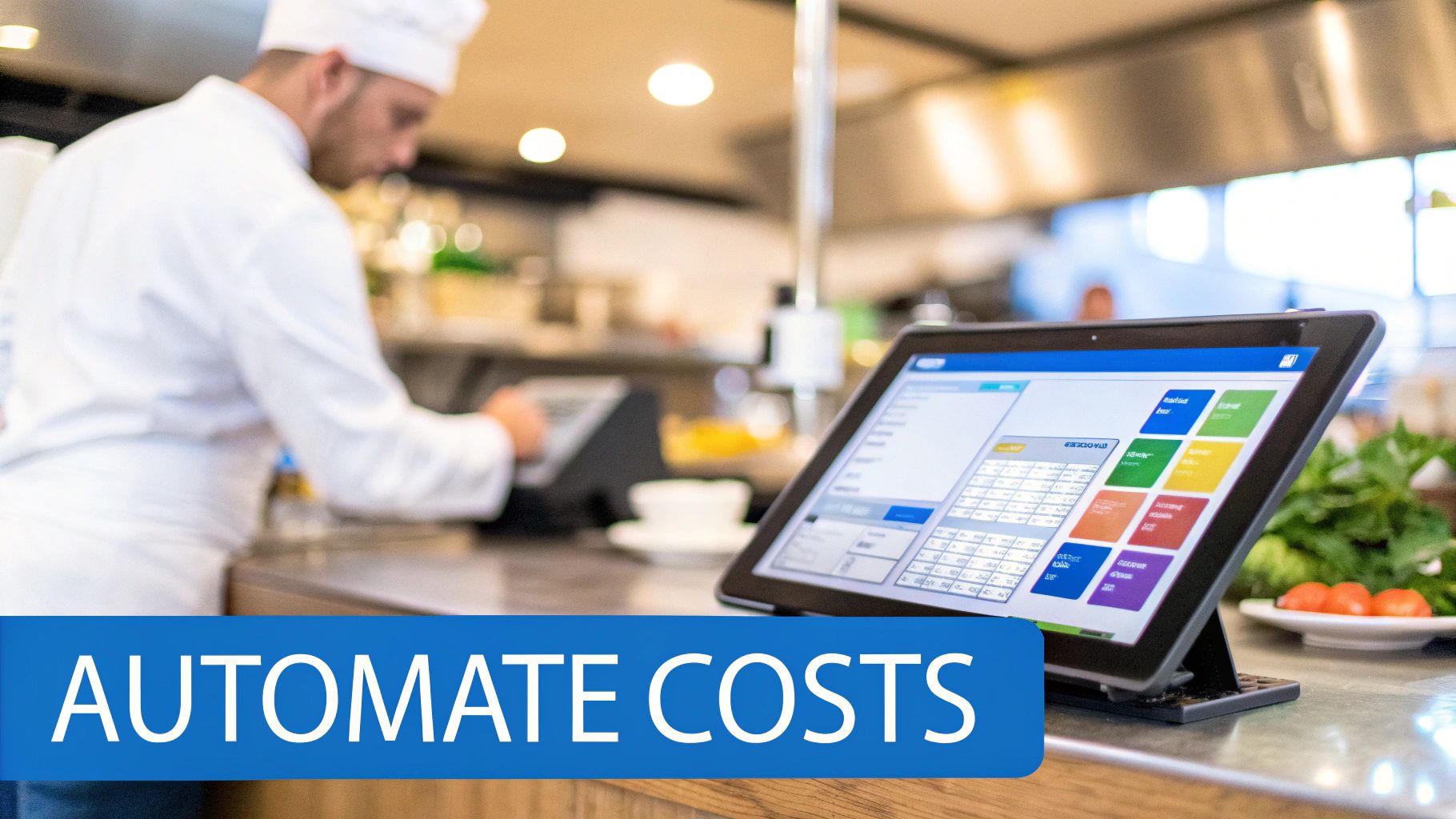
Chef in a professional kitchen using a tablet with a restaurant management system to automate costs.

Let's be honest, trying to calculate your food cost percentage with a stack of invoices and a clunky spreadsheet is a nightmare. It’s slow, it’s frustrating, and it’s practically begging for mistakes. By the time you figure out there’s a problem, the damage to your bottom line has already been done for weeks.

This is where modern restaurant tech, specifically a good Point of Sale (POS) system, completely changes the game. It shifts you from being reactive to proactive. Instead of spending the first week of a new month figuring out what went wrong last month, you get real-time data that flags issues the moment they pop up.

Real-Time Inventory and Instant Reporting

The magic of a modern POS is how it connects what you sell directly to what you have in stock. Every time a server punches in an order for your signature burger, the system knows to deduct one bun, 150g of ground beef, and a slice of cheddar from your inventory counts. This keeps a live, running tally of your stock levels—something manual counts could never achieve.

This simple connection unlocks some incredibly powerful tools:

  • Instant Food Cost Reports: Forget the calculator. You can pull up an accurate food cost percentage report for any time frame—today, this week, this month—with just a couple of clicks.
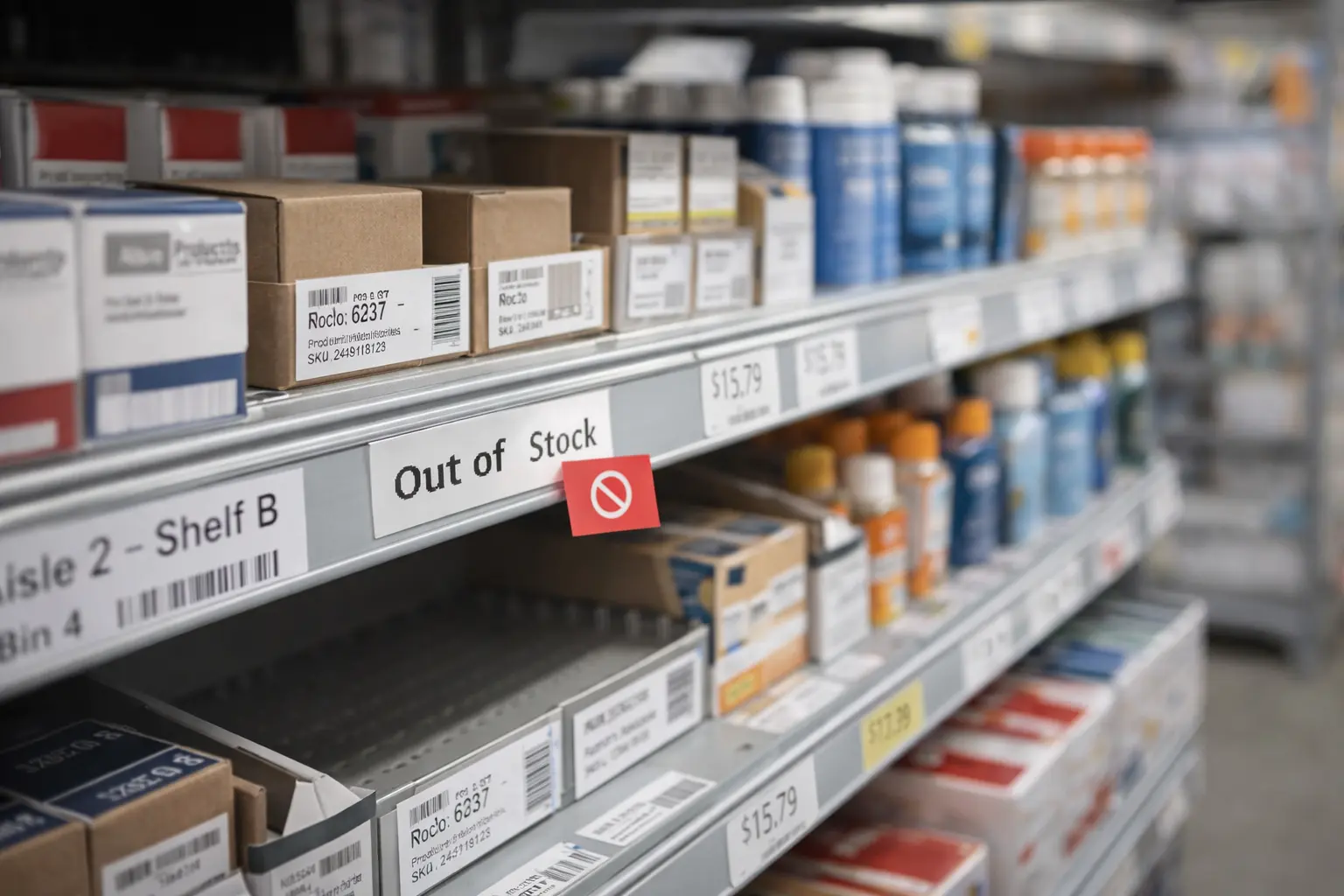
  • Low-Stock Alerts: The system can automatically ping you when you're running low on key ingredients, helping you dodge those dreaded 86's during a dinner rush.
  • Sales vs. Theoretical Use Analysis: This is a big one. You can compare what your sales data says you should have used against your actual inventory. A big gap between the two is a major red flag for waste, over-portioning, or even theft.

If you want to get into the weeds on this, it's worth exploring how a modern restaurant inventory management system can really dial in these processes.

Making Data-Driven Decisions with Confidence

When your tracking is automated, you can finally make smart, profitable decisions without guessing. Imagine your chicken supplier hikes their prices. Your POS can instantly recalculate the cost for every single dish that uses chicken, showing you exactly how much that price change just squeezed your margins. Now you can react immediately—maybe you adjust a menu price, or maybe it’s time to call a different supplier.

Precise food cost monitoring is absolutely critical because restaurants famously run on razor-thin pre-tax profit margins, typically just 3-5%. Think about it: food costs eat up roughly 33 cents of every sales dollar. Shaving even a few points off your food cost can have a massive impact on your actual take-home profit.

At the end of the day, technology gives you back your most valuable resource: time. Automating the soul-crushing task of calculating food costs frees you up to do what you're actually good at—training your staff, perfecting your menu, and creating an amazing experience for your guests. It lets you run your business by the numbers, not by your gut.

Got Questions? We've Got Answers

Even when you know the formulas, real-world situations can throw a wrench in your food cost calculations. Let's tackle some of the most common questions that pop up for restaurant operators.

How Often Should I Be Running These Numbers?

At a minimum, you should calculate your total food cost percentage monthly. This timing lines up perfectly with your P&L statement, giving you a solid big-picture view of your financial health.

But if you really want to stay on top of things, a weekly calculation is the gold standard. A week is short enough that if a number looks off, you can quickly trace it back. Was it a sudden price hike from a vendor on Monday? Or maybe portion sizes got a little loose during that crazy weekend rush? Weekly checks let you catch these problems before they snowball.

So, What's a Good Food Cost Percentage Anyway?

Everyone loves to throw around the 28-35% benchmark, but the truth is, a "good" percentage really depends on what you're serving.

  • Fine Dining: Don't be surprised to see higher costs, maybe 35-40%. Those premium ingredients—A5 wagyu, fresh truffles—come with a hefty price tag.
  • Pizzerias & Pasta Joints: These concepts are often the envy of the industry, running lean with percentages as low as 15-25%. It's hard to beat the margins on flour and water.
  • Quick Service Restaurants: High volume and lower price points mean QSRs usually aim for the 25-30% range to stay profitable.

Ultimately, the right target for your restaurant is the one that covers your costs and leaves you with a healthy profit.

What About Promos and Staff Meals?

This is a great question because it's so easy to overlook. Freebies aren't actually free—the ingredients still cost you money.

The best practice is to include the cost of those promotional items, comps, and employee meals in your Cost of Goods Sold (COGS). However, you should exclude their sale value (since there wasn't one) from your total revenue. This gives you an honest look at your inventory usage against the actual cash you brought in.


Mastering your food cost percentage is the single most effective way to protect your bottom line. Instead of getting lost in spreadsheets, let Biyo POS handle the heavy lifting. Our system automates everything from real-time inventory counts to instant cost reporting, giving you the clarity to make smart decisions.

Ready to take control of your margins? Visit Biyo POS to start your free trial today.

Related Posts